
Loading, please wait...
LOT 0702
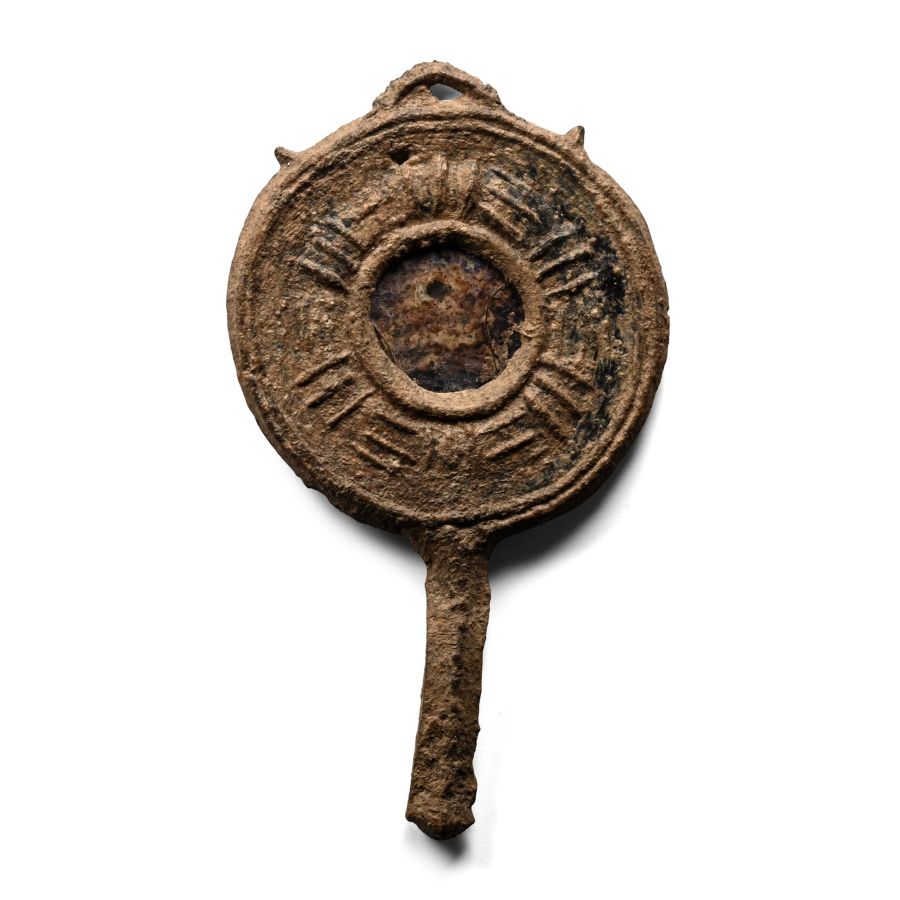
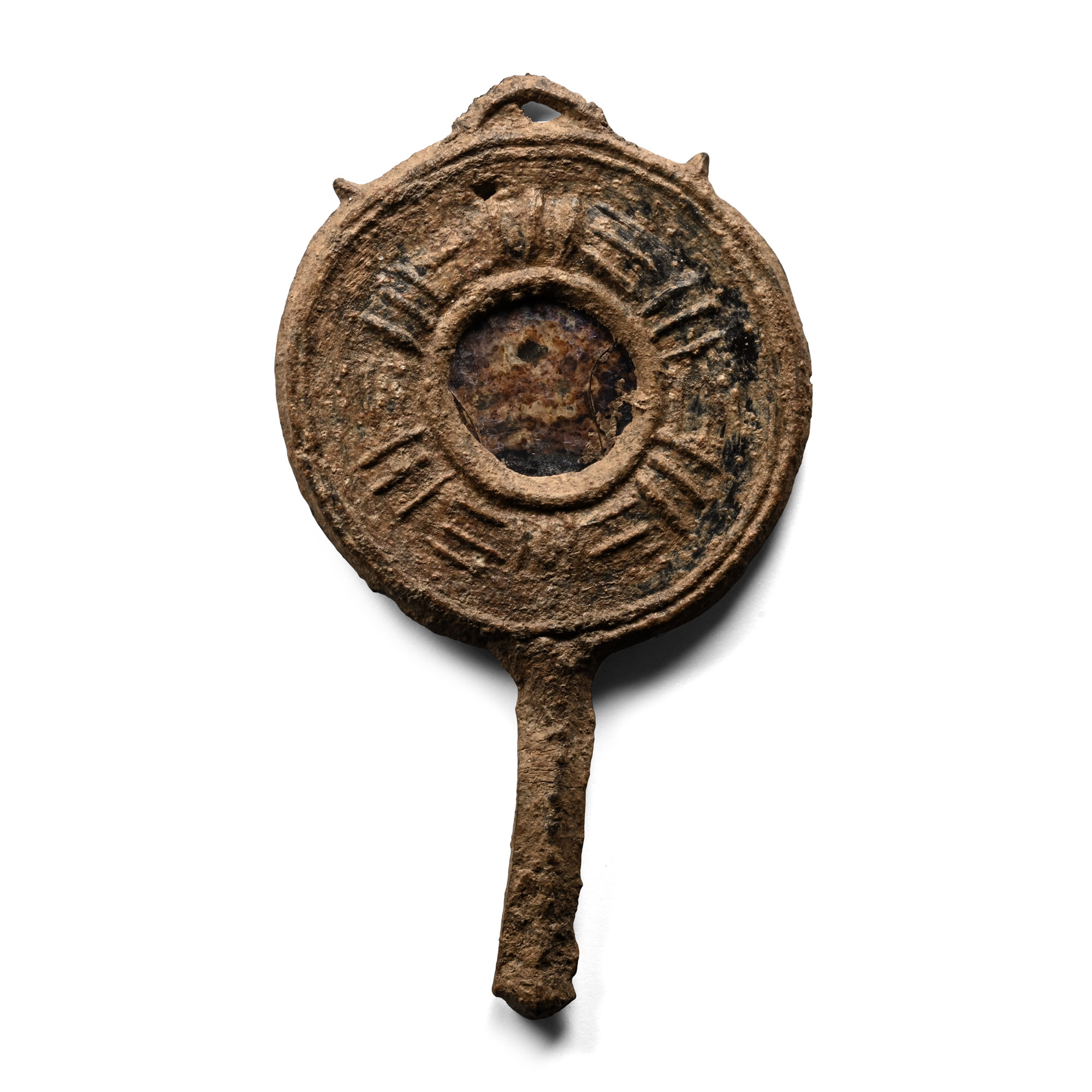
Late Roman Votive Lead Mirror with Glass Still in Situ
4TH-6TH CENTURY A.D.
2 5/8 in. (19 grams, 68 mm).
Comprising a lead-alloy circular rim with raised radiating hatching, loop above and short lozenge-section handle; original inset glass panel. [No Reserve]
ProvenanceAcquired from Brigantia, York, UK, circa 2010.
Ian Wilkinson collection, Nottinghamshire, UK, formed since 1985.
This lot is accompanied by an illustrated lot declaration signed by the Head of the Antiquities Department, Dr Raffaele D’Amato.
TimeLine Auctions follows a vetting process to ensure the authenticity and legality of all items, reinforcing our commitment to integrity and responsible trading. Each antiquity, antique, and coin lot undergoes thorough examination by a vetting committee of at least ten external specialists, professional trade association members, scientists, and archaeologists: Our Vetting Process
AUCTIONS:
TimeLine is a leading auction house specialising in antiquities, ancient art, collectables, natural history, coins, medals, and books. Our auctions offer museums, collectors, historians, and enthusiasts the opportunity to acquire unique and historically significant pieces.
-
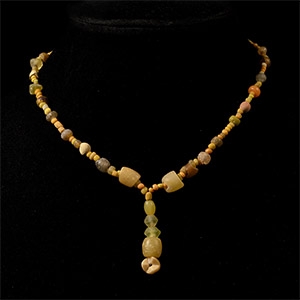
Roman Yellow Glass Bead Necklace String
1st-4th century A.D. and laterSold for (Inc. bp): £72
A restrung Y-shaped string composed of variously shaped beads with a central feature composed of larger beads. 15.7 grams, 34 cm
Acquired 1980-2015. Ex Abelita family collection. This lot is accompanied by an illustrated lot declaration signed by the Head of the Antiquities Department, Dr Raffaele D’Amato. -
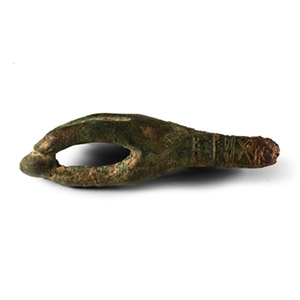
Roman Bronze Key Handle in the Shape of a Hand Holding Fruit
1st-3rd century A.D.Estimate: £600 - 800 (+bp*)
Opening Bid: £333
Formed as a lady's right hand with thumb and forefinger extended to hold a grape; iron shank to the wrist. 157 grams, 10.1 cm
Ex Cambridgeshire, UK, collection, 1990s. This lot is accompanied by an illustrated lot declaration signed by the Head of the Antiquities Department, Dr Raffaele D’Amato. -
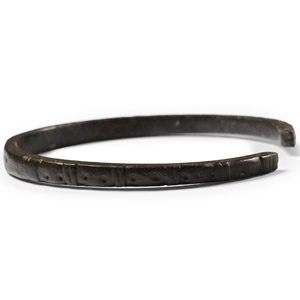
Roman Bronze Decorated Bracelet
1st-4th century A.D.Sold for (Inc. bp): £85
With a rectangular-section body divided into segments with transverse lines, punched pellets in between. 17 grams, 57.7 mm
Ex German art market, 2000s. Acquired from an EU collector living in London. From the collection of Surrey, UK, gentleman. This lot is accompanied by an illustrated lot declaration signed by the Head of the Antiquities Department, Dr Raffaele D’Amato.
