
Loading, please wait...


LOT 0911
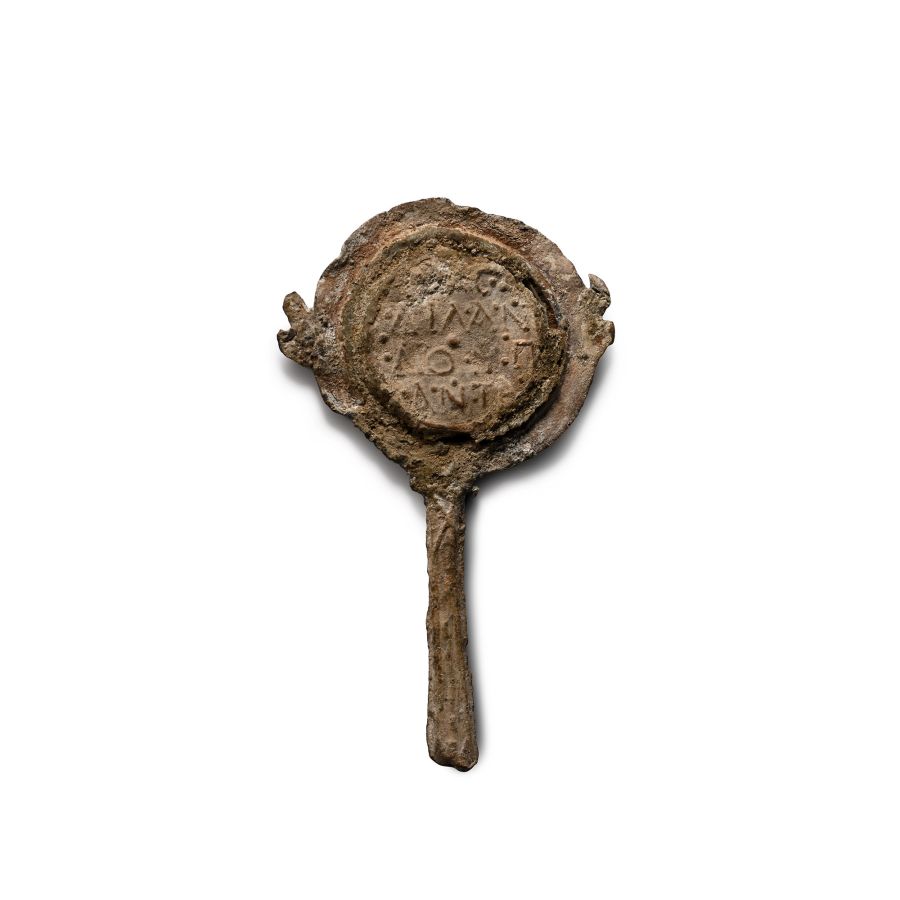
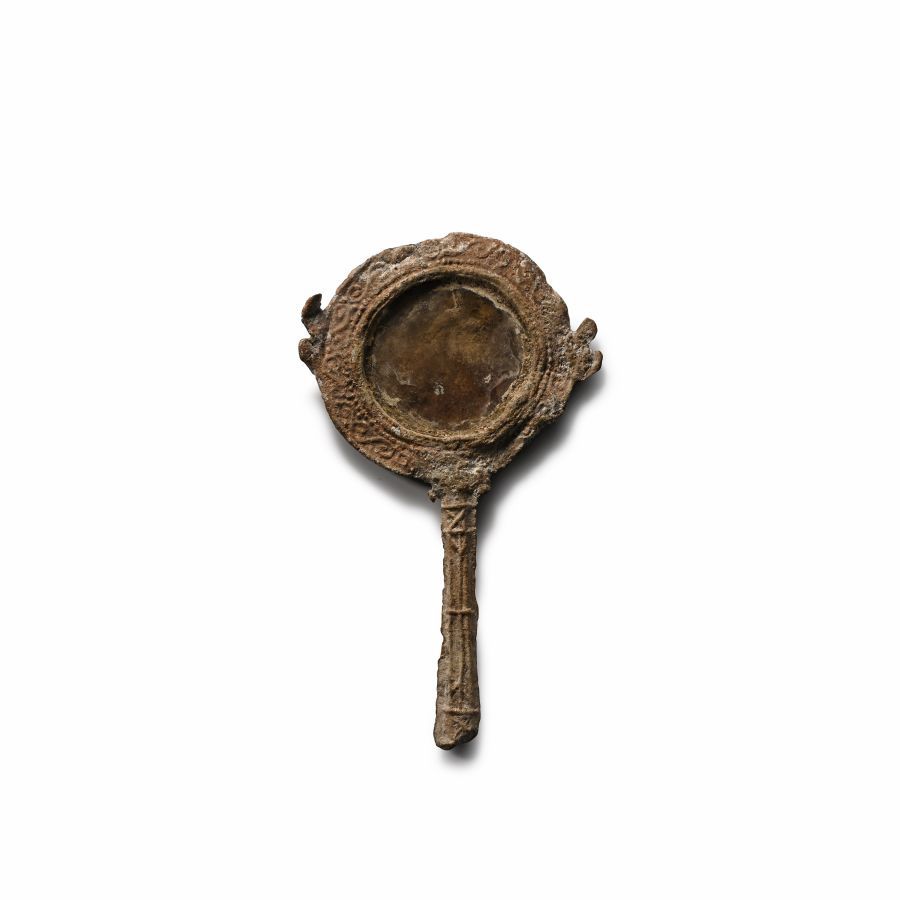
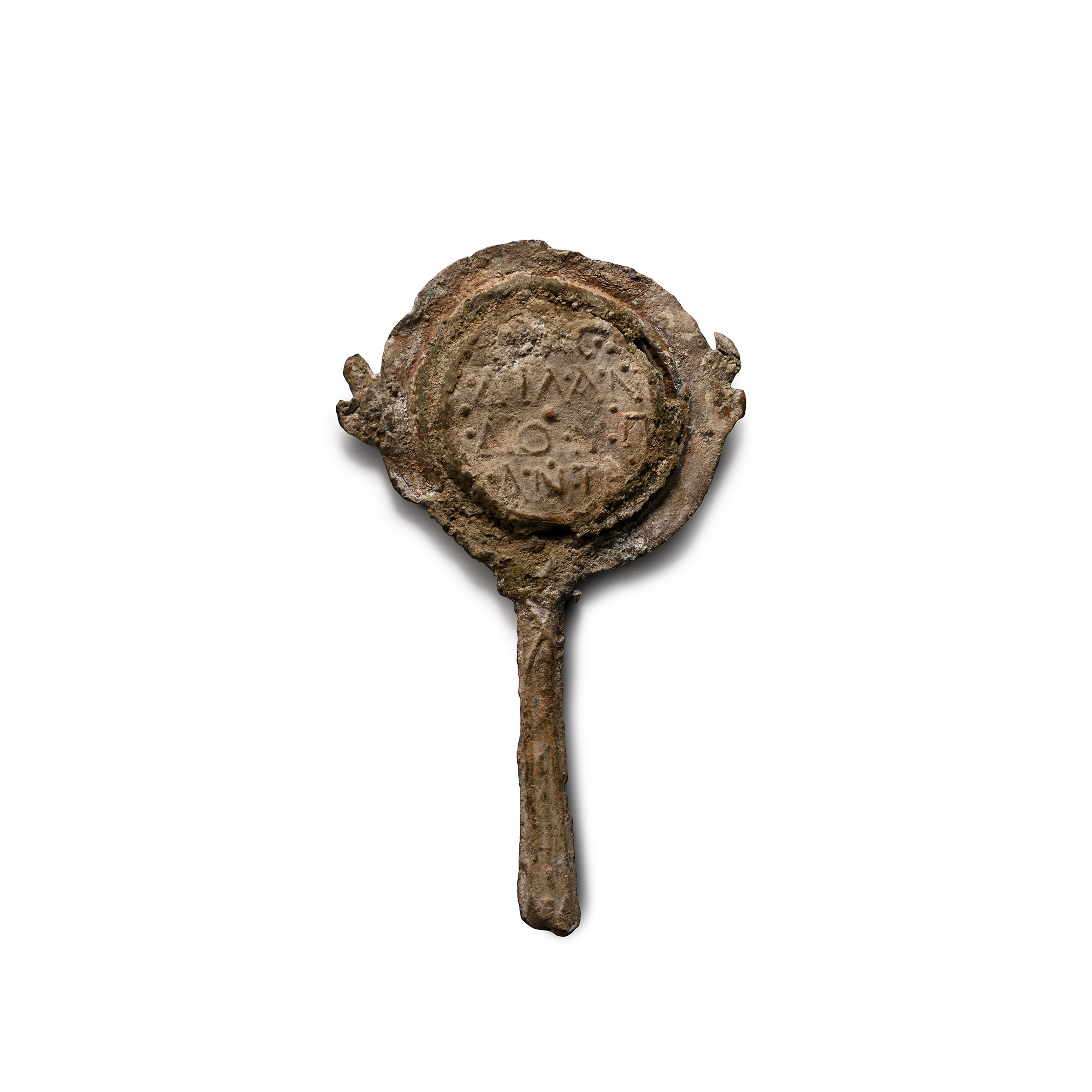
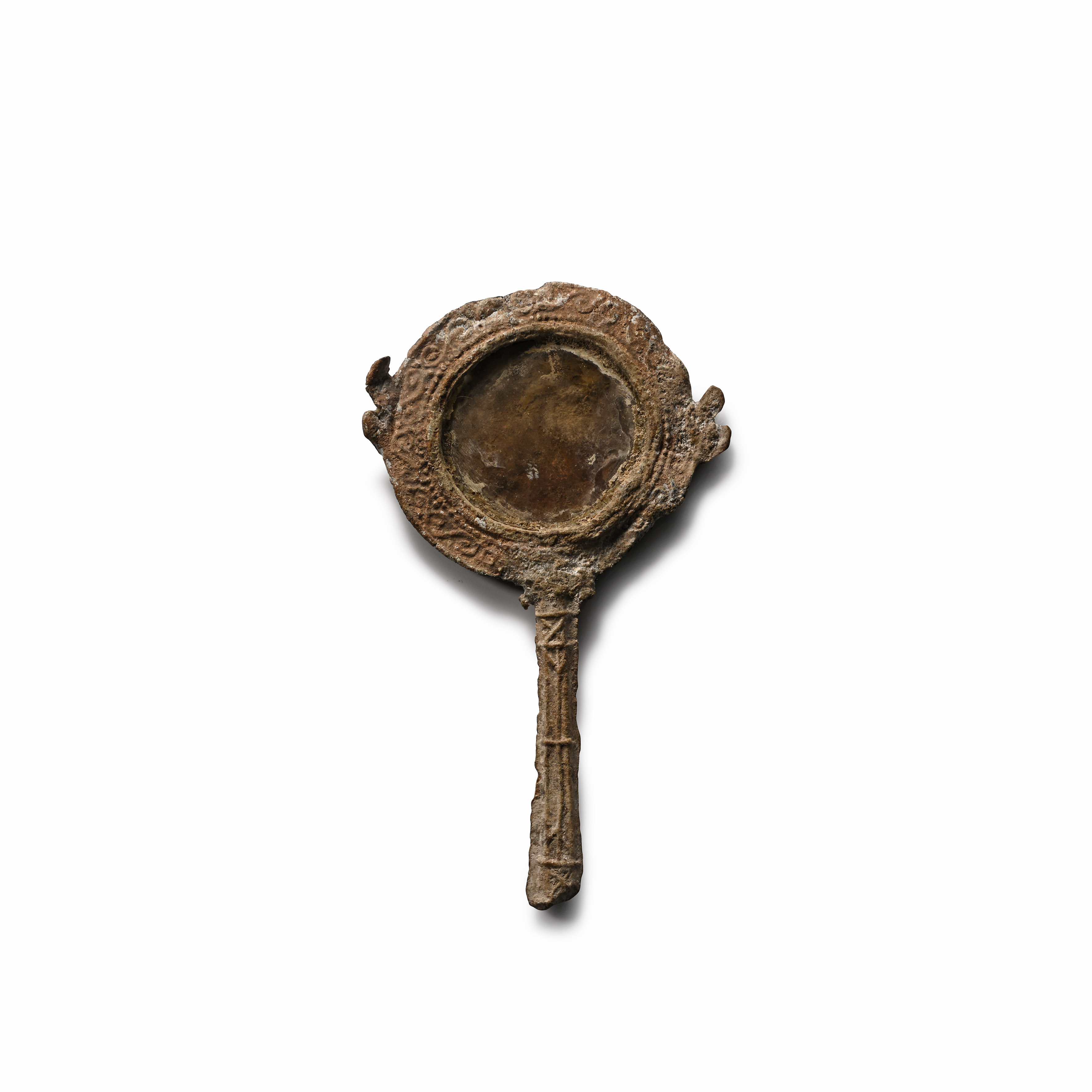
Late Roman Votive Lead Mirror Inscribed 'For the woman who loves her husband'
3RD CENTURY A.D.
4 in. (35 grams, 10.3 cm).
Comprising a discoid plate with running scroll border, lentoid-section handle with raised teardrop decoration; applied central reflective disc with Greek inscription to the reverse: 'τῆς φιλάνδρου πάντα' translating to 'For the woman who loves her husband'; with original reflective glass in situ.
ProvenanceAcquired from Brigantia, York, UK, circa 2010.
Ian Wilkinson collection, Nottinghamshire, UK, formed since 1985.
This lot is accompanied by an illustrated lot declaration signed by the Head of the Antiquities Department, Dr Raffaele D’Amato.
Cf. Spasić Durić, D., Град Виминацијум-The city of Viminacium, (in Serbian), Pozarevac, 2015, fig.78, for similar; see also the same inscription on a lead mirror from Black Sea Region, in Из истории Северного Причерноморья в ант. эпоха (From the history of the Northern Black Sea region in the ancient era (in Russian), 1979, p.118,3.
FootnotesMany examples of this category from the Danube region were found in female graves, where they perhaps served as grave goods considered appropriate for their connection with general issues of fertility, good fortune, and beauty, or even as protective amulets. The inscriptions found on votive lead mirrors in Pannonia, published by Németh & Szabó, show female characteristics, and the beautiful female soul as an addressee. Since lead mirror frames have been found in this Roman province only in graves of women, it is probable that these miniature mirrors, filled with glass in their central hole, were expected to serve as ritual or magical tools to assist the souls of dead women in the afterlife.
CONDITIONTimeLine Auctions follows a vetting process to ensure the authenticity and legality of all items, reinforcing our commitment to integrity and responsible trading. Each antiquity, antique, and coin lot undergoes thorough examination by a vetting committee of at least ten external specialists, professional trade association members, scientists, and archaeologists: Our Vetting Process
AUCTIONS:
TimeLine is a leading auction house specialising in antiquities, ancient art, collectables, natural history, coins, medals, and books. Our auctions offer museums, collectors, historians, and enthusiasts the opportunity to acquire unique and historically significant pieces.
LOT 0911
Late Roman Votive Lead Mirror Inscribed 'For the woman who loves her husband'
Sold for (Inc. bp): £546
-
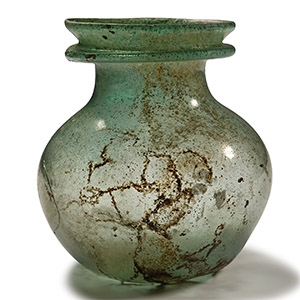
Roman Green Glass Jar
3rd-4th century A.D.Sold for (Inc. bp): £91
With dimpled base, squat globular body with shallow dimple above the base, broad neck with gusseted rim. 80 grams, 92 mm
Ex London art market 1990s. From a London, UK, collection. This lot is accompanied by an illustrated lot declaration signed by the Head of the Antiquities Department, Dr Raffaele D’Amato. -
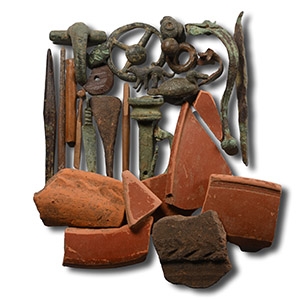
Bronze Age to Roman Bronze Artefact Group
1st millennium B.C.-4th century A.D.Sold for (Inc. bp): £65
Comprising: terracotta bowl fragments; bow brooch fragments; a looped fastener; two awls; a small duck mount; bone pin fragments; a looped nail cleaner; and others. 166 grams total, 12-74 mm
Found on various UK sites since 1974. Property of an Essex collector. This lot is accompanied by an illustrated lot declaration signed by the Head of the Antiquities Department, Dr Raffaele D’Amato. -
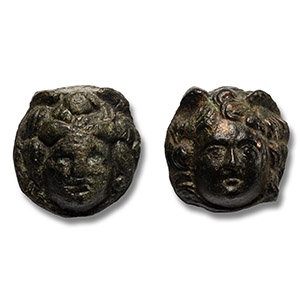
Roman Bronze Medusa Mount Pair
2nd-3rd century A.D.Sold for (Inc. bp): £130
Each modelled in the half-round with copious hair framing the female face with winged diadem; hollow to the reverse. 31.3 grams total, 25.9-27.1 mm
Ex German art market, 2000s. Acquired from an EU collector living in London. From the collection of Surrey, UK, gentleman. This lot is accompanied by an illustrated lot declaration signed by the Head of the Antiquities Department, Dr Raffaele D’Amato.
