
Loading, please wait...
LOT 0719
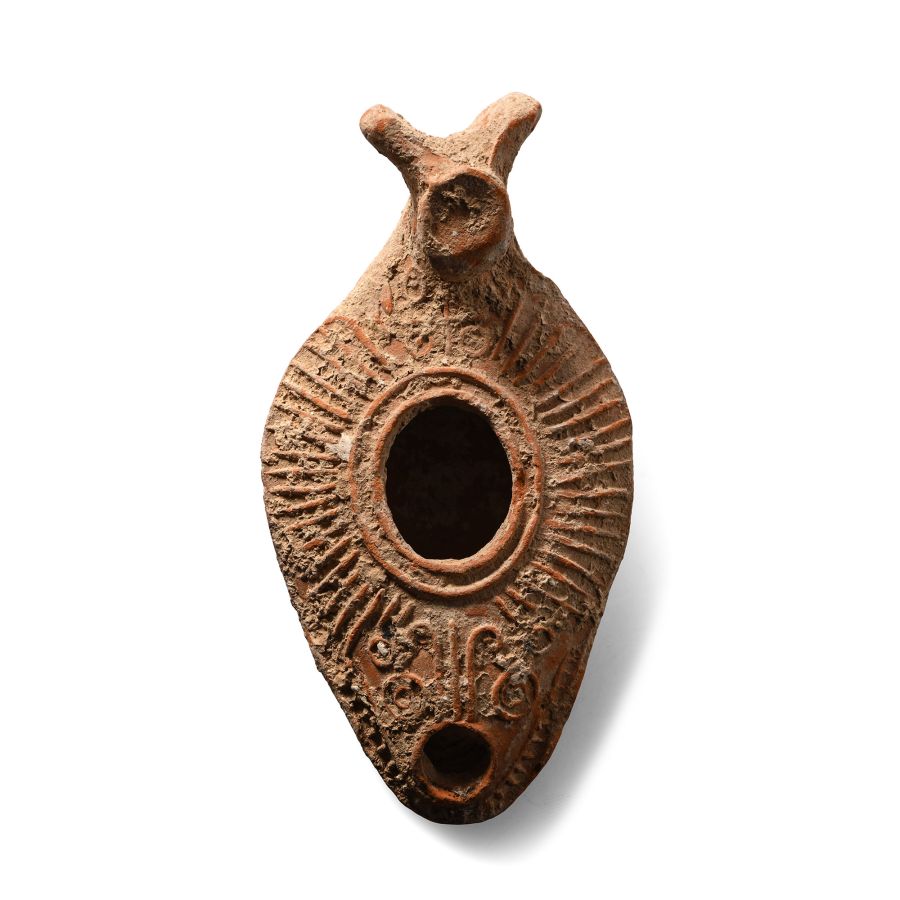
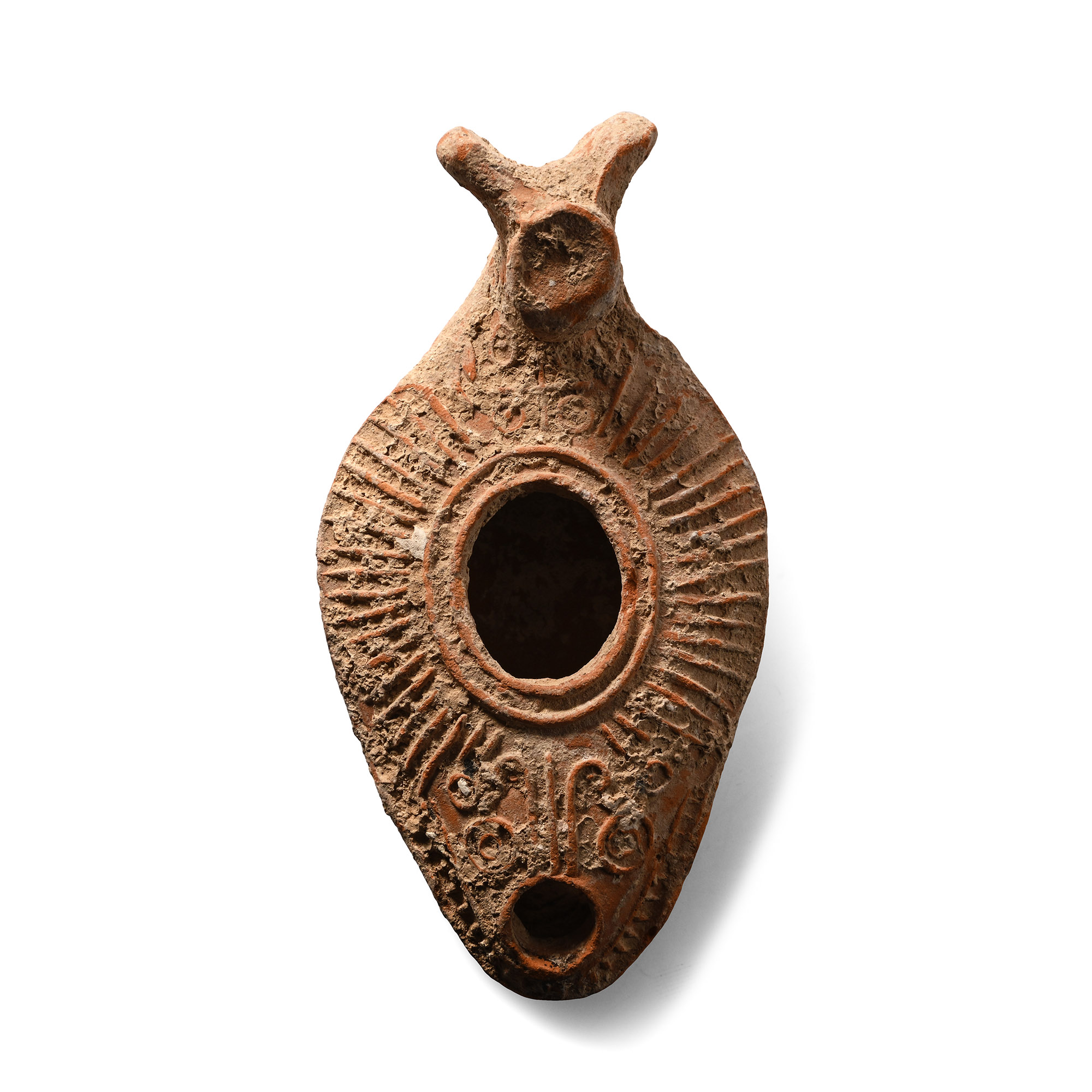
Late Roman Terracotta Slipper Oil Lamp with Animal Head Handle
HOLY LAND, CIRCA 5TH-7TH CENTURY A.D.
4 1/8 in. (73 grams, 10.6 cm).
Handle to the rear with two large lateral projections, radiating ribs surrounding the filler hole, scroll motifs on the nozzle; low basal ring with scroll motifs. [No Reserve]
ProvenanceEx Ancient Art Shop, Windsor, UK, 1990s.
Ex private West County, UK, collection.
TimeLine Auctions follows a vetting process to ensure the authenticity and legality of all items, reinforcing our commitment to integrity and responsible trading. Each antiquity, antique, and coin lot undergoes thorough examination by a vetting committee of at least ten external specialists, professional trade association members, scientists, and archaeologists: Our Vetting Process
AUCTIONS:
TimeLine is a leading auction house specialising in antiquities, ancient art, collectables, natural history, coins, medals, and books. Our auctions offer museums, collectors, historians, and enthusiasts the opportunity to acquire unique and historically significant pieces.
LOT 0719
Late Roman Terracotta Slipper Oil Lamp with Animal Head Handle
Sold for (Inc. bp): £85
-
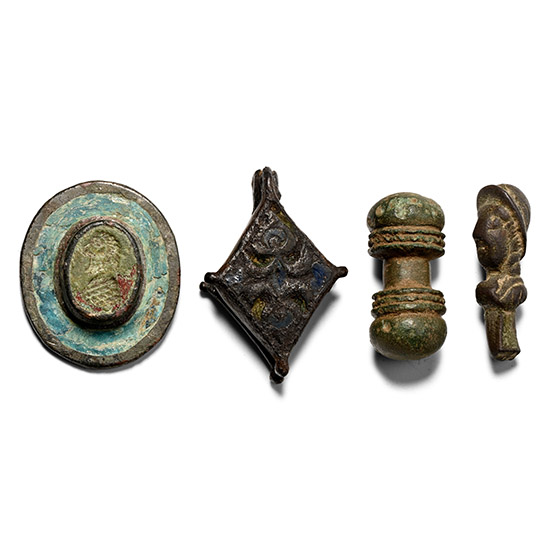
Roman Bronze Artefact Collection
1st-4th century A.D.Sold for (Inc. bp): £130
Comprising: an oval enamelled mount with a central cell with a profile bust; a finial formed as a helmetted bust; a lozenge-shaped seal box with blue enamel; and a toggle fastener. 37.1 grams total, 24-31 mm
Found Lancashire and Yorkshire, UK. Acquired on the UK art market. Property of a Lancashire, UK, collector. -
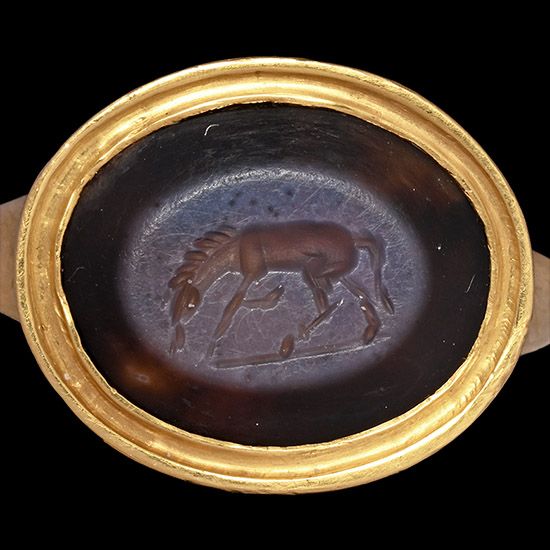
Roman Nicolo Gemstone of a Grazing Horse in Gold Ring
1st century A.D.Estimate: £1,800 - 2,400 (+bp*)
Current Winning Bid: £1,000
Ellipsoid with chamfered edge, incuse grazing horse image on a baseline; set into a later gold ring; supplied with a museum-quality impression. 7.72 grams, 23.21 mm overall, 18.46 x 18.02 mm internal diameter (approximate size British Q, USA 8, Europe 17.49, Japan 16)
Private collection, Europe. Acquired on the English art market. This lot has been checked against the Interpol Database of stolen works of art and is accompanied by search certificate number no.13165-248341. -
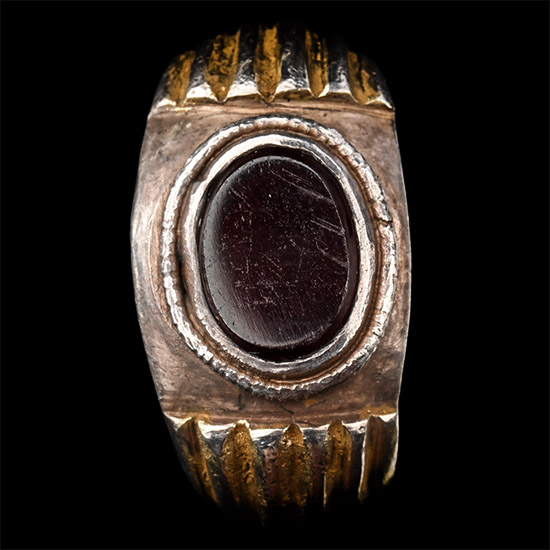
Roman Silver-Gilt Ring with Gemstone
2nd-3rd century A.D. or laterSold for (Inc. bp): £182
With a ribbed hoop, rectangular bezel with central cell and beaded wire collar, inset with later garnet cloison. 15.33 grams, 27.34 mm overall, 20.41 x 16.53 mm internal diameter (approximate size British N 1/2, USA 6 3/4, Europe 14.35, Japan 13)
From the collection of a European gentleman living in South London; acquired 1970-1980. Private collection, Suffolk, UK.
