
Loading, please wait...


LOT 1063
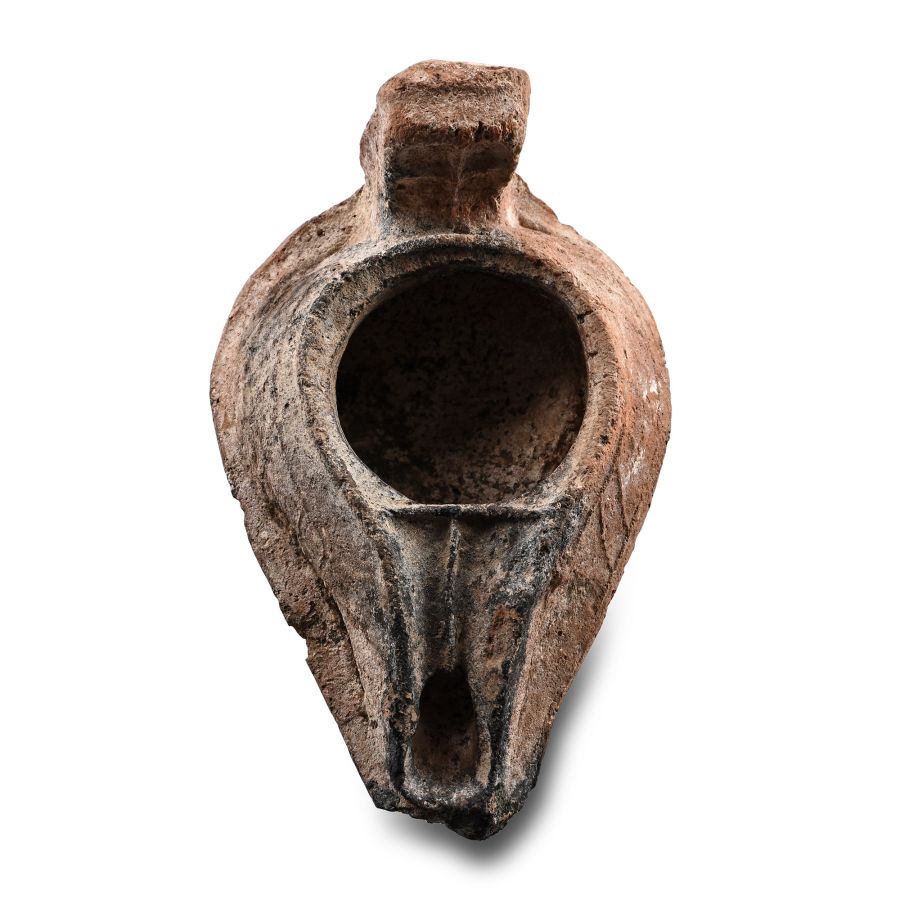
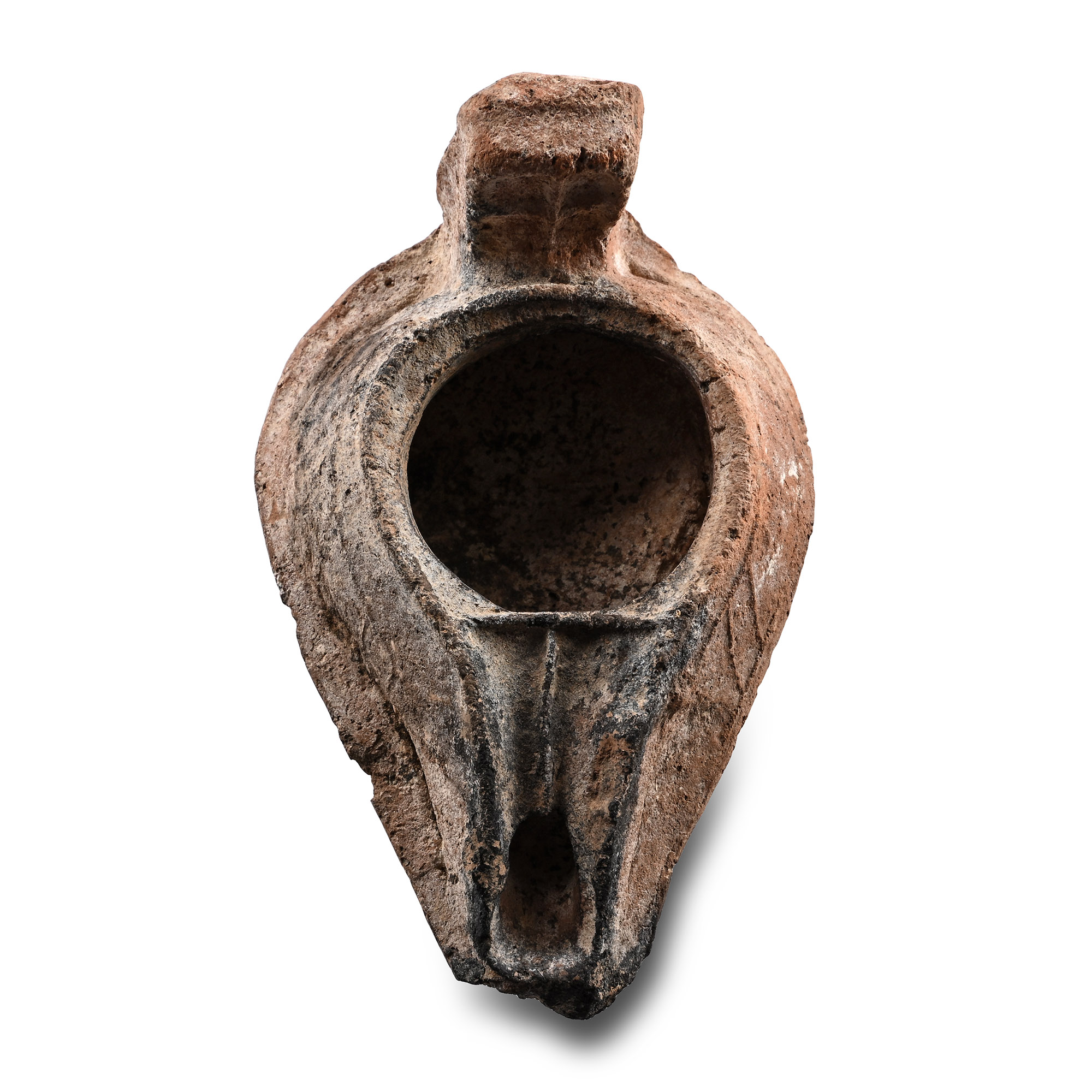
Late Roman Terracotta Oil Lamp
6TH-7TH CENTURY A.D.
4 7/8 in. (185 grams, 12.5 cm).
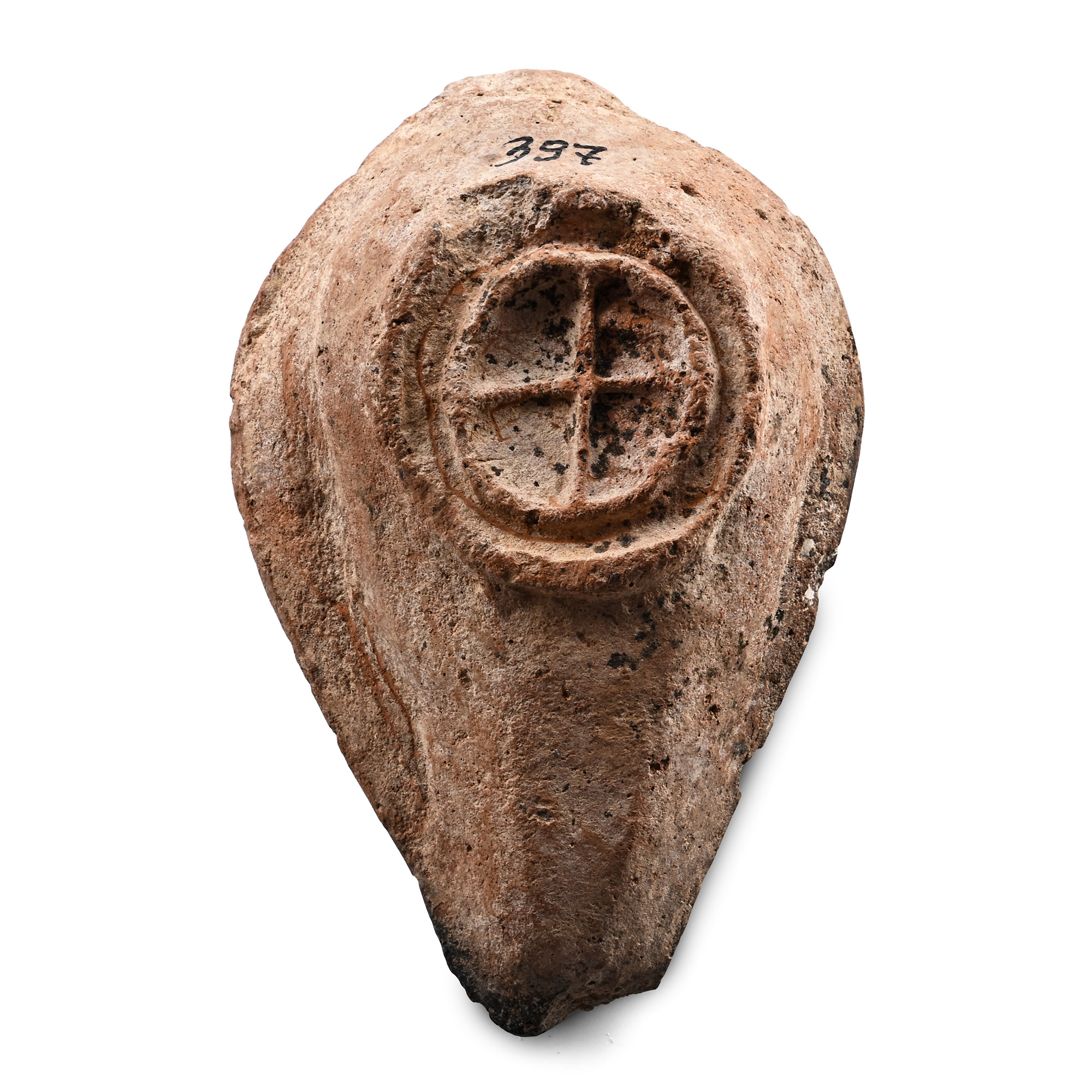
Slipper-shaped type with hatching to the shoulder, ribbed nozzle, rectangular handle with raised cruciform motif, underside with cross-in-circle motif and inked '397' legend. [No Reserve]
ProvenanceEx important German collection, 1970s onwards.
CONDITIONTimeLine Auctions follows a vetting process to ensure the authenticity and legality of all items, reinforcing our commitment to integrity and responsible trading. Each antiquity, antique, and coin lot undergoes thorough examination by a vetting committee of at least ten external specialists, professional trade association members, scientists, and archaeologists: Our Vetting Process
AUCTIONS:
TimeLine is a leading auction house specialising in antiquities, ancient art, collectables, natural history, coins, medals, and books. Our auctions offer museums, collectors, historians, and enthusiasts the opportunity to acquire unique and historically significant pieces.
LOT 1063
Late Roman Terracotta Oil Lamp
Estimate £80 - 100€93 - 116 (for guidance only)$108 - 135 (for guidance only)
Opening Bid
£5 (EUR 6; USD 7) +BP*
-
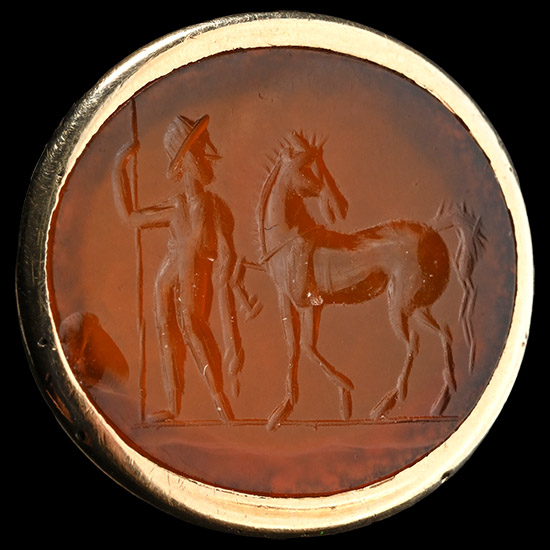
Roman Carnelian Intaglio of a Warrior and Horse in a Later Gold Ring
Circa 1st-2nd century A.D. and laterEstimate: £1,500 - 2,000 (+bp*)
Opening Bid: £700
Engraved with a standing male figure wearing a pointed cap and holding a long upright spear beside a horse, the horse with its head turned back and one foreleg raised; both figures standing upon a ground line; set in a later gold ring with a plain oval bezel, divided shoulders and a slender hoop. 2.43 grams, 20.04 mm overall, 17.19 x 16.57 mm internal diameter (approximate size British N 1/2, USA 6 3/4, Europe 14.35, Japan 13)
Acquired on the European art market. UK, private collection.
The combination of the cap, spear, drapery and horse supports identification as one of the Dioscuri, Castor or Pollux. The same combination of attributes appears in Roman representations of a Dioscurus, including an example in the London Museum. -
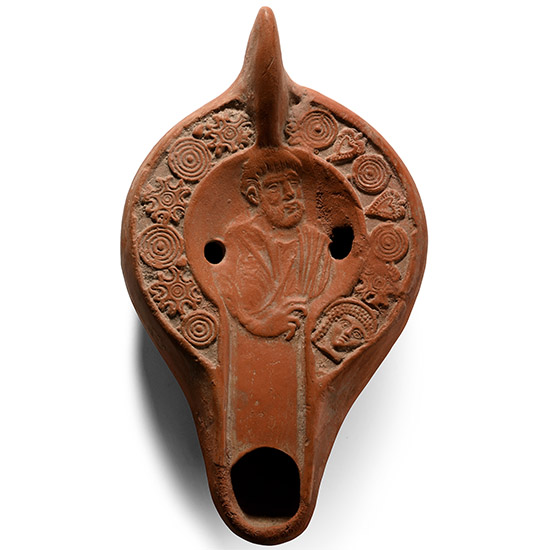
Late Roman Terracotta Oil Lamp with Bust
5th-6th century A.D.Estimate: £200 - 300 (+bp*)
Opening Bid: £5
With stub handle to the rear, wide rim with concentric rings and starbursts, the discus with male bust in three-quarter view wearing tunic and toga; a low basal ring. 150 grams, 14.2 cm
From the private collection of Peter Clayton, FCILIP, Dip, Arch, FSA, FRNS, Hemel Hempstead, Hertfordshire, UK; formed since the late 1950s. -
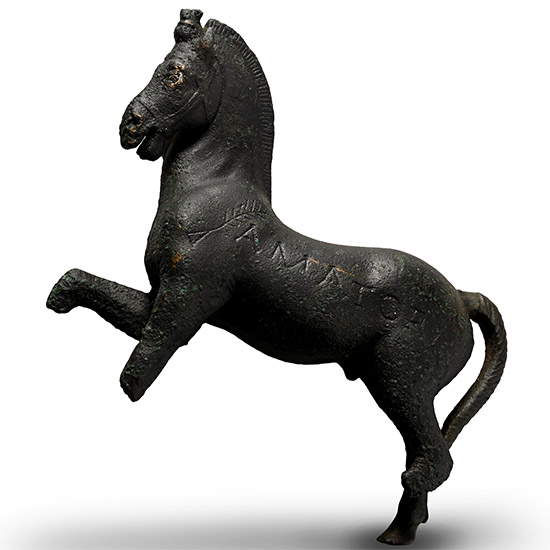
Large Roman 'AMATOR' Bronze Prancing Horse Statue
3rd century A.D.Estimate: £4,000 - 6,000 (+bp*)
Opening Bid: £2,000
Modelled in the round with an elongated neck, right foreleg raised, head turned slightly to the right with open mouth wearing a bridle, short mane and tail with ribbed engraved decoration, inscription 'AMATOR' next to a branch; lower parts of three legs absent. 376 grams, 11.1 cm
Found Norfolk, UK. Acquired on the UK art market in the 1980s. From an East Anglian private collection. Accompanied by an academic report by Dr Raffaele D'Amato. This lot has been checked against the Interpol Database of stolen works of art and is accompanied by search certificate no.13549-262542.
Romans frequently used 'amator' combined with a noun to show a deep dedication to a particular craft or lifestyle. On a freestanding bronze horse statue, it could be a self-dedication by the person who commissioned it. Alternatively, 'amator' could be the name of the person who owned the statue or a demonstration of dedication to a specific horse or craft of horse-breeding.
