
Loading, please wait...
LOT 0579
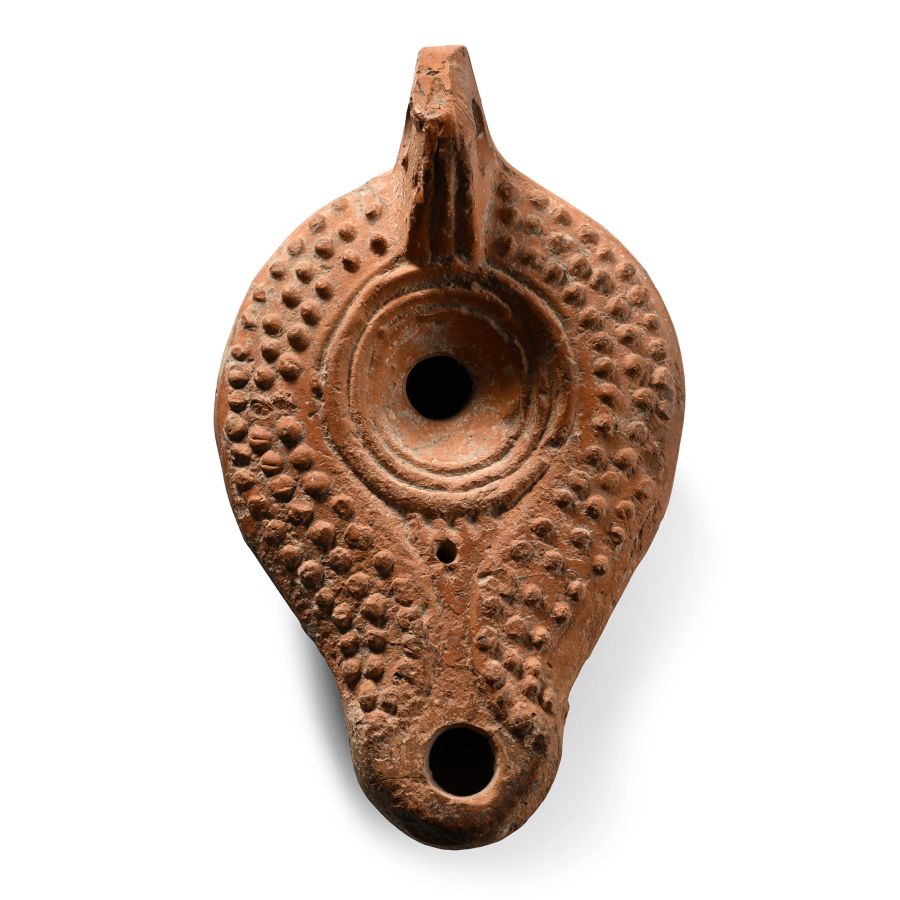
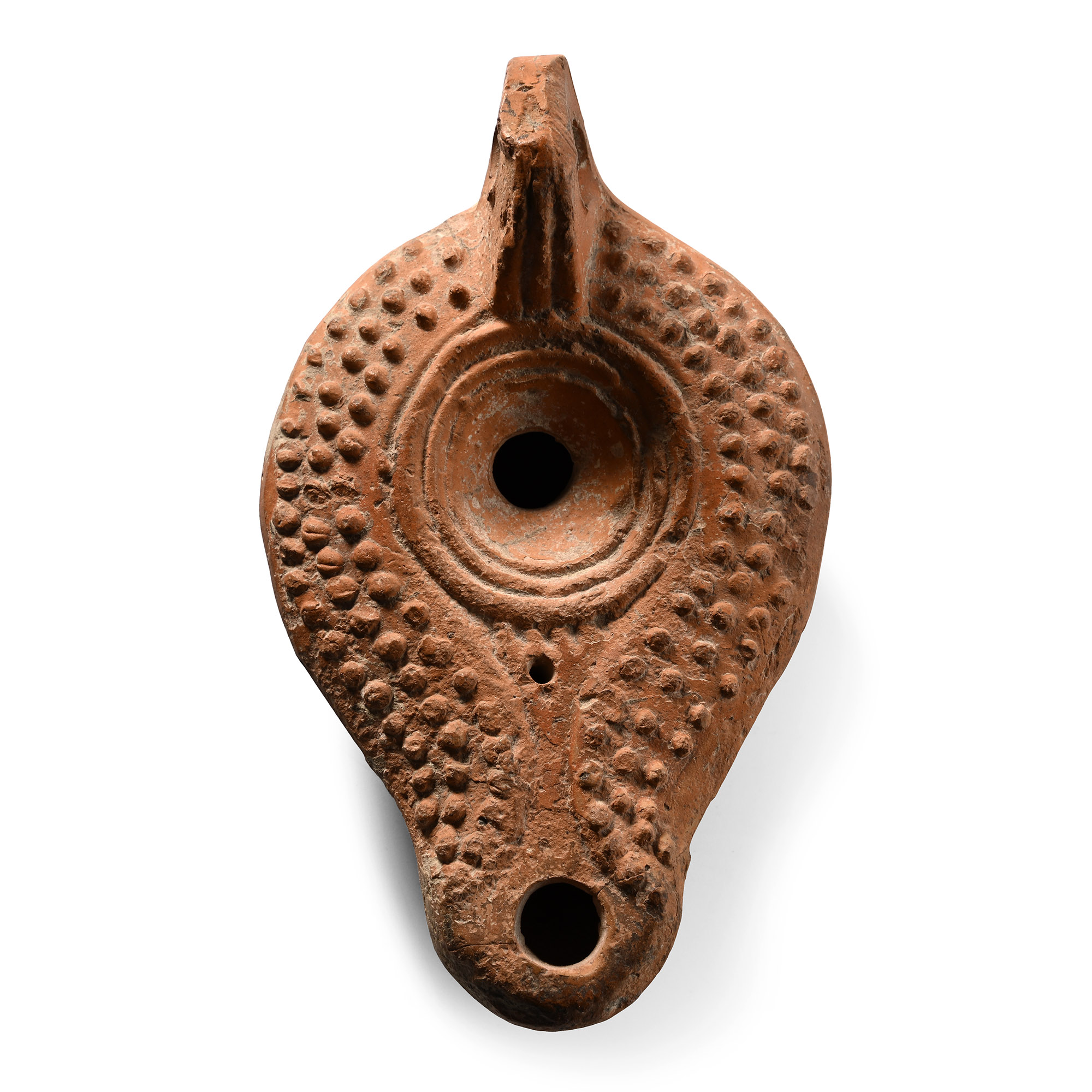
Late Roman Terracotta Oil Lamp with Stipple Decoration
5TH-6TH CENTURY A.D.
5 in. (137 grams, 12.6 cm).
Comprising a rounded nozzle with a low channel and a recessed discus with a filler hole, the body decorated with three rows of raised pellets, with a loop handle to the rear and a low basal ring. [No Reserve]
ProvenanceBy descent to the son of a late Hertfordshire gentleman collector, whose collection was formed from the 1960s.
CONDITIONTimeLine Auctions follows a vetting process to ensure the authenticity and legality of all items, reinforcing our commitment to integrity and responsible trading. Each antiquity, antique, and coin lot undergoes thorough examination by a vetting committee of at least ten external specialists, professional trade association members, scientists, and archaeologists: Our Vetting Process
AUCTIONS:
TimeLine is a leading auction house specialising in antiquities, ancient art, collectables, natural history, coins, medals, and books. Our auctions offer museums, collectors, historians, and enthusiasts the opportunity to acquire unique and historically significant pieces.
-
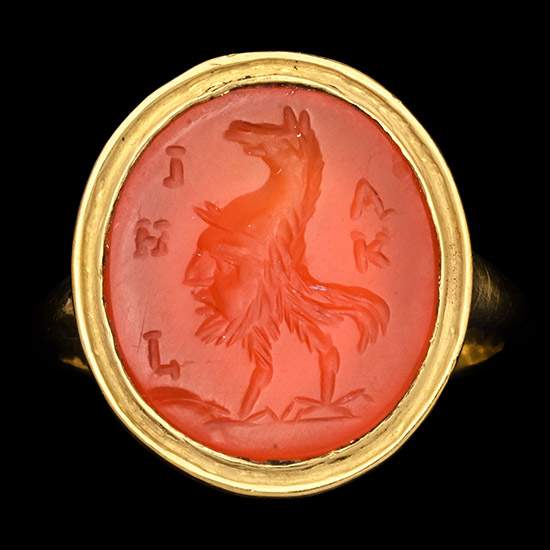
Roman Carnelian Gemstone with Gryllus in Gold Ring
2nd century A.D.Sold for (Inc. bp): £2,860
Translucent oval intaglio featuring a standing gryllus wearing a gryphon-headed helmet, flanked by the inscription 'KAΛHI' meaning 'to the beautiful one'; set in a later gold ring with a D-section hoop; supplied with a museum-quality impression. 9.29 grams, 23.83 mm overall, 20.32 x 17.88 mm internal diameter (approximate size British R 1/2, USA 8 3/4, Europe 19.38, Japan 18)
Acquired on the European art market. This lot has been checked against the Interpol Database of stolen works of art and is accompanied by search certificate number no.13322-257896.
Fanciful combinations of various human and animal heads, sometimes with the addition of other elements, are generally called grylloi. These fantastic devices were more than mere artists' fancies and were worn by the ancient Romans and others for their supposed efficacy in averting the evil eye. -
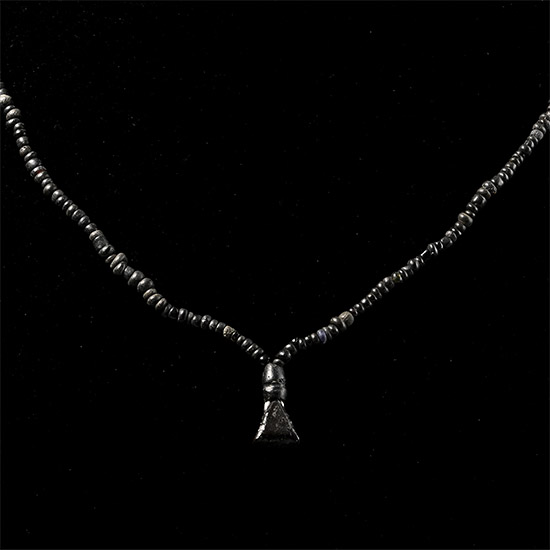
Roman Black Glass and Other Bead Necklace String
1st-4th century A.D. and laterSold for (Inc. bp): £46
Mainly composed of oblate and annular beads, the central feature with a tabular triangular bead; restrung. 7.5 grams, 44.5 cm
Acquired in the 1990s. Ex London, UK, collection. -
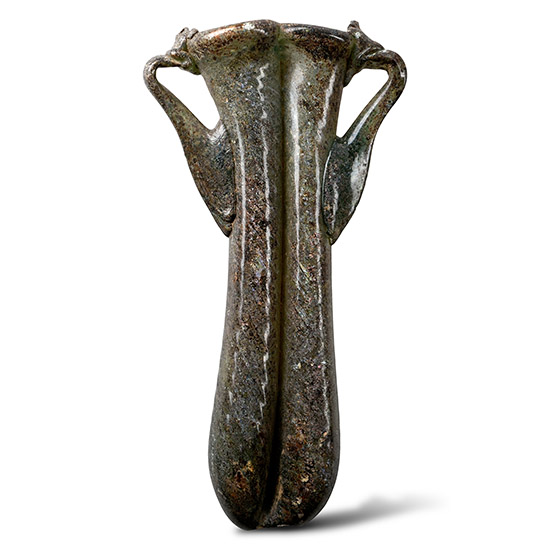
Roman Glass Double Unguentarium
4th century A.D.Sold for (Inc. bp): £234
Comprising two conjoined tapering tubular cells, with applied handles at the shoulder. 46.6 grams, 11.7 cm
Private collection, 1990s-early 2000s.
