
Loading, please wait...
LOT 0129
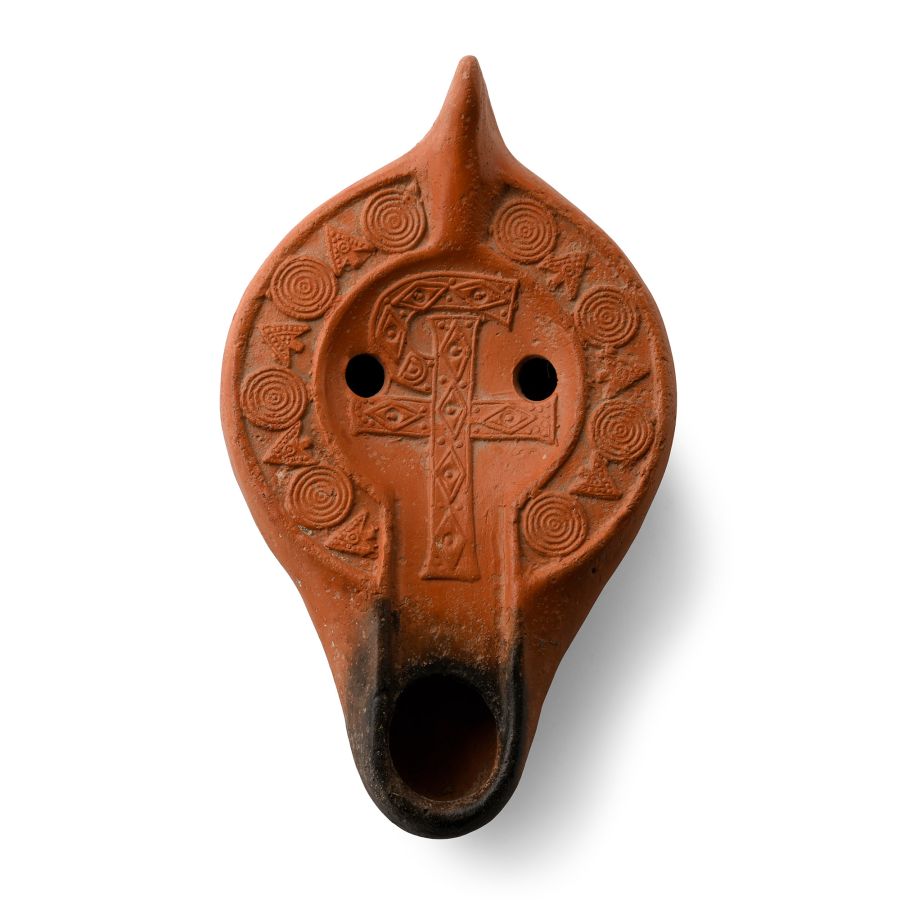
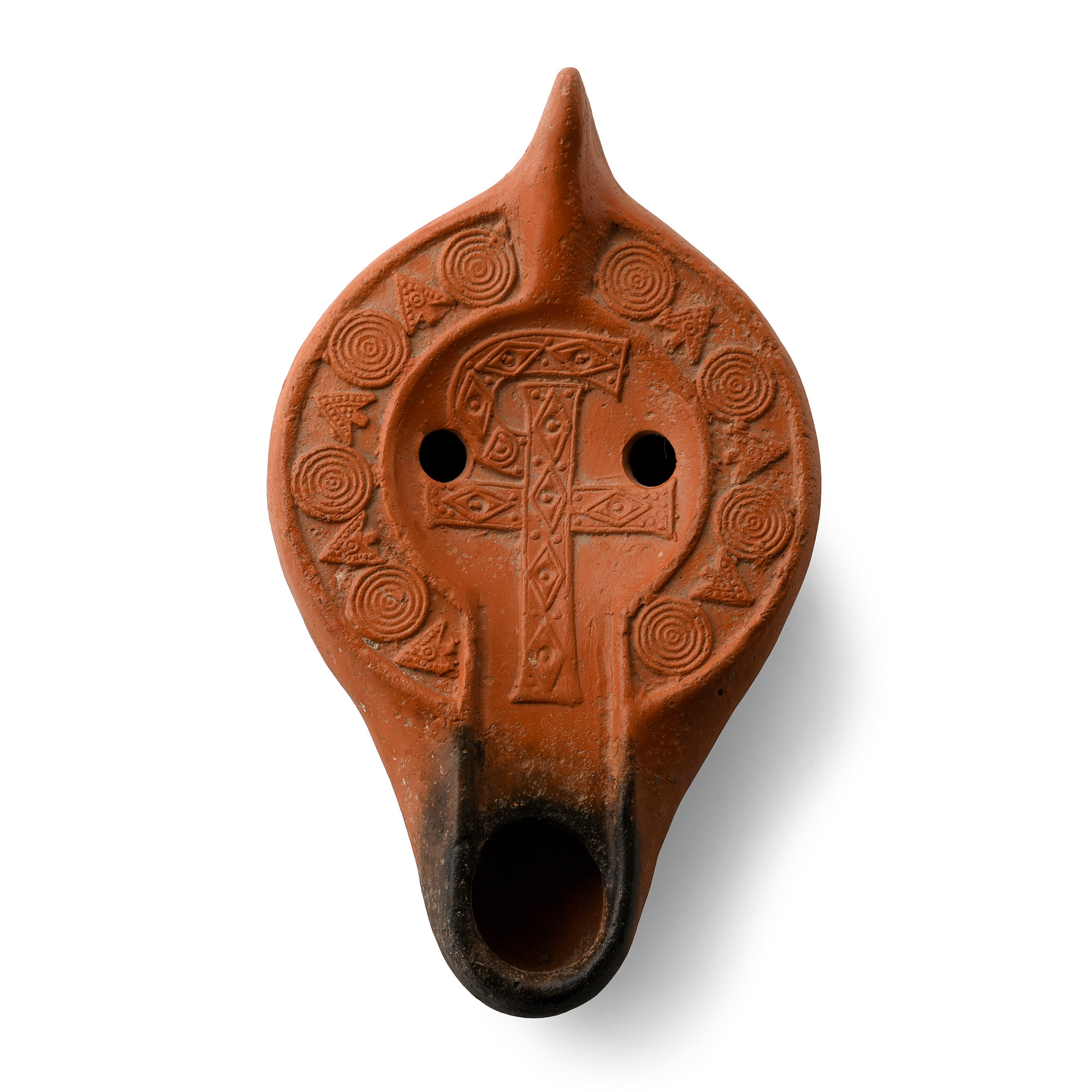
Late Roman Terracotta Lamp with Chi Rho
LATE 5TH-EARLY 6TH CENTURY A.D.
5 1/2 in. (173 grams, 13.9 cm).
Recessed discus with two filler holes flanking a low-relief letter rho with cruciform stave, lozenge detailing; band of concentric circles and arrowheads on the rim, lug handle and a low basal ring.
ProvenancePrivate collection, acquired in 1994; thence by descent.
LiteratureFor these lamps (Atlante type X; Hayes type II) cf. Bussière, J., Lindros Wohl, B., Ancient Lamps in the J. Paul Getty Museum, Malibu, 2017, p.352ff., for the type.
FootnotesThe so-called Christian lamps in Terra Sigillata Africana (TSA) have been classified by Hayes into two major types, I and II. Lamps of Hayes types I and II, initially produced in Tunisia only, were broadly exported, then imitated throughout the Roman Empire for three centuries; consequently, they are extremely numerous.
CONDITIONTimeLine Auctions follows a vetting process to ensure the authenticity and legality of all items, reinforcing our commitment to integrity and responsible trading. Each antiquity, antique, and coin lot undergoes thorough examination by a vetting committee of at least ten external specialists, professional trade association members, scientists, and archaeologists: Our Vetting Process
AUCTIONS:
TimeLine is a leading auction house specialising in antiquities, ancient art, collectables, natural history, coins, medals, and books. Our auctions offer museums, collectors, historians, and enthusiasts the opportunity to acquire unique and historically significant pieces.
-
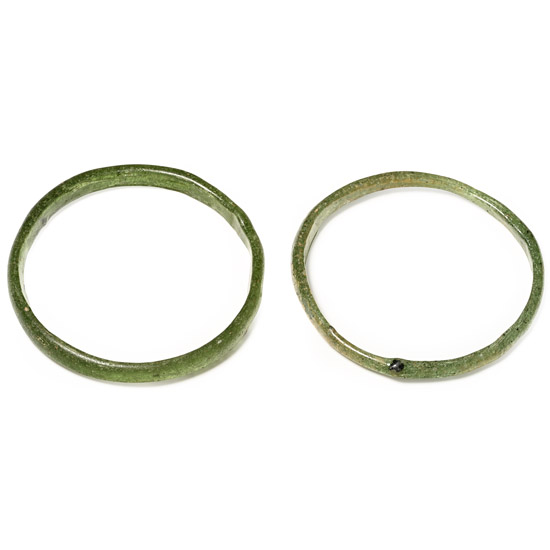
Roman Green Glass Bangle Pair
1st-4th century A.D.Sold for (Inc. bp): £99
Each plano-convex in section in green glass with striated surface. 23 grams total, 72-75 mm
Acquired on the UK art market in the late 20th century A.D. From the private collection of the late David King (1940-2024), Hoddesdon, Hertfordshire, UK. -
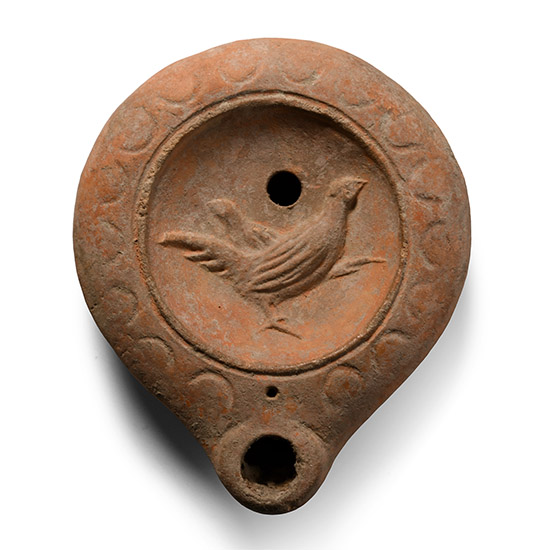
Roman Terracotta Oil Lamp with Cockerel
2nd-3rd century A.D.Sold for (Inc. bp): £442
Shallow body with impressed annulets framing the discus, a cockerel at the centre with its left leg raised and head extended upwards. 95 grams, 94 mm
Ex German art market, 2000s. Acquired from an EU collector living in London. From the collection of a Surrey, UK, gentleman. -
.jpg)
Roman Bronze Eagle Statuette
Eastern Empire, 3rd-4th century A.D.Sold for (Inc. bp): £104
Modelled in the round with a short tail and exaggerated beak; sockets to the eyes to accept glass inserts. 46 grams, 52 mm
From the collection of a gentleman, acquired on the London art market in the 1990s.
