
Loading, please wait...
LOT 0648
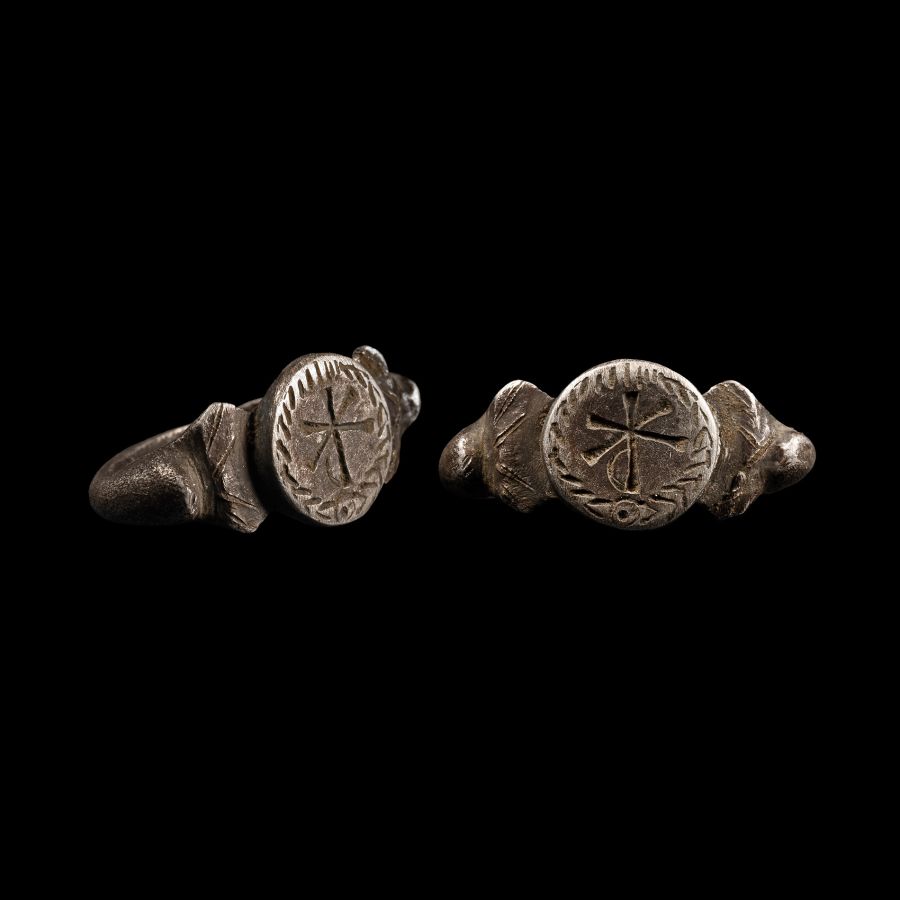
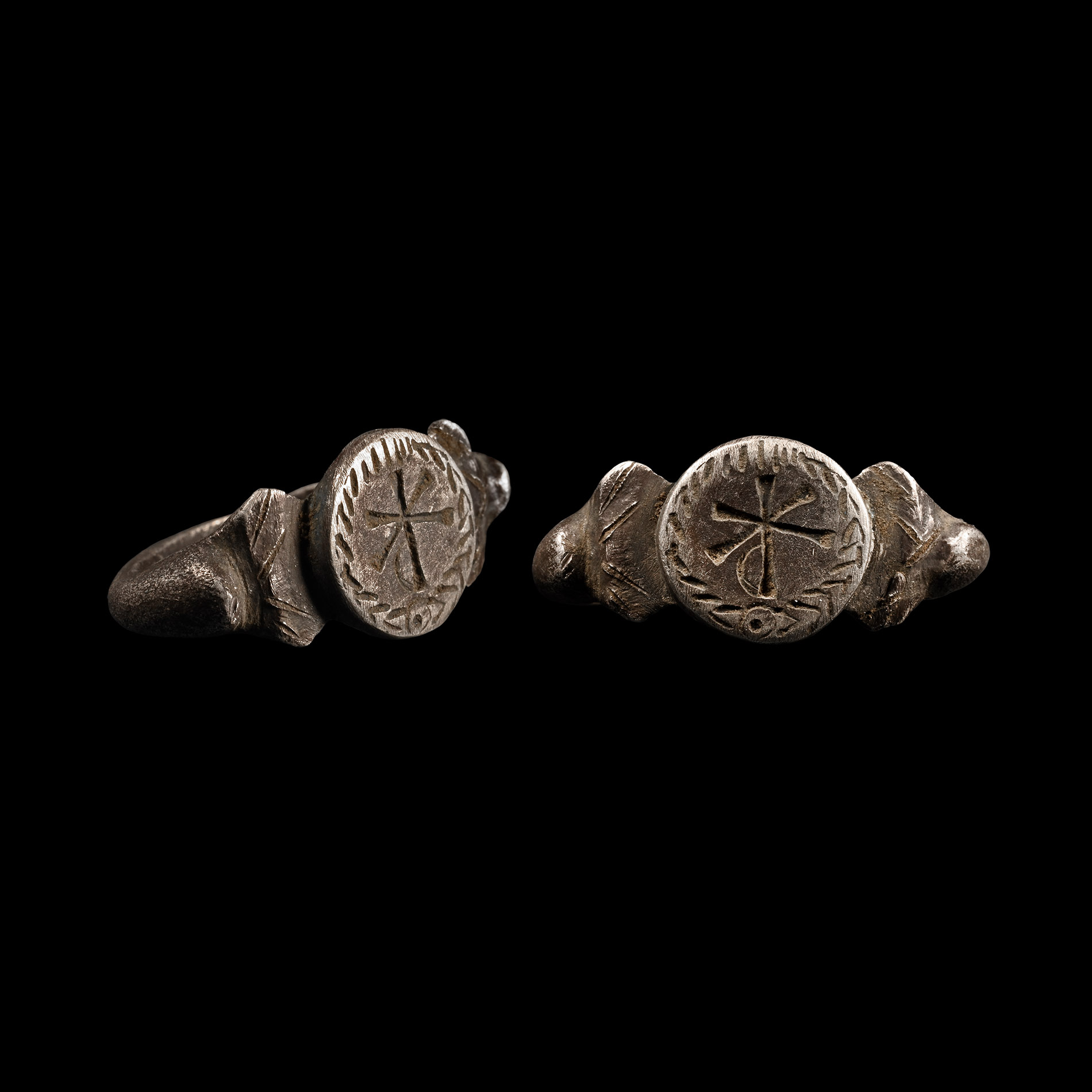
Late Roman Silver Ring with Cross
4TH-5TH CENTURY A.D.
1 in. (5.33 grams, 24.90 mm overall, 18.81 mm internal diameter (approximate size British J, USA 4 3/4, Europe 8.69, Japan 8)).
A silver ring with carinated hoop, shaped shoulders, discoid bezel engraved with a Chi Rho cross within a dashed roundel.
ProvenanceAcquired before 2000.
From the collection of a European gentleman living in the UK.
TimeLine Auctions follows a vetting process to ensure the authenticity and legality of all items, reinforcing our commitment to integrity and responsible trading. Each antiquity, antique, and coin lot undergoes thorough examination by a vetting committee of at least ten external specialists, professional trade association members, scientists, and archaeologists: Our Vetting Process
AUCTIONS:
TimeLine is a leading auction house specialising in antiquities, ancient art, collectables, natural history, coins, medals, and books. Our auctions offer museums, collectors, historians, and enthusiasts the opportunity to acquire unique and historically significant pieces.
-
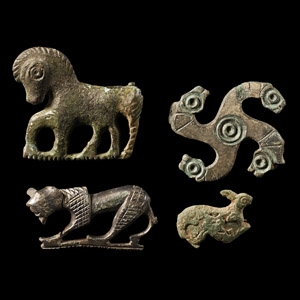
Roman Plate Brooch Collection
1st-4th century A.D.Sold for (Inc. bp): £338
A group of four bronze plate brooches: a horse walking left on a corded groundline, pin lug, pin and catchplate to reverse; a lioness in a stalking posture standing on a groundline, with incised face and mane detailing; pin lug to reverse; a hare bounding right with two recessed panels to the body also in the form of hares, pin lug, pin and catchplate to reverse; whorl brooch with central ring-and-dot ornament with four arms radiating outwards, each with a beast-head terminal, pin lug and catchplate to reverse. 41.3 grams total, 21-36 mm
Acquired before 2000. From the collection of a European gentleman living in the UK. -
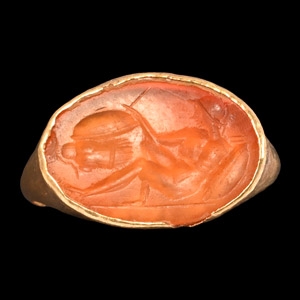
Roman Gold Ring with Warrior Gemstone
1st century B.C.Estimate: £1,000 - 1,400 (+bp*)
Opening Bid: £500
A hollow-formed gold finger ring with inset carnelian intaglio scene with reclining warrior surrounded by his arms and armour. 1.16 grams, 17.75 mm overall, 14.32 mm internal diameter (approximate size British F, USA 2 3/4, Europe 3.67, Japan 3)
with Bertolami Fine Art, 22 April 2022, lot 148. English private collection. -
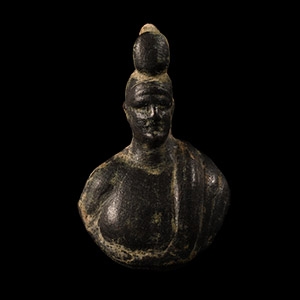
Roman Mount with Flavian Emperor
Late 1st century A.D.Estimate: £300 - 400 (+bp*)
Opening Bid: £150
A copper-alloy appliqué protome in the form of the Flavian Emperor Vespasian, frontal bust in half relief, wearing an exomis leaving his right shoulder uncovered, solid suspension ring to the top of the head. 52.3 grams, 60 mm
Acquired 1969-1999. London collection of the late Mr S.M., thence by descent.
The realism in the details is remarkable and was achieved through fine modelling. This protome was perhaps set in a medallion to decorate the lower terminal of a fulcrum, an S-shaped couch attachment almost always made of metal which was fastened to the side of a wooden headboard to serve as an elbow-rest on a couch (kline).
