
Loading, please wait...
LOT 0642
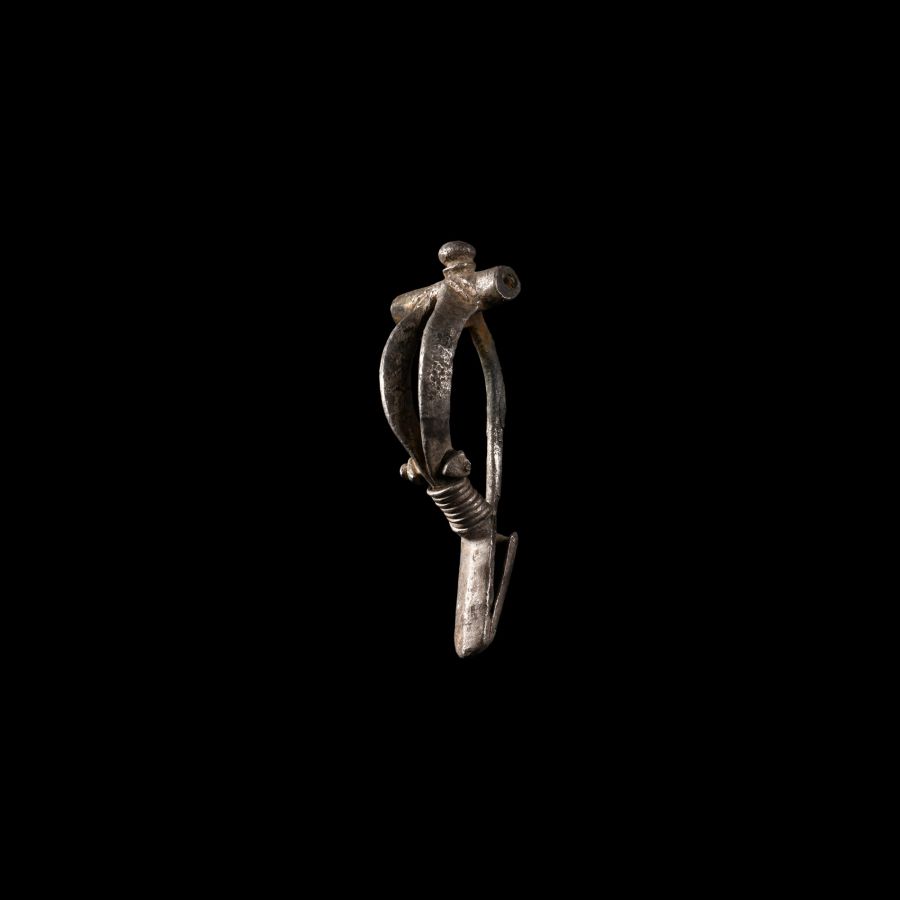
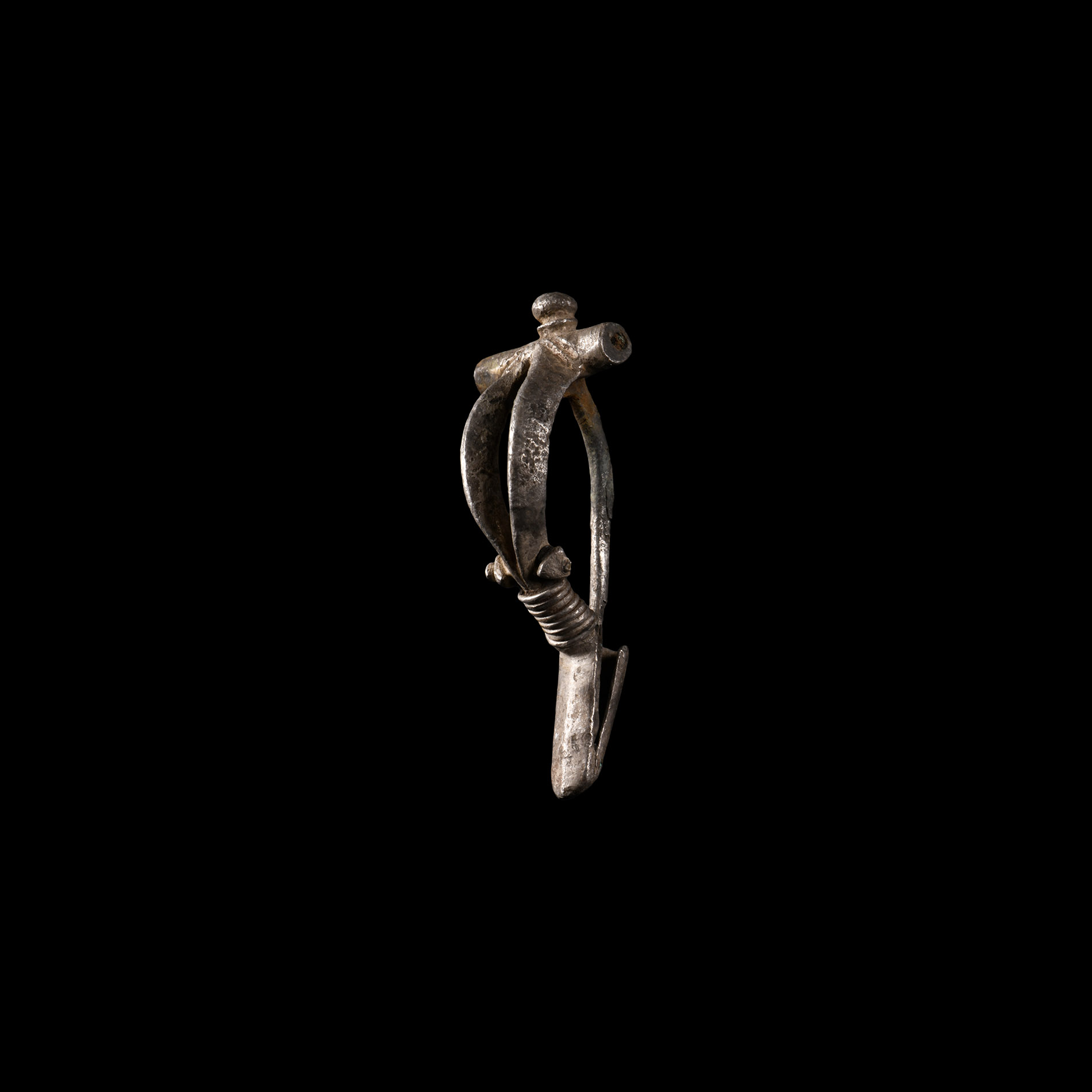
Late Roman Silver Double-Bow Brooch
3TH-4TH CENTURY A.D.
1 7/8 in. (9.33 grams, 48 mm).
A silver sprung-prin or proto-crossbow brooch, the two separate bows joining at the top of the foot and above the spring case. [No Reserve]
ProvenanceAcquired before 2000.
From the collection of a European gentleman living in the UK.
Cf. Behrens, G., ‘Zur Typologie und technik der provinzialrömischen Fibeln’ in Jahrb Römisch-Germanisches Zentralmuseum, 1954, pp.220-236, fig.2, no.6, from Worms.
FootnotesThese fibulae were the prototypes from which the crossbow brooch developed. Like crossbow brooch, the structure copmprises two essential parts: the upper part an arched bow and the lower part comprising a fairly long foot with a long and narrow catch-plate.
CONDITIONTimeLine Auctions follows a vetting process to ensure the authenticity and legality of all items, reinforcing our commitment to integrity and responsible trading. Each antiquity, antique, and coin lot undergoes thorough examination by a vetting committee of at least ten external specialists, professional trade association members, scientists, and archaeologists: Our Vetting Process
AUCTIONS:
TimeLine is a leading auction house specialising in antiquities, ancient art, collectables, natural history, coins, medals, and books. Our auctions offer museums, collectors, historians, and enthusiasts the opportunity to acquire unique and historically significant pieces.
-
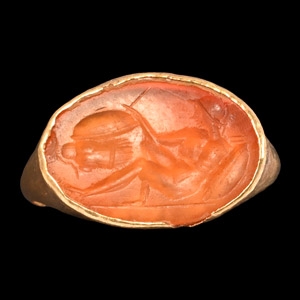
Roman Gold Ring with Warrior Gemstone
1st century B.C.Estimate: £1,000 - 1,400 (+bp*)
Opening Bid: £500
A hollow-formed gold finger ring with inset carnelian intaglio scene with reclining warrior surrounded by his arms and armour. 1.16 grams, 17.75 mm overall, 14.32 mm internal diameter (approximate size British F, USA 2 3/4, Europe 3.67, Japan 3)
with Bertolami Fine Art, 22 April 2022, lot 148. English private collection. -
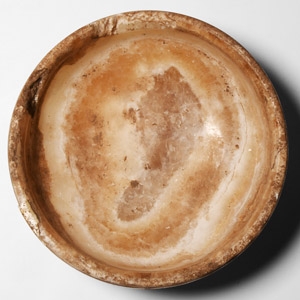
Roman Alabaster Bowl
1st-3rd century A.D.Estimate: £500 - 700 (‡+bp*)
Opening Bid: £250
A polished alabaster bowl with convex sidewall and copper-alloy facing to the foot; chipped. 263 grams, 98 mm
Acquired early 1990s. Ex private American collection; thence by descent. Private collection since 1998. -
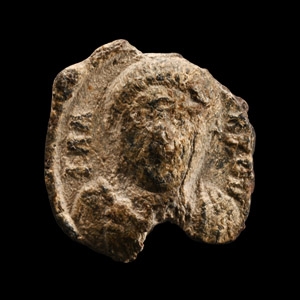
Roman Lead Sealing with Bust of an Emperor
3rd-4th century A.D.Sold for (Inc. bp): £20
A round lead seal with male portrait, wearing a military mantle fastened on the right side by a fibula, three Latin letters on the left side, possibly 'I A A'. 2.3 grams, 13 mm
Acquired in the 1970s. Important European collection.
Lead seals were used to seal documents. The sealing shows a facing male head with a bearded face, probably the portrait of a Roman emperor or a high imperial functionary, like a Dux or a Praefectus. The hairstyle is that of the Dominate, or late 3rd century AD.
