
Loading, please wait...
LOT 0956
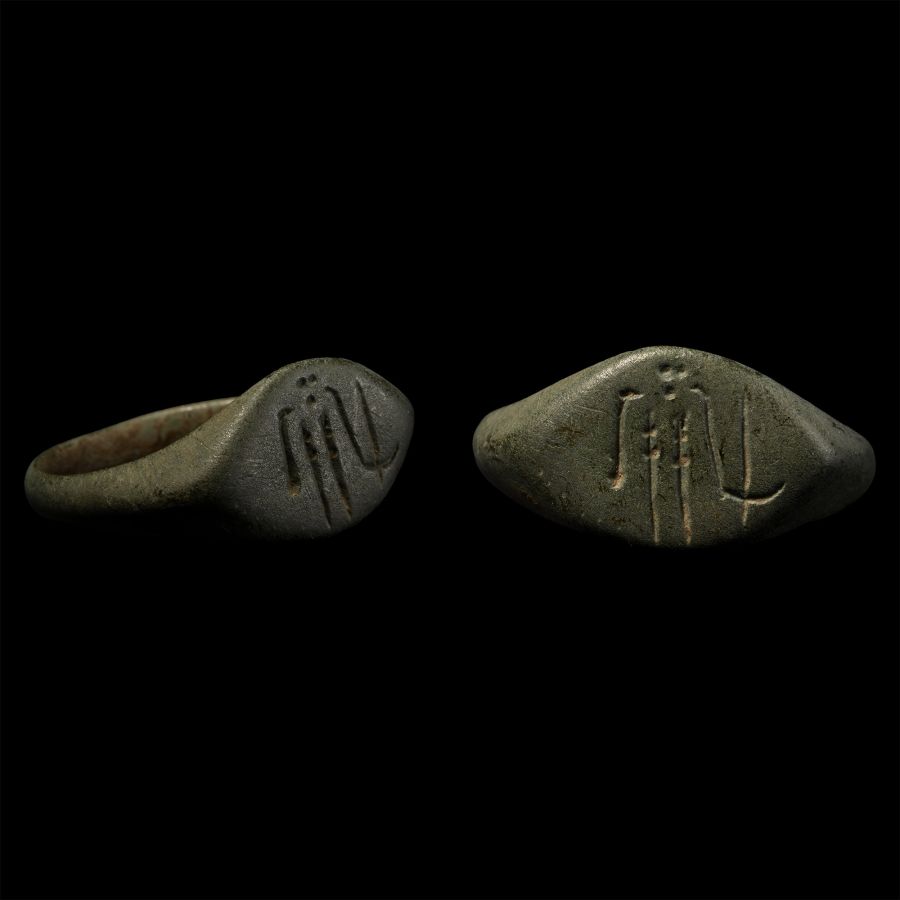
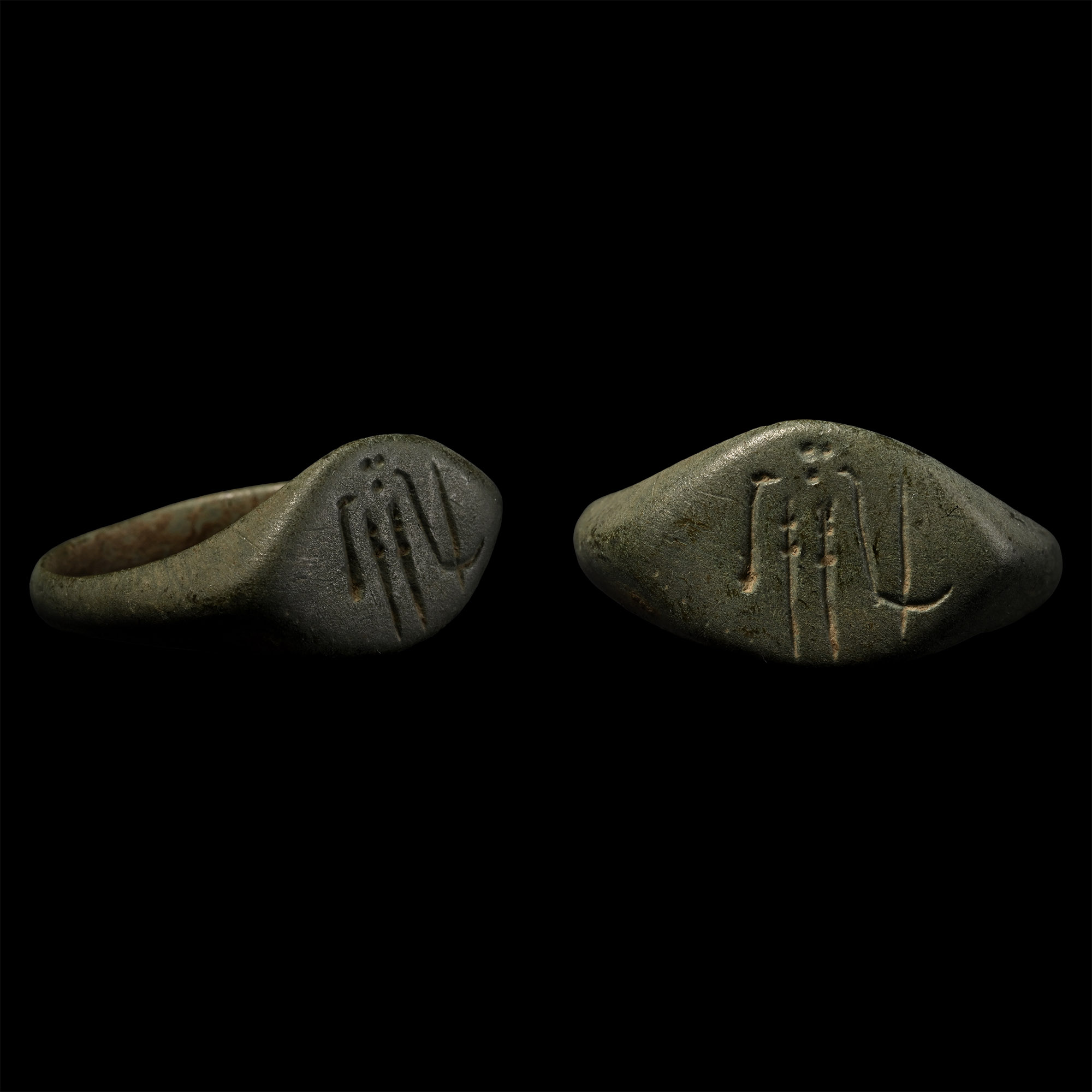
Late Roman Ring with Warrior
3RD CENTURY A.D.
1 in. (5.19 grams, 24.17 mm overall, 19.97 mm internal diameter (approximate size British U, USA 10, Europe 22.52, Japan 21)).
With a slender D-section hoop and a lentoid bezel with a stylised figure holding a spear. [No Reserve]
ProvenanceAcquired on the UK and EU art market before 2000.
From the private collection of a Surrey, UK, gentleman.
Cf. for the type Mills, N., Celtic and Roman Artefacts, Witham, 2007, p.104, fig.RB319 (M194).
FootnotesThis ring belongs to a particular category of Late Roman rings which have a thin and flat sectioned shank with variously decorated bezels, in this case, probably a reference to the iconography of the god Mars.
CONDITIONTimeLine Auctions follows a vetting process to ensure the authenticity and legality of all items, reinforcing our commitment to integrity and responsible trading. Each antiquity, antique, and coin lot undergoes thorough examination by a vetting committee of at least ten external specialists, professional trade association members, scientists, and archaeologists: Our Vetting Process
AUCTIONS:
TimeLine is a leading auction house specialising in antiquities, ancient art, collectables, natural history, coins, medals, and books. Our auctions offer museums, collectors, historians, and enthusiasts the opportunity to acquire unique and historically significant pieces.
-
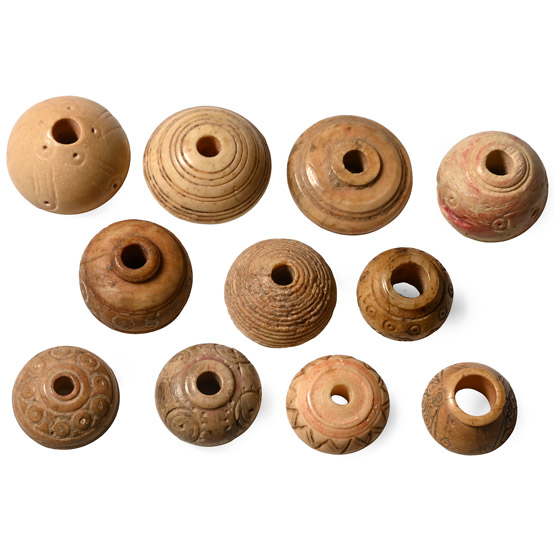
Roman Bone Spindle Whorl Collection
1st-4th century A.D.Sold for (Inc. bp): £182
Including plano-convex, ribbed and other types, some with ring-and-dot detailing. 45 grams total, 16-23 mm
From the collection of a Kent gentleman, formed from the 1990s. -
.jpg)
Late Roman Silver Ring with Nicolo Gemstone with Facing Busts and Chi Rho
4th-6th century A.D. or laterSold for (Inc. bp): £1,690
Broad hoop and shoulder with stepped bezel, inset nicolo with incuse image of two profile busts flanking a frond surmounted by a Christogram; supplied with a museum-quality impression. 12.79 grams, 25.74 mm overall, 17.61 x 14.24 mm internal diameter (approximate size British I 1/2, USA 4 1/2, Europe 8.07, Japan 7)
Private collection, England. -
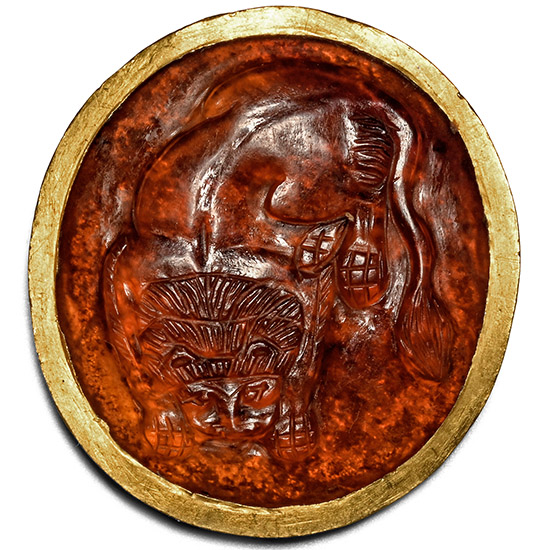
Roman Carnelian Cameo of a Crouching Lion in Gold Mount
Eastern Roman, 3rd-4th century A.D.Sold for (Inc. bp): £4,680
Discoid cell with flange rim, inset convex gemstone with reserved image of a lion resting with his head on his forepaws. 2.72 grams, 25 mm
Private English collection, formed between the late 1970s and early 1990s. Private collection, London, UK. This lot has been checked against the Interpol Database of stolen works of art and is accompanied by search certificate number no.13100-248677.
