
Loading, please wait...
LOT 0727
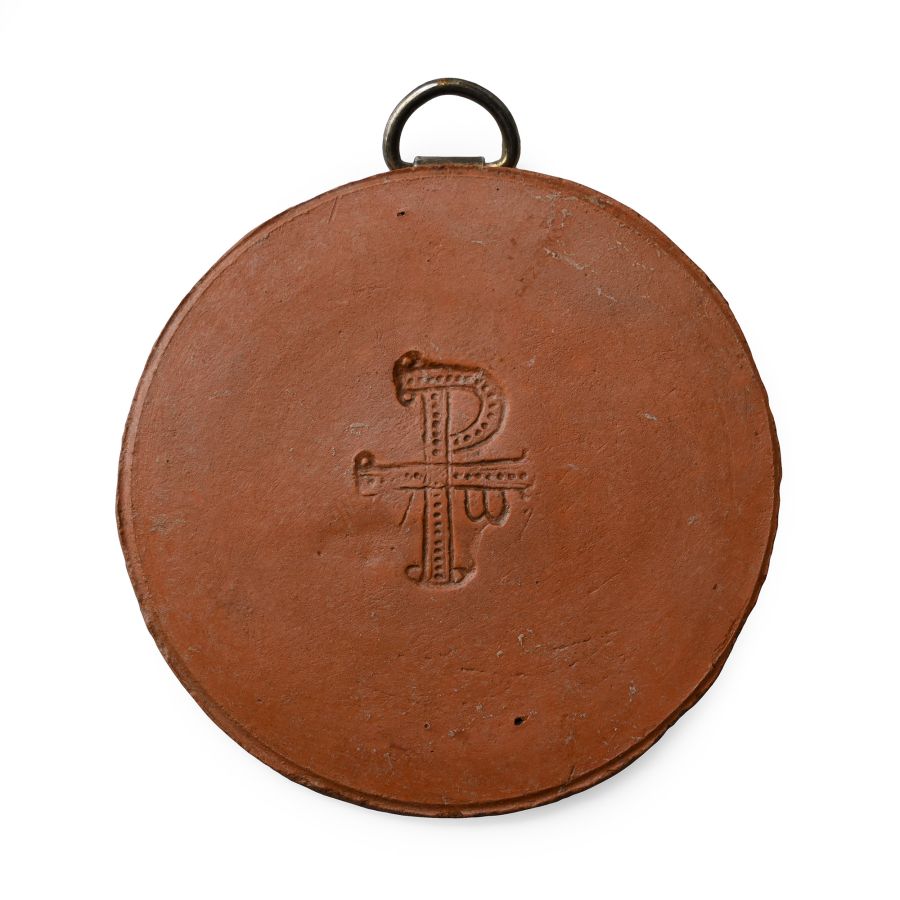
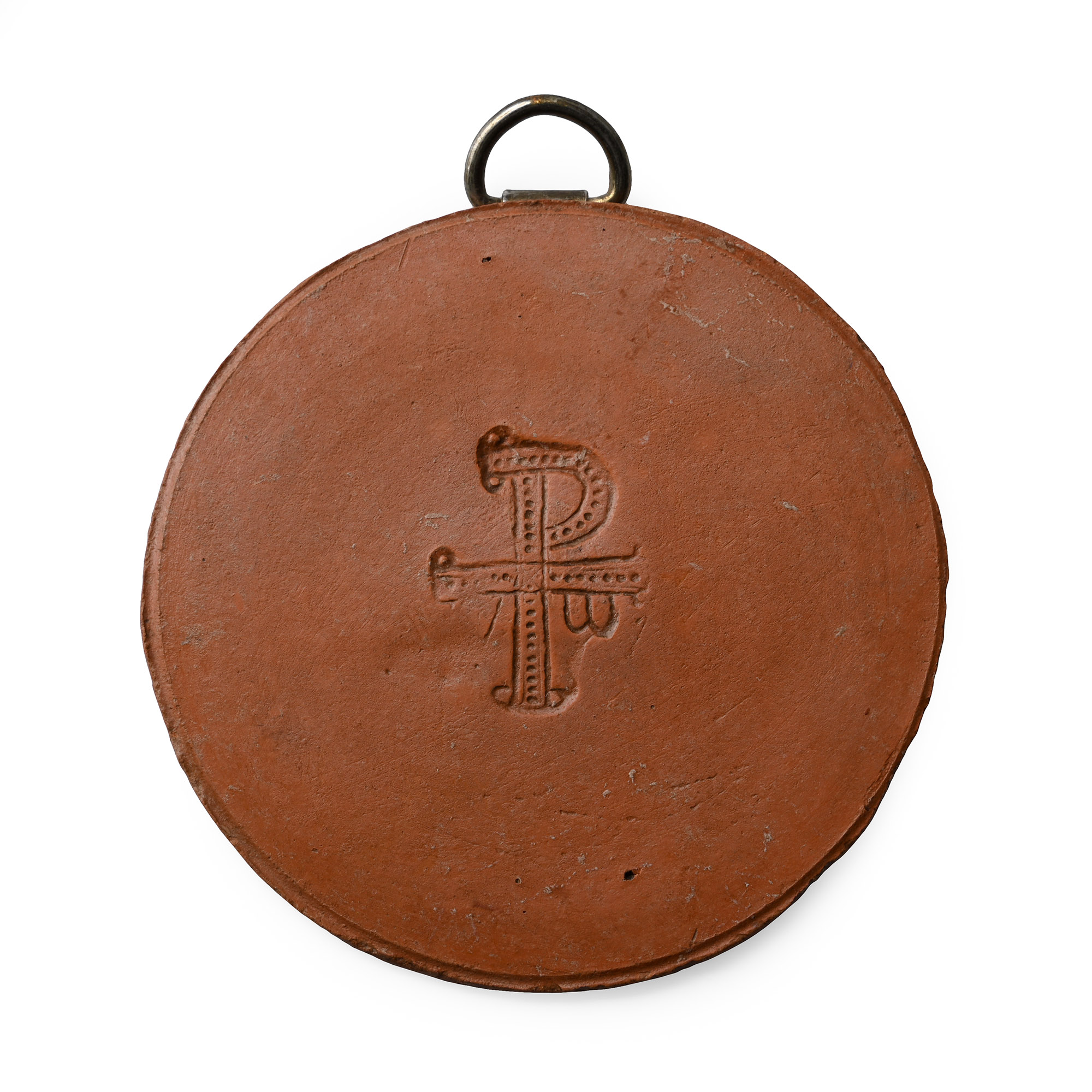
Late Roman Redware Plate Centre with Chi Rho
4TH CENTURY A.D.
4 in. (42.6 grams, 10 cm).
Circular base with impressed Chi Rho motif at the centre; modern suspension loop attached to the back. [No Reserve]
ProvenanceEx Alison Barker collection, London, UK (with her attachment).
CONDITIONTimeLine Auctions follows a vetting process to ensure the authenticity and legality of all items, reinforcing our commitment to integrity and responsible trading. Each antiquity, antique, and coin lot undergoes thorough examination by a vetting committee of at least ten external specialists, professional trade association members, scientists, and archaeologists: Our Vetting Process
AUCTIONS:
TimeLine is a leading auction house specialising in antiquities, ancient art, collectables, natural history, coins, medals, and books. Our auctions offer museums, collectors, historians, and enthusiasts the opportunity to acquire unique and historically significant pieces.
-
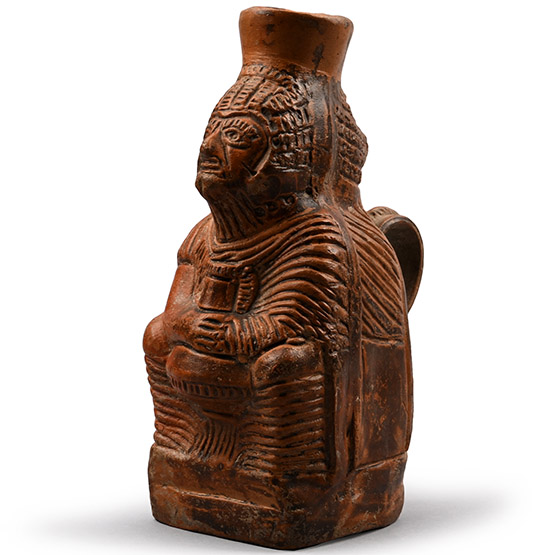
Roman Terracotta Jug of a Woman Holding a Flask
Mid 3rd century A.D.Sold for (Inc. bp): £936
Formed as a seated elderly woman with a short neck and handle with deep decorative ridges, stylised detailing to the face and hair tied in a bun, wine-jug (lagynos) gripped in her arms and between her knees, detailing to folds of garments; her pierced ears were likely once adorned with earrings. 345 grams, 17 cm
Acquired 1980s. Ex B Lee North collection. Accompanied by a positive thermoluminescence analysis report, sample no.N122e54 from Oxford Authentication. Accompanied by an academic report by Dr Raffaele D'Amato. This lot has been checked against the Interpol Database of stolen works of art and is accompanied by a search certificate no.11312-188595.
The motif of an old, drunken woman corresponds to a well-known Hellenistic repertoire. These jugs were produced in Africa and were widespread within the Empire. Recent analysis carried out on a North African bottle of the drink ‘anus’, found in an exceptional state of preservation in Valencia, concluded that the vessel contained a resin from the Pinocea family intended to waterproof the vessel, which probably contained vegetable oil. -
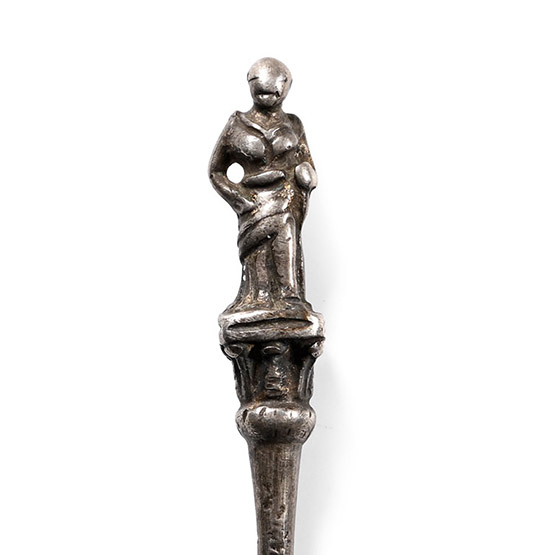
Roman Silver Pin with a Figure of a Standing Woman
2nd-3rd century A.D.Estimate: £400 - 600 (‡+bp*)
Opening Bid: £200
Comprising a tapering body with a Corinthian capital finial, a standing female figure atop the capital, dressed in long robes. 16 grams, 98 mm
Acquired in the 1980s. Private collection, Switzerland, thence by descent. Private collection, since the late 1990s.
The pin seems to belong to the group 18 of the Cool's classification. The treatment of the figures in these pins varies greatly, including both the very 'Celtic' looking face on a pin from Cirencester and a Graeco-Roman figure type of Venus standing on a Corinthian capital from London. This great diversity of treatments clearly suggests that these pins were the occasional products of a wide variety of workshops. -
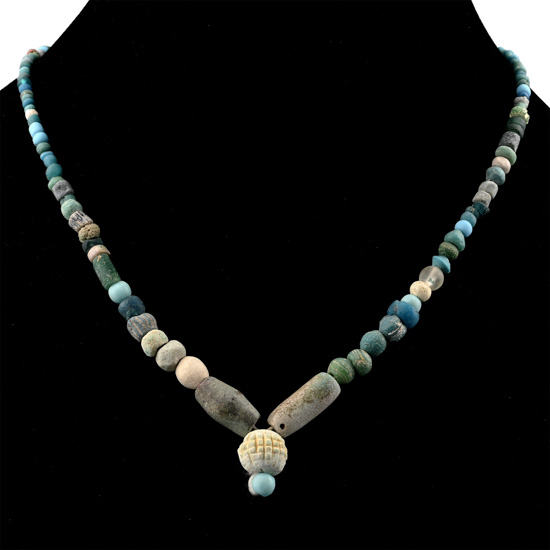
Roman Glass and Other Bead Necklace String
1st-4th century A.D. and laterSold for (Inc. bp): £72
A restrung designer necklace composed of graduated beads with larger beads as a central feature. 16.56 grams, 38.7 cm
From London, UK, gallery collection, 1990s.
