
Loading, please wait...
LOT 0831
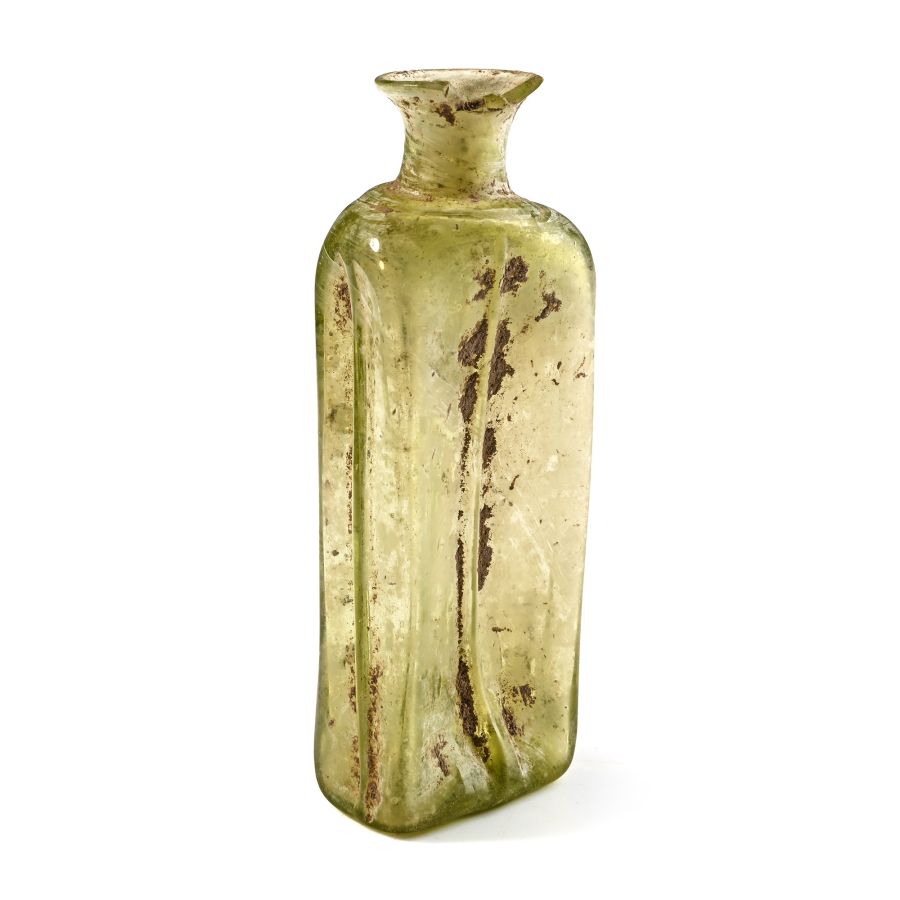
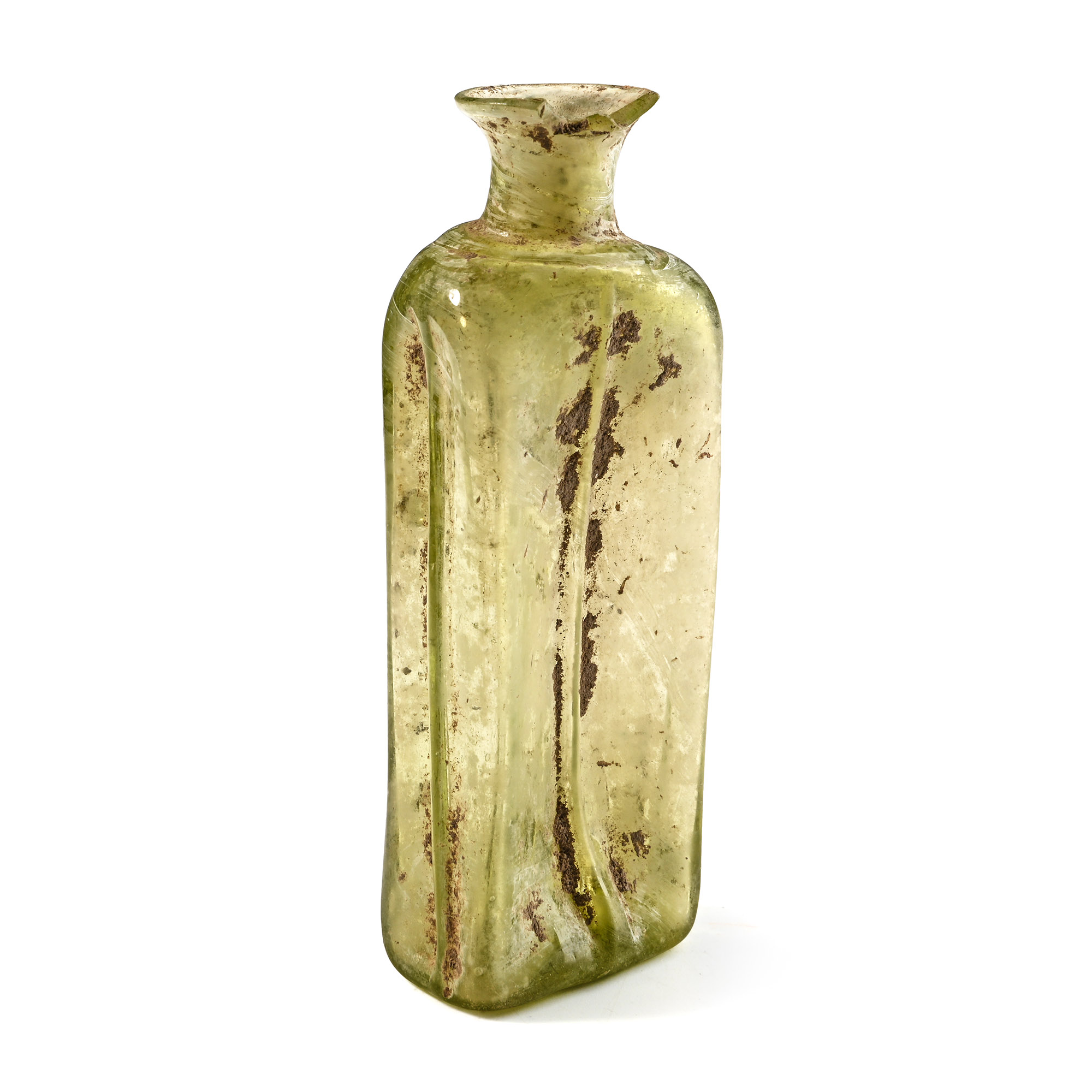
Late Roman Pale Green Glass Bottle
CIRCA 3RD-5TH CENTURY A.D.
3 7/8 in. (44.75 grams, 98 mm).
Rectangular body with raised rib on each side, short tubular neck with an everted rim. [No Reserve]
ProvenanceEx German art market, 2000s.
Acquired from an EU collector living in London.
From the collection of a Surrey, UK, gentleman.
TimeLine Auctions follows a vetting process to ensure the authenticity and legality of all items, reinforcing our commitment to integrity and responsible trading. Each antiquity, antique, and coin lot undergoes thorough examination by a vetting committee of at least ten external specialists, professional trade association members, scientists, and archaeologists: Our Vetting Process
AUCTIONS:
TimeLine is a leading auction house specialising in antiquities, ancient art, collectables, natural history, coins, medals, and books. Our auctions offer museums, collectors, historians, and enthusiasts the opportunity to acquire unique and historically significant pieces.
-
.jpg)
Roman Agate Cameo with Devouring Hound
Circa 1st-2nd century A.D.Sold for (Inc. bp): £468
Black-and-white cameo featuring a raised image of a hunting dog devouring a hare with its long ears pulled against the neck, detailed ribs and claws on the back paw. 0.81 grams, 15 mm
From the private collection of a European gentleman (1942-2024), formed since the 1970s. -
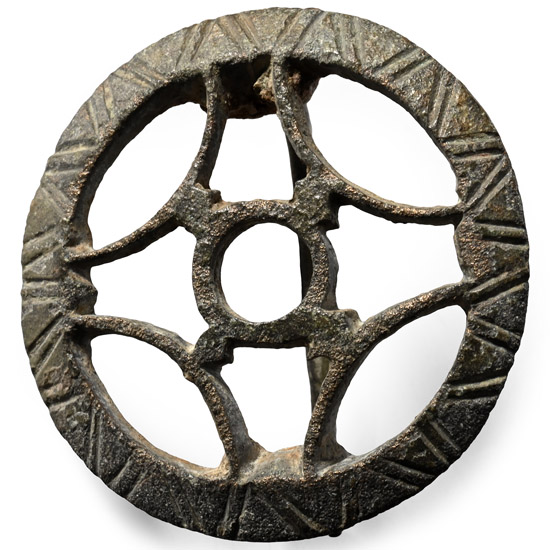
Roman Bronze Roundel Plate Brooch
3rd-4th century A.D.Sold for (Inc. bp): £33
Openwork brooch with incised chevrons on the rim, central roundel supported by four curving bars, pin and catch on the reverse. 11.6 grams, 34 mm
From the private coin collection of a West London, UK, gentleman, formed since the mid 1980s. -
.jpg)
Roman Marble Left Foot from a Sculpture
2nd century A.D.Sold for (Inc. bp): £3,900
Comprising an elegantly carved lower part of the calf and foot, a detailed rendering of the toes; the proportions suggesting that the subject was a child or a young woman; mounted on a custom-made display stand. 771 grams total, 15 cm high including stand
Nicolas Koutoulakis (1910-1996), thence by descent. Ex Galerie Dominique Thirion, Brussels, 1990s. Private collection of Mr K.A., France. with Kallos Gallery, London, UK. Accompanied by an academic report by Dr Raffaele D'Amato. This lot has been checked against the Interpol Database of stolen works of art and is accompanied by a search certificate number no.13010-246748.
The foot was a prominent feature on sculptures: more susceptible to weathering and the ravages of time than a head or a torso, the fragments that survive are often badly damaged. It is also possible that this piece belonged to a sculpture created via the acrolith technique, in which the sculptor focused his attention solely on the unclothed parts of the figure, which were made from a more valuable material than the rest of the piece.
