
Loading, please wait...


LOT 1277
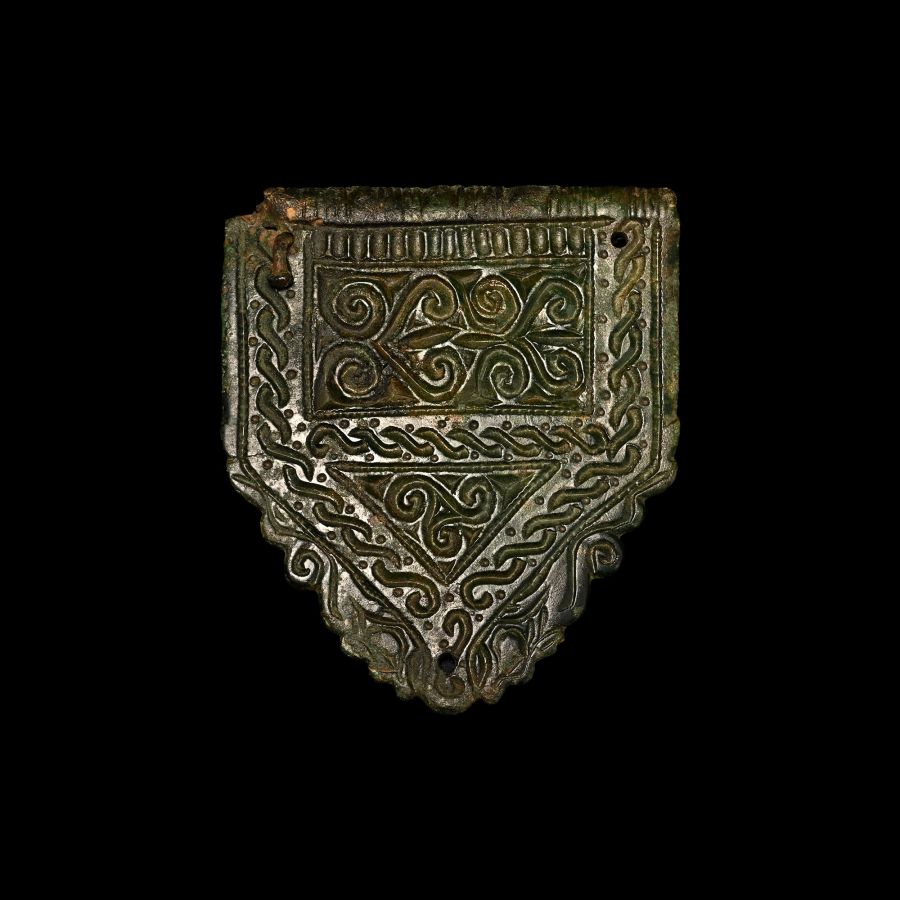
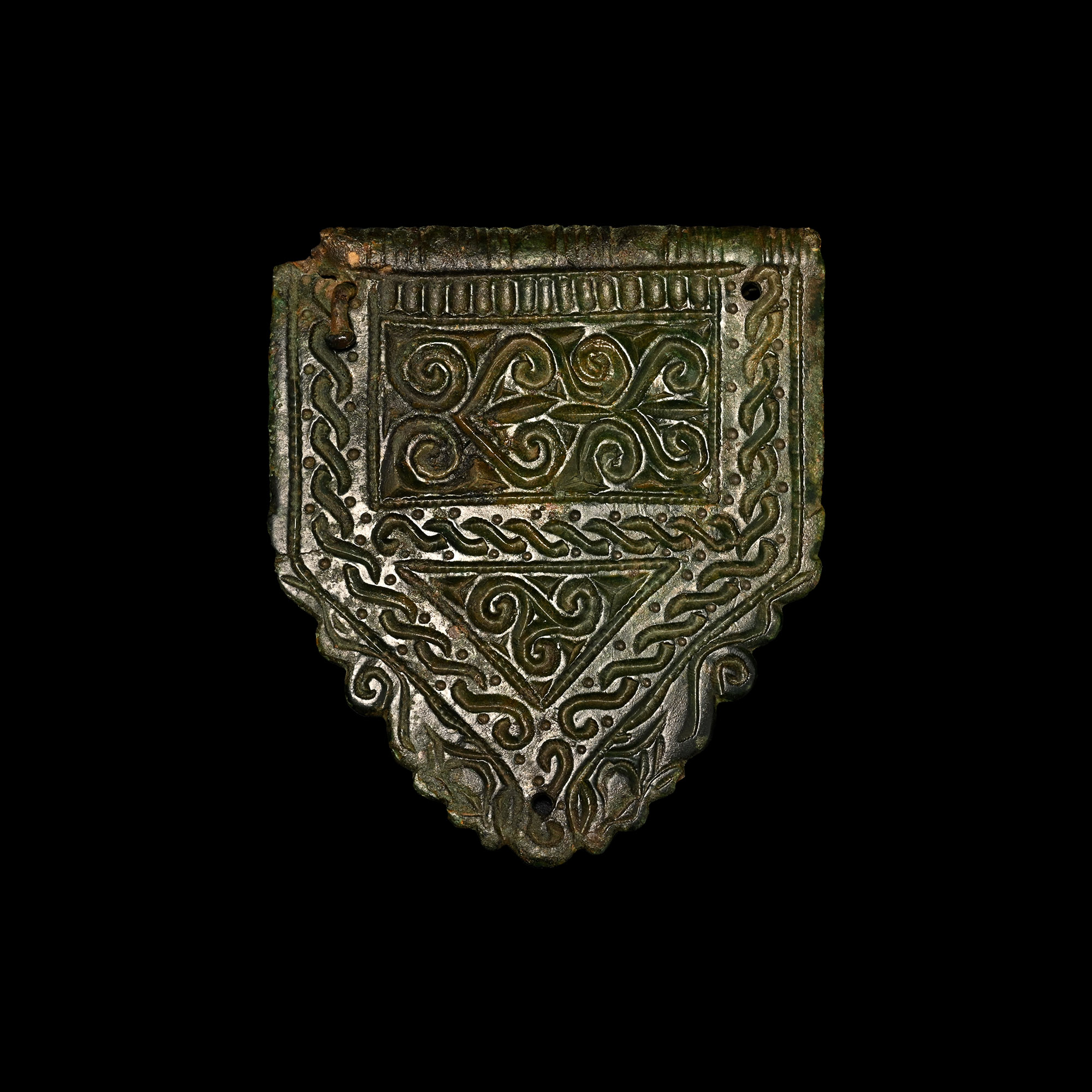
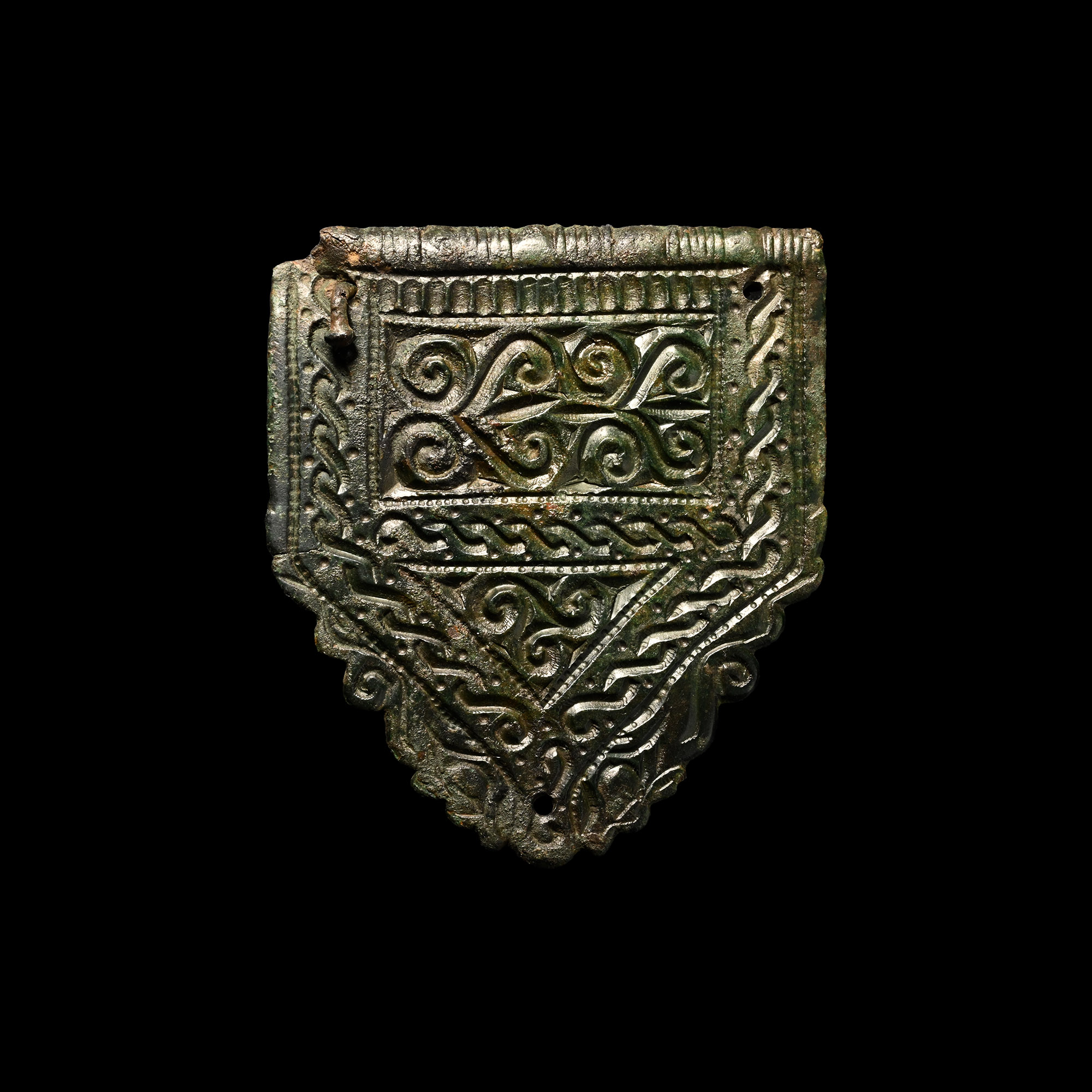
Late Roman Military Belt Buckle Plate
4TH-5TH CENTURY A.D.
2 7/8 in. (47 grams, 73 mm).
Buckle counter-plate decorated in late Roman military style with central panel of scrolls with guilloche bands and billeting, triangular extension to rear edge with triskele within a guilloche border and hare-and-hounds motif to the edge; rolled rim to the forward edge and three piercings, one with rivet in situ. [No Reserve]
ProvenanceAcquired in the 1980s.
Property of a Middlesex gentleman.
Cf. Bishop, M.C. & Coulston, J.C.N., Roman Military Equipment From the Punic Wars to the Fall of Rome, London, 1993, p.63-9; Pollington, S., Kerr, L. & Hammond, B., Wayland's Work: Anglo-Saxon Art, Myth & Material Culture from the 4th to 7th century, Ely, 2010, item 8.38.
CONDITIONTimeLine Auctions follows a vetting process to ensure the authenticity and legality of all items, reinforcing our commitment to integrity and responsible trading. Each antiquity, antique, and coin lot undergoes thorough examination by a vetting committee of at least ten external specialists, professional trade association members, scientists, and archaeologists: Our Vetting Process
AUCTIONS:
TimeLine is a leading auction house specialising in antiquities, ancient art, collectables, natural history, coins, medals, and books. Our auctions offer museums, collectors, historians, and enthusiasts the opportunity to acquire unique and historically significant pieces.
LOT 1277
Late Roman Military Belt Buckle Plate
Estimate £300 - 400€350 - 460 (for guidance only)$410 - 540 (for guidance only)
Opening Bid
£5 (EUR 6; USD 7) +BP*
-
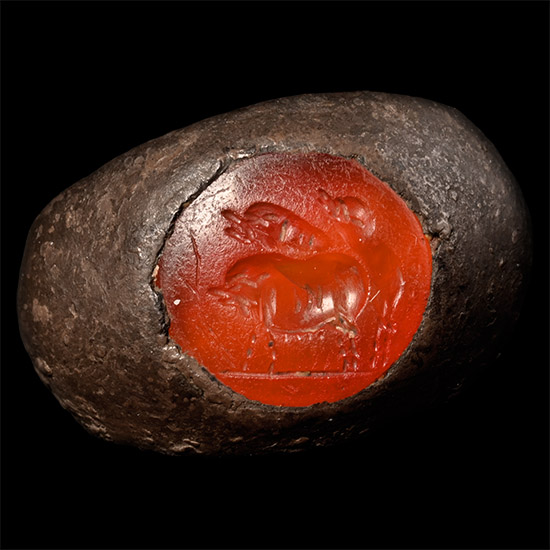
Roman Silver Ring with Carnelian Gemstone of Mating Pigs
2nd century A.D.Estimate: £2,000 - 3,000 (+bp*)
Opening Bid: £975
Comprising a keeled hoop with wide shoulders, set with a carnelian intaglio engraved with two copulating pigs with a third one shown on the sow's back. 9.44 grams, 24.60 mm overall, 19.12 x 13.03 mm internal diameter (approximate size British H 1/2, USA 4, Europe 6.81, Japan 6)
Private collection, London. This lot has been checked against the Interpol Database of stolen works of art and is accompanied by search certificate no.13532-263672.
The type belongs to variant 4, type 1, of the Roman iron rings in the Ruseva-Slokoska classification. Ellipsoid shield-bezels with conically cut gemstones are typical of the 2nd century A.D. -
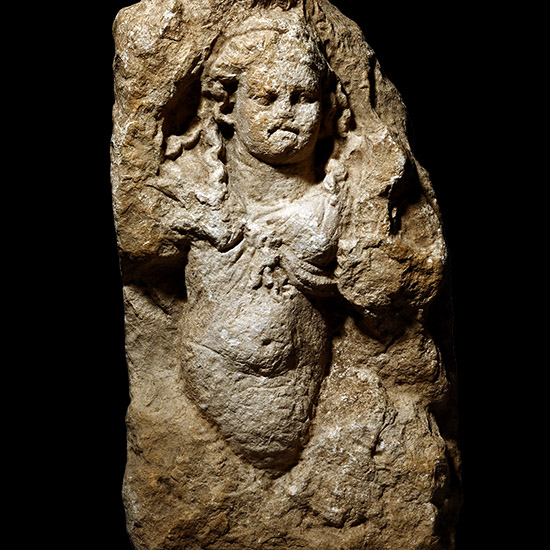
Large Roman Marble Relief with Triton
2nd century A.D.Estimate: £4,000 - 6,000 (‡+bp*)
Opening Bid: £2,000
Carved in high relief on a dressed block; with broad fleshy face and long strands of curly hair draped over the shoulders; mantle to the shoulders secured on the chest, narrow trunk with rounded abdomen and navel, fish-scale detailing to the lower body; left arm supporting a conch shell or cornucopia, right arm raised; mounted on a custom-made stand. 18.65 kg total, 49.5 cm including stand
with Archaeologia, Switzerland, before 1983. Ex private North American collection. London private collection, 2016. -
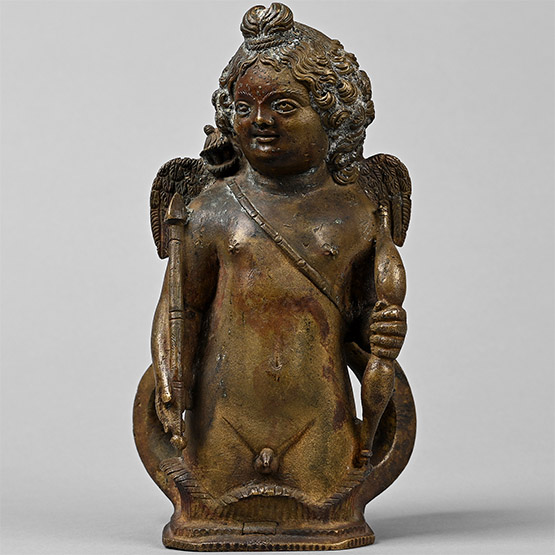
Large Roman Bronze Chariot or Lectica Mount of Cupid
2nd-3rd century A.D.Estimate: £20,000 - 30,000 (‡+bp*)
Opening Bid: £10,000
Modelled in the round hollow-formed figure of Cupid standing nude emerging from a flower, with dressed curly hair bound into a forelock, small dorsal wings on the shoulders, a recurved bow in his left hand and an arrow supported on his right forearm; looped handles to the rear and stepped base below. 1.79 kg, 19.9 cm
From the collection of J-Ph, Mariaud de Serres, Paris, France, 1990s. Piasa Auctions, 17-18 March 2003, no.584. Private collection, Europe. Accompanied by an academic report by Dr Raffaele D'Amato. This lot has been checked against the Interpol Database of stolen works of art and is accompanied by search certificate no.13215-249253. Accompanied by a copy of French passport no.237039.
These prismatic fittings covered the ends of the wooden beams, reinforcing the floor of the undercarriage on both long sides. The heavy and ornate nature of these accessories suggests they were originally attached to a more substantial vehicle such as a pilentum (used to transport aristocrats on state occasions), a carruca (for transporting emperors and aristocratic matrons) or even a thensa (a ceremonial chariot used to transport deities to the imperial games) or a lectica (portable bed for patricii and matronae). Contemporary sources describe ornate inlay, rare woods and metalwork incorporated into these vehicles, and, probably, the present fitting would originally have been gilded.
