
Loading, please wait...
LOT 1021
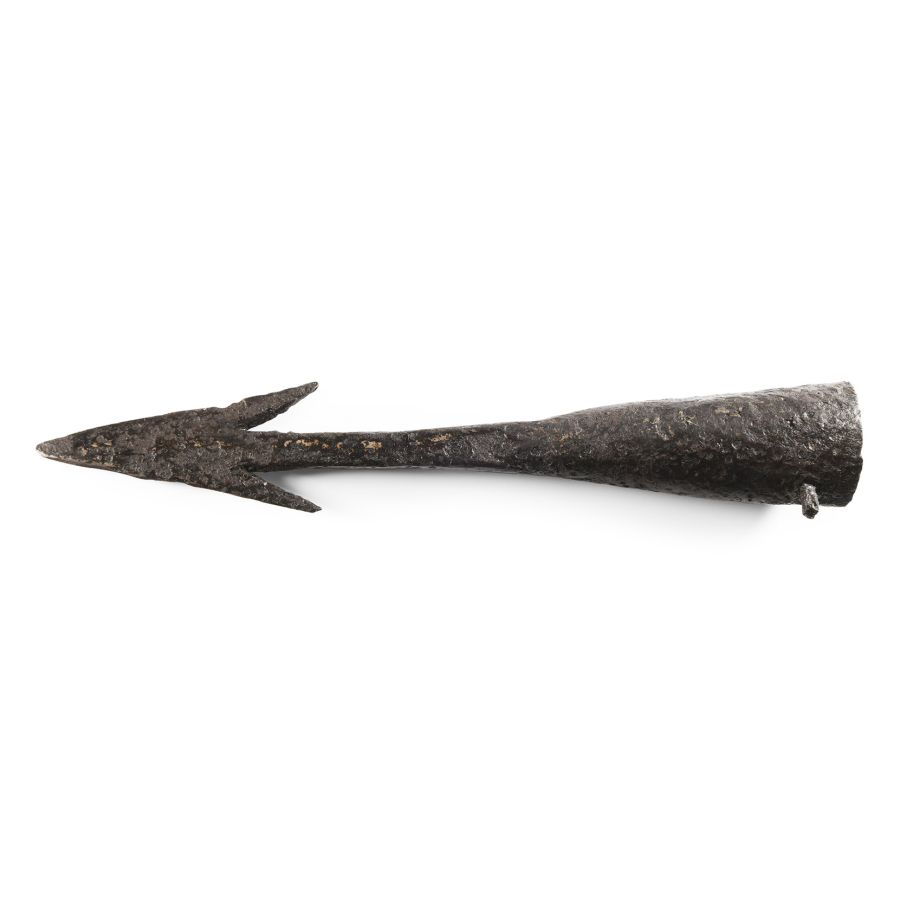
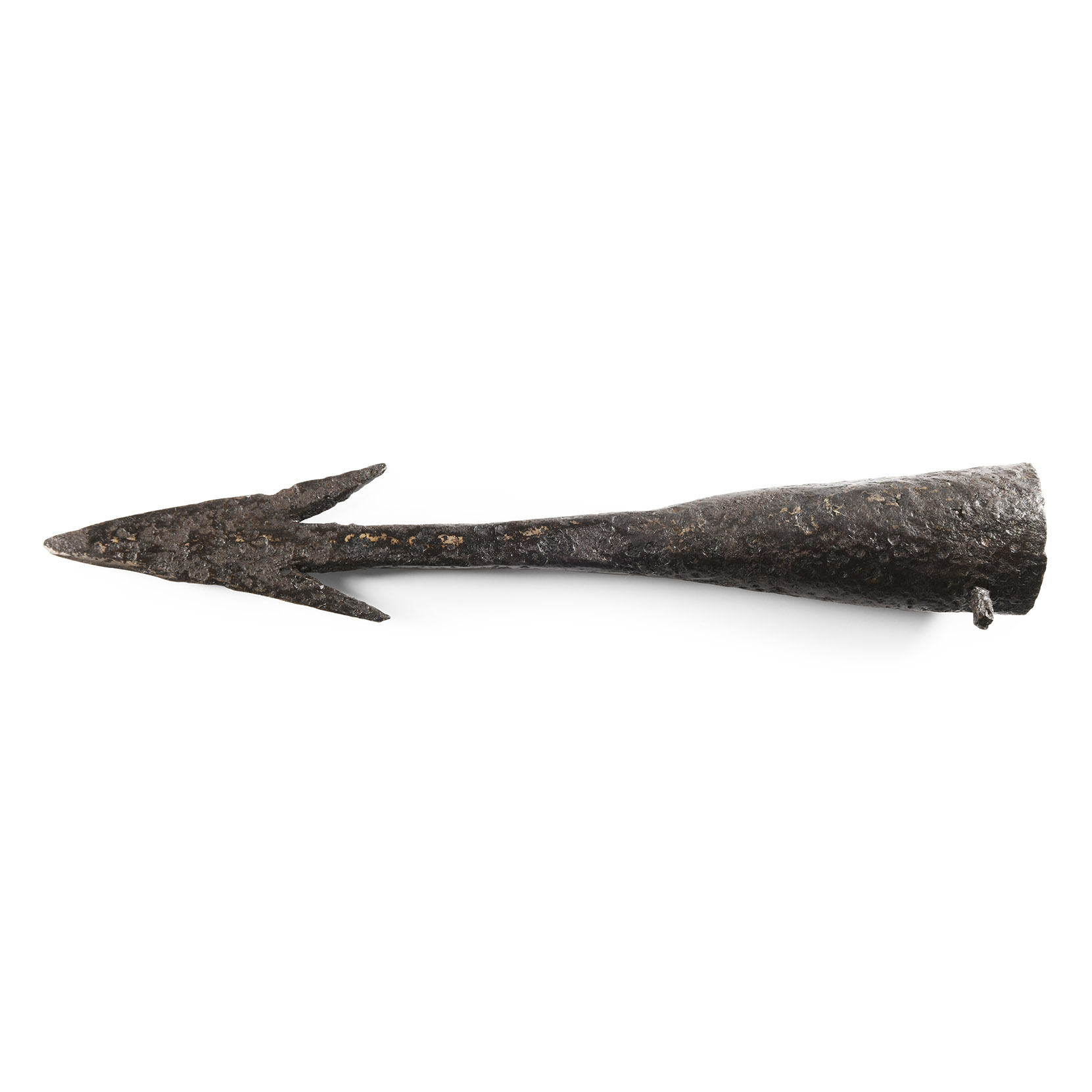
Late Roman Iron Socketted Javelin
4TH-6TH CENTURY A.D.
9 1/4 in. (213 grams, 23.5 cm).
Fitted with a triangular blade with two barbs, expanding tubular socket. [No Reserve]
ProvenanceFrom the private collection of a London gentleman, from his grandfather's collection formed before the early 1970s.
LiteratureCf. Bemmann, G. & Bemmann, J., Der Opferplatz von Nydam, Die Funde aus der älteren Grabungen, Nydam I und Nydam II, Neumünster, 1998, no.1063, pl.116, for similar.
FootnotesSince the third century, Roman soldiers increasingly started to use long shafted socketed weapons with barbed heads. These weapons were called bebrae by Vegetius, according to whom they were able to cut heads with a single stroke. They first appeared in Northern Europe, as shown by numerous finds of barbed heads in graves and peat-bogs, especially Danish, and were introduced to the Roman army by Germanic mercenaries.
CONDITIONTimeLine Auctions follows a vetting process to ensure the authenticity and legality of all items, reinforcing our commitment to integrity and responsible trading. Each antiquity, antique, and coin lot undergoes thorough examination by a vetting committee of at least ten external specialists, professional trade association members, scientists, and archaeologists: Our Vetting Process
AUCTIONS:
TimeLine is a leading auction house specialising in antiquities, ancient art, collectables, natural history, coins, medals, and books. Our auctions offer museums, collectors, historians, and enthusiasts the opportunity to acquire unique and historically significant pieces.
-
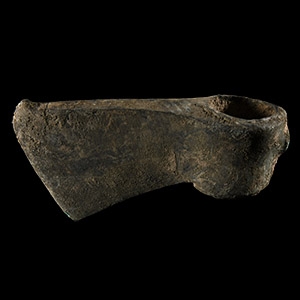
Heavy Western Asiatic Bronze Axehead
Late 3rd millennium B.C.Estimate: £100 - 140 (+bp*)
Opening Bid: £50
With swept blade, large socket with shallow raised circumferential rib and a vertical rib to the rear. 741 grams, 14.5 cm
Acquired 1980-2015. Ex Abelita family collection.
In the middle of the 3rd millennium B.C., the most widespread types of axes were those made for splitting and those for cutting. In the last third of this millennium there emerged a sharp differentiation between such axes. Such a sharp division by function should be associated with the influence of the Syro-Palestinian tradition. Such differentiation, in the absence of some multifunctional forms can be observed from the end of the 4th millennium B.C. and during the 3rd millennium B.C. -
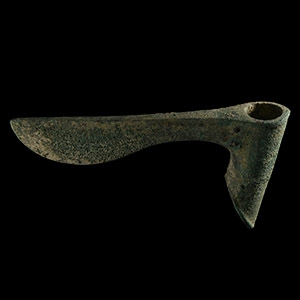
Luristan Sar-e Tabar Socketted Axehead
2nd millennium B.C.Sold for (Inc. bp): £208
With plain cylindrical socket and staff, off-set at the base, of simple undecorated shape with a long lentoid-section D-shaped blade with scooped profile. 465 grams, 18 cm
Earlier 20th century collection. Mayfair, London gallery, UK. Dr D.G. collection, 1990s-2019.
Many examples of bronze axeheads are attributed to the Luristan culture and various shapes have been discussed by different scholars. Moorey (1971, pp.39-41) shows similar axeheads, stating that the texts executed on some specimens have shown them made of arsenical bronze, and attributes them to the late 3rd millennium B.C. or 2nd millennium B.C., period in which this alloy was used abundantly. -
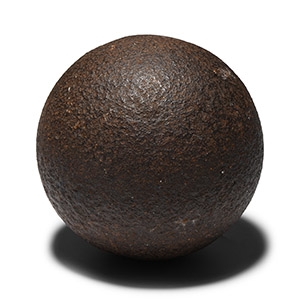
English Civil War Iron Cannon Ball
1642-1651 A.D.Sold for (Inc. bp): £182
Possibly made for a naval long gun, a 'long nine'. 4.3 kg, 98 mm wide
Found in a churchyard in Derbyshire, UK, before 1950. Acquired from the son of the clergyman that found it, in 2004. Property of a Nottinghamshire gentleman.
