
Loading, please wait...
LOT 1529
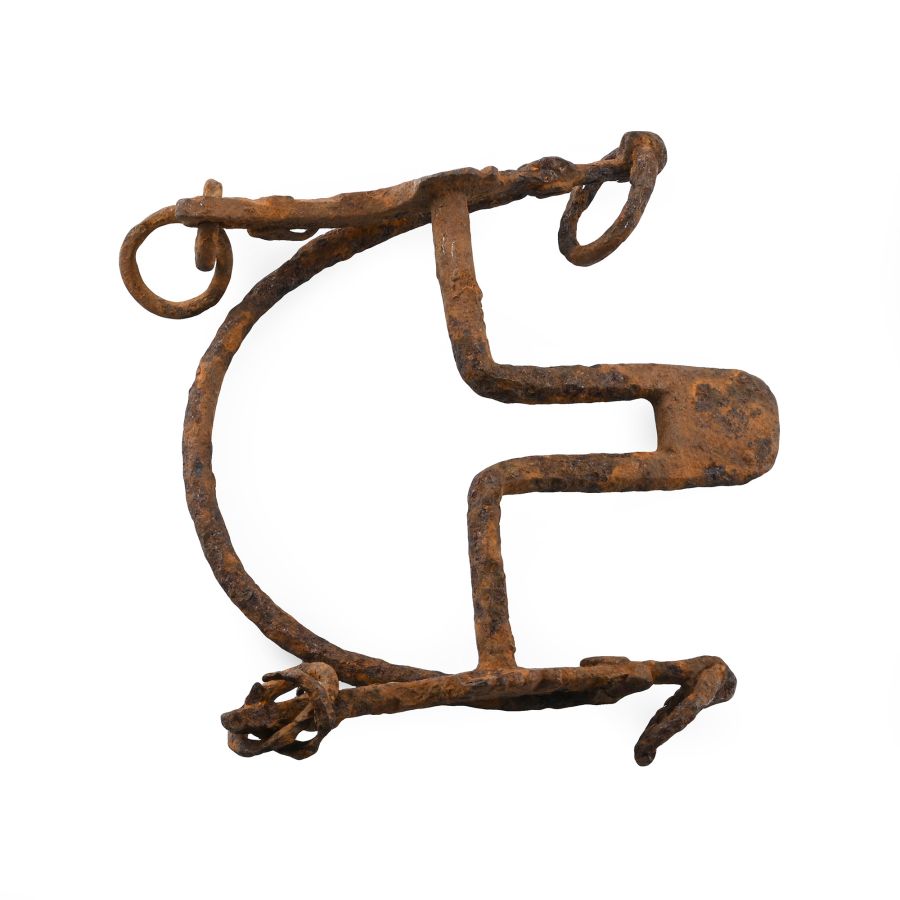
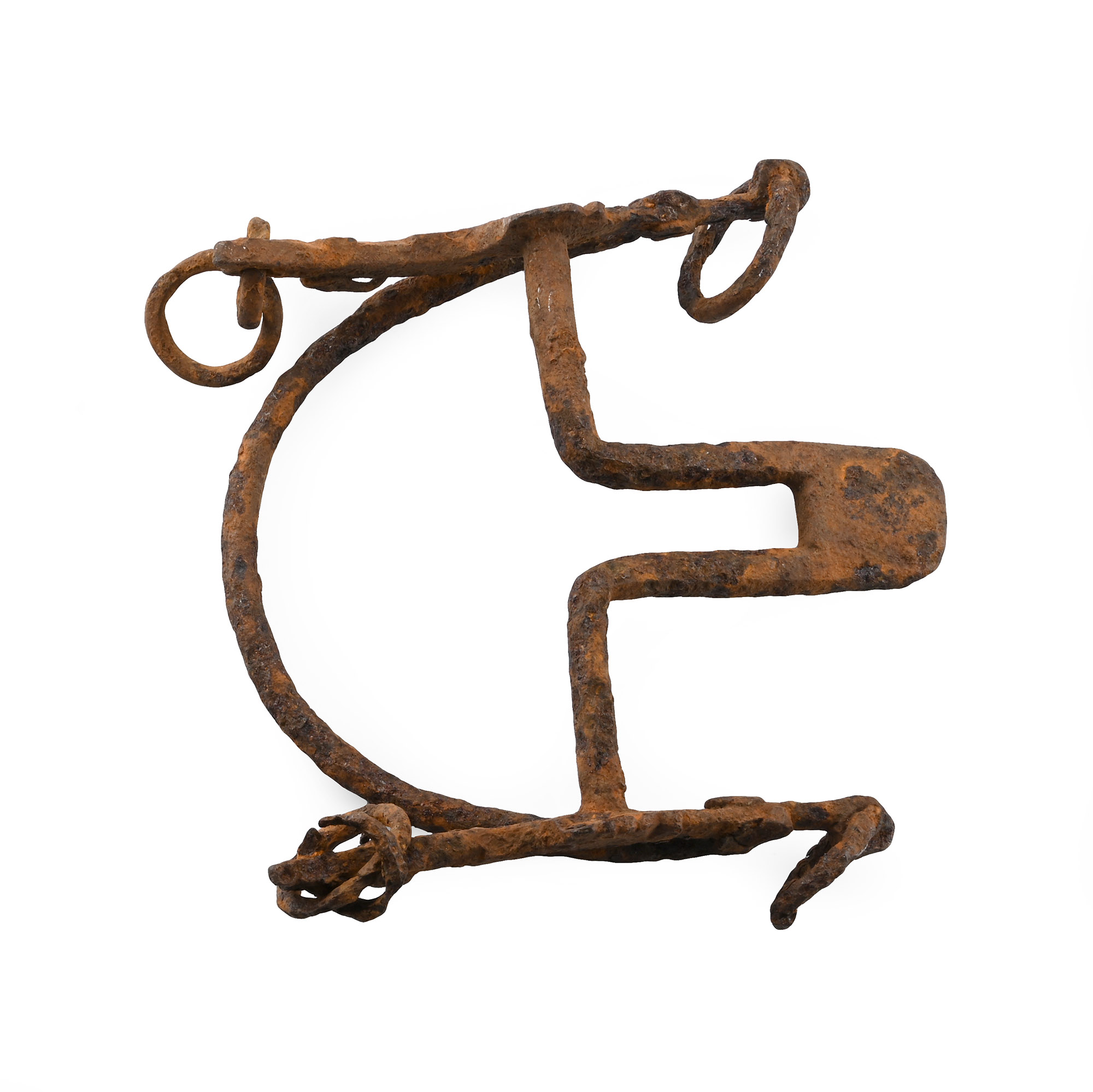
Late Roman Iron Horse Bit
4TH-5TH CENTURY A.D.
5 1/4 in. (233 grams, 13.5 cm).
Curb-bit comprising two horizontal lateral bars with attachment points for the reins and bridle, U-shaped high-port and tongue-bar. [No Reserve]
ProvenanceEx German art market, 2000s.
Acquired from an EU collector living in London.
From the collection of a Surrey, UK, gentleman.
Cf. similar in the Metropolitan Museum of Art under Object Number: 42.50.497.
CONDITIONTimeLine Auctions follows a vetting process to ensure the authenticity and legality of all items, reinforcing our commitment to integrity and responsible trading. Each antiquity, antique, and coin lot undergoes thorough examination by a vetting committee of at least ten external specialists, professional trade association members, scientists, and archaeologists: Our Vetting Process
AUCTIONS:
TimeLine is a leading auction house specialising in antiquities, ancient art, collectables, natural history, coins, medals, and books. Our auctions offer museums, collectors, historians, and enthusiasts the opportunity to acquire unique and historically significant pieces.
-
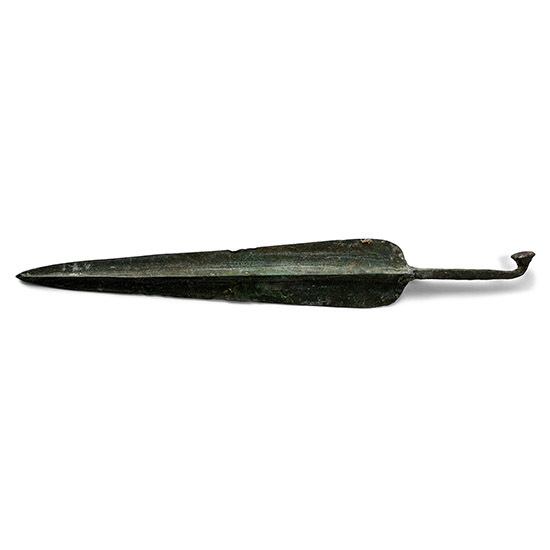
North-Western Persian Bronze Blade
Circa 1st millennium B.C.Sold for (Inc. bp): £117
With a long tapering blade having rounded shoulders and a prominent mid-rib, the tang bent over at the tip with a round stud terminal. 230 grams, 33.5 cm
Ex Abelita family collection, 1980s-2000s.
The metalworking techniques used in making bronze weapons in early Iran were very complex. Surfaces were often finished in repoussé work, and some of the weapons were chased, others engraved. The ruling elites of warrior horsemen were buried with their weapons and horses. -
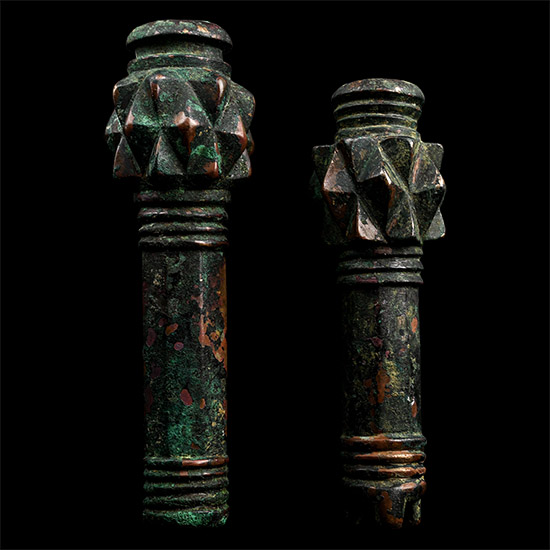
Luristan Bronze Macehead Collection
Circa 900-800 B.C.Sold for (Inc. bp): £1,300
With long septagonal and octagonal shank, rounded knobs around the swollen head, flanked by horizontal bands. 876 grams total, 15.5-17.3 cm
UK private collection before 2000. Acquired on the UK art market. Private collection, London, UK. -
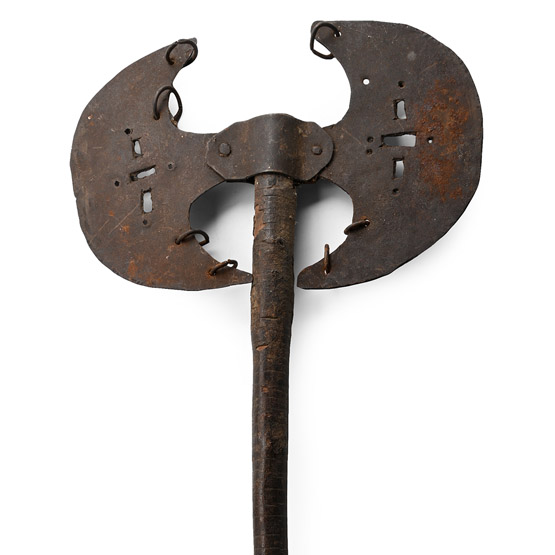
African Ceremonial Iron Double Axe
Late 20th century A.D.Sold for (Inc. bp): £26
Comprising: tapering wooden shaft with circumferential grooves; iron twibill head with two-part flat socket riveted to two crescent blades, each with punched rectangular slots and holes, butted rings to the inner angles. 450 grams, 56.5 cm
Property of a Berkshire, UK, gentleman collector.
