
Loading, please wait...
LOT 0629
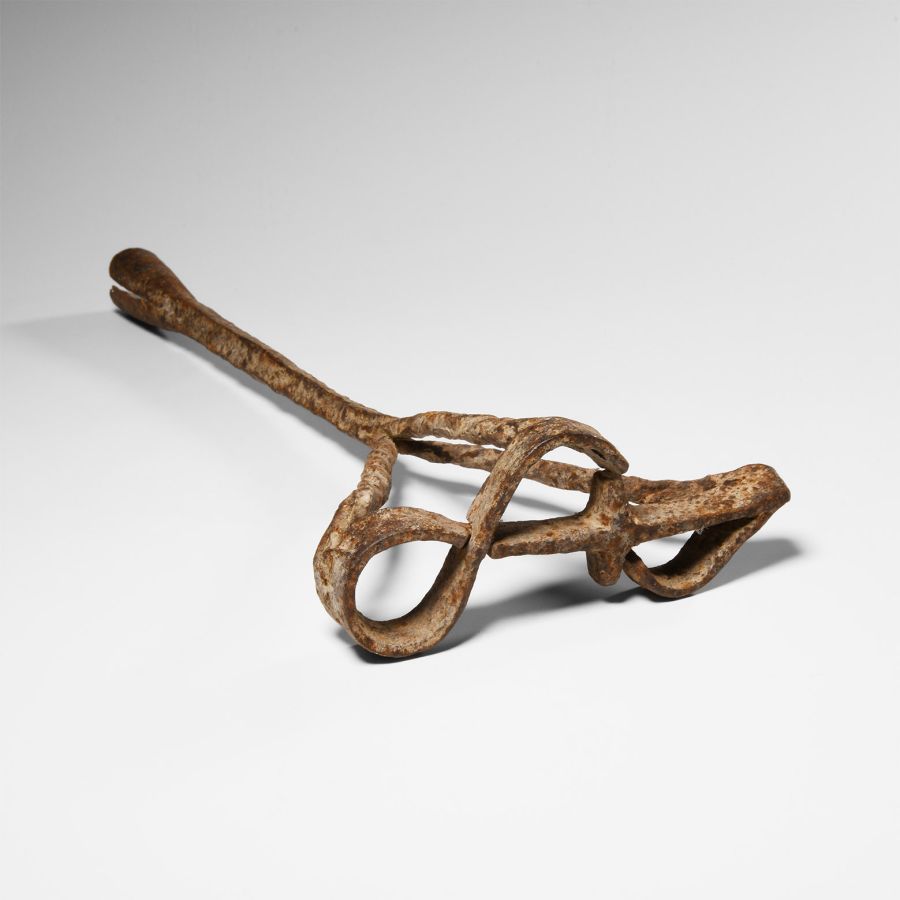
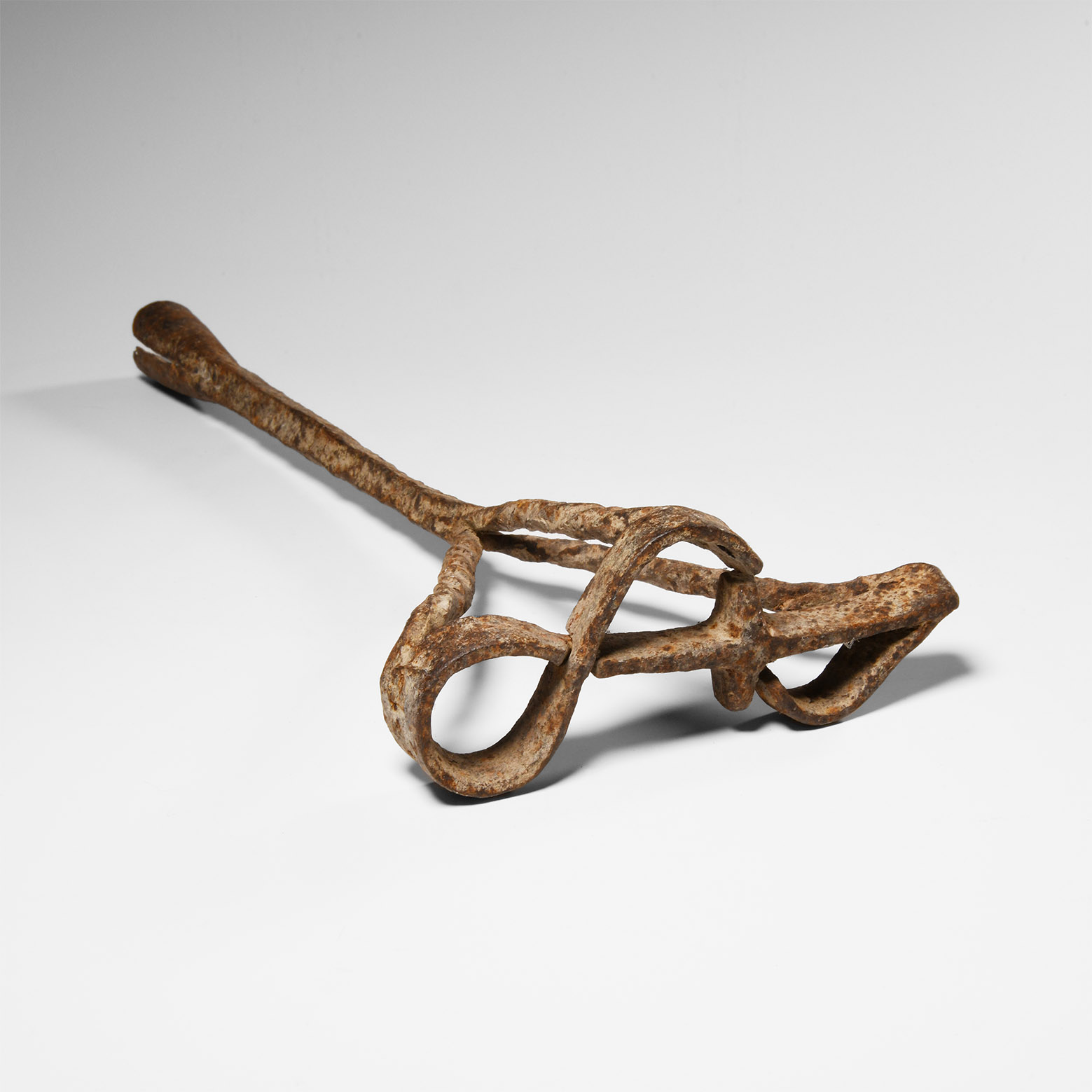
Late Roman Iron Branding Signaculum
5TH-6TH CENTURY A.D.
14 3/4 in. (521 grams, 37.5 cm).
Featuring an elaborate monogram composed of Greek letters M and O, supported by decoratively twisted prongs; tapering cylindrical socket.
ProvenanceAcquired 1990s-early 2000s.
East Anglian private collection.
See Baratta, G., 'Roman Signacula / Una particolare categoria di signacula: marchi per legno, pellame ed animali', in Mayer M., Olive, G., Baratta, G., Guzman Almagro, A.(ed.), XII Congressus Internationalis Epigraphiae Grecae et Latinae, Barcelona, 2007, pp.99-108, figs.3,7, for similar stamps.
FootnotesBranding stamps or signacula, in particular those with large single letters, were used for marking livestock to identify the ownership, the breed, the quality and other features of the animal. The signacula were usually made in bronze, but iron examples are also preserved.
CONDITIONTimeLine Auctions follows a vetting process to ensure the authenticity and legality of all items, reinforcing our commitment to integrity and responsible trading. Each antiquity, antique, and coin lot undergoes thorough examination by a vetting committee of at least ten external specialists, professional trade association members, scientists, and archaeologists: Our Vetting Process
AUCTIONS:
TimeLine is a leading auction house specialising in antiquities, ancient art, collectables, natural history, coins, medals, and books. Our auctions offer museums, collectors, historians, and enthusiasts the opportunity to acquire unique and historically significant pieces.
LOT 0629
Late Roman Iron Branding Signaculum
Estimate £80 - 100€93 - 116 (for guidance only)$108 - 135 (for guidance only)
-
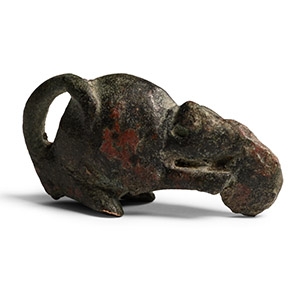
Roman Bronze Mouse Nibbling a Nut Statuette
1st-4th century A.D.Sold for (Inc. bp): £78
Modelled with naturalistic detailing on all fours nibbling at a nut held between the forepaws, tail curled upwards. 11.9 grams, 29 mm
‘The Ancient Menagerie Collection’ formerly the property of a Cambridgeshire lady, collected since the 1990s and acquired from auctions and dealers throughout Europe and the USA, now ex London collection. -
.jpg)
Roman Bronze-Handled Key with Panther
1st-4th century A.D.Estimate: £600 - 800 (+bp*)
Opening Bid: £300
The bronze handle modelled as the forequarters of a panther leaping from a crown of fronds, with stylised facial detailing; iron stem, bit and wards. 74 grams, 77 mm
Acquired on the German art market around 2000s. From the collection of an EU gentleman living in the UK. -
.jpg)
Roman Bronze Lying Dog Bowl Mount
1st-4th century A.D.Sold for (Inc. bp): £52
Modelled in the half-round with naturalistic detailing. 26.3 grams, 34 mm
‘The Ancient Menagerie Collection’ formerly the property of a Cambridgeshire lady, collected since the 1990s and acquired from auctions and dealers throughout Europe and the USA, now ex London collection.
