Loading, please wait...

Use mousewheel to zoom in and out, click to enlarge

Details

LOT 0712

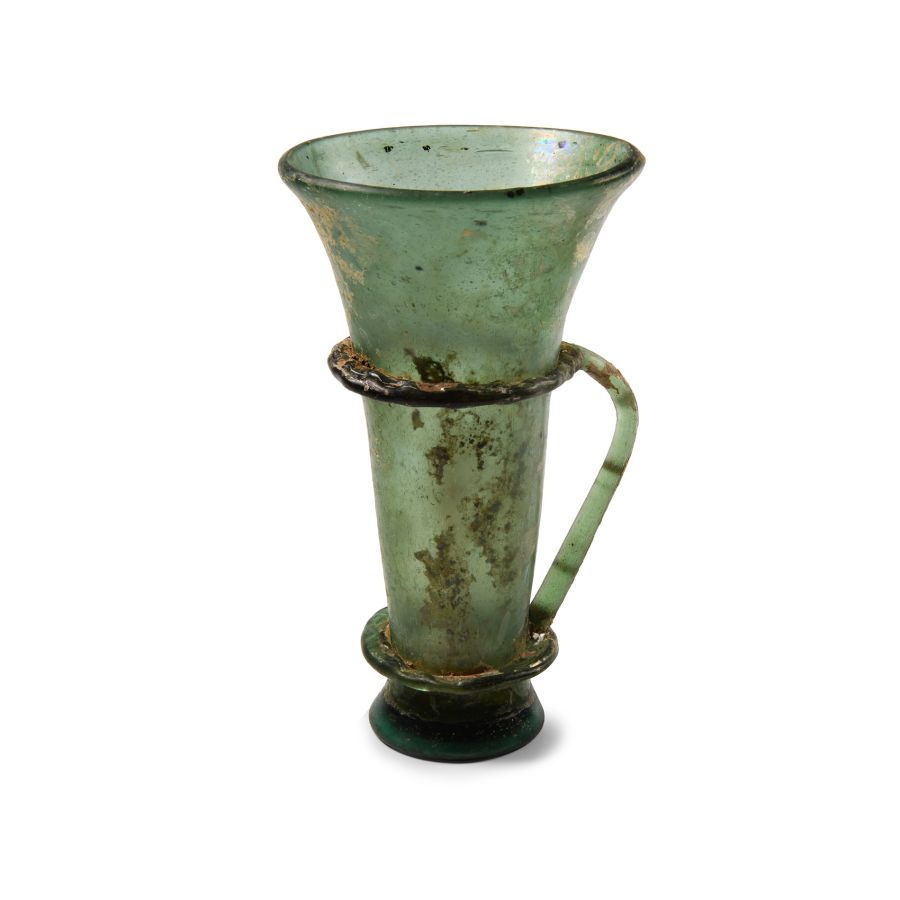
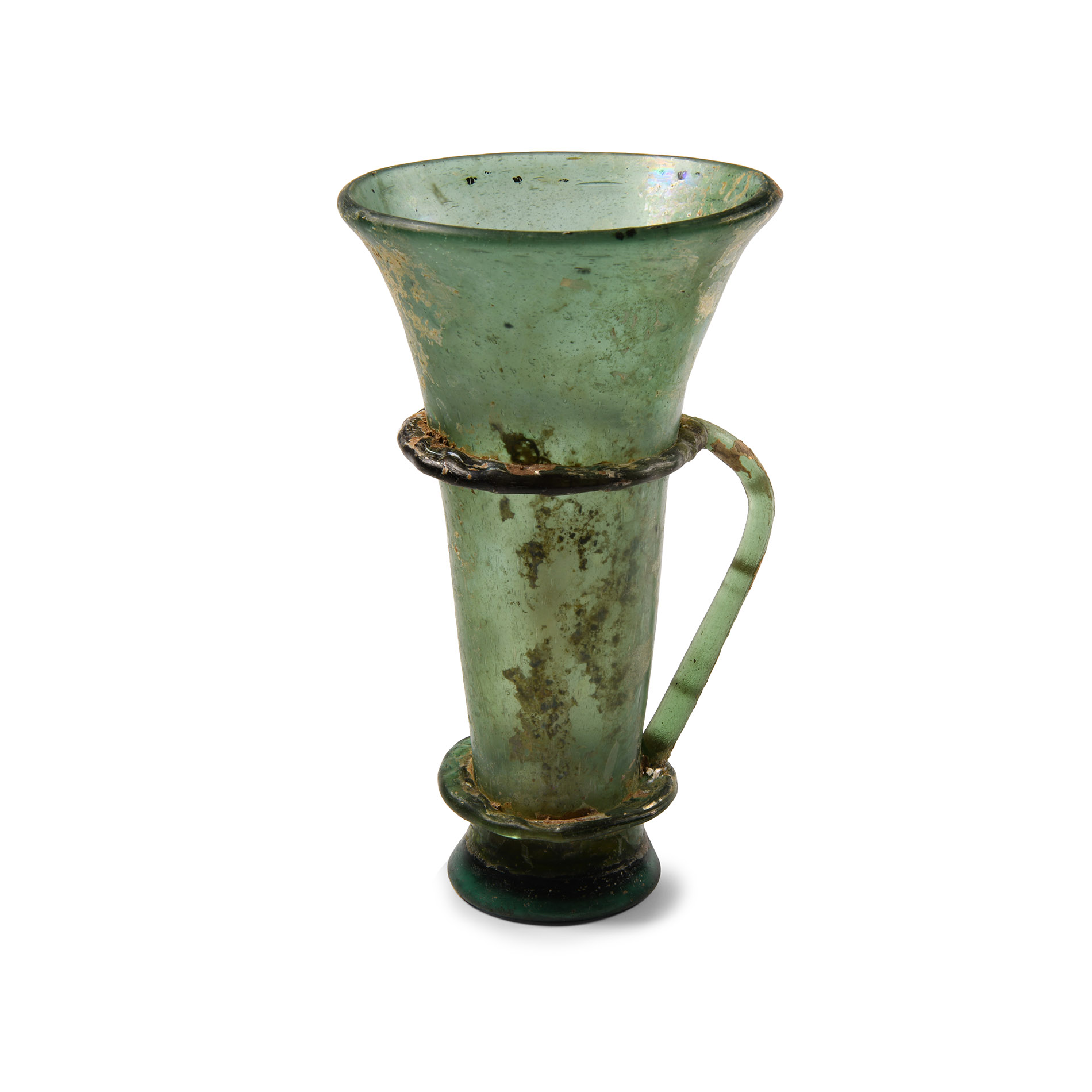
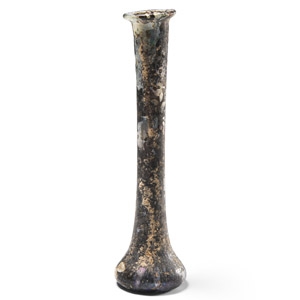
Late Roman Green Glass Vessel with Handle

CIRCA 4TH CENTURY A.D.

7 in. (325 grams, 17.7 cm high).

Featuring a cylindrical body and flared neck, applied collar and handle and remains of iridescence; some restoration.

Provenance

with a London, UK gallery 1971-early 2000s.

CONDITION

VETTING:

TimeLine Auctions follows a vetting process to ensure the authenticity and legality of all items, reinforcing our commitment to integrity and responsible trading. Each antiquity, antique, and coin lot undergoes thorough examination by a vetting committee of at least ten external specialists, professional trade association members, scientists, and archaeologists: Our Vetting Process


AUCTIONS:

TimeLine is a leading auction house specialising in antiquities, ancient art, collectables, natural history, coins, medals, and books. Our auctions offer museums, collectors, historians, and enthusiasts the opportunity to acquire unique and historically significant pieces.

LOT 0712

Late Roman Green Glass Vessel with Handle

Sold for (Inc. bp): £390

Print page

RELATED LOTS

  • Roman Bronze Figure of Diana
    Roman Bronze Figure of Diana
    1st-2nd century A.D.

    Sold for (Inc. bp): £3,900

    Standing with her weight on her right leg, the left leg slightly bent, looking towards her left; the hair gathered at the nape of the neck; dressed in a short pleated sleevelesschiton, puffed up at the waist and falling above her knees, small boots with the strings tied above the ankles; carrying a quiver held by a strap passing over the right shoulder across her breasts; her lowered left arm was probably holding a bow, her right arm raised above her shoulder in the act of drawing an arrow from her quiver; mounted on a custom-made display stand. 155 grams total, 12.5 cm high including stand


    Ex Mr. A.J. collection, Geneva, Switzerland. Acquired in Europe in 2014. Private collection. This lot has been checked against the Interpol Database of stolen works of art and is accompanied by search certificate number no.11793-206487

    This example depicts a well-attested type of Diana (Greek Artemis) goddess of the hunt. The slight swaying and the folds of the garment recall a Greek work of the classical period, widely copied by the Romans. The statuette is a good artwork from the Roman period, with identical copies spread throughout the empire, as many similar figures came from Naples, Bligny-sur-Dache, Trebizond, Carnuntum, and Vienna. The statuette was probably intended for a domestic altar (lararium).

    Lot Details

  • Roman and Later Bronze Artefact Group
    Roman and Later Bronze Artefact Group
    3rd-4th century A.D. and later

    Sold for (Inc. bp): £130

    Comprising various figures and mounts including: a sheep, a fly, a peacock, an anthropomorphic head, a mount with a lying feline and a crouching figure. 94 grams total, 18-40 mm


    Acquired on the UK art market. Property of a Ruislip, UK, gentleman, by inheritance.

    In the art of late antiquity and early Christianity, during the Christian Middle Ages to the present, peacock held a prominent place, not only as a decorative motif, but also as a distinctive emblematic and symbolic sign. Its image was usually combined with a kantharos or a tree of life. Individually or in pairs, it was usually represented on places which were the ones closest to the holiest part of churches (altar’s parapet wall panels). Votive statuettes were brought in the church by the believers.

    Lot Details

  • Large Roman Bronze Mythical Cockerel-Headed Snake
    Large Roman Bronze Mythical Cockerel-Headed Snake
    4th century A.D.

    Estimate: £500 - 700 (+bp*)

    Opening Bid: £278

    The upper body, neck and head of a mythical basilisk, modelled in the round with the body of a serpent and head of a cockerel, the body with a tapering round-section profile, stylised detailing to the head. 260 grams, 88 mm


    ‘The Ancient Menagerie Collection’ formerly the property of a Cambridgeshire lady, collected since the 1990s and acquired from auctions and dealers throughout Europe and the USA, now ex London collection.

    The basilisk was a Graeco-Roman mythical two-legged dragon or serpent-like creature with a cock's head. It had the reputed ability to kill people by either looking at them, touching them, or sometimes breathing on them. According to legend a basilisk would die instantly upon hearing a rooster crow or looking at itself in a mirror.

    Lot Details

Stay up-to-date with the latest from TimeLine Auctions by joining our mailing list