
Loading, please wait...
LOT 0903
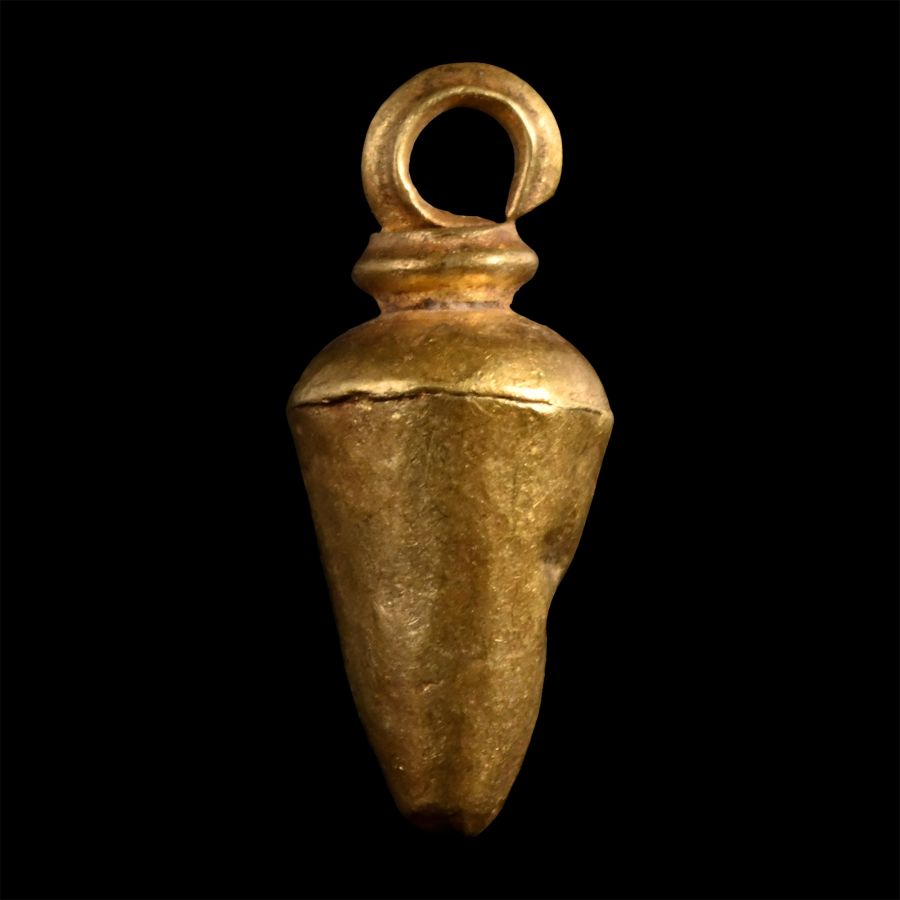
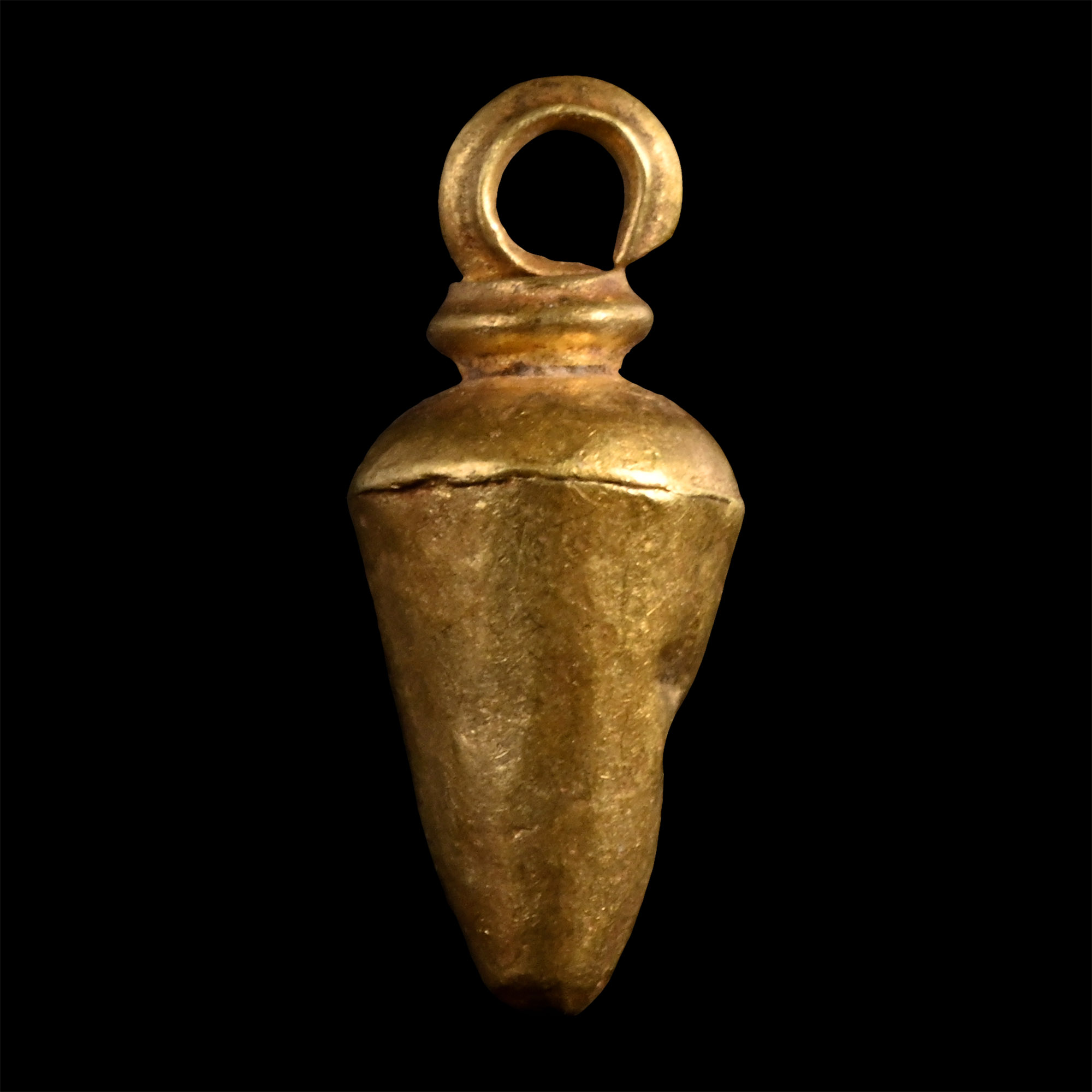
Late Roman Gold Teardrop Pendant
6TH CENTURY A.D.
3/8 in. (0.31 grams, 11 mm).
Comprising a conical body with collared suspension loop above. [No Reserve]
ProvenanceFrom the collection of a late Japanese collector, 1970s.
This lot is accompanied by an illustrated lot declaration signed by the Head of the Antiquities Department, Dr Raffaele D'Amato.
Cf. for similar biconical pendants from earrings Baldini Lippolis, I., L'Oreficeria nell'Impero di Costantinopoli tra IV e VII secolo (the Jewellery in the Empire of Constantinople between IV and VII century, in Italian), Bari, 1999, p.102 no.1.
FootnotesDuring the Late Empire, earrings with biconical foil applications became widespread in Roman Egypt. The comparison with necklaces containing similar biconical elements used as beads or suspension elements for pendants seems to give consistency to the chronological indication of the 6th century, especially in that geographical area.
CONDITIONTimeLine Auctions follows a vetting process to ensure the authenticity and legality of all items, reinforcing our commitment to integrity and responsible trading. Each antiquity, antique, and coin lot undergoes thorough examination by a vetting committee of at least ten external specialists, professional trade association members, scientists, and archaeologists: Our Vetting Process
AUCTIONS:
TimeLine is a leading auction house specialising in antiquities, ancient art, collectables, natural history, coins, medals, and books. Our auctions offer museums, collectors, historians, and enthusiasts the opportunity to acquire unique and historically significant pieces.
-
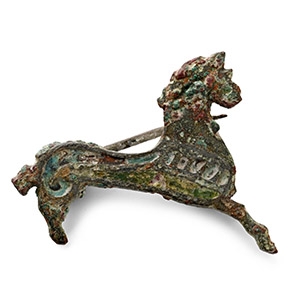
Romano-British Enamelled Bronze Horse Brooch
2nd century A.D.Sold for (Inc. bp): £104
Modelled with erect head and slender legs, recessed cells on the body to accept enamel with some blue enamel remaining; pin and remains of catchplate on the reverse. 4.28 grams, 32 mm
Found East Anglia, UK. This lot is accompanied by an illustrated lot declaration signed by the Head of the Antiquities Department, Dr Raffaele D'Amato. -
.jpg)
Roman Bronze Trumpet Whorl Brooch
Circa 2nd century A.D.Sold for (Inc. bp): £104
S-shaped La Tène scroll with trumpet and bulb detailing, catch and pin to the reverse. 8.89 grams, 33 mm
From the collection of a Suffolk, UK, gentleman, established from the early 2000s. This lot is accompanied by an illustrated lot declaration signed by the Head of the Antiquities Department, Dr Raffaele D'Amato. -
.jpg)
Roman Silver-Gilt Statuette of Mercury
1st-2nd century A.D.Estimate: £600 - 800 (+bp*)
Opening Bid: £300
Modelled in the round in advancing pose, with traveling cloak wrapped around his shoulder and left arm; petasos covering his hair and talaria on his feet. 8.76 grams, 37 mm
Acquired in the late 1980s-early 1990s. Private collection, London, UK. This lot is accompanied by an illustrated lot declaration signed by the Head of the Antiquities Department, Dr Raffaele D'Amato.
