
Loading, please wait...
LOT 0760
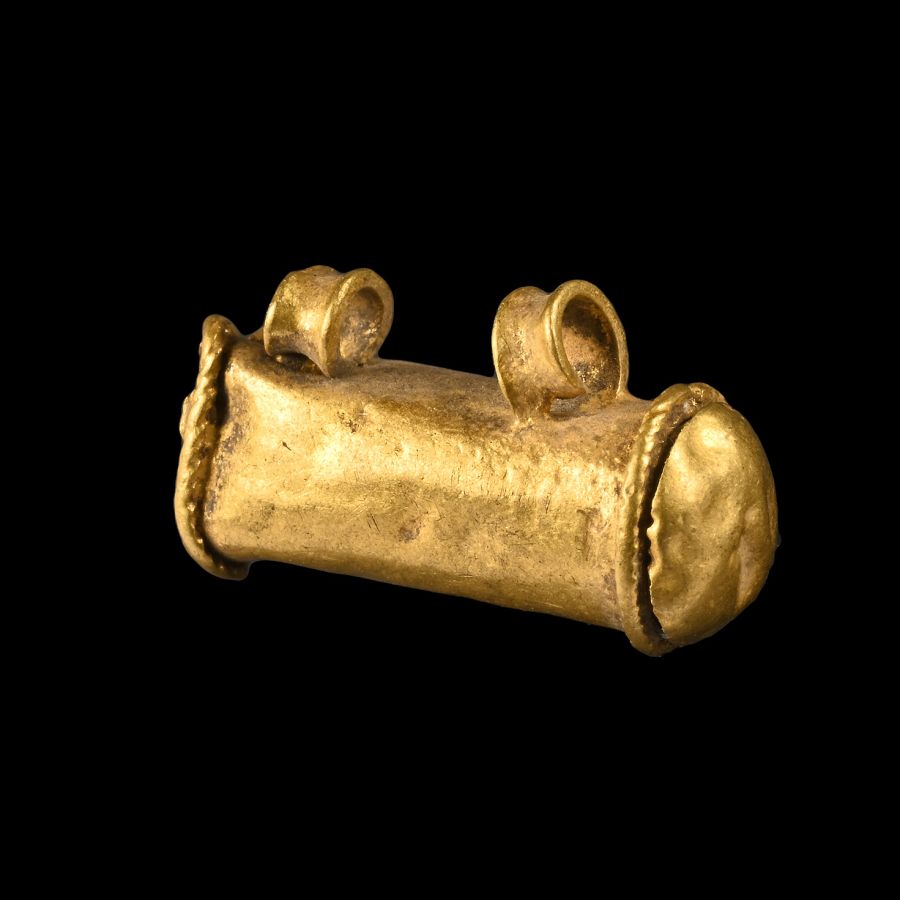
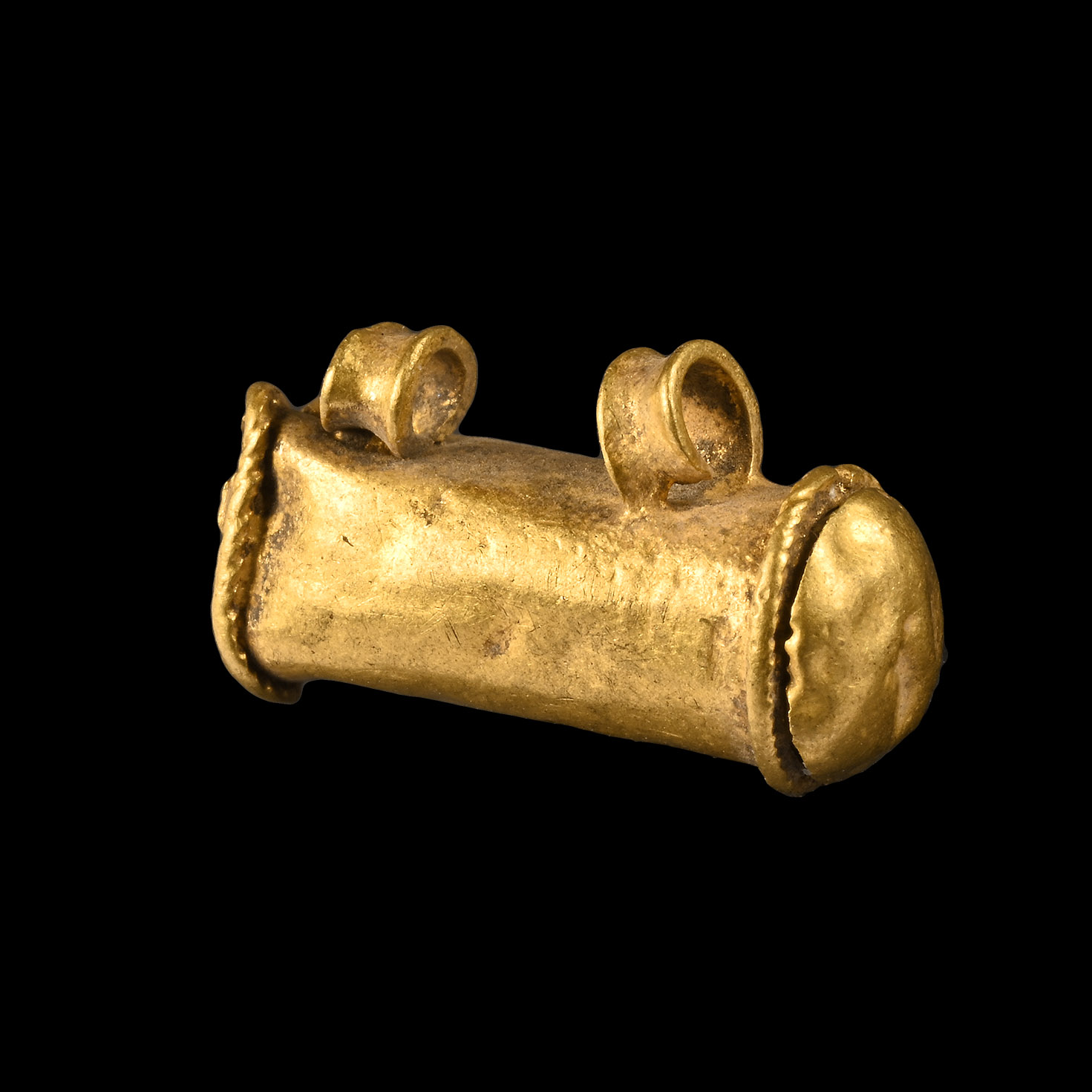
Late Roman Gold Amulet Case Pendant
5TH-6TH CENTURY A.D. OR LATER
5/8 in. (1.15 grams, 15 mm).
A gold amulet case pendant composed of a cylindrical body with two suspension loops to one face, filigree collar to both arms, one end face retaining a removeable domed cap.
ProvenanceAcquired 1980-2015.
Ex Abelita family collection.
TimeLine Auctions follows a vetting process to ensure the authenticity and legality of all items, reinforcing our commitment to integrity and responsible trading. Each antiquity, antique, and coin lot undergoes thorough examination by a vetting committee of at least ten external specialists, professional trade association members, scientists, and archaeologists: Our Vetting Process
AUCTIONS:
TimeLine is a leading auction house specialising in antiquities, ancient art, collectables, natural history, coins, medals, and books. Our auctions offer museums, collectors, historians, and enthusiasts the opportunity to acquire unique and historically significant pieces.
LOT 0760
Late Roman Gold Amulet Case Pendant
Estimate £120 - 170€140 - 200 (for guidance only)$160 - 230 (for guidance only)
-
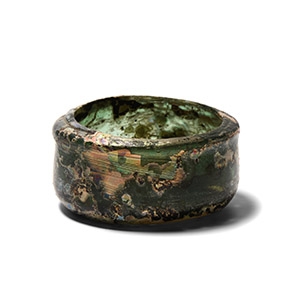
Roman Glass Cosmetic Dish
1st-3rd century A.D.Sold for (Inc. bp): £169
A green glass cosmetic dish or jar with a squat body and inverted rim; iridescent surfaces. 60 grams, 56 mm wide
French collection, 1960s-early 2000s. From an important Paris gallery, France. -
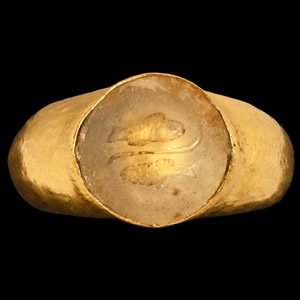
Roman Gold Ring with Fish Gemstone
3rd-4th century A.D.Sold for (Inc. bp): £1,170
A hollow-formed gold finger ring with inset glass intaglio of two fishes placed tête-bêche; the astrological symbol for the Pisces constellation. 6.11 grams, 26.55 mm overall, 20.73 mm internal diameter (approximate size British W 1/2, USA 11 1/4, Europe 25.6, Japan 24)
English private collection. -
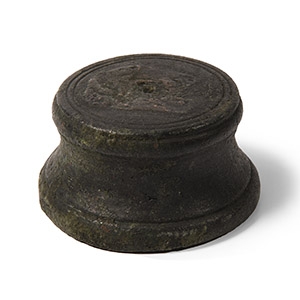
Roman Statuette Base
1st-4th century A.D.Sold for (Inc. bp): £143
A copper-alloy statuette base formed with a waisted edge and circular upper and lower faces, the lower with a greater circumference than the upper. 86 grams, 53 mm
Essex gallery, early 2000s.
