
Loading, please wait...


LOT 0818
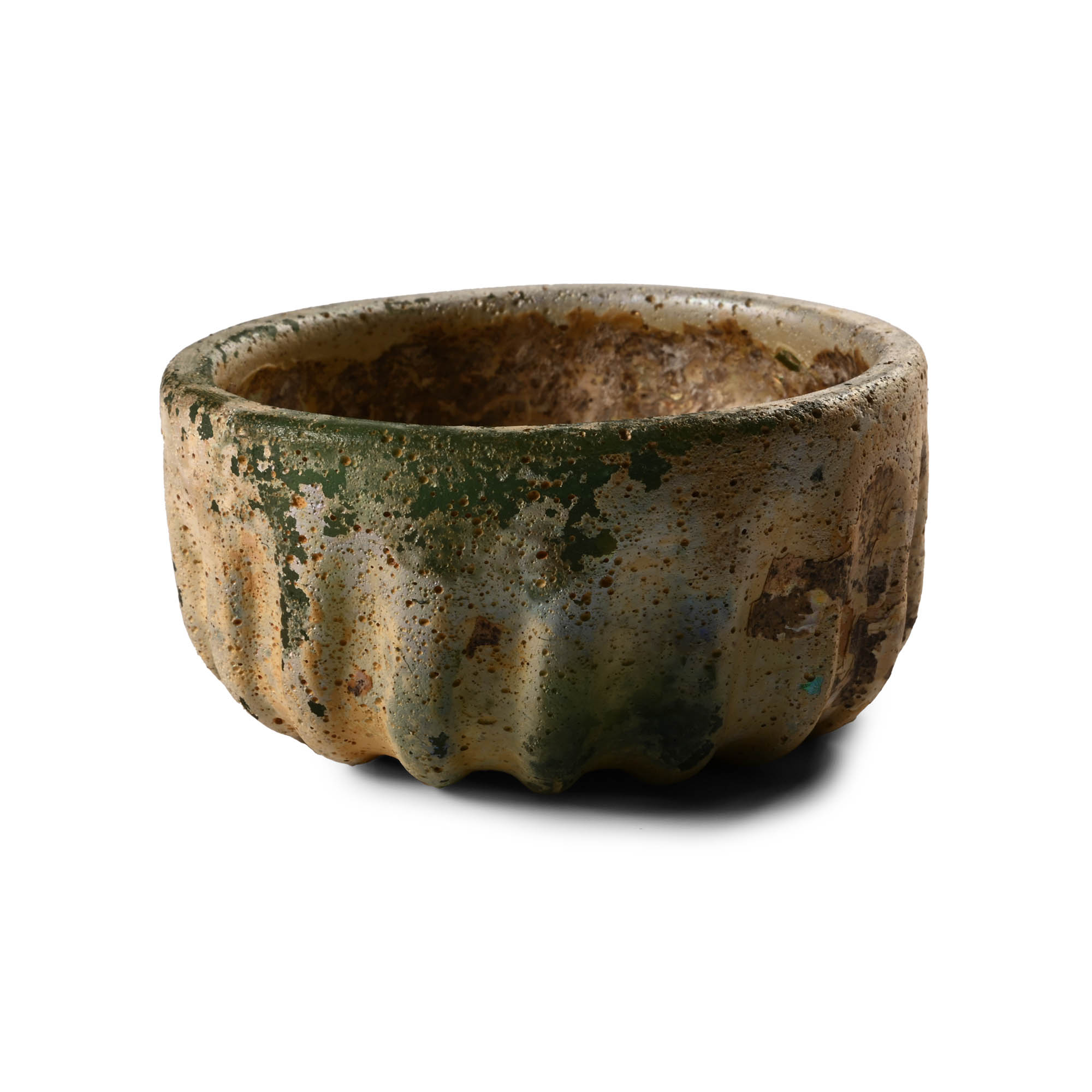
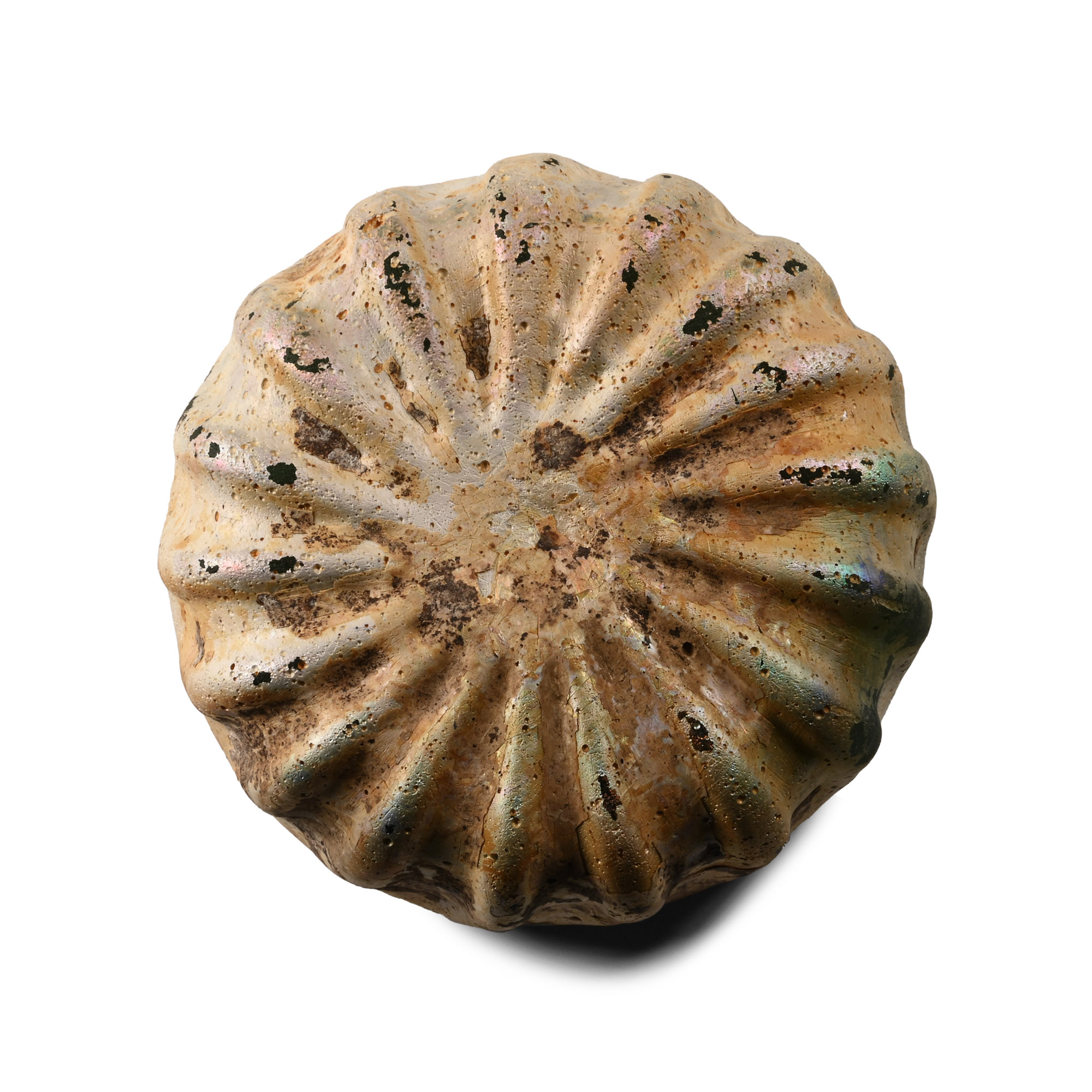
Late Roman Glass Ribbed Dish
EASTERN EMPIRE, 5TH-6TH CENTURY A.D.
3 1/2 in. (174 grams, 89 mm).
Iridescent glass bowl with thick sidewall, vertical ribbing extending to the base, rolled rim.
ProvenanceFormerly in North American collection, 1990s.
From the collection of a London, UK, gentleman.
This lot is accompanied by an illustrated lot declaration signed by the Head of the Antiquities Department, Dr Raffaele D’Amato.
Cf. Whitehouse, D., Roman Glass in The Corning Museum Of Glass, Volume One, New York, 1997, pp.261-265, for type.
CONDITIONTimeLine Auctions follows a vetting process to ensure the authenticity and legality of all items, reinforcing our commitment to integrity and responsible trading. Each antiquity, antique, and coin lot undergoes thorough examination by a vetting committee of at least ten external specialists, professional trade association members, scientists, and archaeologists: Our Vetting Process
AUCTIONS:
TimeLine is a leading auction house specialising in antiquities, ancient art, collectables, natural history, coins, medals, and books. Our auctions offer museums, collectors, historians, and enthusiasts the opportunity to acquire unique and historically significant pieces.
LOT 0818
Late Roman Glass Ribbed Dish
Estimate £250 - 350€290 - 410 (for guidance only)$340 - 470 (for guidance only)
-
Roman Bronze Pricket Candlestick
2nd-4th century A.D.Sold for (Inc. bp): £1,300
Pricket formed as a baboon crouching on a tiered base with bun feet; the animal wearing a pounced hood with tall octagonal-section spike above; mounted on a custom-made stand. 95.7 grams total, 99 mm including stand
From a Cambridgeshire, UK, collection, 1990s. This lot is accompanied by an illustrated lot declaration signed by the Head of the Antiquities Department, Dr Raffaele D’Amato. -
Roman Glass Janiform Ampulla
3rd century A.D.Estimate: £800 - 1,000 (‡+bp*)
Opening Bid: £360
Body formed as two addorsed putto-heads with long, narrow neck separated from the body by a constriction; funicular mouth. 48.9 grams, 11 cm
Ex Anita Zürrer-Bass (1928-2018), Switzerland, formed 1960s-1990s. Thence by descent. This lot is accompanied by an illustrated lot declaration signed by the Head of the Antiquities Department, Dr Raffaele D’Amato.
The body of this type of vessel is formed from two heads joined together at the back. The faces have protruding chins, full cheeks and turned-up noses. The hair, filling the space between the faces, is arranged into spherical curls. This kind of products were often realised in Syrian workshops and widespread across the empire. They are usually dated to the 3rd century A.D. -
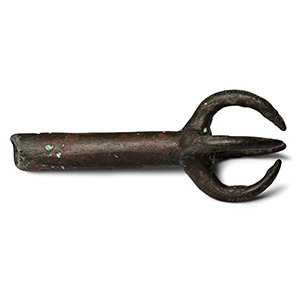
Roman Bronze Sceptre Head
1st-4th century A.D.Sold for (Inc. bp): £98
With tapering tubular shank, pierced at the open end, four tapering integral hooks forming a claw-setting; possibly from a statue, having once held amber. 18.5 grams, 63 mm
Acquired from a UK dealer circa 2004. Ian Wilkinson collection, Nottinghamshire, UK, formed since 1985. Accompanied by a laminated identification label. This lot is accompanied by an illustrated lot declaration signed by the Head of the Antiquities Department, Dr Raffaele D’Amato.
