
Loading, please wait...


LOT 0753
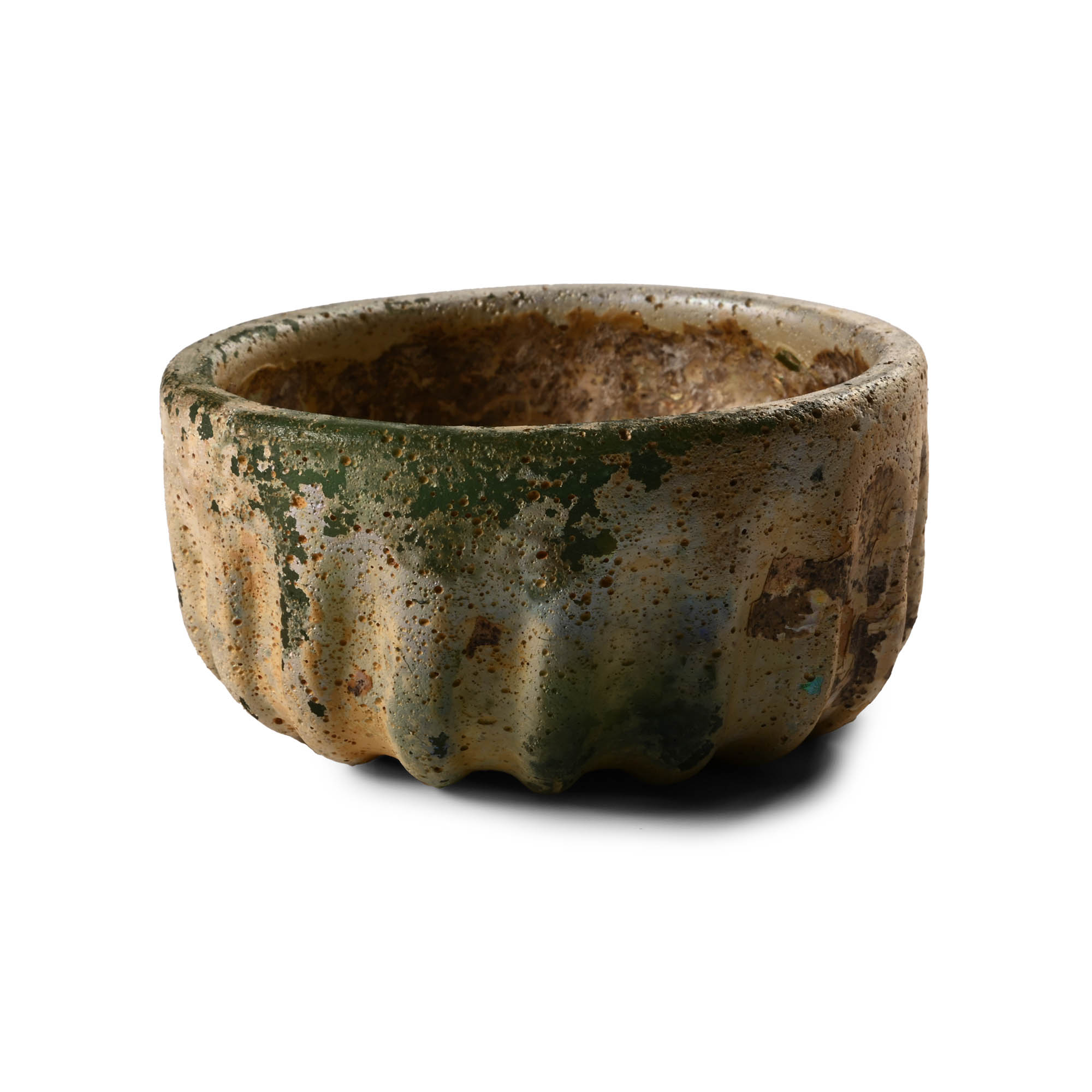
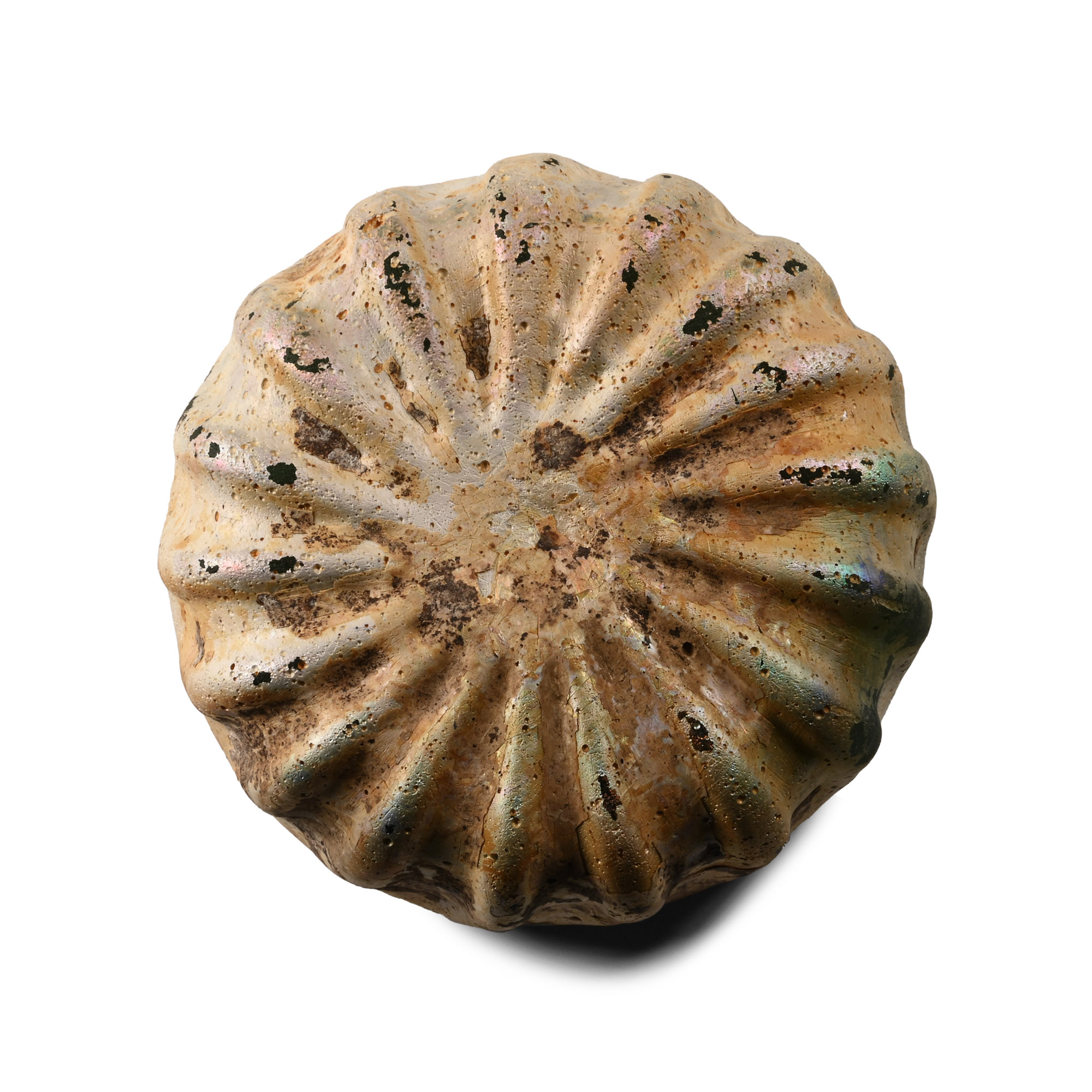
Late Roman Glass Ribbed Dish
EASTERN EMPIRE, 5TH-6TH CENTURY A.D.
3 1/2 in. (174 grams, 89 mm).
Iridescent glass bowl with thick sidewall, vertical ribbing extending to the base, rolled rim.
ProvenanceFormerly in North American collection, 1990s.
From the collection of a London, UK, gentleman.
Cf. Whitehouse, D., Roman Glass in The Corning Museum Of Glass, Volume One, New York, 1997, pp.261-265, for type.
CONDITIONTimeLine Auctions follows a vetting process to ensure the authenticity and legality of all items, reinforcing our commitment to integrity and responsible trading. Each antiquity, antique, and coin lot undergoes thorough examination by a vetting committee of at least ten external specialists, professional trade association members, scientists, and archaeologists: Our Vetting Process
AUCTIONS:
TimeLine is a leading auction house specialising in antiquities, ancient art, collectables, natural history, coins, medals, and books. Our auctions offer museums, collectors, historians, and enthusiasts the opportunity to acquire unique and historically significant pieces.
LOT 0753
Late Roman Glass Ribbed Dish
Estimate £350 - 450€410 - 520 (for guidance only)$470 - 610 (for guidance only)
-
Roman Aubergine Glass Flask
1st-3rd century A.D.Estimate: £350 - 450 (+bp*)
Opening Bid: £180
With piriform body, dimpled base, tapering tubular neck with pinched and everted rolled rim. 19 grams, 11.5 cm
From an important London, UK, collection, 1970-1990s. -
Roman Bronze Bull Weight
1st-4th century A.D.Sold for (Inc. bp): £156
Model head of a bull with flat base. 16.6 grams, 21 mm
From the collection of a gentleman, acquired on the London art market in the 1990s. -
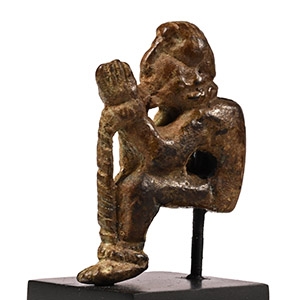
Roman Bronze Bound Captive Mount
Late 2nd century A.D.Sold for (Inc. bp): £195
Depicted as a bearded man, seated and naked with rope binding the hands together and extending around the neck and ankles; pierced vertically at the shoulders; probably a sliding mount for a thong or cord; mounted on a custom-made display stand. 59 grams total, 59 mm including stand
From a collection acquired on the UK art market from various auction houses and collections mostly before 2000. From an important Cambridgeshire estate; thence by descent.
Statuettes of foreign ‘barbarian’ prisoners of this type have been found along the Danube. Their spread coincides with the Marcomannic wars of the Emperor Marcus Aurelius. The hairstyle of this warrior has parallels with the warriors depicted on the contemporary Sarcophagus of Portonaccio, which represents a battle between Romans and Marcomanni.
