
Loading, please wait...
LOT 0155
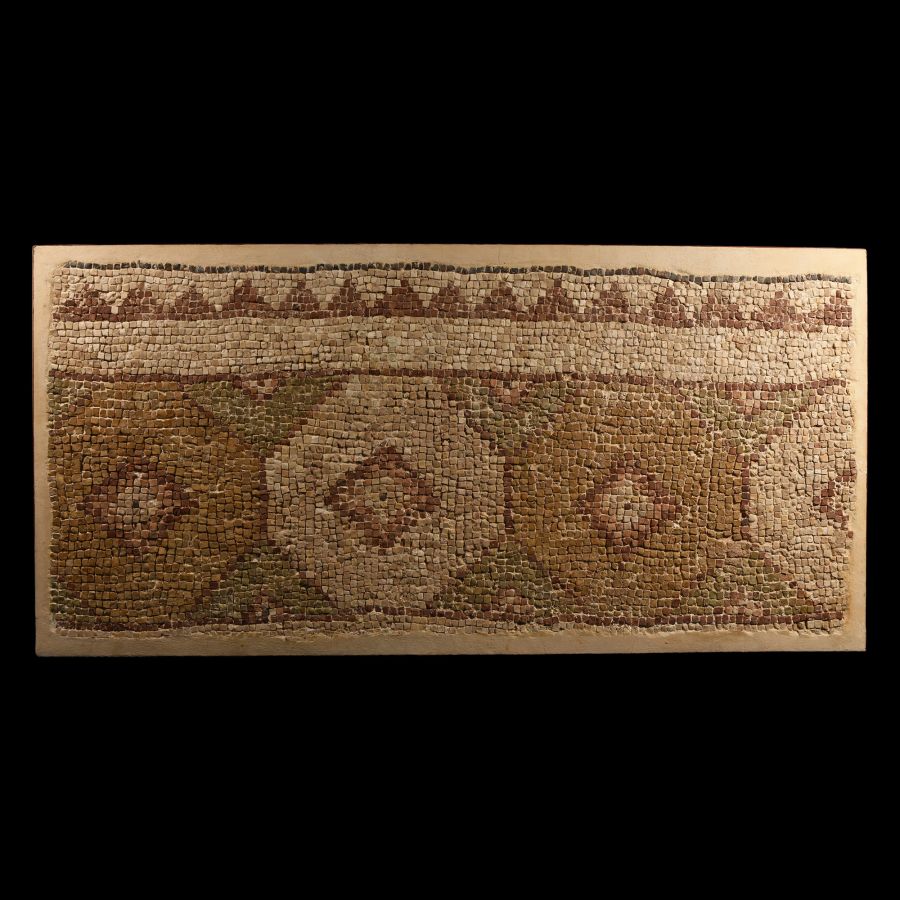
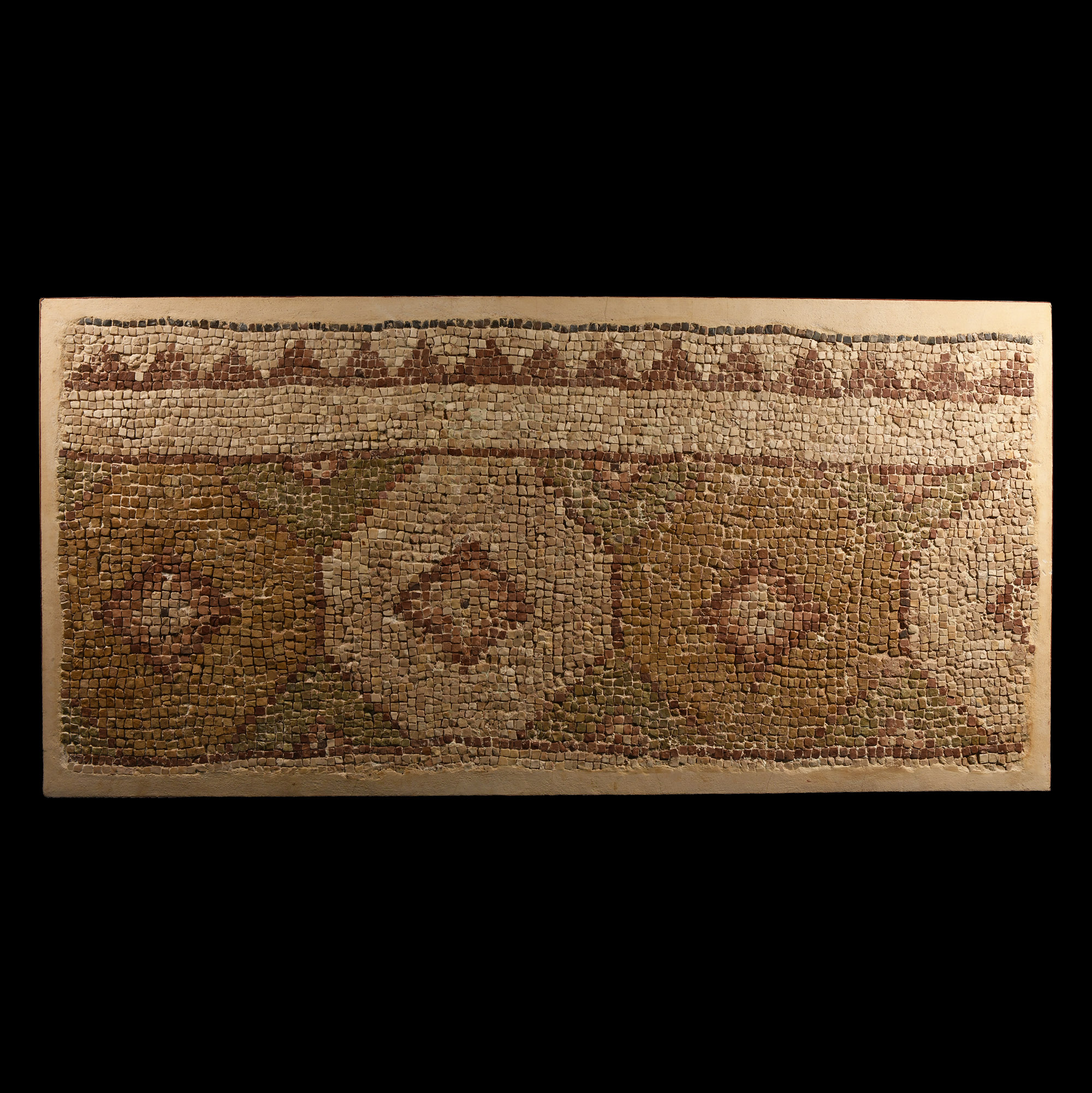
Late Roman Geometric Floor Mosaic
CIRCA 6TH-8TH CENTURY A.D.
59 1/2 in. (59 kg, 151 cm wide including frame).
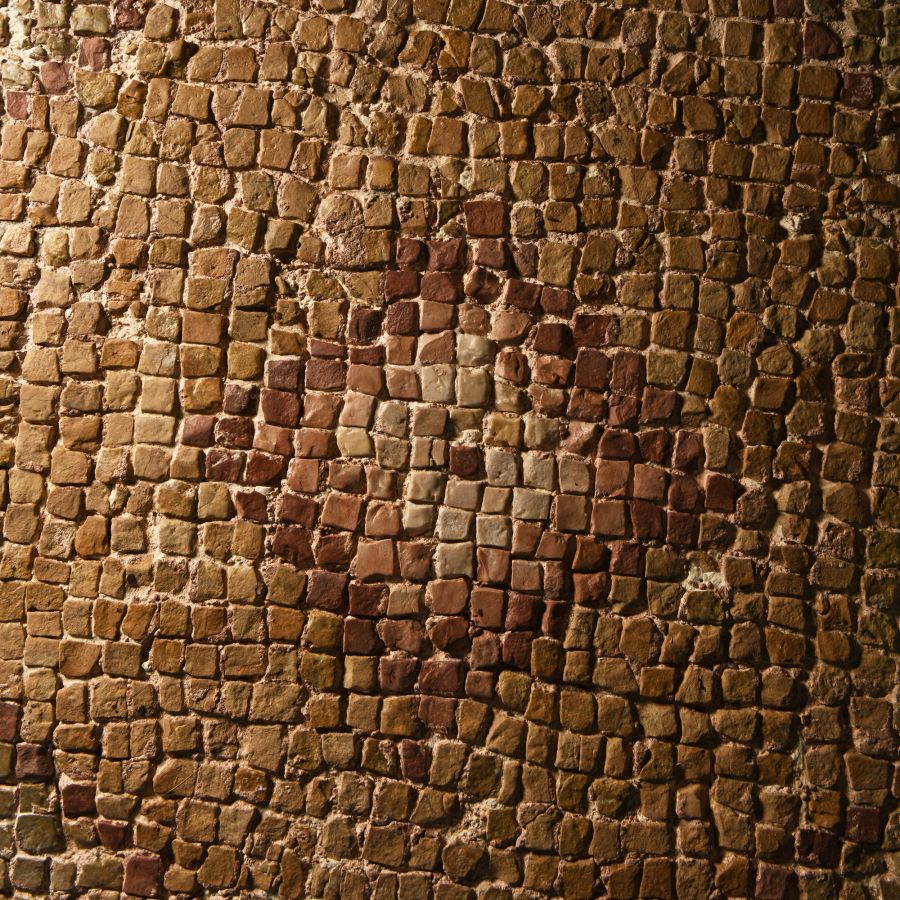
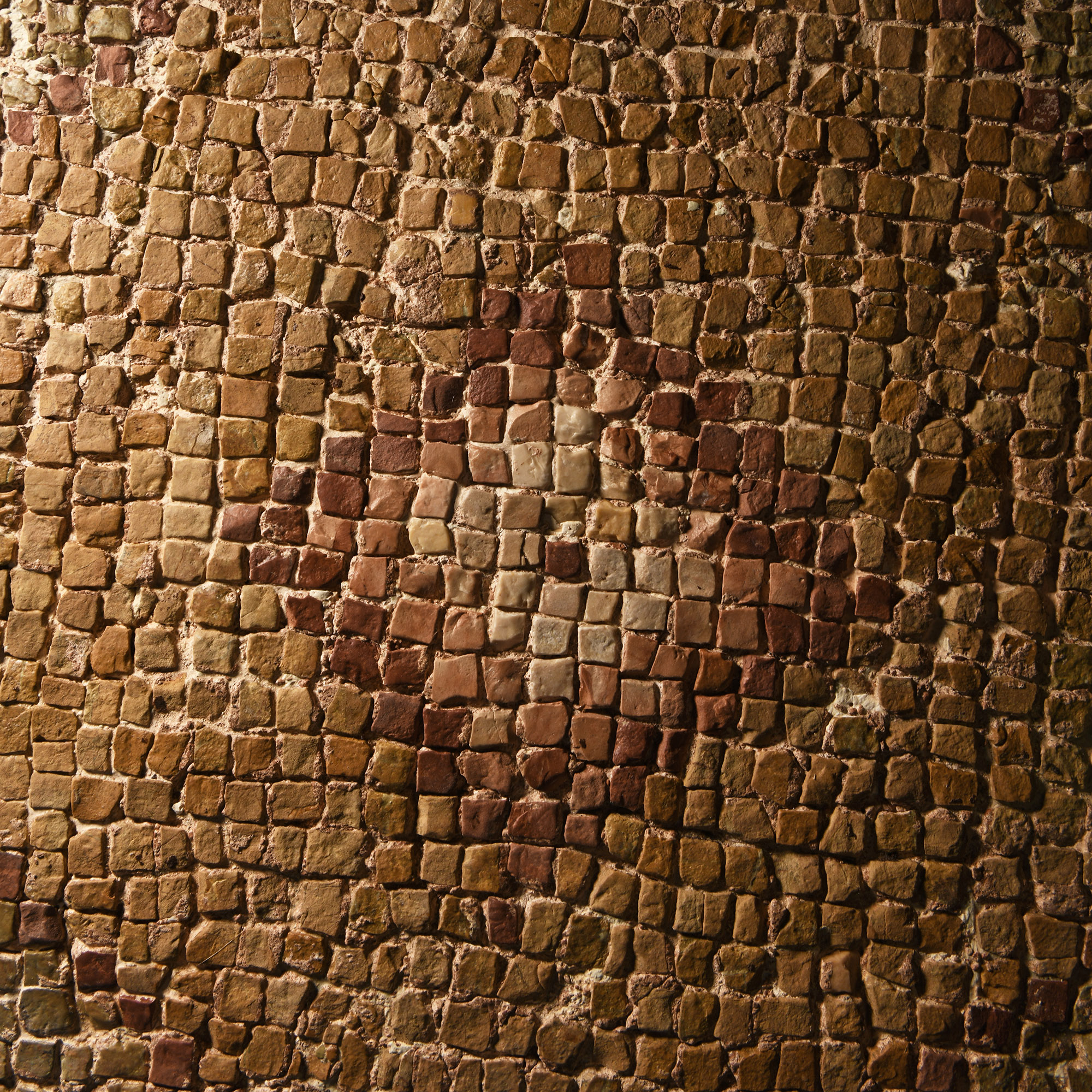
Comprising three full and one partial octagon, each with two concentric rhombuses distinguished by different shades of yellow, white and light red, each with a central red dot; the border above with a band of red triangles; mounted on a reinforced backing board.
ProvenanceAcquired 1970s-1996.
Property of a North American collector.
London collection, 2016.
Accompanied by an academic report by Dr Raffaele D'Amato.
This lot has been checked against the Interpol Database of stolen works of art and is accompanied by search certificate number no.11920-207410.
Cf. Piccirillo, M., Alliata, E., Umm Al-Rasas Mayfa’Ah, I, Gli Scavi del complesso di Santo Stefano, Jerusalem, 1994, pp.75,92; Miller, S., The Mosaics of Tiberias and Hammat Tiberias during the Roman, Byzantine and Early Islamic Periods, Jerusalem, II Vol., 2011, pl.11 nos.3, 4, 5; pl.17 no.6, pl.18, pl.26 no.8, pl.27 no.6, pl.28 no.8, pl.29, nos.5-6, pl.33, nos.6, 7, for similar patterns.
FootnotesThe use of abstract and geometric motifs characterises the mosaic art of the Levant under the domination of Byzantium. Close ties can be identified between these rhomboidal figures with those of some of the famous Lebanese mosaics of Beit el Dine, or the mosaics of Tiberias and Hammat, which represent the last expression of Roman art in that area before the Islamic conquest.
CONDITIONTimeLine Auctions follows a vetting process to ensure the authenticity and legality of all items, reinforcing our commitment to integrity and responsible trading. Each antiquity, antique, and coin lot undergoes thorough examination by a vetting committee of at least ten external specialists, professional trade association members, scientists, and archaeologists: Our Vetting Process
AUCTIONS:
TimeLine is a leading auction house specialising in antiquities, ancient art, collectables, natural history, coins, medals, and books. Our auctions offer museums, collectors, historians, and enthusiasts the opportunity to acquire unique and historically significant pieces.
-
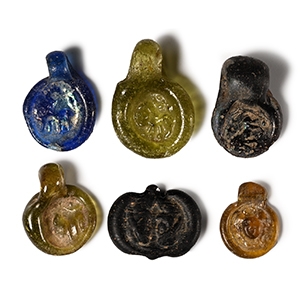
Roman Decorated Glass Pendant Group
1st-2nd century A.D.Sold for (Inc. bp): £416
Comprising six discoid pendants with impressed motifs, five with integral loops; four with an image of an advancing lion, one with a facing medusa head, and one with two opposing male heads, pierced twice for suspension. 11.12 grams total, 17-26 mm
London, UK gallery, 1971-early 2000s. -
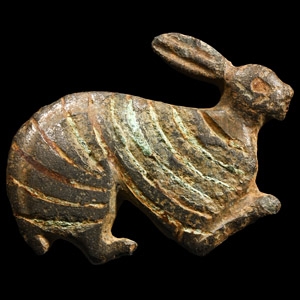
Roman 'Essex' Bronze Hare Brooch
Circa 2nd century A.D.Sold for (Inc. bp): £221
Bronze plate brooch in the form of a hare with remains of enamel stripes to the body; pin-lugs and catch to the reverse. 2.89 grams, 21 mm
Found Essex, UK, in the 1980s. Property of an Essex collector. -
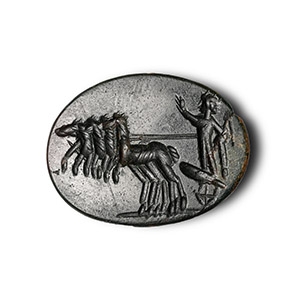
Romano-British Gemstone with Helios Driving Quadriga
2nd-3rd century A.D.Sold for (Inc. bp): £520
Intaglio image of a chariot pulled by four horses and a standing figure. 1.15 grams, 17.77 mm
Found Southern England. Acquired on the UK art market in the 1980s. From an East Anglian private collection.
