
Loading, please wait...
LOT 0199
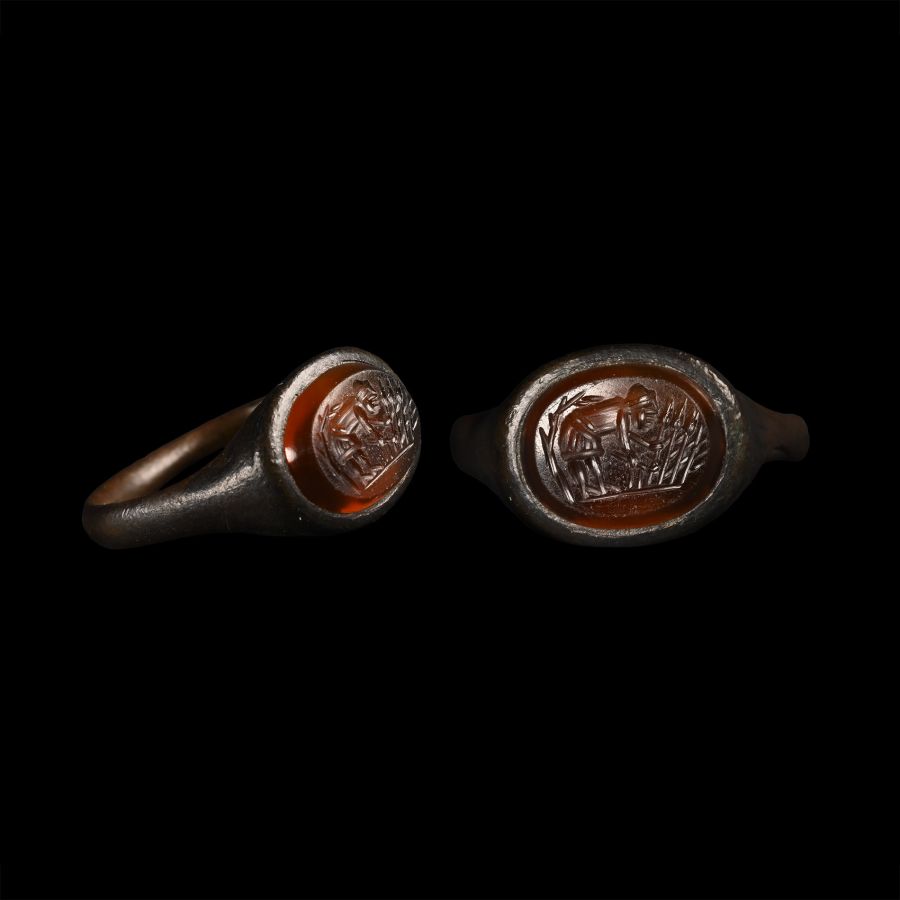
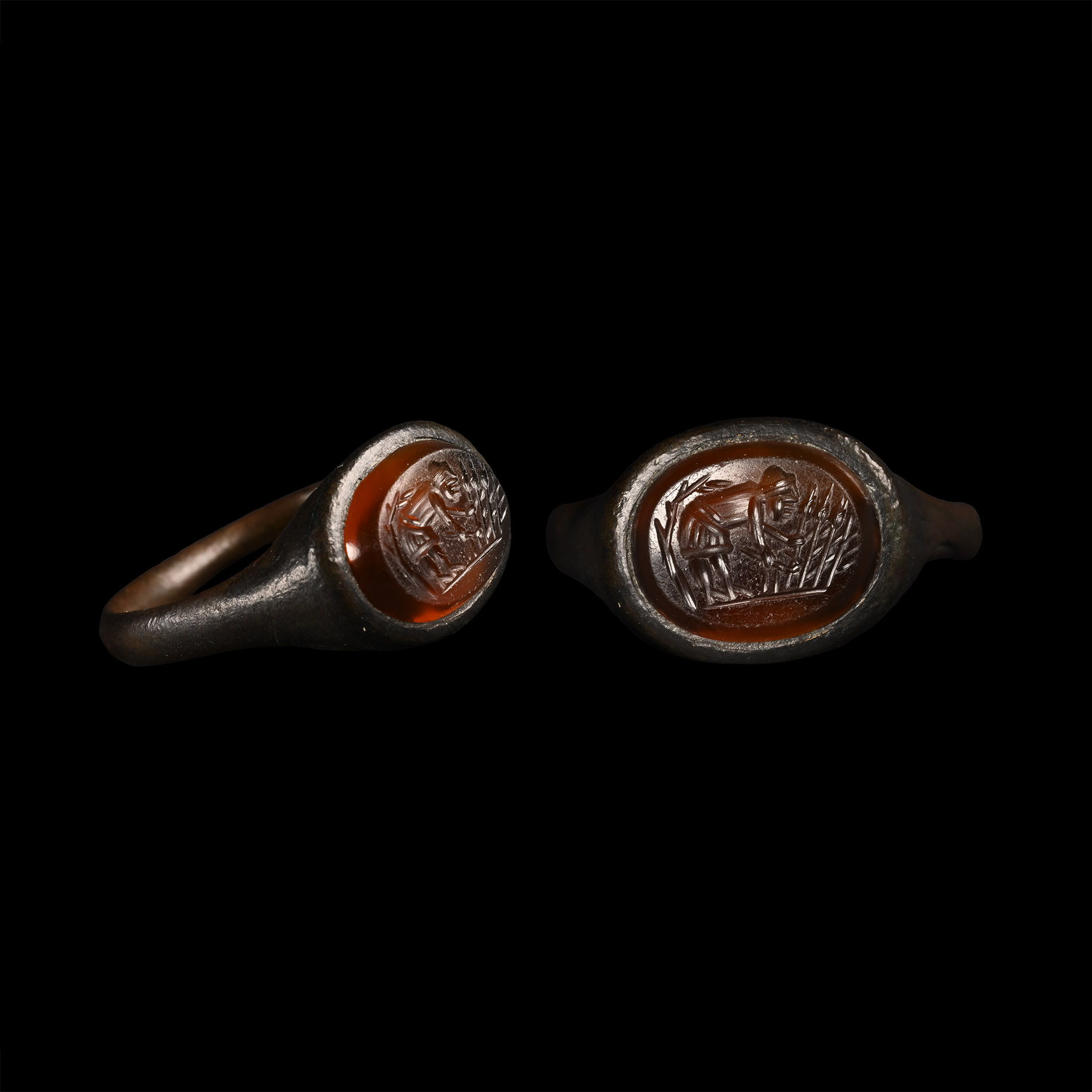
Late Roman Bronze Ring with Harvester Gemstone
CIRCA 5TH-6TH CENTURY A.D.
1 1/8 in. (6.21 grams, 27.78 mm overall, 19.08 mm internal diameter (approximate size British S 1/2, USA 9 1/4, Europe 20.63, Japan 19)).
With narrow shank and carinated ellipsoid bezel, inset carnelian intaglio of an agricola farm-worker harvesting wheat.
ProvenanceAcquired on the German art market before 2000.
Property of a Surrey, UK, collector.
Cf. Ruseva-Slokoska, L., Roman Jewellery, Sofia, 1991, item 233, for type.
CONDITIONTimeLine Auctions follows a vetting process to ensure the authenticity and legality of all items, reinforcing our commitment to integrity and responsible trading. Each antiquity, antique, and coin lot undergoes thorough examination by a vetting committee of at least ten external specialists, professional trade association members, scientists, and archaeologists: Our Vetting Process
AUCTIONS:
TimeLine is a leading auction house specialising in antiquities, ancient art, collectables, natural history, coins, medals, and books. Our auctions offer museums, collectors, historians, and enthusiasts the opportunity to acquire unique and historically significant pieces.
-
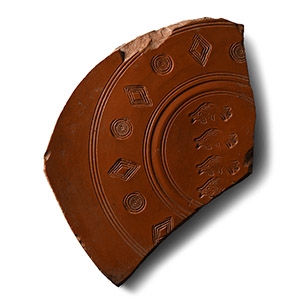
Roman Redware Fish Sherd with Christian Symbols
4th-5th century A.D.Sold for (Inc. bp): £85
Flat ceramic sherd with incised concentric rings, band of impressed alternating lozenges and roundels, group of four fish to the centre; fabric-backed. 178 grams, 17.5 cm
Acquired 1960s-1990s. From the late Alison Barker collection, a retired London barrister
The representation of fish on this terra sigillata from a North African workshop suggests the connection with Christian faith through the fish symbol. The ancient Greek: 'ἰχθύς', was an acronym for the phrase ‘Jesus Christ, Son of God’, in Greek, and was used by early Christians for this reason. The fish symbol was very common in the catacombs of Rome and was used as a recognition symbol among the early Christians. -
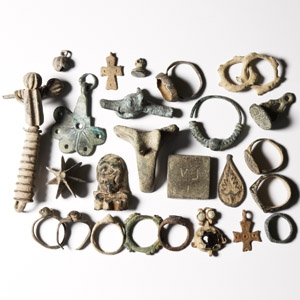
Roman and Later Bronze Artefact Group
1st millennium B.C. and laterSold for (Inc. bp): £78
Including a bow brooch, finger rings, tabular lead-alloy trade weight and other items. 207 grams total, 10-75 mm
Ex North London, UK, gentleman, 1990s-2000s. -
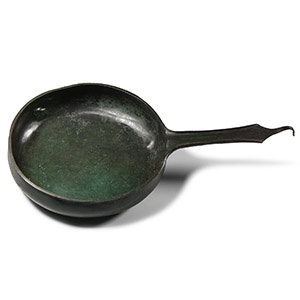
Roman Bronze Pan with Handle
1st century B.C.-1st century A.D.Estimate: £1,200 - 1,700 (+bp*)
Opening Bid: £667
The bowl with a wide flat bottom and convex sides; the inside with incised concentric circles; flat handle with raised edges and hooked finial for suspension. 483 grams, 39.5 cm
German private collection, Mr O., collecting in the 1950s-1960s; thence by descent. with Bonhams, London, 7 July 2016, lot 191. Accompanied by an academic report by Dr Raffaele D’Amato. This lot has been checked against the Interpol Database of stolen works of art and is accompanied by search certificate number no.11735-201189.
This vessel was part of Roman and provincial bronze instrumentum domesticum, i.e. culinary or domestic utility ware. Such cooking vessels are rare: some are found in central and northern Italy, in Pannonia, Germany and in Britain. The Aylesford Pan, today in the British Museum (inventory no.1886.1112.1), is one of the most important finds. This specimen (Eggers type 130), probably pre-Caesarian or Caesarian, was found in a grave together with a Celtic bucket and a jug.
