
Loading, please wait...
LOT 0827
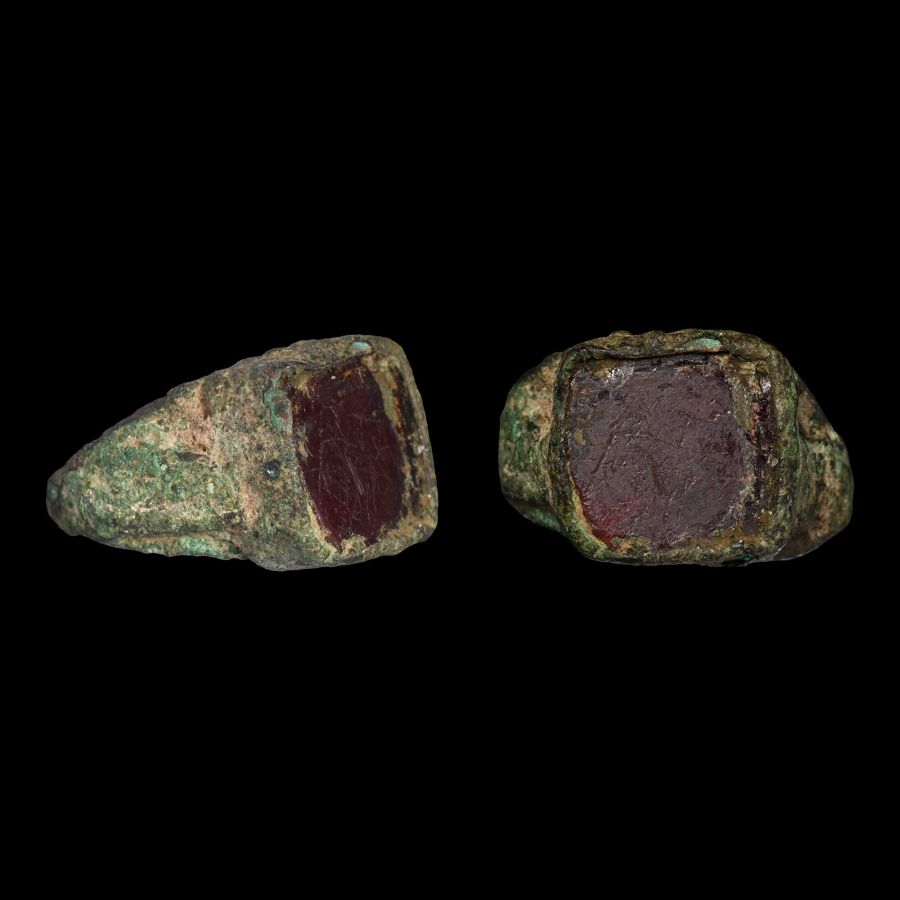
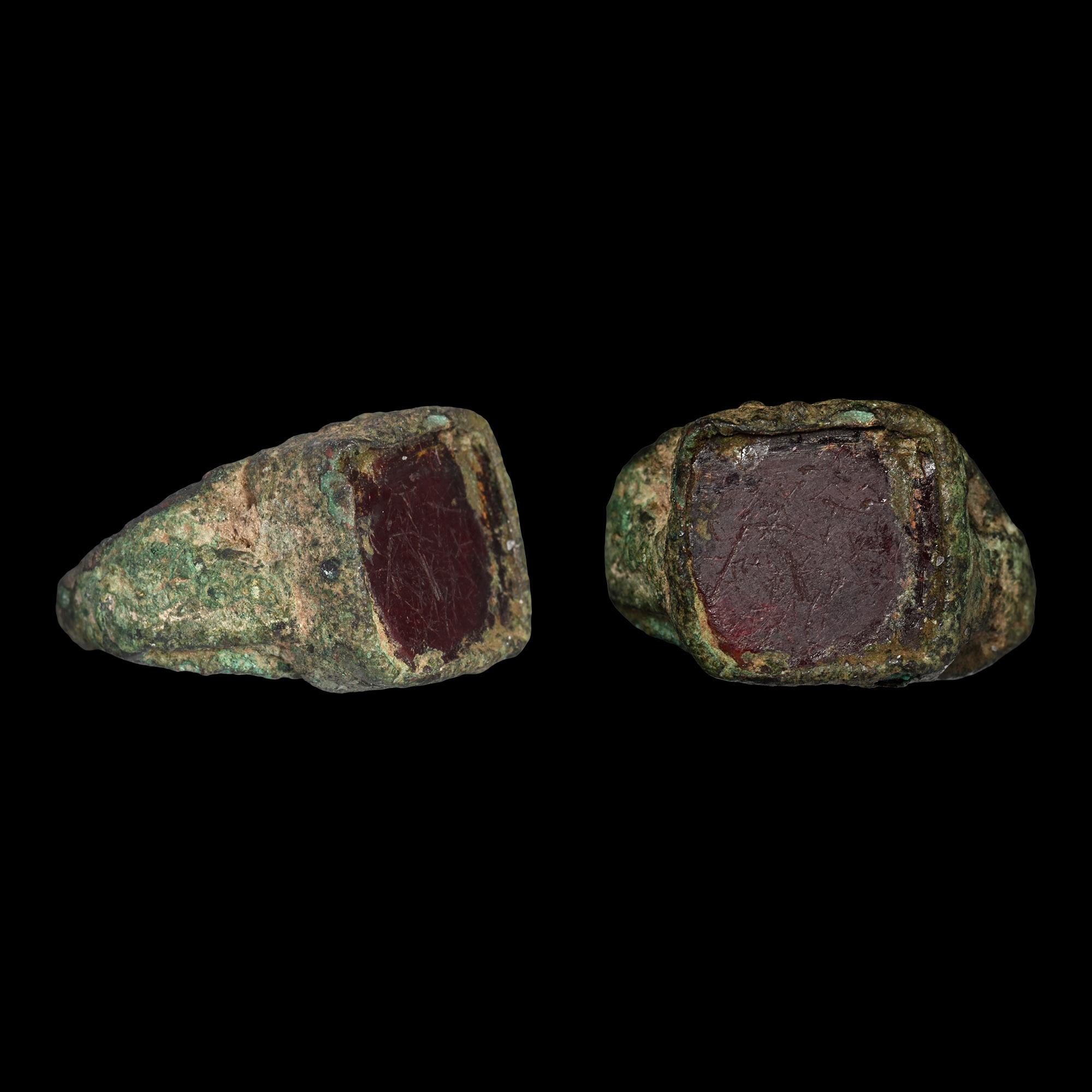
Late Roman Bronze Ring with Flatbed Garnet Gemstone
5TH-6TH CENTURY A.D.
1 in. (5.13 grams, 24.16 mm overall, 18.27 x 16.05 mm internal diameter (approximate size British L, USA 5 3/4, Europe 11.24, Japan 10)).
D-section hoop with flared shoulders and square cell, inset cloison. [No Reserve]
ProvenanceFrom the private collection of Mr Brian Edwards, New Malden, Surrey, UK, formed from the late 1970s-early 1980s; thence by descent.
Accompanied by the original collector's data sheet(s) with reference no.A42.
TimeLine Auctions follows a vetting process to ensure the authenticity and legality of all items, reinforcing our commitment to integrity and responsible trading. Each antiquity, antique, and coin lot undergoes thorough examination by a vetting committee of at least ten external specialists, professional trade association members, scientists, and archaeologists: Our Vetting Process
AUCTIONS:
TimeLine is a leading auction house specialising in antiquities, ancient art, collectables, natural history, coins, medals, and books. Our auctions offer museums, collectors, historians, and enthusiasts the opportunity to acquire unique and historically significant pieces.
-
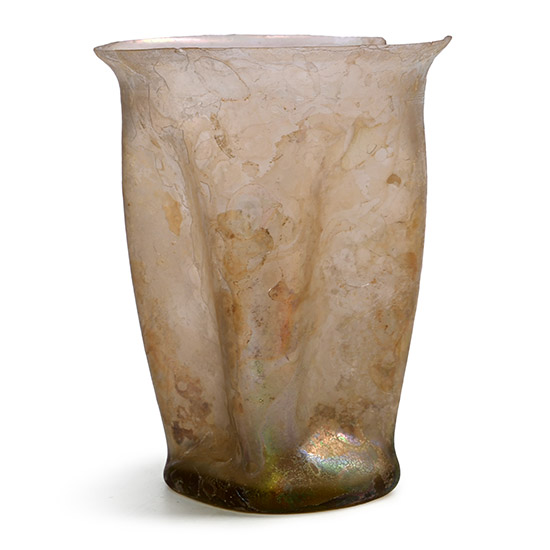
Roman Iridescent Glass Pinched Beaker
Circa 2nd-3rd century A.D.Sold for (Inc. bp): £78
Flat base and a conical body with an everted rim; rim chipped. 53 grams, 10.3 cm
From the collection of a late Norfolk, UK gentleman's collection, formed from the late 1960s-1970s. -
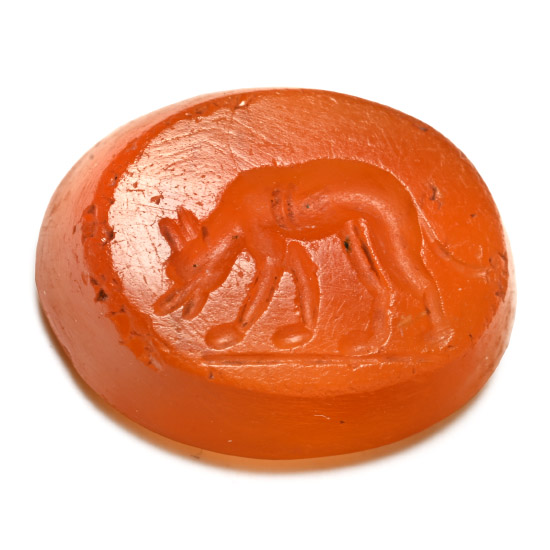
Roman Carnelian Gemstone with Wolf
2nd-3rd century A.D.Sold for (Inc. bp): £182
With intaglio lupa she-wolf advancing on a baseline. 0.79 grams, 12 mm
From the private collection of a European gentleman (1942-2024), formed since the 1970s. -
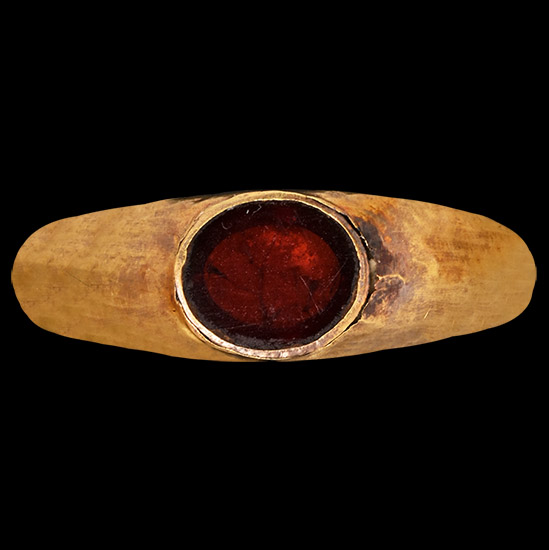
Roman Gold Ring with Red Gem
1st century A.D.Sold for (Inc. bp): £1,105
Comprising a hollow-form round-section hoop widening towards the shoulders, set with a table-cut garnet or paste with foil backing, polished. 1.55 grams, 21.78 mm overall, 15.63 x 14.16 mm internal diameter (approximate size British H 1/2, USA 4, Europe 6.81, Japan 6)
From the old family collection of a West Country, UK, lady; acquired by descent from her grandfather circa 2001.
The ring belongs to variant 3, type 1, of the Slokovska classification. The type of ring is characteristic of the Early Imperial Age. Similar rings with the same typology of gemstones have also been found in Kerch.
