
Loading, please wait...
LOT 0662
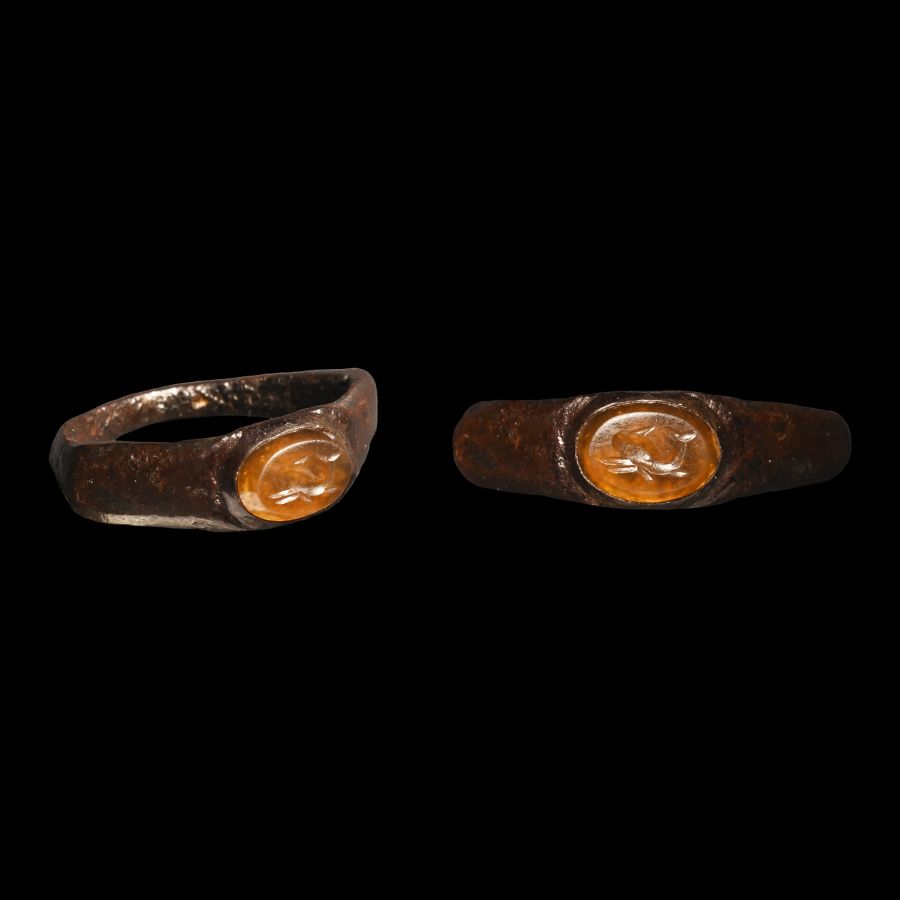
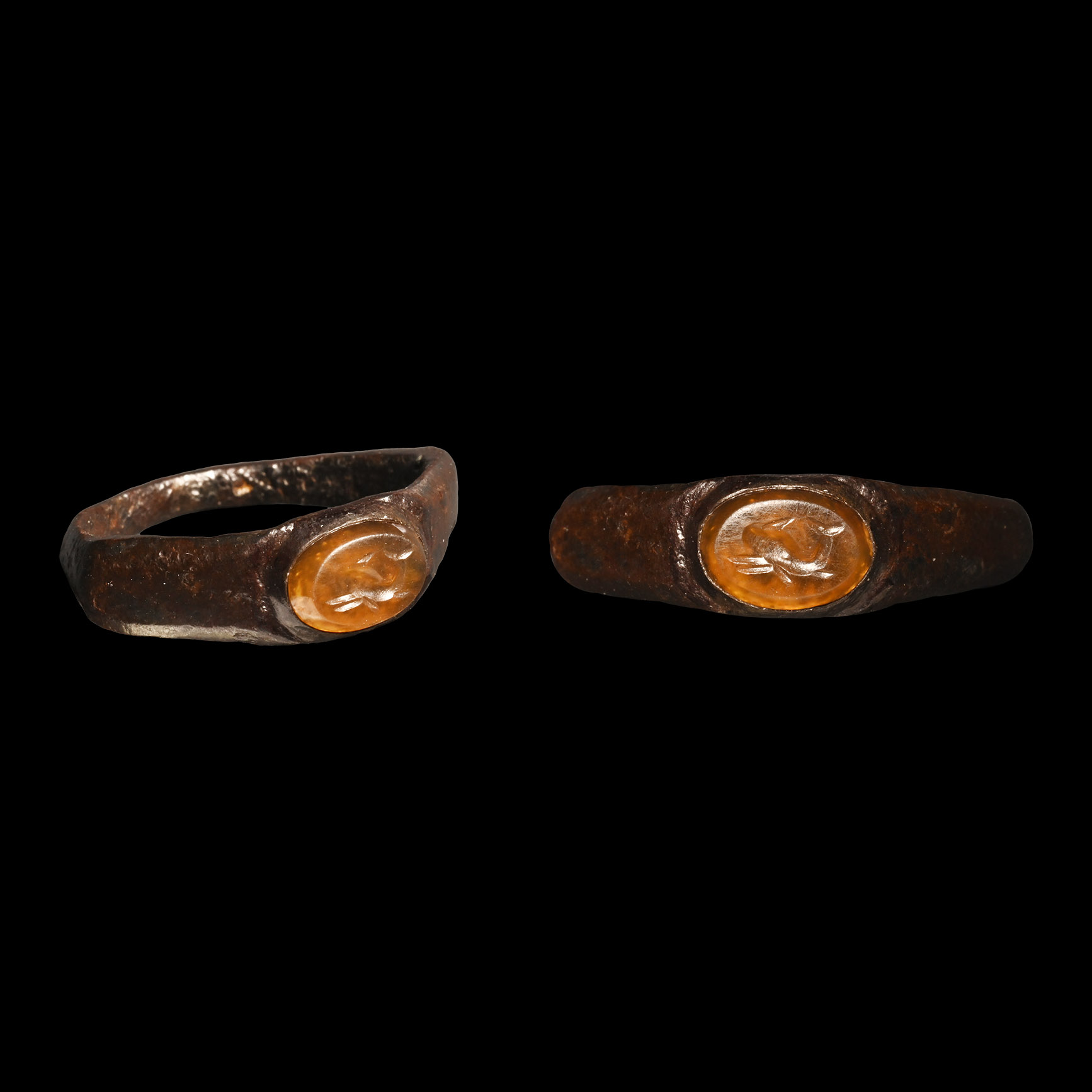
Late Roman Bronze Ring with Dolphin Gemstone
CIRCA 3RD-4TH CENTURY A.D.
1 in. (3.15 grams, 24.52 mm overall, 18.01 mm internal diameter (approximate size British O 1/2, USA 7 1/4, Europe 15.61, Japan 15)).
With facetted angled shoulders, small plaque with inset carnelian intaglio of a dolphin with raised tail.
ProvenanceAcquired on the German art market before 2000.
Property of a Surrey, UK, collector.
Cf. Ruseva-Slokoska, L., Roman Jewellery, Sofia, 1991, item 227, for type.
CONDITIONTimeLine Auctions follows a vetting process to ensure the authenticity and legality of all items, reinforcing our commitment to integrity and responsible trading. Each antiquity, antique, and coin lot undergoes thorough examination by a vetting committee of at least ten external specialists, professional trade association members, scientists, and archaeologists: Our Vetting Process
AUCTIONS:
TimeLine is a leading auction house specialising in antiquities, ancient art, collectables, natural history, coins, medals, and books. Our auctions offer museums, collectors, historians, and enthusiasts the opportunity to acquire unique and historically significant pieces.
-
.jpg)
Roman 'The Wakefield' Bronze Founding of Rome Commemorative Military Phalera
1st century B.C.-1st century A.D.Estimate: £1,000 - 1,400 (+bp*)
Opening Bid: £500
With high-relief image depicting a she-wolf in profile advancing beneath a tree, with an infant or boy (Romulus?) on its back, nude and looking up towards the tree. 39 grams, 62 mm
Mostly intact, good condition.
Believed to have been found in Wakefield, UK, in the 1960s. From the Roman 'Invasion Period' private collection of Brian Riley, Wakefield, UK, 1960s-2007. Acquired from Brian Riley, Yorkshire, UK, circa 2007. Property of a Stowmarket, UK, gentleman. Accompanied by an academic report by Dr Raffaele D’Amato.
Military phalerae usually depicted heads of the gods, spirits of the underworld, birds and lions. The higher officers in the Roman army had the custom of wearing a rich suite of phalerae with its straps directly attached to leather garments or doublets, worn over their armour. These decorations were awarded in sets, commonly of nine, although sources confirm that this was not an always the case. -
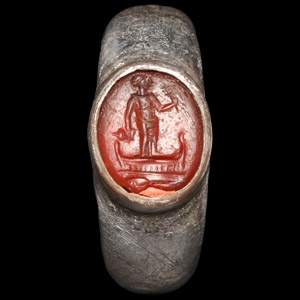
Roman Silver Ring with Isis Gemstone
1st century A.D.Sold for (Inc. bp): £338
Ellipsoid cell to the bezel, inset carnelian gemstone with intaglio Isis standing by the curved prow of a boat holding a sistrum in her raised hand. 5.53 grams, 23.13 mm overall, 17.36 mm internal diameter (approximate size British N 1/2, USA 6 3/4, Europe 14.35, Japan 13)
Old private collection, 1980s. European art market. -
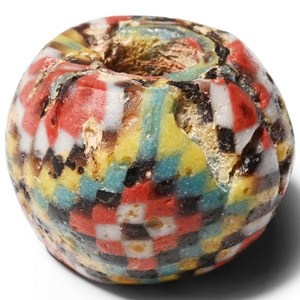
Roman Mosaic Glass Bead
1st-3rd century A.D.Sold for (Inc. bp): £72
Of oblate shape with an intricate chequerboard pattern; the patterns assembled from bundles of compatible coloured canes melted together, pulled out long and the slices then melted as the bead around bead surfaces. 2.66 grams, 14.7 mm
London, UK gallery, 1971-early 2000s.
