
Loading, please wait...
_900x900.jpg "Late Roman Bronze Ring with Bust")
_200x200.jpg "Late Roman Bronze Ring with Bust")
.jpg "Late Roman Bronze Ring with Bust")
LOT 0599
Late Roman Bronze Ring with Bust
5TH-6TH CENTURY A.D.
1 1/8 in. (8.85 grams, 29.60 mm overall, 17.30 x 20.72 mm internal diameter (approximate size British O, USA 7, Europe 14.98, Japan 14)).
Substantial hoop with a raised rectangular bezel bearing a profile bust facing left, flanking inscription '+VI[R]TVS' (Value)
ProvenanceEx German art market, 2000s.
Acquired from an EU collector living in London.
From the collection of a Surrey, UK, gentleman.
Cf. Hadjadj, R., Bagues Merovingiennes - Gaul du Nord, Paris, 2007, item 571, for type.
FootnotesThe ring seems to underline military virtue (virtus), and it can be assumed that it was given as a gift to a soldier for an act of courage, or as a reward for an undertaking of a certain value. The bust could represent an imperial figure.
CONDITIONTimeLine Auctions follows a vetting process to ensure the authenticity and legality of all items, reinforcing our commitment to integrity and responsible trading. Each antiquity, antique, and coin lot undergoes thorough examination by a vetting committee of at least ten external specialists, professional trade association members, scientists, and archaeologists: Our Vetting Process
AUCTIONS:
TimeLine is a leading auction house specialising in antiquities, ancient art, collectables, natural history, coins, medals, and books. Our auctions offer museums, collectors, historians, and enthusiasts the opportunity to acquire unique and historically significant pieces.
-
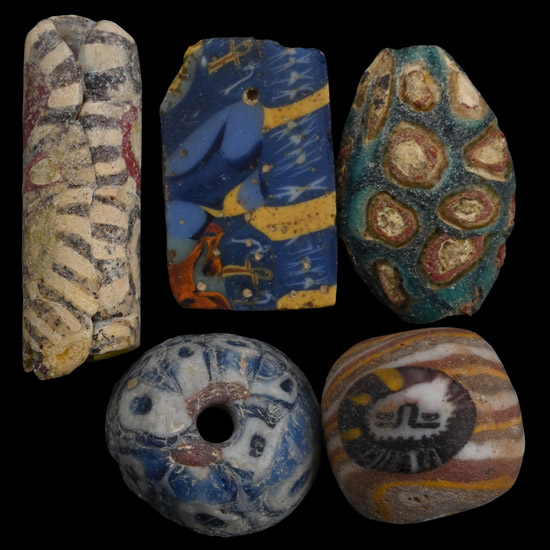
Roman Millefiori Glass Bead and Inlay Group
1st-4th century A.D.Sold for (Inc. bp): £442
Including barrel-shaped, tubular and other types. 11.89 grams total, 12-23 mm
From the collection of a gentleman, acquired on the London art market in the 1990s. -
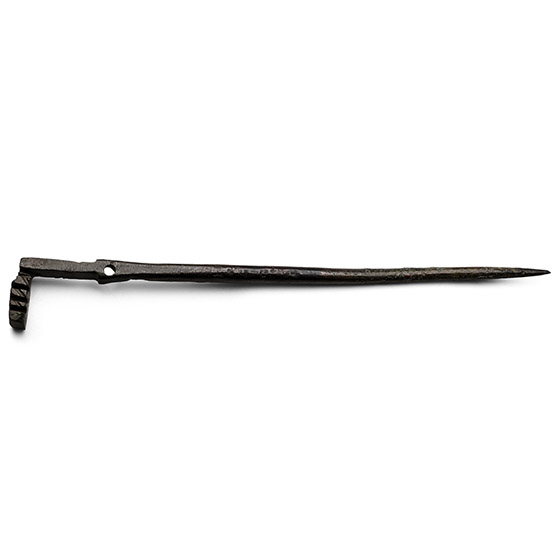
Roman Hair Pin Key
1st-4th century A.D.Sold for (Inc. bp): £78
Comprising a tapering shaft with a perpendicular key terminal with piercing. 6.36 grams, 98 mm
Ex German art market, 2000s. Acquired from an EU collector living in London. From the collection of a Surrey, UK, gentleman. -
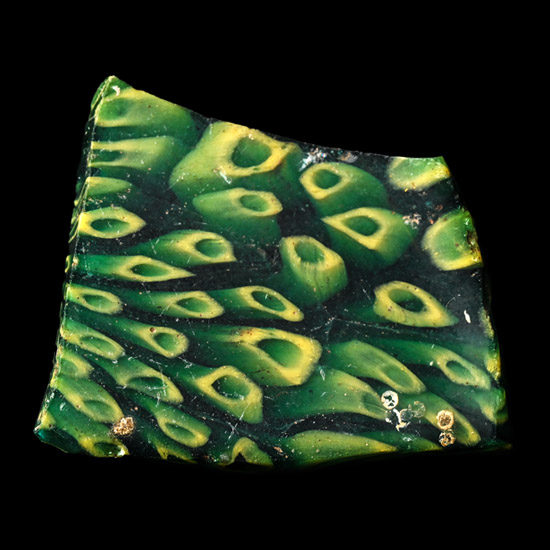
Roman Green Mosaic Glass Fragment
Late 1st century B.C.-early 1st century A.D.Sold for (Inc. bp): £221
A roughly rectangular section of green and black mosaic glass with yellow annulets. 5.69 grams, 34.3 mm
From the late collection of a Cornish couple, formed from the early 1990s.
