
Loading, please wait...
LOT 0151
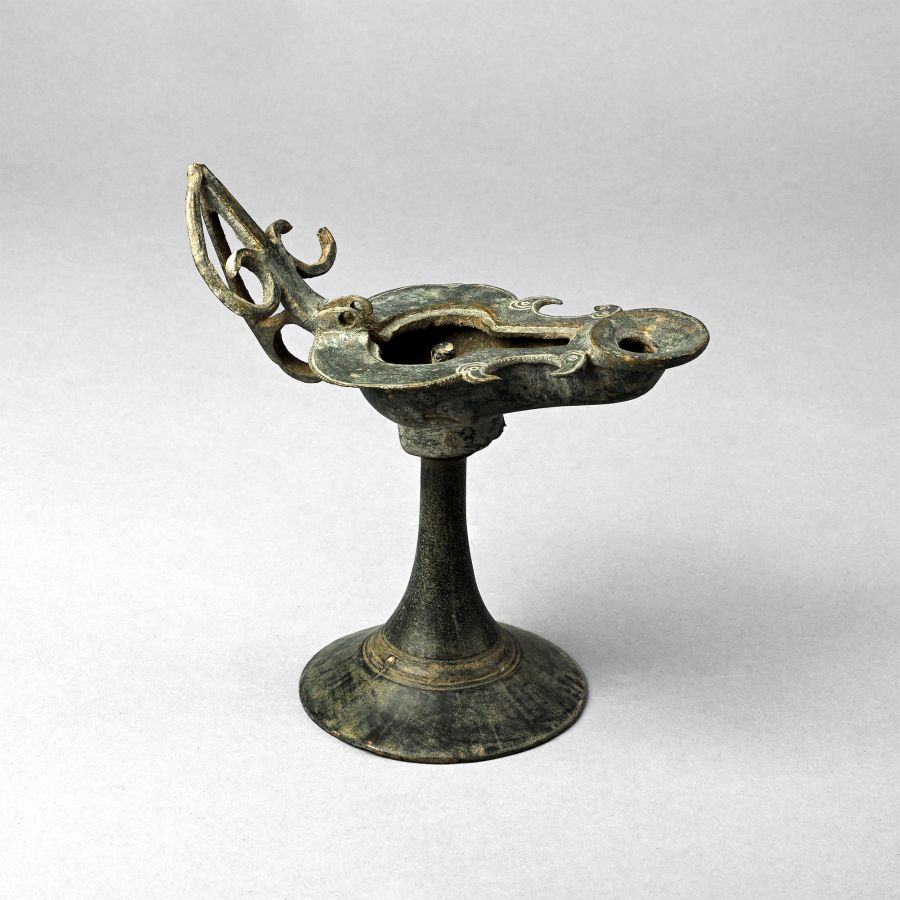
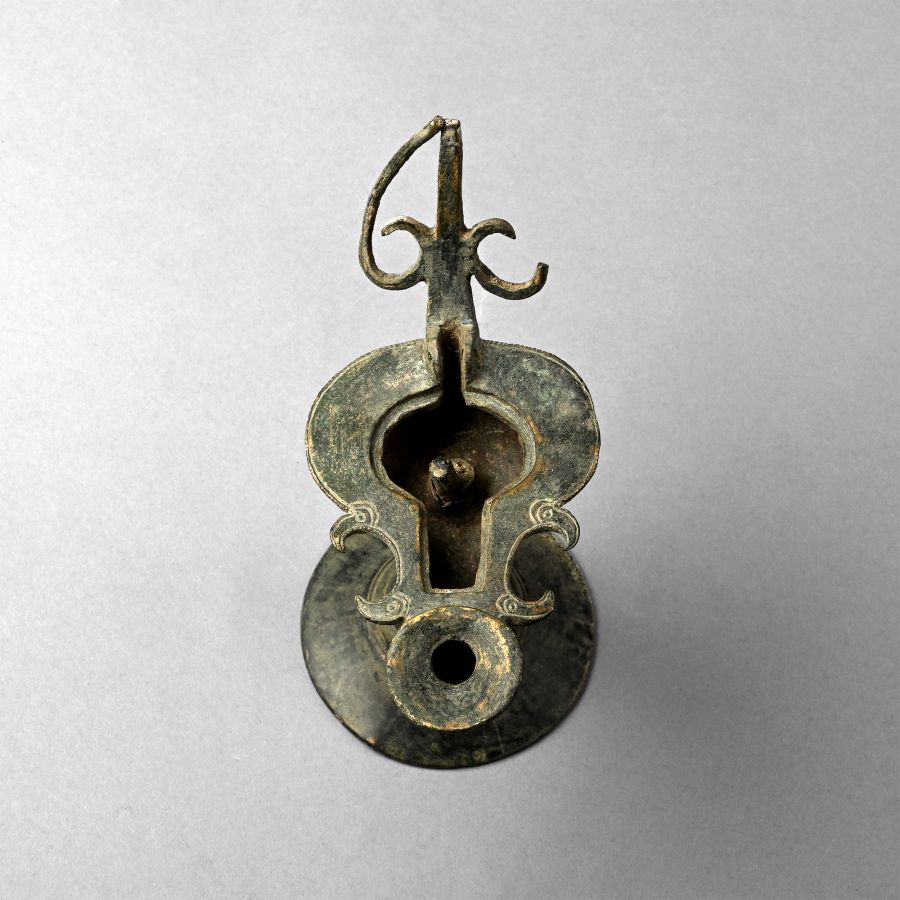
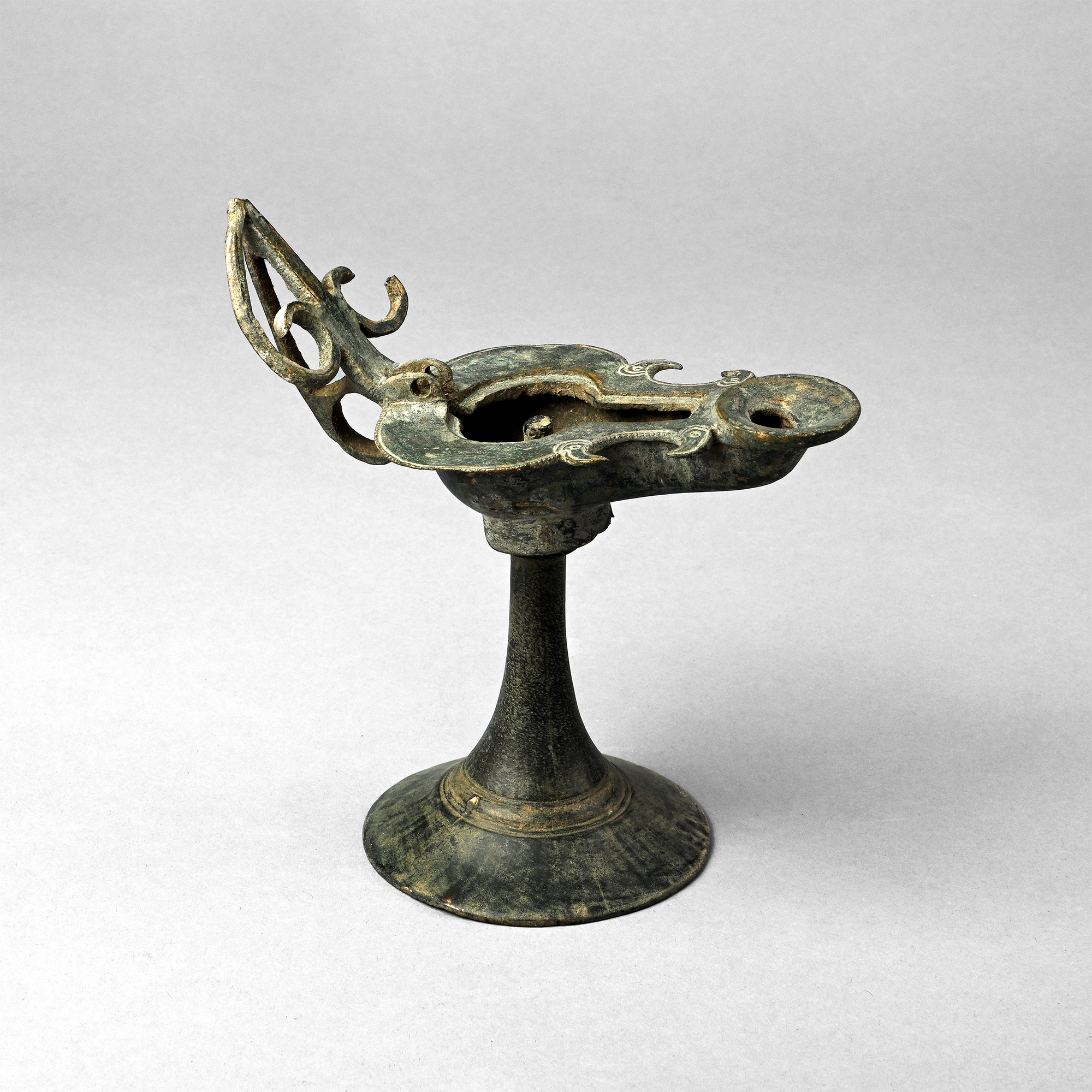
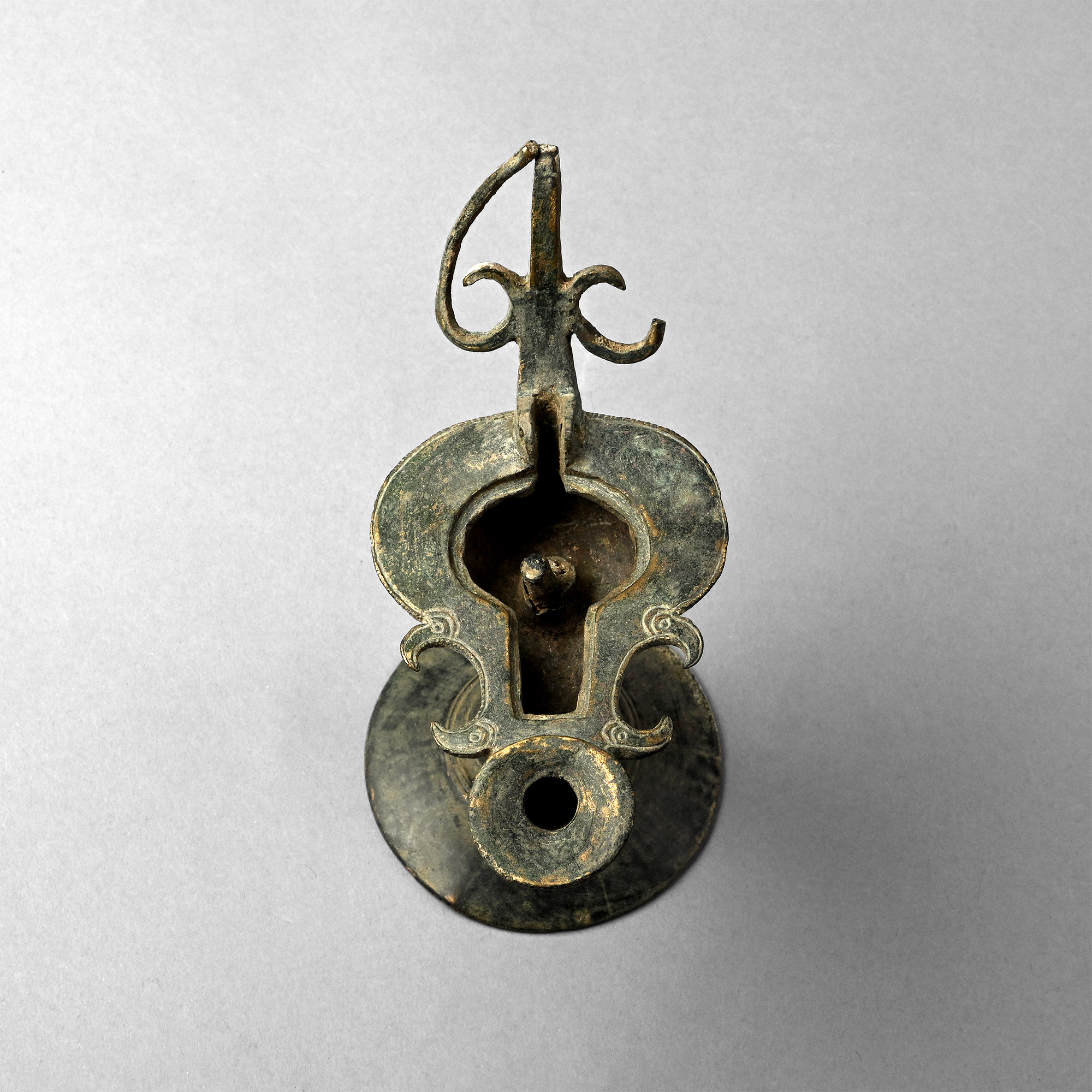
Late Roman Bronze Lamp and Stand
CIRCA 5TH-6TH CENTURY A.D.
3 3/8 - 6 in. (543 grams total, 8.6-15.4 cm).
Comprising a slipper-shaped lamp with broad flange rim to the shoulder and rear with hooked spurs; scooped recessed nozzle; handle to rear formed as a vertical bar with lateral coils converging at the apex (one partly absent) and finger-loop below; two small hinge lugs to the rear of the flange to attach a hinged cover (absent); base with socket and portion of peg; separate conical stand with carination and collar to top. [2]
ProvenanceEx German art market, 2000s.
Acquired from an EU collector living in London.
From the collection of a Surrey, UK, gentleman.
Cf. Walters, H.B., Catalogue of the Greek and Roman lamps in the British Museum, London, 1914, no.1468, for a less elaborate example of the type.
CONDITIONTimeLine Auctions follows a vetting process to ensure the authenticity and legality of all items, reinforcing our commitment to integrity and responsible trading. Each antiquity, antique, and coin lot undergoes thorough examination by a vetting committee of at least ten external specialists, professional trade association members, scientists, and archaeologists: Our Vetting Process
AUCTIONS:
TimeLine is a leading auction house specialising in antiquities, ancient art, collectables, natural history, coins, medals, and books. Our auctions offer museums, collectors, historians, and enthusiasts the opportunity to acquire unique and historically significant pieces.
-
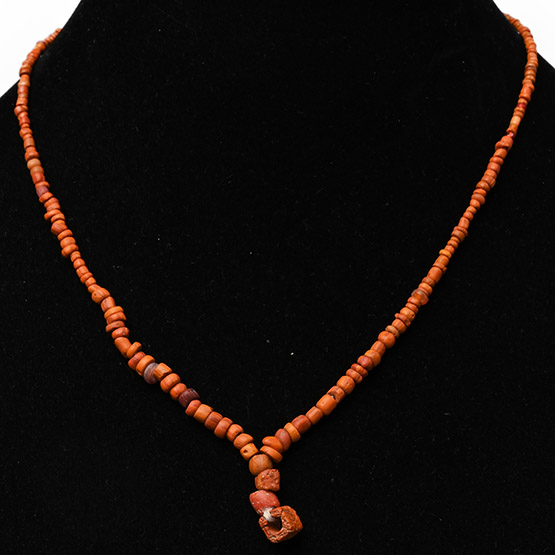
Roman Orange Glass Bead Necklace String
1st-4th century A.D. and laterSold for (Inc. bp): £195
Composed of gently graduating beads with larger beads as a central feature, restrung. 8.01 grams, 38 cm
Ex London, UK, collection, 1990s. -
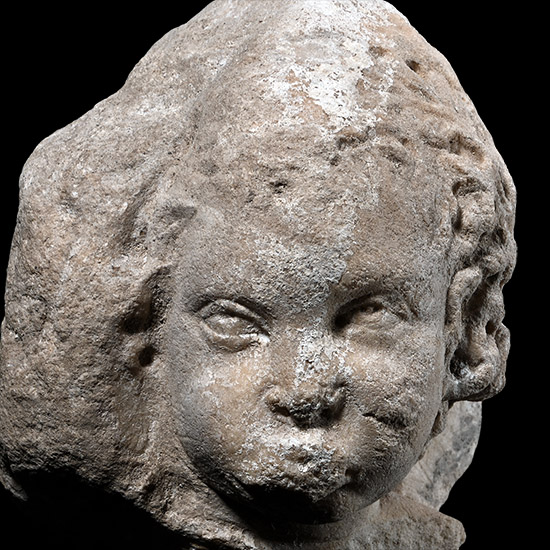
Roman Marble Head of a Putto
2nd-3rd century A.D.Sold for (Inc. bp): £1,040
Statue fragment with juvenile head of a putto carved in high-relief with full head of curly hair. 3.95 kg, 17.9 cm
From the private Netherlands collection of Mr Edward P. Van Dijk (1942-2024); his collection formed since the 1970s. -
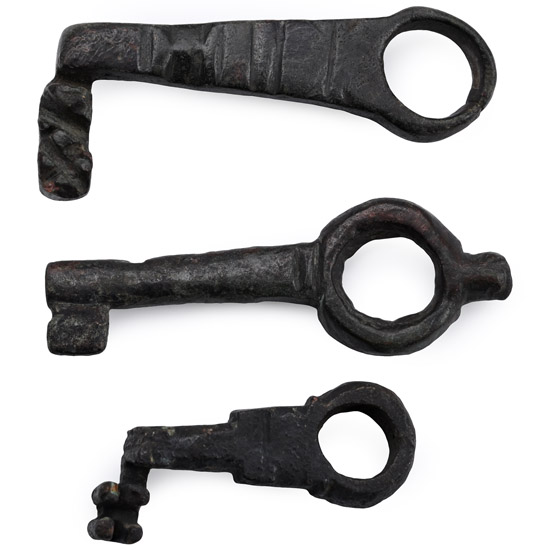
Roman Bronze Key Group
1st-4th century A.D.Sold for (Inc. bp): £176
Comprising three keys with looped terminals, one for a barrel lock. 67.66 grams total, 42-62 mm
Ex German art market, 2000s. Acquired from an EU collector living in London. From the collection of a Surrey, UK, gentleman.
