
Loading, please wait...
LOT 1922
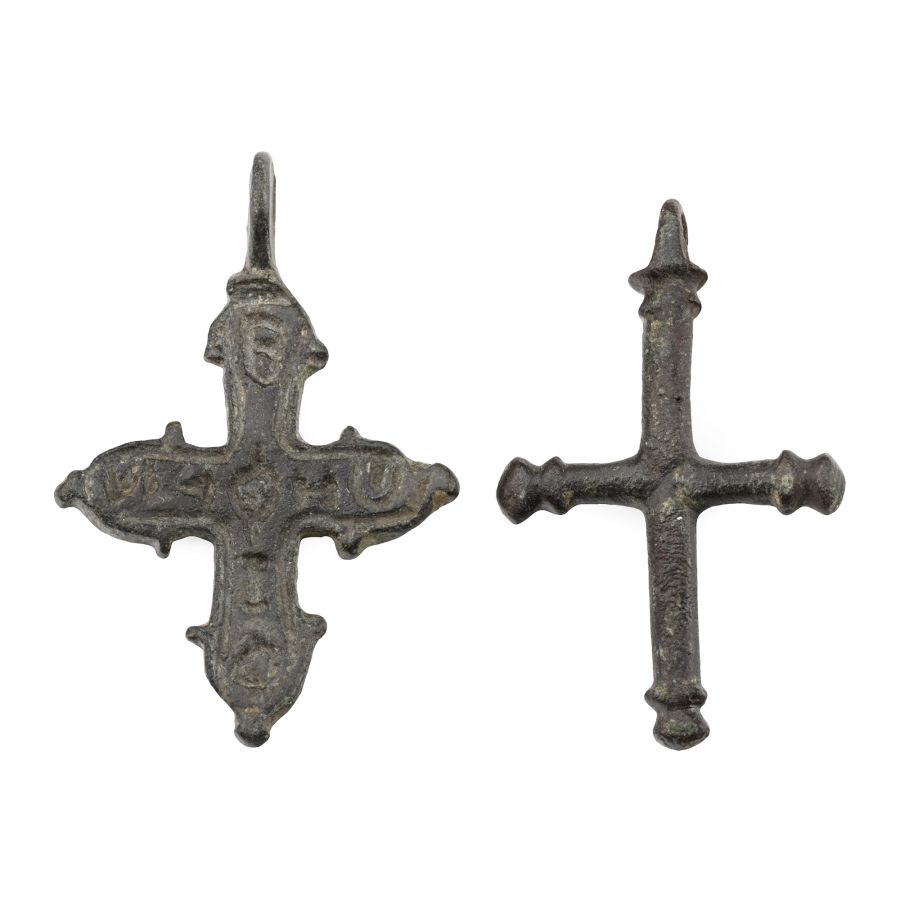
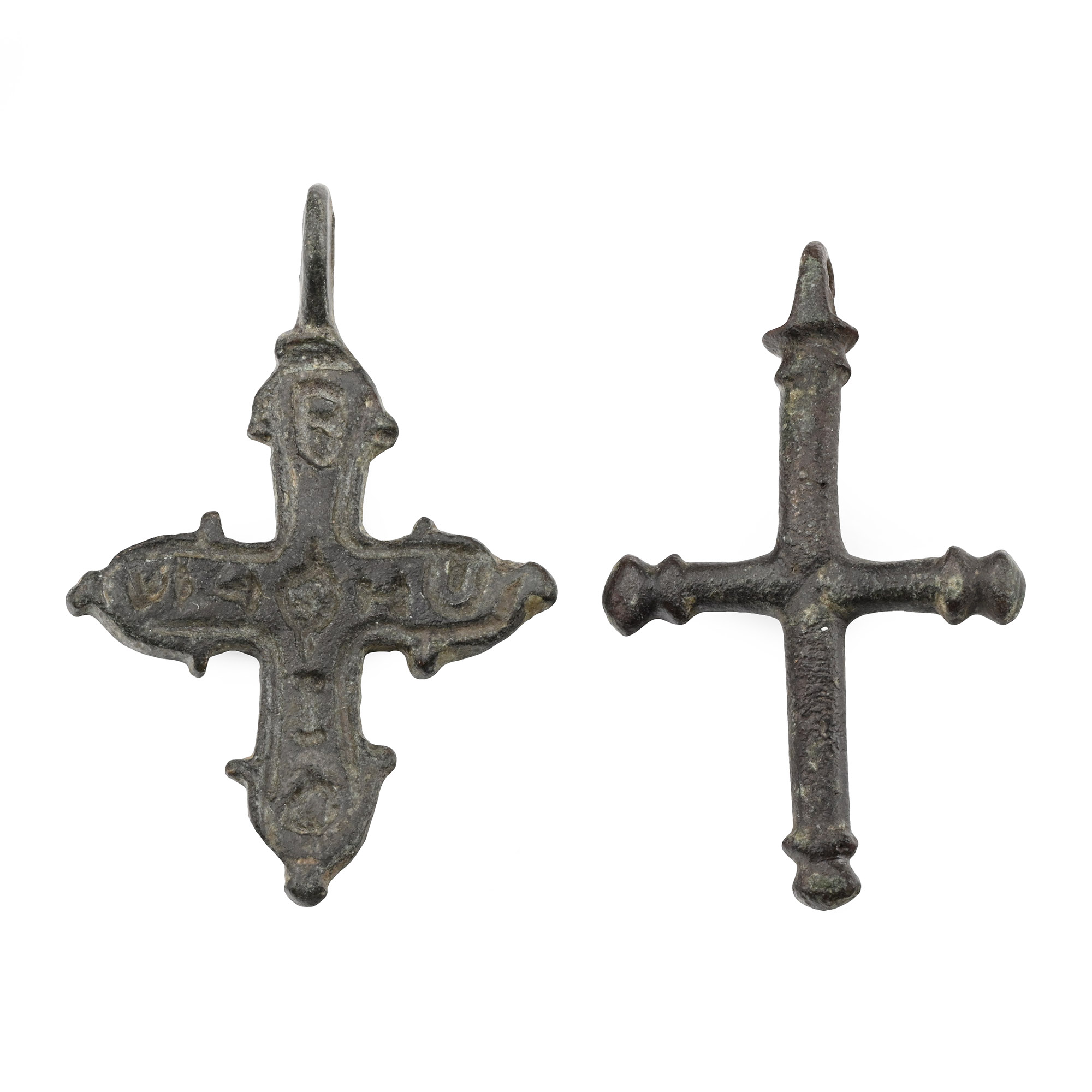
Late Medieval Bronze Cross Pendant Group
14TH-16TH CENTURY A.D.
1 3/8 - 1 1/2 in. (7.98 grams total, 36-39 mm).
Comprising: a cross pommee pendant with 'OMONIA' (harmony) impressed legend; narrow cross pendant with collared lobe finials. [2, No Reserve]
ProvenanceEx German art market, 2000s.
Acquired from an EU collector living in London.
From the collection of a Surrey, UK, gentleman.
TimeLine Auctions follows a vetting process to ensure the authenticity and legality of all items, reinforcing our commitment to integrity and responsible trading. Each antiquity, antique, and coin lot undergoes thorough examination by a vetting committee of at least ten external specialists, professional trade association members, scientists, and archaeologists: Our Vetting Process
AUCTIONS:
TimeLine is a leading auction house specialising in antiquities, ancient art, collectables, natural history, coins, medals, and books. Our auctions offer museums, collectors, historians, and enthusiasts the opportunity to acquire unique and historically significant pieces.
-
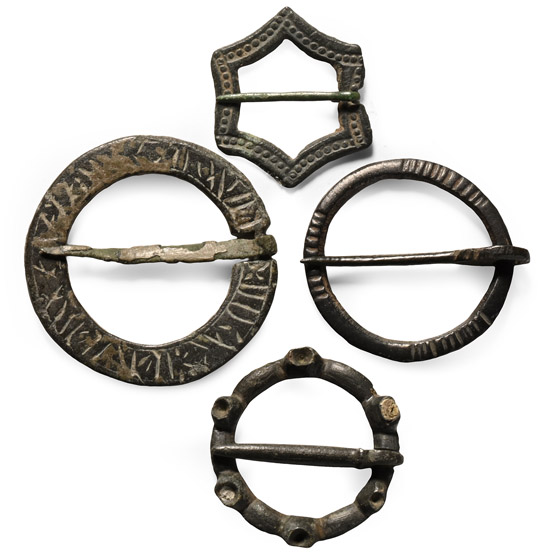
Medieval Bronze Ring Brooch Collection
14th-15th century A.D.Sold for (Inc. bp): £52
Including circular type with six cells to the hoop, hexagram and other types, one with the inscription 'IhESVS Nazarenvs' [Jesus of Nazareth]. 17.39 grams total, 24-33 mm
Found Norfolk, UK. -
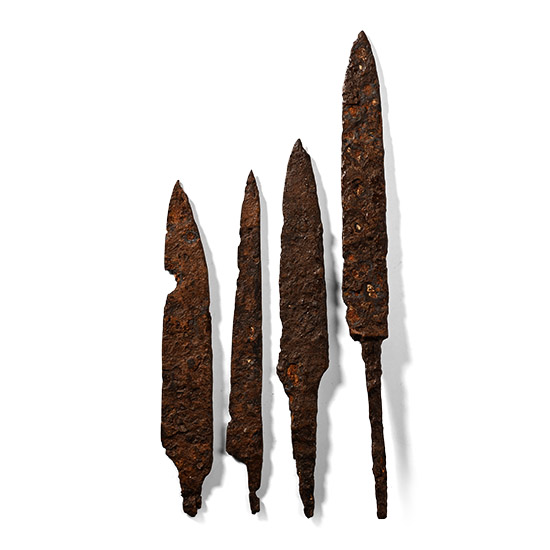
Medieval Iron Knife Blade Collection
Circa 12th-15th century A.D.Sold for (Inc. bp): £20
Each a single-edge leaf-shaped blade with whittle tang, one with integral bolster. 84 grams total, 12.6-18.1 cm
Acquired on the UK art market before 2000. Property of an Essex, UK, gentleman. -
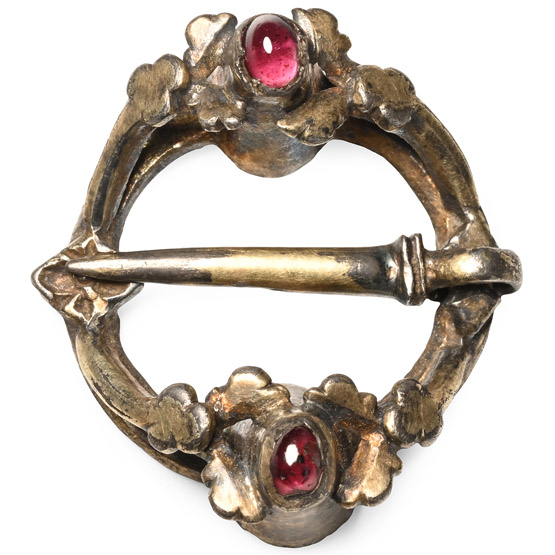
Medieval Silver-Gilt Ring Brooch with Garnet Cabochons
European, 13th-14th century A.D.Estimate: £350 - 450 (+bp*)
Opening Bid: £175
Annular in form with tapering cells to each end, with inset garnet cabochons, and leaf detailing, quatrefoil opposite the sword-shaped pin. 5.42 grams, 26 mm
Private collection, London, UK.
