
Loading, please wait...
LOT 0619
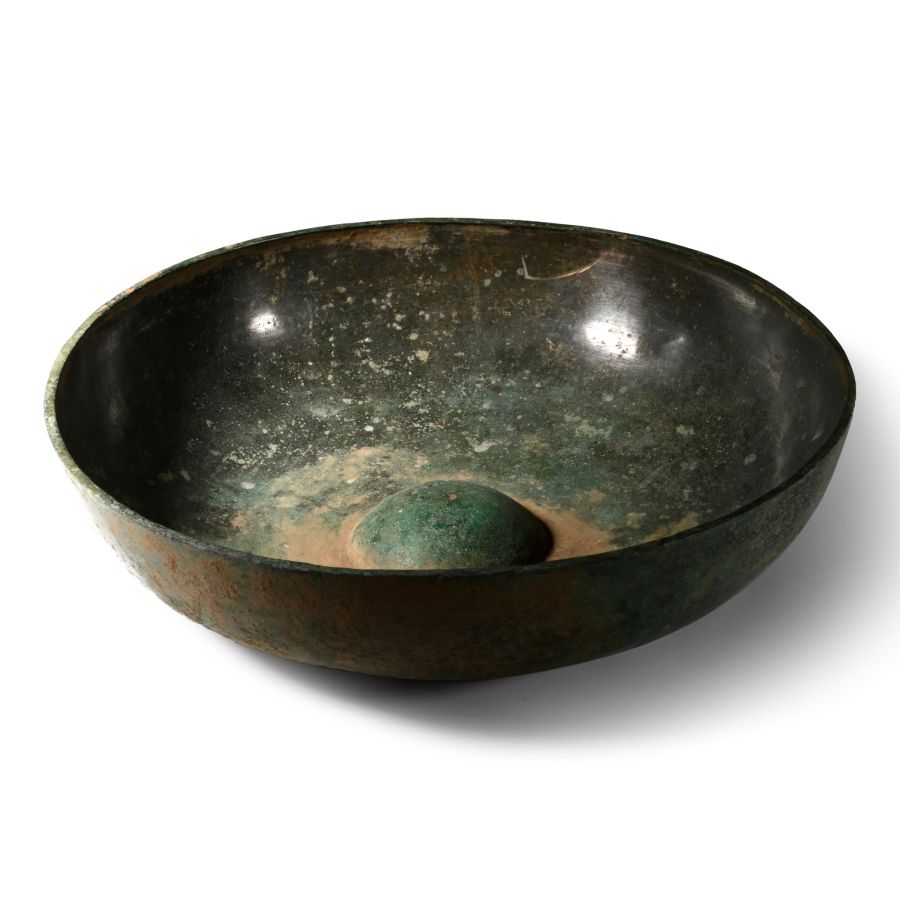
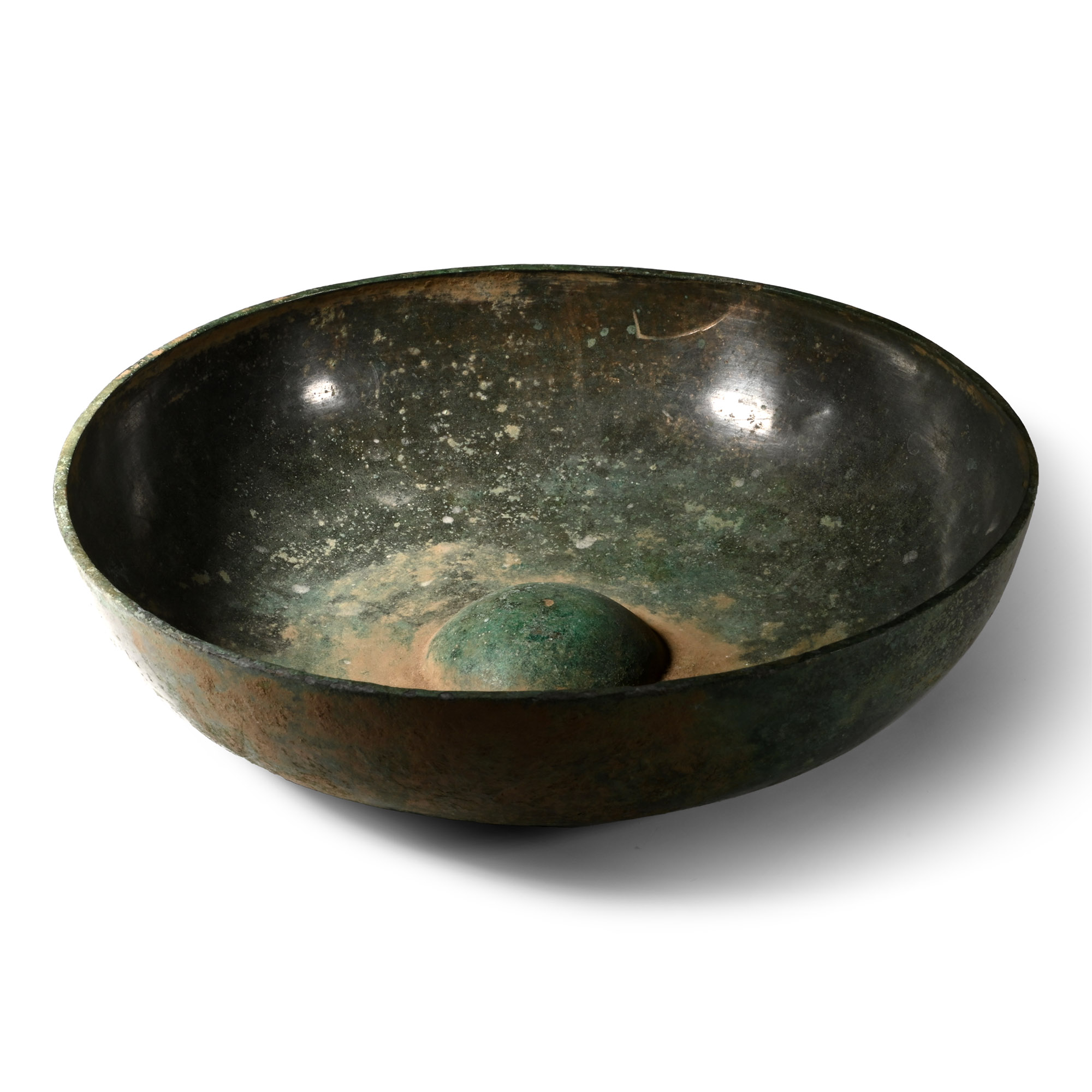
Late Lydian Bronze Phiale with Boss
600-400 B.C.
9 1/2 in. (536 grams, 24 cm wide).
Broad and squat with thickened rim, central boss to the base.
ProvenanceAcquired in the mid 1980s-1990s.
Private collection, Switzerland, thence by descent.
Private collection, since the late 1990s.
TimeLine Auctions follows a vetting process to ensure the authenticity and legality of all items, reinforcing our commitment to integrity and responsible trading. Each antiquity, antique, and coin lot undergoes thorough examination by a vetting committee of at least ten external specialists, professional trade association members, scientists, and archaeologists: Our Vetting Process
AUCTIONS:
TimeLine is a leading auction house specialising in antiquities, ancient art, collectables, natural history, coins, medals, and books. Our auctions offer museums, collectors, historians, and enthusiasts the opportunity to acquire unique and historically significant pieces.
-
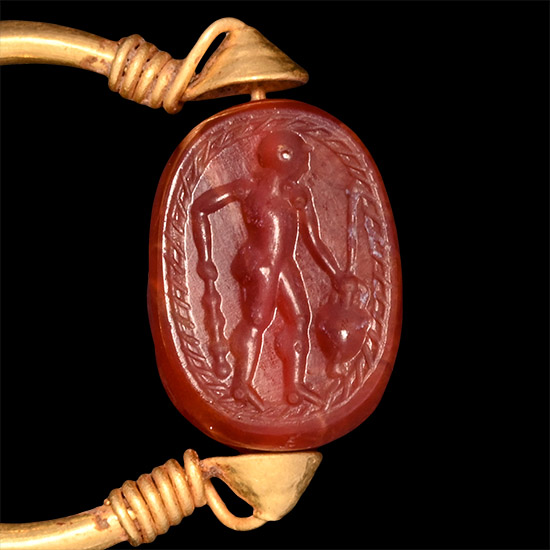
Etruscan Carnelian Scarab with Hercules at a Fountain in Gold Ring
3rd century B.C.Estimate: £1,500 - 2,000 (+bp*)
Opening Bid: £750
Hoop made from D-section wire with coils to the shoulders, scarab bezel with carapace detailing and intaglio of a standing nude figure of Hercules holding a club and amphora at a stream, enclosed by a roped border. 5.73 grams, 22.52 mm overall, 18.68 x 16.58 mm internal diameter (approximate size British P, USA 7 1/2, Europe 16.23, Japan 15)
Acquired on the UK art market. Private collection, England. -
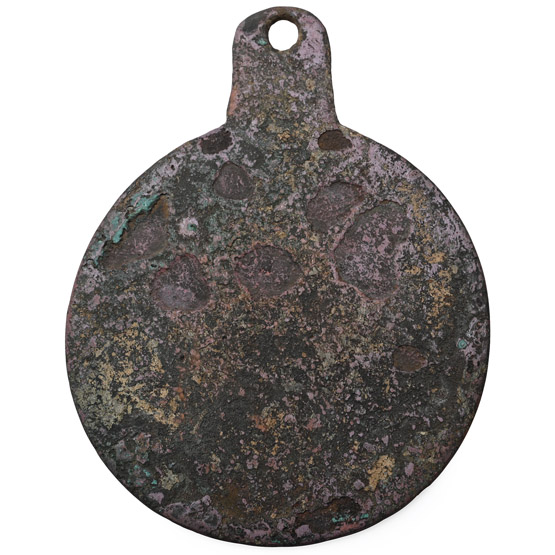
Graeco-Roman Bronze Mirror
1st century B.C.-1st century A.D.Sold for (Inc. bp): £59
Discoid flat-section body with a tongue-shaped, pierced handle. 150 grams, 13 cm
London, UK, art market, 1980s. Private collection, London, UK. -
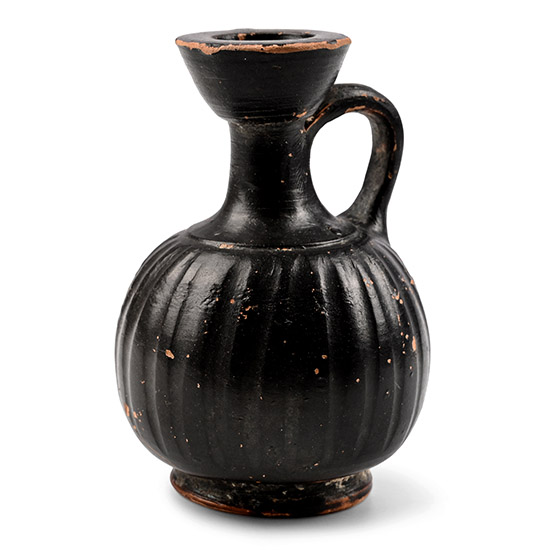
Apulian Squat Terracotta Lekythos
4th century B.C.Sold for (Inc. bp): £234
Comprising a bulbous body with a basal ring, a narrow neck and a loop handle to the rear; vertical ribbing to the body. 74 grams, 81 mm
Acquired on the French art market. Swiss private collection. Private collection, UK.
