
Loading, please wait...
LOT 0564
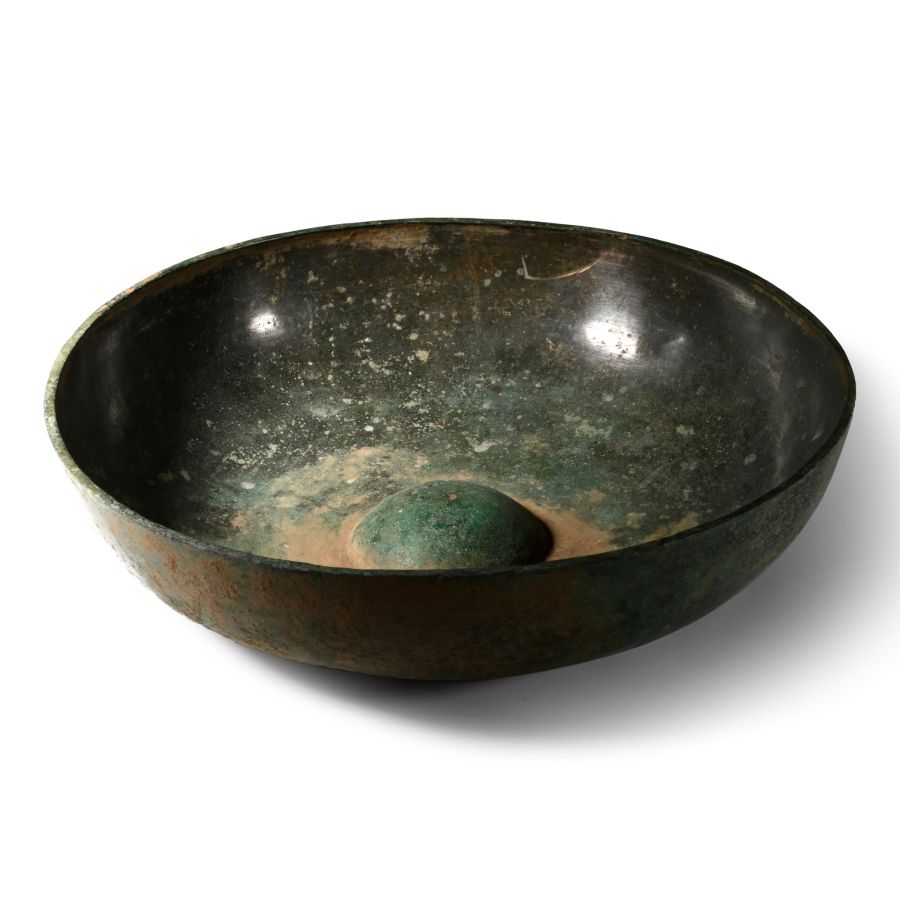
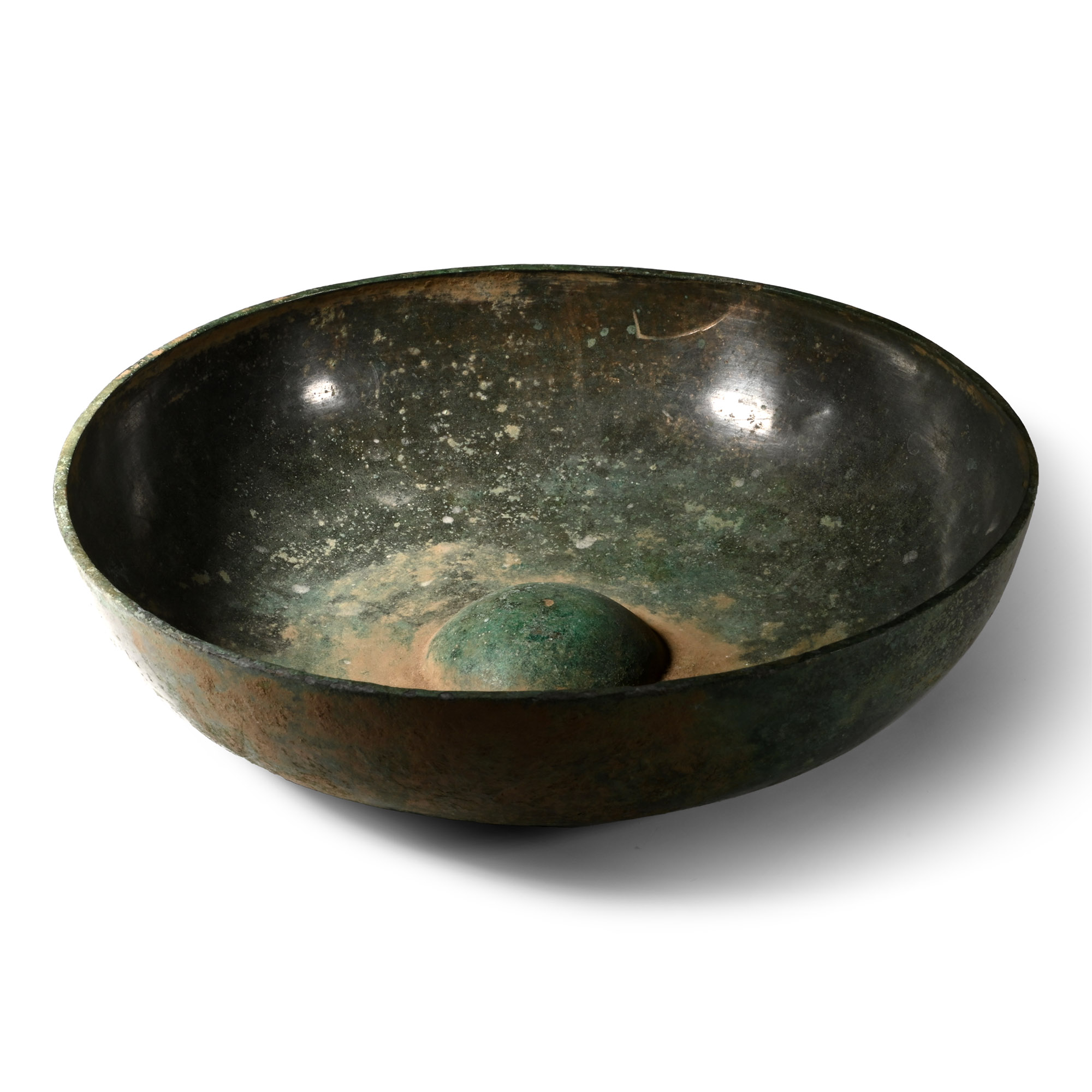
Late Lydian Bronze Phiale with Boss
600-400 B.C.
9 1/2 in. (536 grams, 24 cm wide).
Broad and squat with thickened rim, central boss to the base.
ProvenanceAcquired in the mid 1980s-1990s.
Private collection, Switzerland, thence by descent.
Private collection, since the late 1990s.
This lot has been cleared against the Art Loss Register database, and is accompanied by an illustrated lot declaration signed by the Head of the Antiquities Department, Dr Raffaele D'Amato.
This lot is accompanied by an illustrated lot declaration signed by the Head of the Antiquities Department, Dr Raffaele D'Amato.
TimeLine Auctions follows a vetting process to ensure the authenticity and legality of all items, reinforcing our commitment to integrity and responsible trading. Each antiquity, antique, and coin lot undergoes thorough examination by a vetting committee of at least ten external specialists, professional trade association members, scientists, and archaeologists: Our Vetting Process
AUCTIONS:
TimeLine is a leading auction house specialising in antiquities, ancient art, collectables, natural history, coins, medals, and books. Our auctions offer museums, collectors, historians, and enthusiasts the opportunity to acquire unique and historically significant pieces.
LOT 0564
Late Lydian Bronze Phiale with Boss
Estimate £500 - 700€580 - 810 (for guidance only)$680 - 950 (for guidance only)
-

Greek Terracotta Figure Fragment Group
6th-4th century B.C.Sold for (Inc. bp): £104
Including hollow-formed busts, body fragments and other types. 632 grams total, 3.8-15.5 cm
with H.A.C., Basel, prior 1999. This lot is accompanied by an illustrated lot declaration signed by the Head of the Antiquities Department, Dr Raffaele D'Amato. -
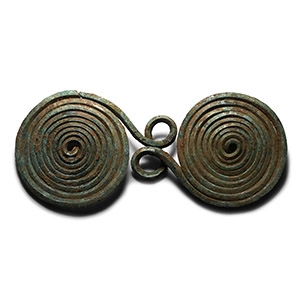
Large Greek Geometric Bronze Spiral Fibula
7th-6th century B.C.Estimate: £450 - 550 (‡+bp*)
Opening Bid: £225
Formed from a single square-section filament rolled into two 'spectacle' discs; one of the spirals terminating in a long pin, the other in a hook serving as the catchplate; openwork figure-of-eight at the centre; pin present broken, coils separated. 159 grams, 17 cm
Acquired in the mid 1980s-1990s. Private collection, Switzerland, thence by descent. Private collection, since the late 1990s. This lot is accompanied by an illustrated lot declaration signed by the Head of the Antiquities Department, Dr Raffaele D’Amato. -
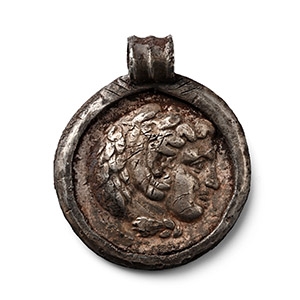
Greek Alexander the Great Tetradrachm in Silver Pendant
3rd-2nd century B.C.Sold for (Inc. bp): £442
Coin encased in silver frame with ribbed suspension loop; bust of Alexander the Great to obverse, seated figure holding a bird to reverse with 'ΑΛΕΞΑΝΔΟΣ' legend. 16.66 grams, 34 mm
Ex German art market, 2000s. Acquired from an EU collector living in London. From the collection of a Surrey, UK, gentleman. This lot is accompanied by an illustrated lot declaration signed by the Head of the Antiquities Department, Dr Raffaele D'Amato.
