
Loading, please wait...
LOT 0210
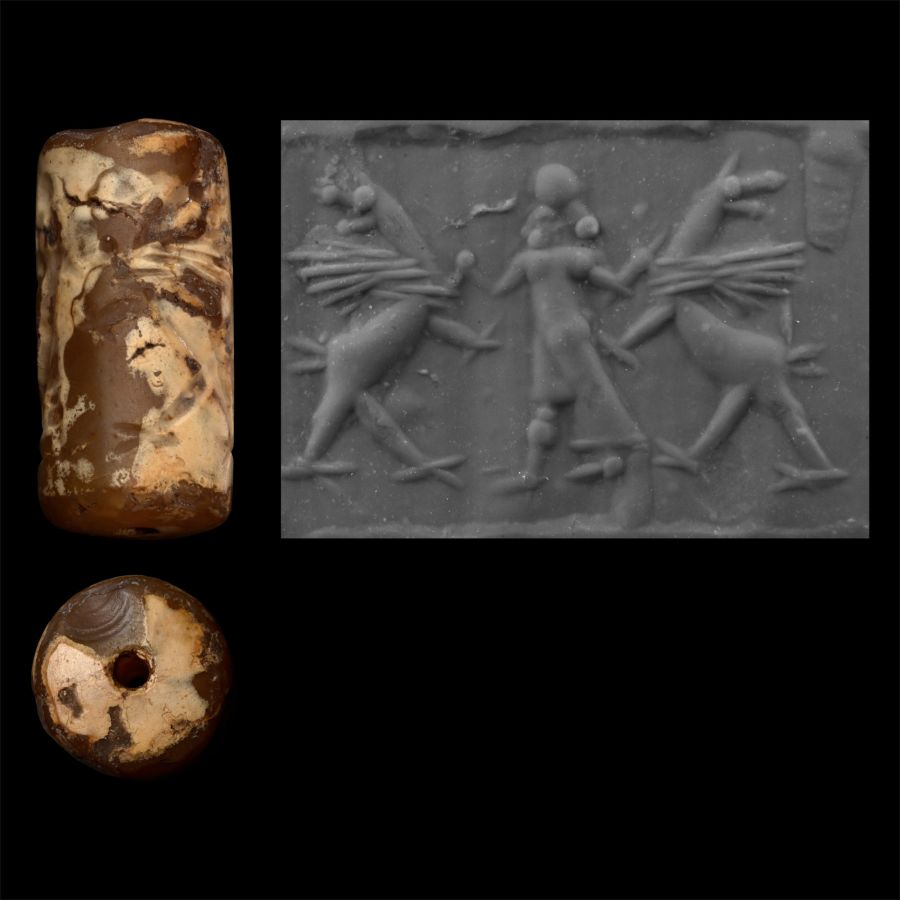
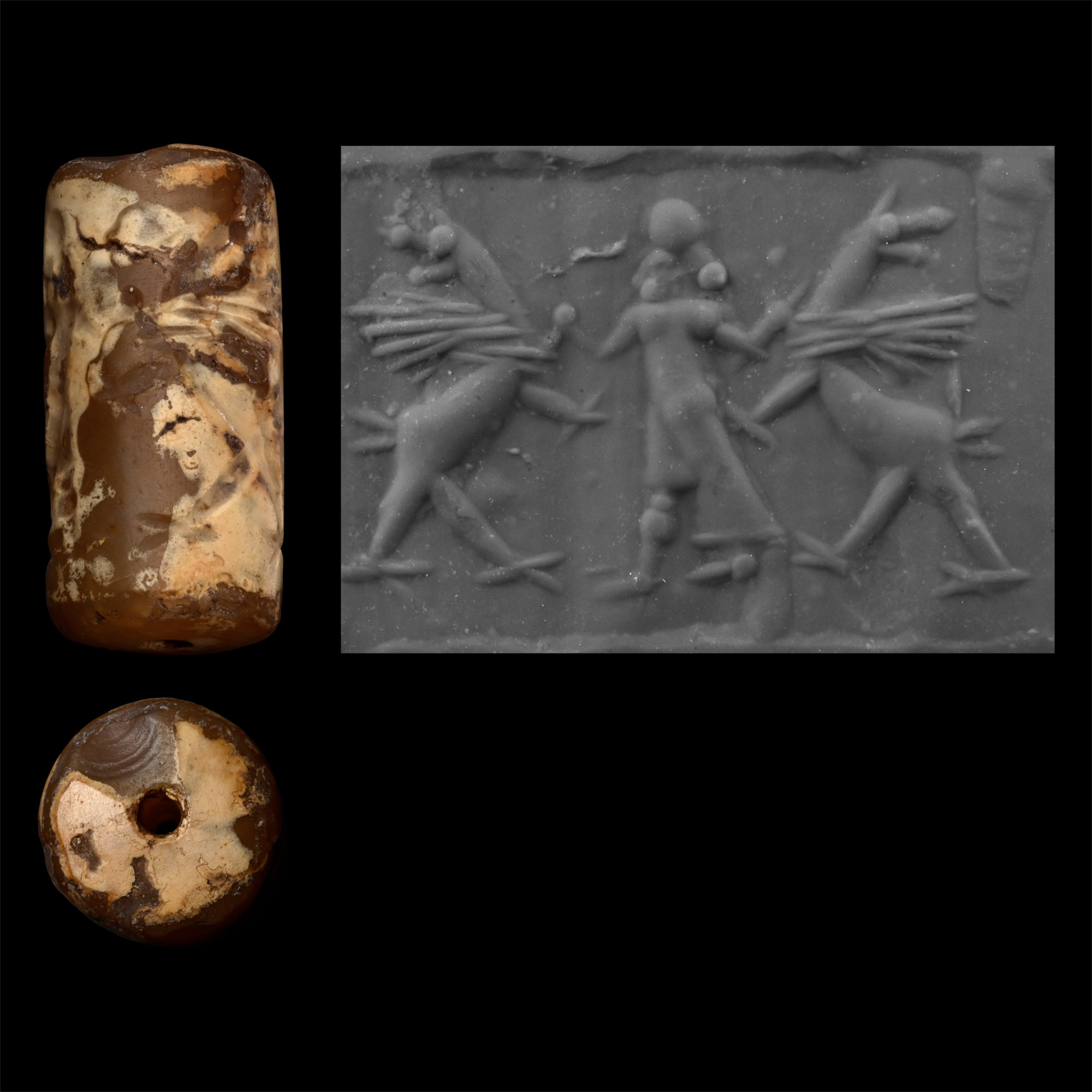
Late Assyrian Yellow Chalcedony Cylinder Seal with Standing God
800-600 B.C.
1 1/4 in. (16.7 grams, 33 mm).
With standing divine figure and animals, restrung pair of red stone beads, old handwritten label '1605'; accompanied by a copy of an old scholarly note, typed and signed by W.G. Lambert, late Professor of Assyriology, University of Birmingham, 1970-1993, which states: 'Cylinder Seal of Yellow Chalcedony with Ivory Coating in Part. 33 x 16 mm. The engraving shows a standing god dressed in a long robe open at the front, from which one leg projects, holding off on either side a winged quadruped which is facing backwards. This is typical Late Assyrian or Late Babylonian seal dating c. 800-600 B.C., engraved with a combination of cutting wheel and drill. The purpose of the scene is to display the power of the god, no doubt meant as the god of the seal owner, but there is nothing to indicate exactly which god the seal engraver had in mind. Apart from a chip off the upper edge not reaching the design, the seal is in very good state of preservation.'; accompanied by a museum-quality impression. [No Reserve]
ProvenanceUK private collection, acquired 1980-1983.
Accompanied by a copy of a scholarly note, typed and signed by Professor Wilfrid George Lambert in 1991.
This lot has been cleared against the Art Loss Register database, and is accompanied by an illustrated lot declaration signed by the Head of the Antiquities Department, Dr Raffaele D'Amato.
TimeLine Auctions follows a vetting process to ensure the authenticity and legality of all items, reinforcing our commitment to integrity and responsible trading. Each antiquity, antique, and coin lot undergoes thorough examination by a vetting committee of at least ten external specialists, professional trade association members, scientists, and archaeologists: Our Vetting Process
AUCTIONS:
TimeLine is a leading auction house specialising in antiquities, ancient art, collectables, natural history, coins, medals, and books. Our auctions offer museums, collectors, historians, and enthusiasts the opportunity to acquire unique and historically significant pieces.
LOT 0210
Late Assyrian Yellow Chalcedony Cylinder Seal with Standing God
Sold for (Inc. bp): £598
-
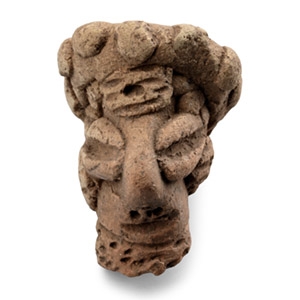
Hittite Ceramic Idol Head
2nd millennium B.C.Sold for (Inc. bp): £52
Head with applied headdress, eyes and earrings, pointillé nostrils and collar. 11 grams, 30 mm
Fine condition.
Ex an important Dutch collection; acquired on the European art market in the 1970s. From the private collection of John Meredith, acquired since the 1990s; thence by descent. This lot has been cleared against the Art Loss Register database, and is accompanied by an illustrated lot declaration signed by the Head of the Antiquities Department, Dr Raffaele D'Amato. -
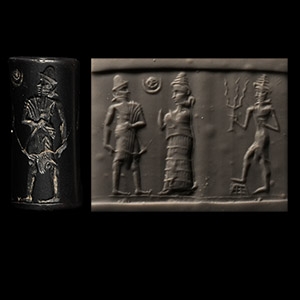
Old Babylonian Haematite Cylinder Seal
2000-1800 B.C.Sold for (Inc. bp): £3,120
Columnar in form with frieze depicting a standing Lamma goddess in flounced robe facing towards a god wearing a pleated garment and holding a mace at his hip; disc-and-crescent motif above; behind, the storm-god Adad with one foot on a mound, wielding a lightning bolt in his raised hand. 11 grams, 25 mm
Private collection, Europe. with Bonhams, London, 22 April 1999, no.538. Acquired by the present owner from the above. Accompanied by copies of the relevant Bonhams catalogue pages. This lot has been checked against the Interpol Database of stolen works of art and is accompanied by a search certificate number no.12538-232100. This lot has been cleared against the Art Loss Register database, and is accompanied by an illustrated lot declaration signed by the Head of the Antiquities Department, Dr Raffaele D'Amato. -
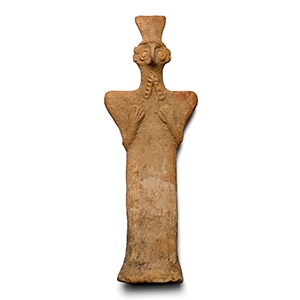
Syro-Hittite Terracotta Figure
1500-1200 B.C.Sold for (Inc. bp): £208
With lentoid-section body and flared base (restored); the face with pinched profile, tall headdress with transverse segmented peak, applied disc eyes, applied chevron beard, hands raised to the chest. 150 grams, 20 cm
Previously with Alex Szolin, Nottingham, UK. Ex Gerrard collection, 1990s. From the private collection of John Meredith, acquired since the 1990s; thence by descent. This lot has been cleared against the Art Loss Register database, and is accompanied by an illustrated lot declaration signed by the Head of the Antiquities Department, Dr Raffaele D'Amato.
