
Loading, please wait...
LOT 0133
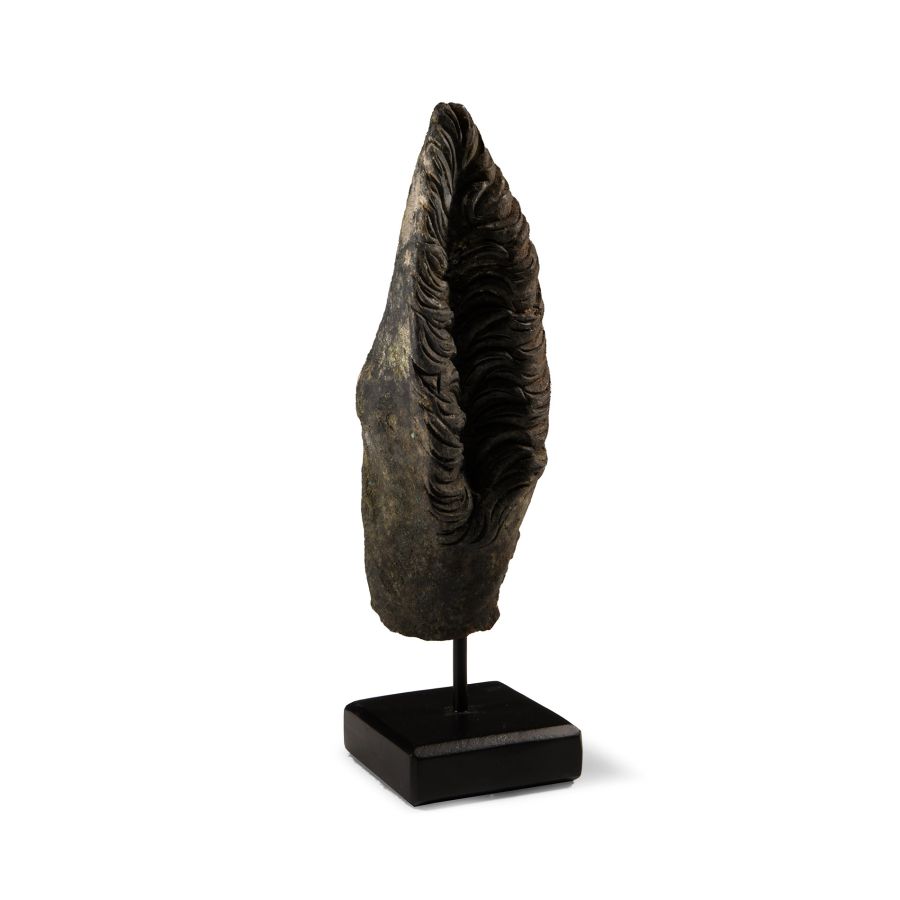
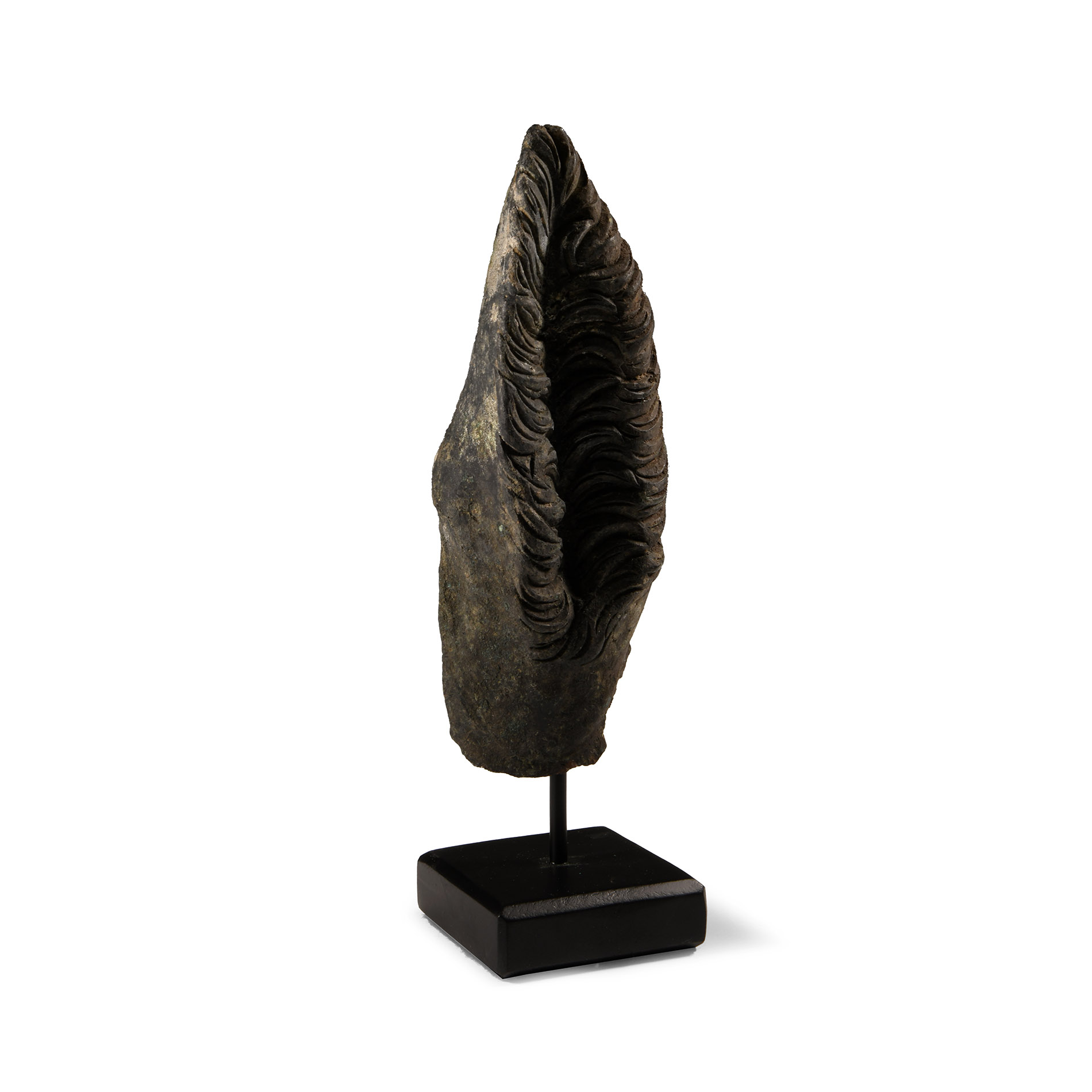
Larger Than Life-Size Roman Bronze Satyr's Ear
1ST-3RD CENTURY A.D.
7 1/4 in. (767 grams, 18.5 cm).
Probably from a colossal statue of Silenus or a satyr, detailed and naturalistic rendering of a left ear, conical shape with accurate depiction of the internal hair.
ProvenanceAcquired in Europe before 1995.
Private collection, Europe.
Cf. various statuettes of satyrs with similar ears in the Metropolitan Museum of Art, inventory nos.1972.118.68 (Etruscan, 5th century B.C.), 07.286.90 (1st century A.D.); see a bronze statue of Silenus with a wineskin found in 1754 around the impluvium of the Villa dei Papiri, Herculaneum, now in Naples Archaeological Museum, inventory number 5006.
FootnotesIn the mythology of ancient Greece and in the Graeco-Roman literary world, satyrs were a community of beings who lived mostly in woods, surrounded by nature, and often together with nymphs. In the most ancient period they were imagined by the Greeks like Sileni, in human form, but with the ears, tail and sometimes hooves of horses. Seilenoi were depicted as fat, elderly, white-haired men, with snub noses, balding heads, and the ears and tails of asses. They were sometimes covered in fluffy white hair and occasionally sported a pair of ox horns.
CONDITIONTimeLine Auctions follows a vetting process to ensure the authenticity and legality of all items, reinforcing our commitment to integrity and responsible trading. Each antiquity, antique, and coin lot undergoes thorough examination by a vetting committee of at least ten external specialists, professional trade association members, scientists, and archaeologists: Our Vetting Process
AUCTIONS:
TimeLine is a leading auction house specialising in antiquities, ancient art, collectables, natural history, coins, medals, and books. Our auctions offer museums, collectors, historians, and enthusiasts the opportunity to acquire unique and historically significant pieces.
-
.jpg)
Large Roman Silvered Bronze Patera
1st century A.D.Estimate: £2,000 - 3,000 (‡+bp*)
Opening Bid: £1,000
With a deep bowl and flat-section handle with integral loop; shallow concentric grooves around the exterior of the neck, rolled rim, concentric rings to the underside; finished on a lathe; cracked and split. 903 grams, 33 cm wide
Acquired in Europe before 1993. Private collection, Europe. This lot has been checked against the Interpol Database of stolen works of art and is accompanied by search certificate number no.11788-206494.
In contrast to their elaborate counterparts, paterae such as this were likely carried as part of the standard kit of Roman soldiers, used as a general cooking and eating utensil. The regular heap up (sarcina) of the legionaries is well represented on the reliefs of the Trajan column. It was composed of a T stake (furca), to which a linen bag (sacculus) was hung, as well as the leather haversack for 15-20 days supplies (trinum nundinum) and personal effects, a pot (ollula), a cup (patera), and a basket for work on the fields. -
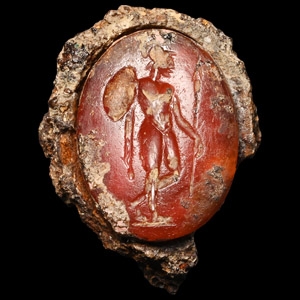
Roman Carnelian Gemstone with Mars
2nd century A.D.Sold for (Inc. bp): £286
With standing helmetted figure with spear and shield; in bronze ring bezel mount. 1.89 grams total, 13-18 mm
Acquired 1970s-1996. Property of a North American collector. London collection, 2016. -
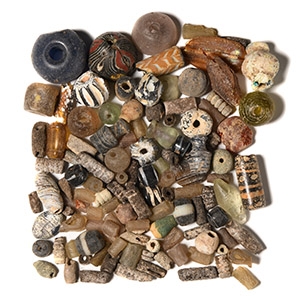
Roman and Other Glass Necklace Bead Collection
1st millennium B.C. and laterSold for (Inc. bp): £130
Comprising a quantity of beads, in mixed shapes, colours and materials; each pierced for stringing. 125 grams total, 5-28 mm
UK gallery, early 2000s.
