
Loading, please wait...
LOT 1993
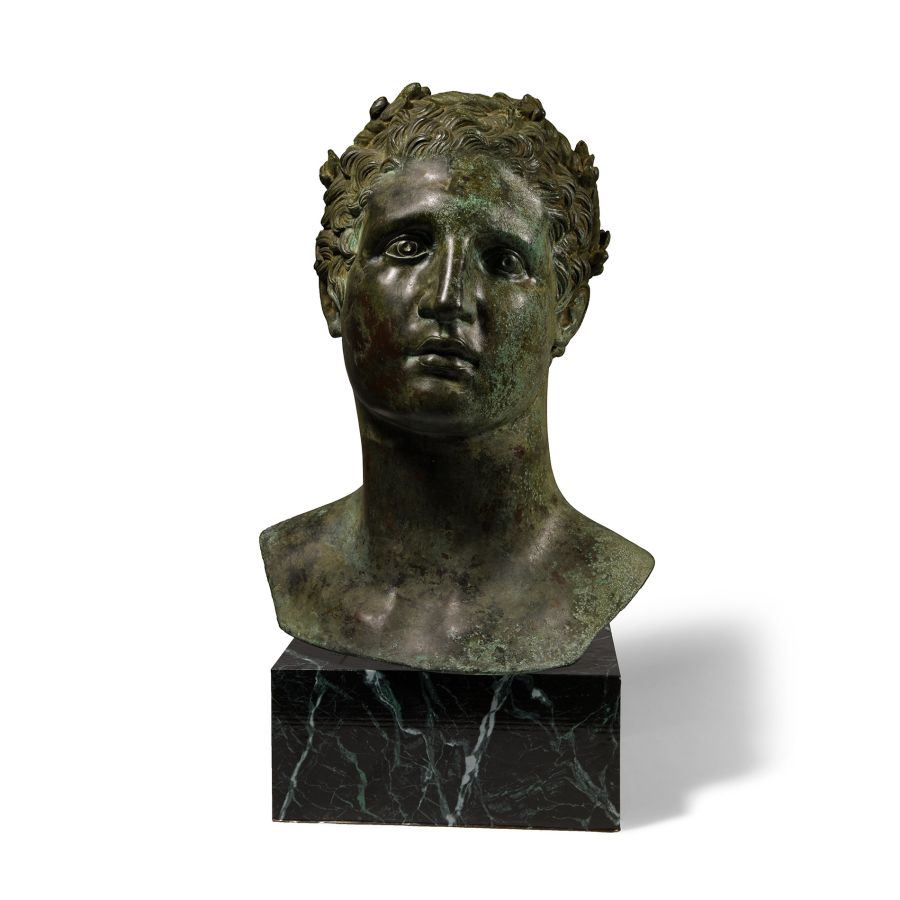
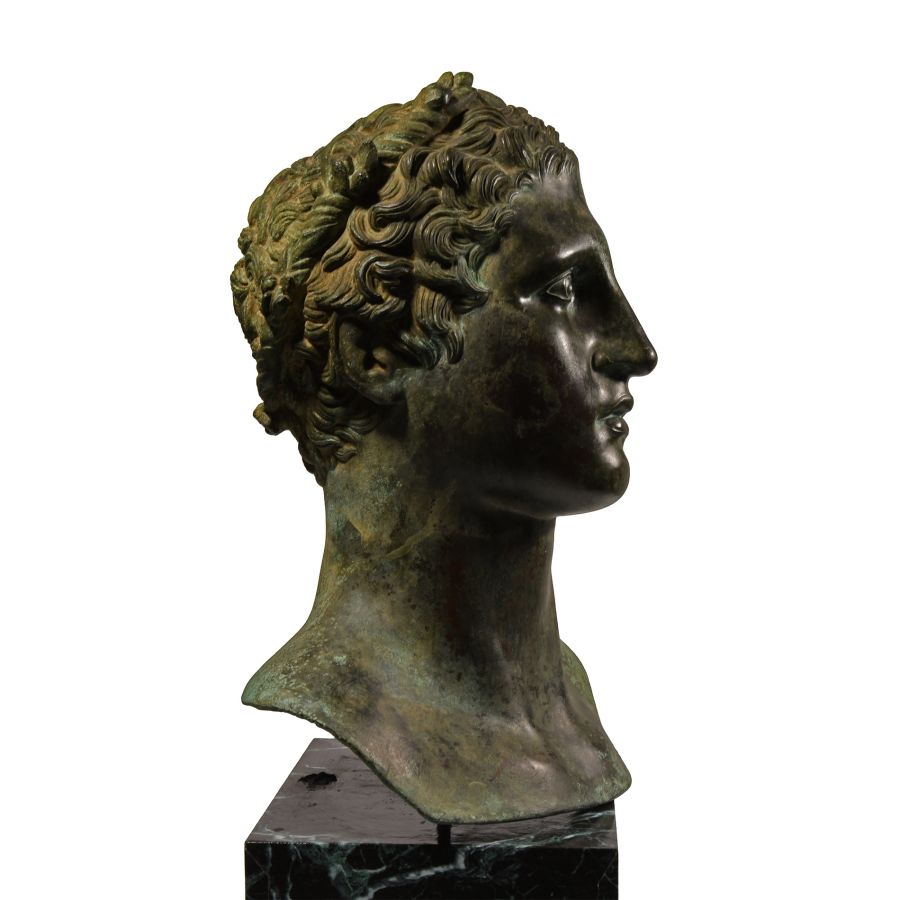
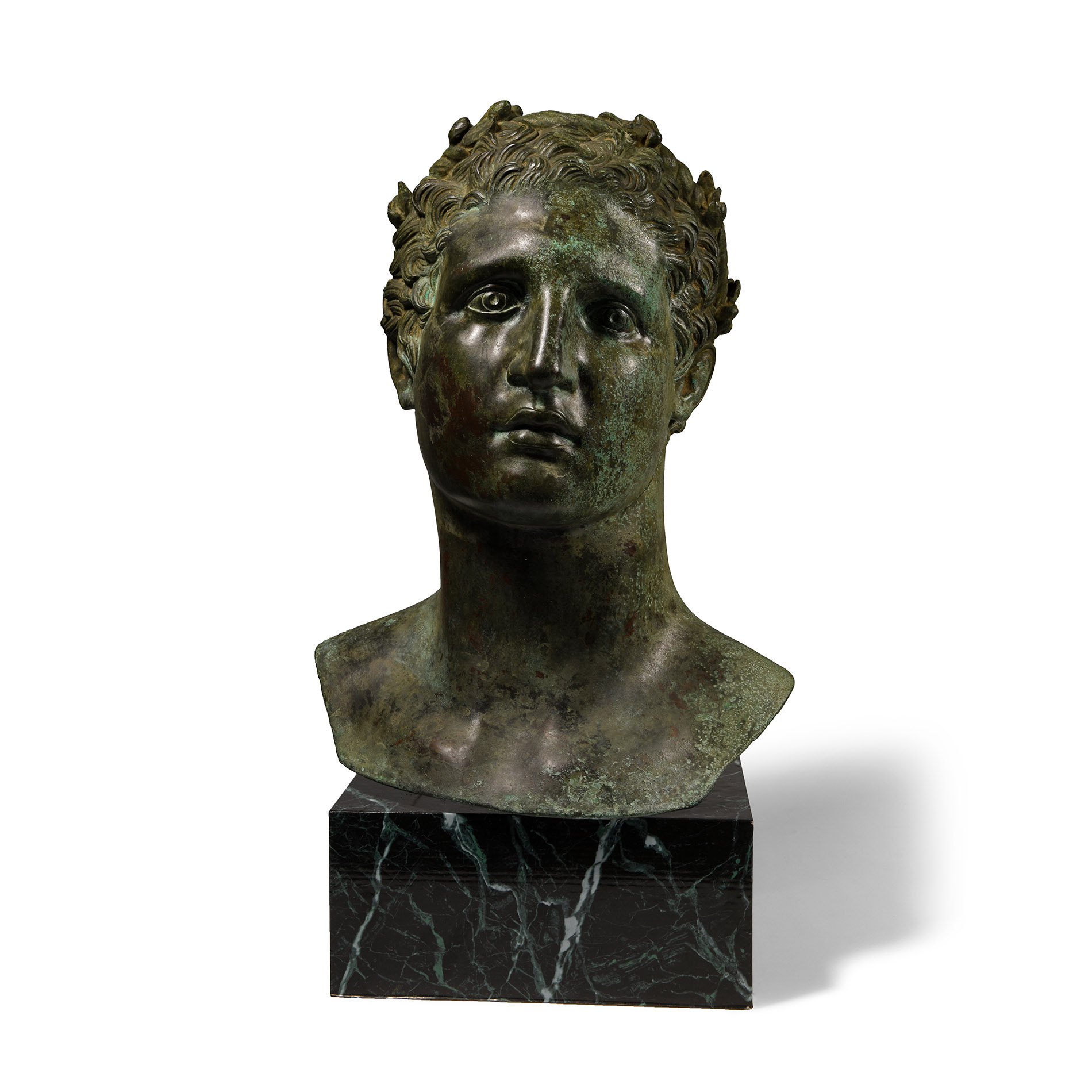
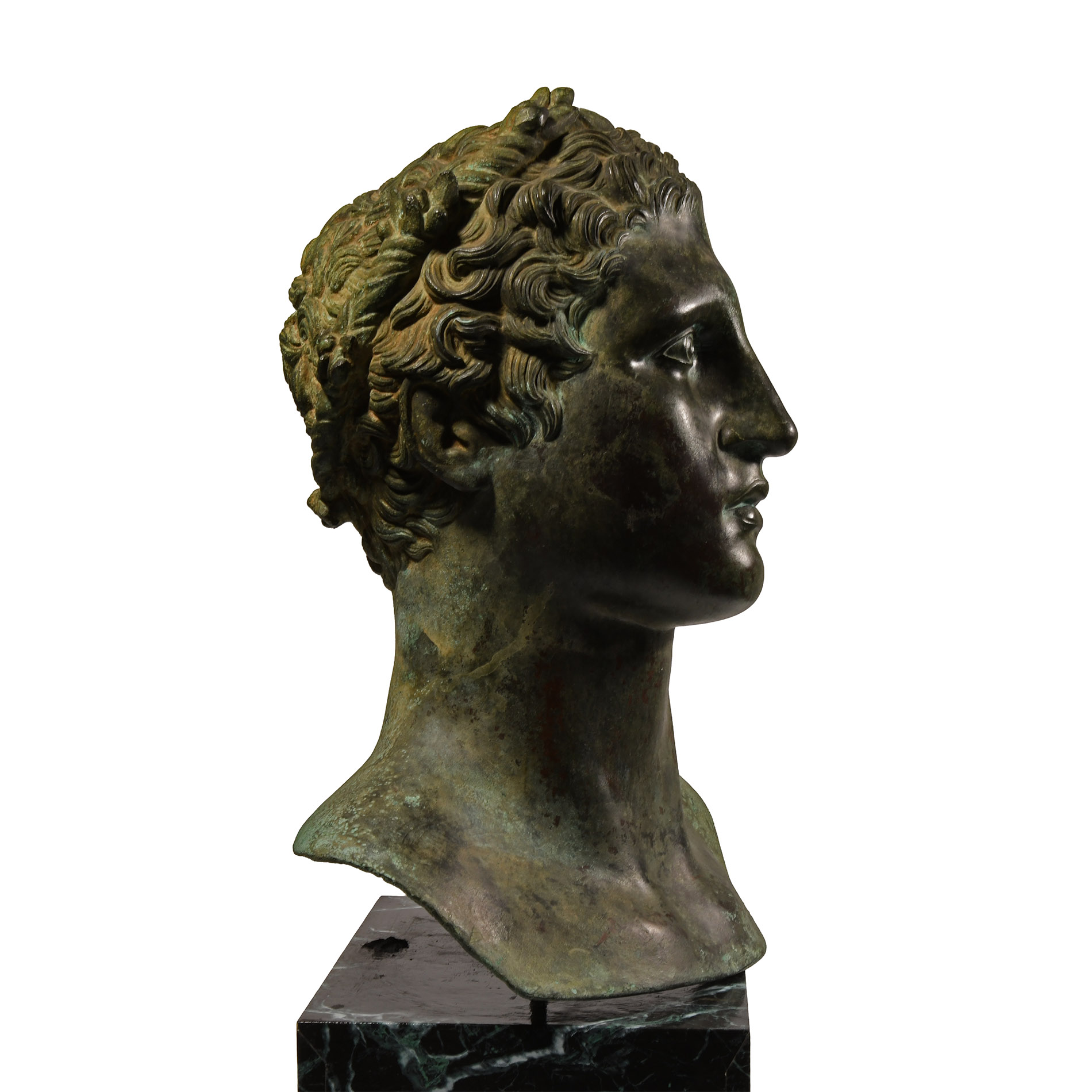
Larger Than Life-Size Bronze Head of a Male Athlete
LATE 19TH-20TH CENTURY A.D.
22 in. (14 kg total, 56 cm high including stand).
Hollow-formed male bust with stern features, a victor's laurel wreath in the tousled hair, thick neck and shoulders; mounted on a stand.
ProvenanceAcquired 1980s-1990s.
Property of a gentleman, Tokyo, Japan.
TimeLine Auctions follows a vetting process to ensure the authenticity and legality of all items, reinforcing our commitment to integrity and responsible trading. Each antiquity, antique, and coin lot undergoes thorough examination by a vetting committee of at least ten external specialists, professional trade association members, scientists, and archaeologists: Our Vetting Process
AUCTIONS:
TimeLine is a leading auction house specialising in antiquities, ancient art, collectables, natural history, coins, medals, and books. Our auctions offer museums, collectors, historians, and enthusiasts the opportunity to acquire unique and historically significant pieces.
-
Carnelian Calligraphic Gemstone Collection
Circa 18th-19th century A.D.Sold for (Inc. bp): £65
Including three octagonal types with nasta'liq script; one ellipsoid, similar (chipped); one square with incised script. 8.47 grams total, 10-19 mm
Acquired 1970s-1996. Property of a North American collector. London collection, 2016. -
Post Medieval Bronze Clothes Fastener Group
18th-19th century A.D.Sold for (Inc. bp): £26
Three accompanied by Portable Antiquities Scheme records: a rectangular tag with knops to the side edges and rectangular attachment bar, hook t the opposite end and central quatrefoil design; an example of Read's Class 3 Type c, domed rectangular body with hook to one end and cross-hatching to the centre; a dress hook of Read's Class D Type 6 comprising a trefoil plan with domed plates, scalloping to the circumferences, pellets to the bodies; seven additional fasteners of various types and dates, most with hatching, floral or pellet ornament. 53 grams total, 22-36 mm
Found Berkshire, UK. Accompanied by a copies of the British Museum's Portable Antiquities Scheme (PAS) report nos.BERK-12D023, BERK-1315E4, and BERK-D2CBD4. -
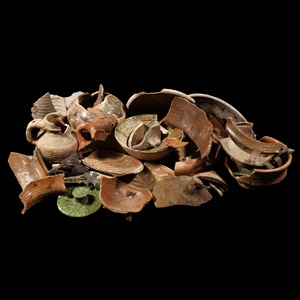
Post Medieval and Later Pottery Fragment Group
Circa 16th-19th century A.D.Sold for (Inc. bp): £13
Comprising vessel fragments from bowls, tankards, plates, jugs and others, including examples displaying decorative motifs and part of a leather shoe. 5.7 kg total, 2.5-22.5 cm
Acquired 1990s-early 2000s. East Anglian private collection.
