
Loading, please wait...
LOT 1957
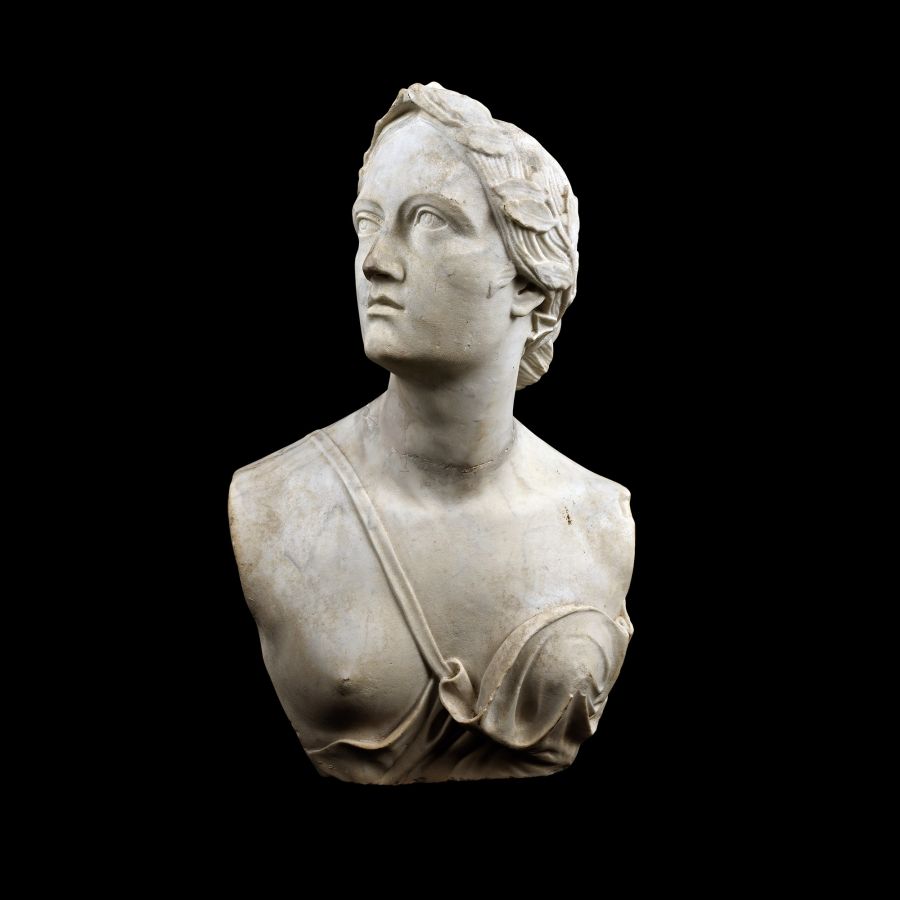
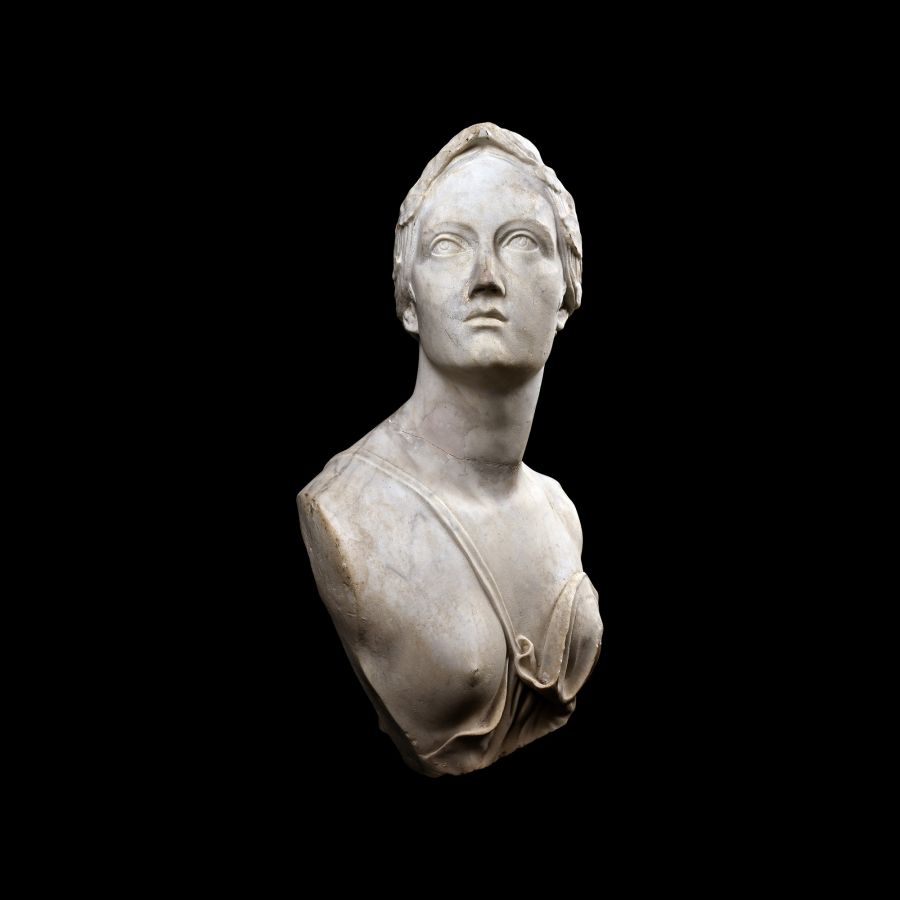
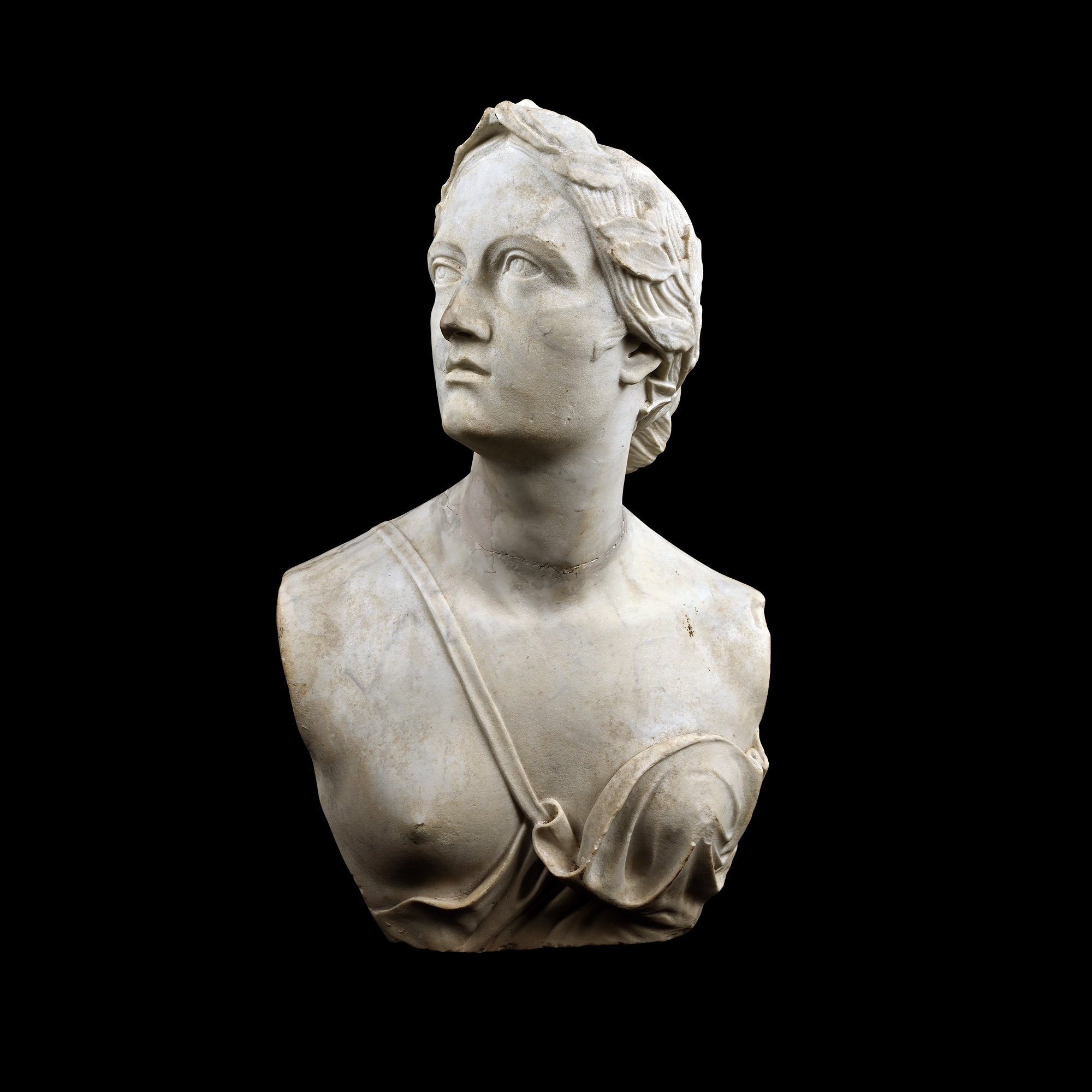
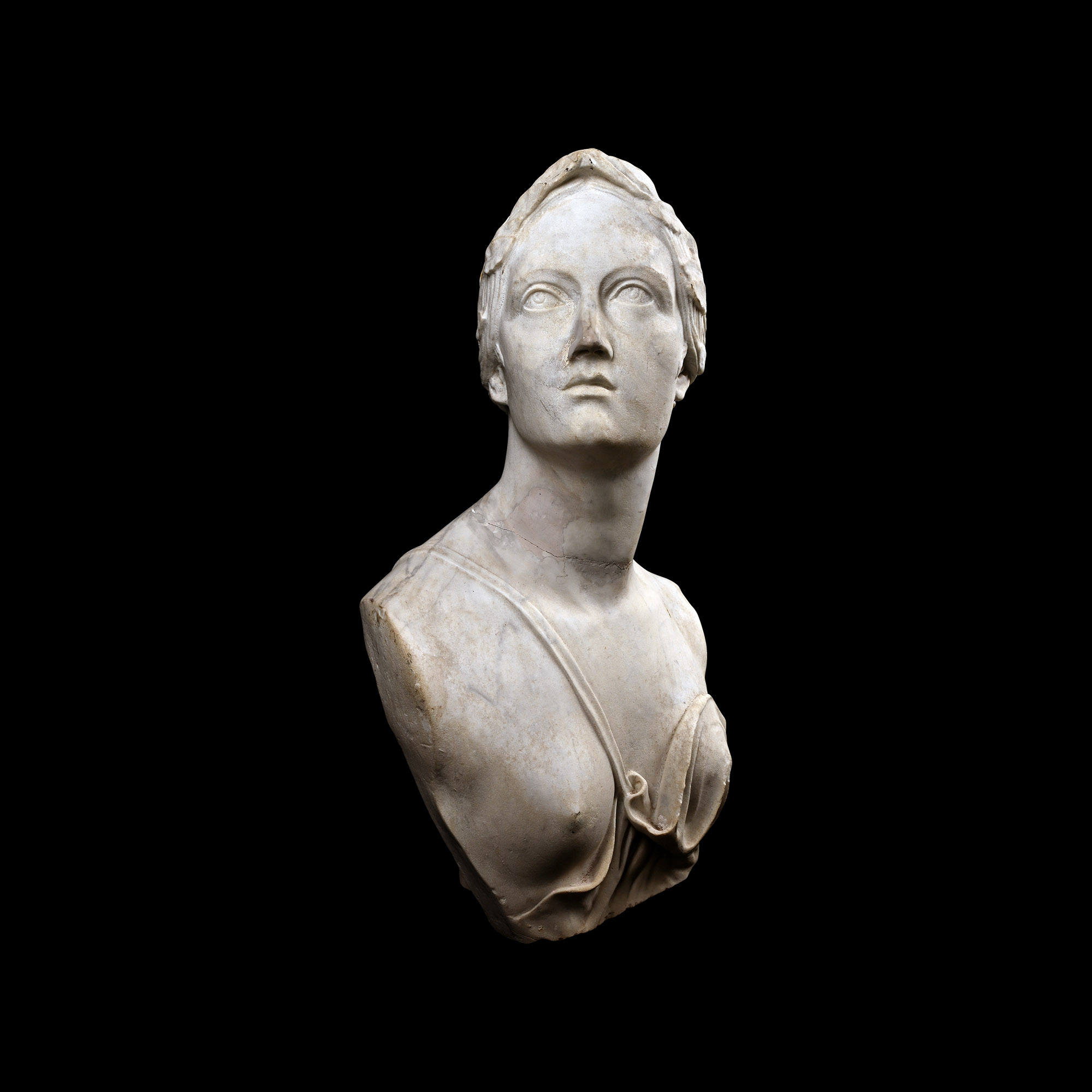
Large White Marble Bust of Diana the Huntress
19TH CENTURY A.D.
26 3/4 in. (66.5 kg, 68 cm high).
The goddess shown in an elegant pose with her head turned to the right and her gaze directed upwards, wearing a laurel leaf crown and a loose garment covering her left breast, leaving the right one exposed, narrow quiver strap crossing over her right shoulder; her hair dressed in soft waves and pulled to a chignon at the nape of her neck; old repair on the neck.
ProvenanceAcquired on the UK art market.
Private collection, London.
This lot has been checked against the Interpol Database of stolen works of art and is accompanied by search certificate no.13080-246797.
Cf. for the Diana of Versailles and her copies Hekler, Antal, Az antik gipszgyüjtemény I-II., Budapest, 1919-1920, 1923, no.276.
FootnotesIn the 19th century, many studies of the hunter goddess were inspired by the 'Diana of Versailles', a 2nd-century Roman version in the Greek tradition of iconography, today in the collection of the Louvre Museum, Paris, France.
CONDITIONTimeLine Auctions follows a vetting process to ensure the authenticity and legality of all items, reinforcing our commitment to integrity and responsible trading. Each antiquity, antique, and coin lot undergoes thorough examination by a vetting committee of at least ten external specialists, professional trade association members, scientists, and archaeologists: Our Vetting Process
AUCTIONS:
TimeLine is a leading auction house specialising in antiquities, ancient art, collectables, natural history, coins, medals, and books. Our auctions offer museums, collectors, historians, and enthusiasts the opportunity to acquire unique and historically significant pieces.
LOT 1957
Large White Marble Bust of Diana the Huntress
Estimate £2,500 - 3,500€2,900 - 4,060 (for guidance only)$3,380 - 4,730 (for guidance only)
-
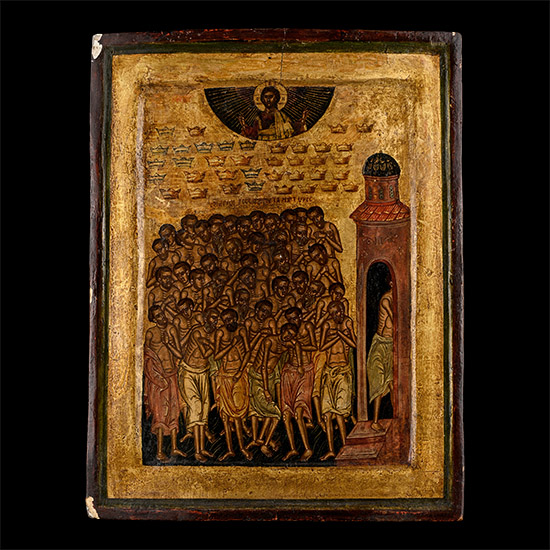
Veneto-Cretan Icon with Forty Martyrs of Sebaste
17th century A.D.Estimate: £6,000 - 8,000 (+bp*)
Opening Bid: £3,000
Depicting the martyrs freezing to death in a lake in Cappadocia, clad only in their undergarments (esophoria); Jesus above, dressed in gold and red, offering the crowns of martyrdom as a sign of reward; a tower to the side of the martyrs; Greek inscriptions: inside the gold nimbus 'O ѾN' (= The Only One who always exists), the inscription above the martyrs reading: 'Οι Άγιοι Τεσσαράκοντα Μάρτυρες = The Saint Holy 40 Martyrs'. 810 grams, 30 x 22.5 cm
Acquired on the European art market. Private collection, London, UK. Accompanied by an academic report by Dr Raffaele D’Amato. This lot has been checked against the Interpol Database of stolen works of art and is accompanied by search certificate number no.13063-249294.
The icon depicts the martyrdom of the 40 soldiers of the Legio XII Fulminata, who died in a frozen lake in Cappadocia in 320 AD. The drama experienced by these courageous men, nourished by their faith in Christ, is evocatively expressed. Their frozen bodies are painted in ochre and olive green, reflecting the stages of their agony. Christ is offering them crowns of glory from heaven as a sign of reward. The cult of the 40 Martyrs spread rapidly, first in Constantinople, where several churches were dedicated to them, then in the Balkans and Russia. -
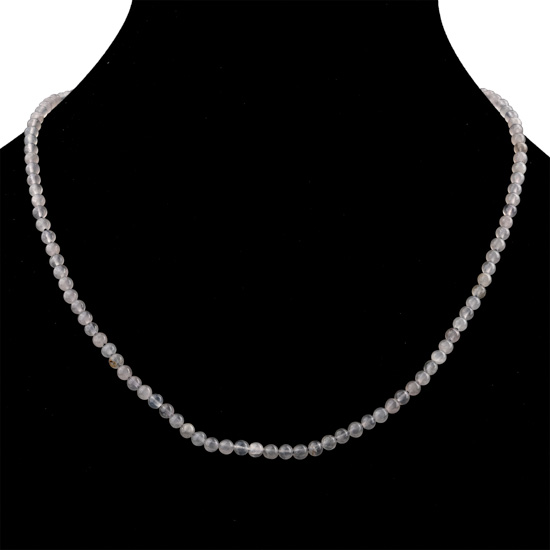
Quartz Bead Necklace String
20th century A.D.Sold for (Inc. bp): £7
Composed of spherical translucent beads, restrung. 11.2 grams, 45.5 cm
From London, UK, gallery collection, 1990s. -
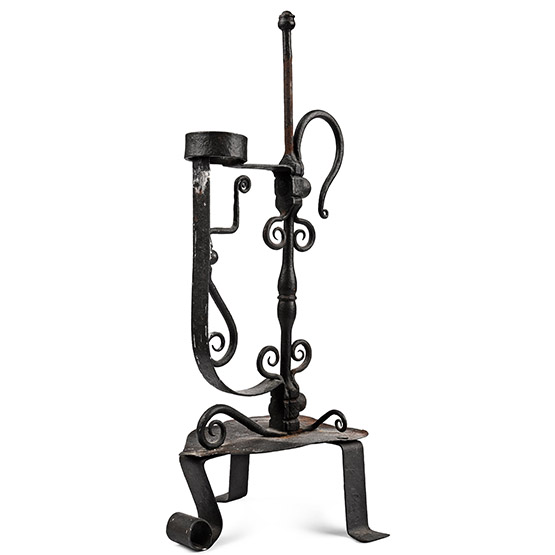
Iron Candle Holder
France, 18th century A.D.Estimate: £300 - 400 (+bp*)
Opening Bid: £150
The central baluster knopped column with scrolling ornament and looped carrying handle above a trefoil-shaped platform and rivetted tripod feet. 1.21 kg, 44 cm
Ex Nic McElhatton, former chairman of Christie's South Kensington. Property of a Berkshire, UK, collector. Accompanied by a copy of McElhatton's cataloguing page.
