Loading, please wait...

Use mousewheel to zoom in and out, click to enlarge

Details

LOT 1393

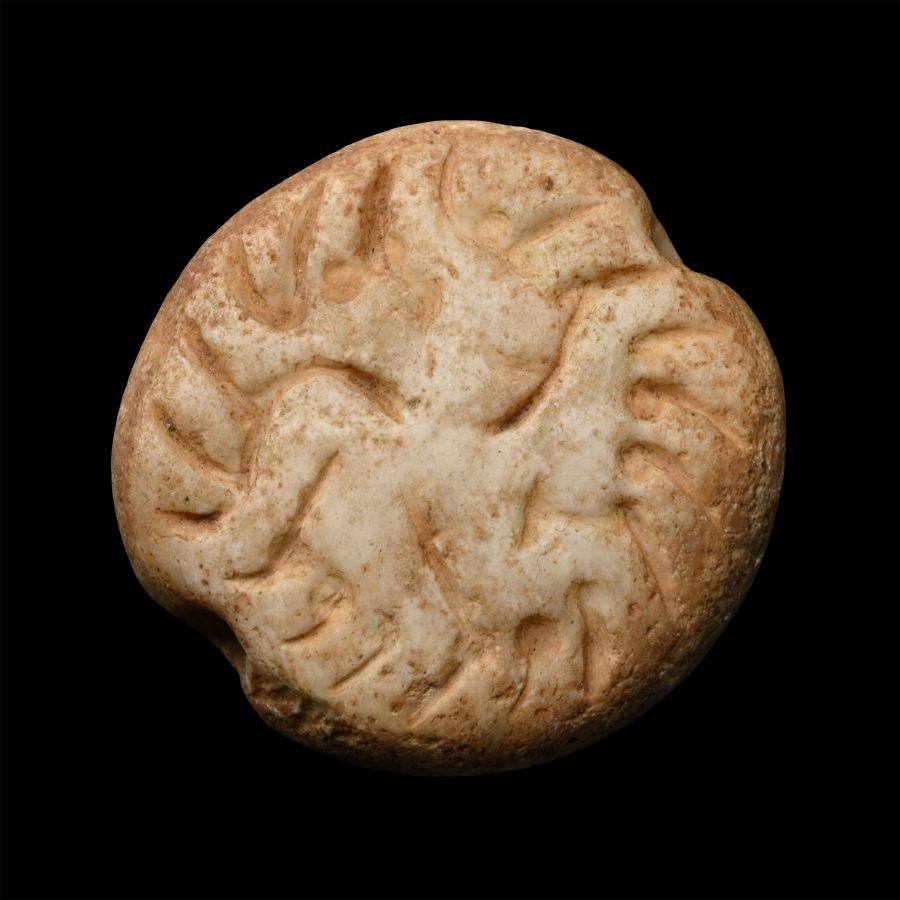
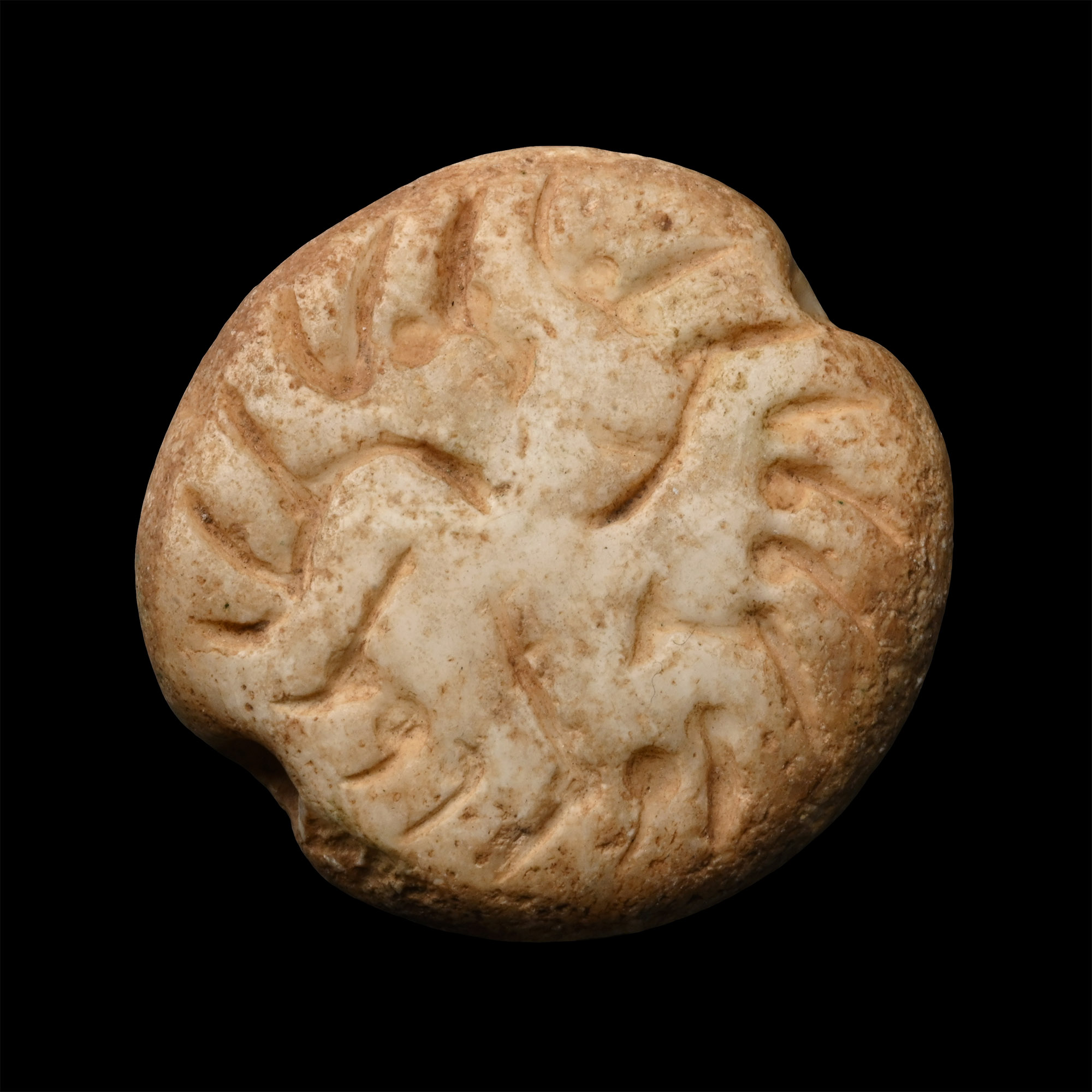
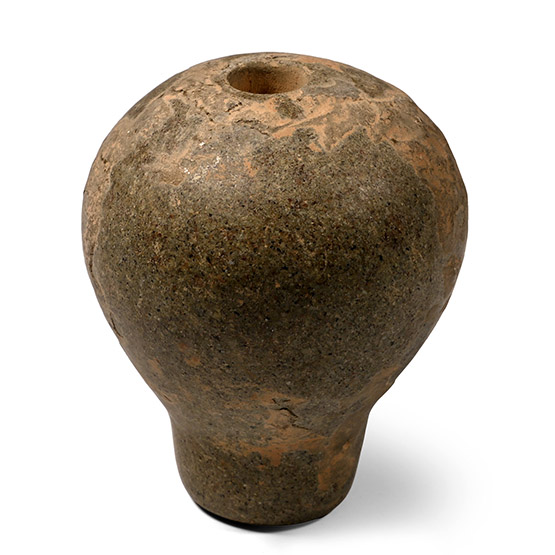
Large Western Asiatic Stone Stamp Seal with Incised Design

3RD-2ND MILLENNIUM B.C.

1 1/2 in. (34.6 grams, 40 mm).

Plane-convex in section with keel to the domed face, incised design of three advancing horses.

Provenance

Private collection, England.

CONDITION

VETTING:

TimeLine Auctions follows a vetting process to ensure the authenticity and legality of all items, reinforcing our commitment to integrity and responsible trading. Each antiquity, antique, and coin lot undergoes thorough examination by a vetting committee of at least ten external specialists, professional trade association members, scientists, and archaeologists: Our Vetting Process


AUCTIONS:

TimeLine is a leading auction house specialising in antiquities, ancient art, collectables, natural history, coins, medals, and books. Our auctions offer museums, collectors, historians, and enthusiasts the opportunity to acquire unique and historically significant pieces.

LOT 1393

Large Western Asiatic Stone Stamp Seal with Incised Design

Estimate £100 - 140€120 - 160 (for guidance only)$140 - 190 (for guidance only)

Print page

RELATED LOTS

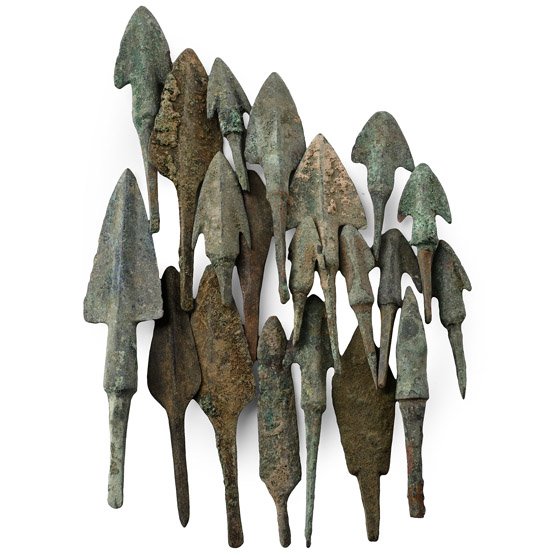
  • Luristan Bronze Arrowhead Collection
    Luristan Bronze Arrowhead Collection
    2nd-1st millennium B.C.

    Sold for (Inc. bp): £130

    Comprising: two large tanged arrowheads, mainly of triangular type with mid-rib; two arrowheads with barbed shoulders, midrib and a stop on the blade with a long tang. 122 grams total, 12.7-15 cm


    Acquired in the 1990s. Ex Abelita family collection.

    One category of the represented arrowheads has a sharp blade, the ends of which extend to form wings or barbs, and a prominent midrib extending into a long tang that has a stop; the blade shape varies from deltoid to more triangular. The other form has no barbs, but it has a prominent midrib extending to the tang, and a rhomboid or tringular blade. Godard claimed that both types of heads, barbed and not barbed, came from Luristan.

    Lot Details

  • Sumerian Terracotta Bulla
    Sumerian Terracotta Bulla
    4th millennium B.C.

    Sold for (Inc. bp): £468

    A bulla with oval stamped impression of two animals. 147 grams, 60 mm


    Specialised collection of cuneiform texts, the property of a London gentleman and housed in London before 1988. Thence by descent to family members. Examined by Professor Wilfrid George Lambert FBA (1926-2011), historian, archaeologist, and specialist in Assyriology and Near Eastern archaeology, in the late 1980s and early 1990s. The collection is exceptional for the variety of types, including some very rare and well preserved examples. Accompanied by a copy of a previous catalogue page.

    Small globular and hollowed clay balls are defined as 'bulla'. They are also known as ‘bulla-envelopes', some of which are plain and some displaying epigraphic, zoomorphic and/or figural decoration, impressed by either cylinder or stamp seals. Bulla first emerged in Mesopotamia and their earliest occurrence can be traced to circa 8000 B.C. Most know decorated bullae come from the Uruk area and offer an insight into its culture. This bulla represents a religious scene, indicated by the combination of the pyramid-shaped byre and the 'sacred herd', which are seen on the early Uruk seals. The symbol of the Mother-Goddess, presented in conjunction with the representations of sheep herd and byre, gave such imagery symbolic significance. The impression with two sheep depicted under the byre, might have been impressed by a stamp seal of the early Uruk period.

    Lot Details

  • Mesopotamian Silver Stamp Seal with Janiform Head of the God Pazuzu
    Mesopotamian Silver Stamp Seal with Janiform Head of the God Pazuzu
    1st millennium B.C.

    Estimate: £3,000 - 4,000 (+bp*)

    Opening Bid: £1,500

    Columnar in form with discoid base supporting a pair of stylised head with almond-shaped eyes, button nose, prominent elongated chin and triangular lobes; suspension loop to the top. 25.80 grams, 36 mm


    Ex Mayfair, London, UK, collection, 1979-1990s. This lot has been checked against the Interpol Database of stolen works of art and is accompanied by search certificate no.13072-249423.

    Pazuzu was an Assyrian and Babylonian demonic god who was represented with a canine head, scaly body, a snake-headed penis, the talons of a bird, and usually four wings. He is often regarded as an evil underworld demon, but he seems also to have played a beneficent role as a protector against pestilential winds; a bronze figure of Pazuzu in the Louvre, (accession number MNB 467) is inscribed, ‘I am Pazuzu, son of Hanpa, king of the evil spirits of the air which issues violently from mountains, causing much havoc.’ His close association with Lamashtu, a fierce demon goddess responsible for child mortality, resulted in him being used to counter her powers and send her back to the underworld. Amulets of Pazuzu were positioned in dwellings to act as protective barriers to evil powers, or were often in the form of just a head, as in this example, and were hung around the necks of pregnant women. Pazuzu is popularly known today as the demon from the 1973 film ‘The Exorcist’.

    Lot Details

Stay up-to-date with the latest from TimeLine Auctions by joining our mailing list