
Loading, please wait...
LOT 1245
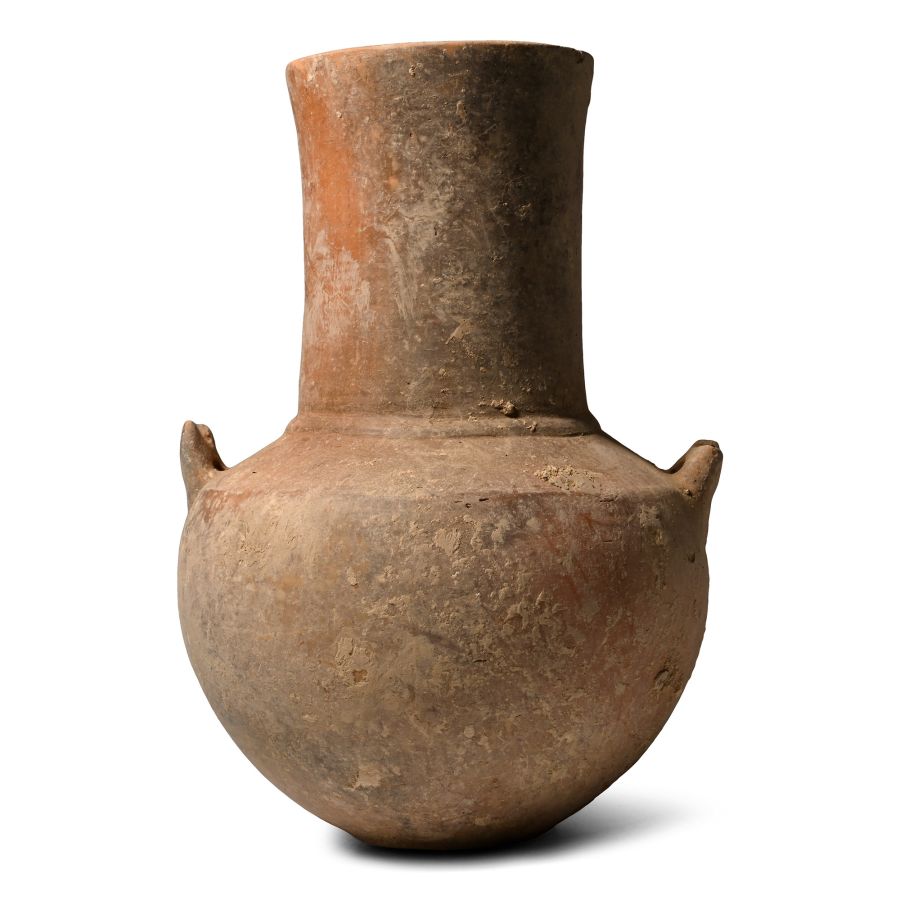
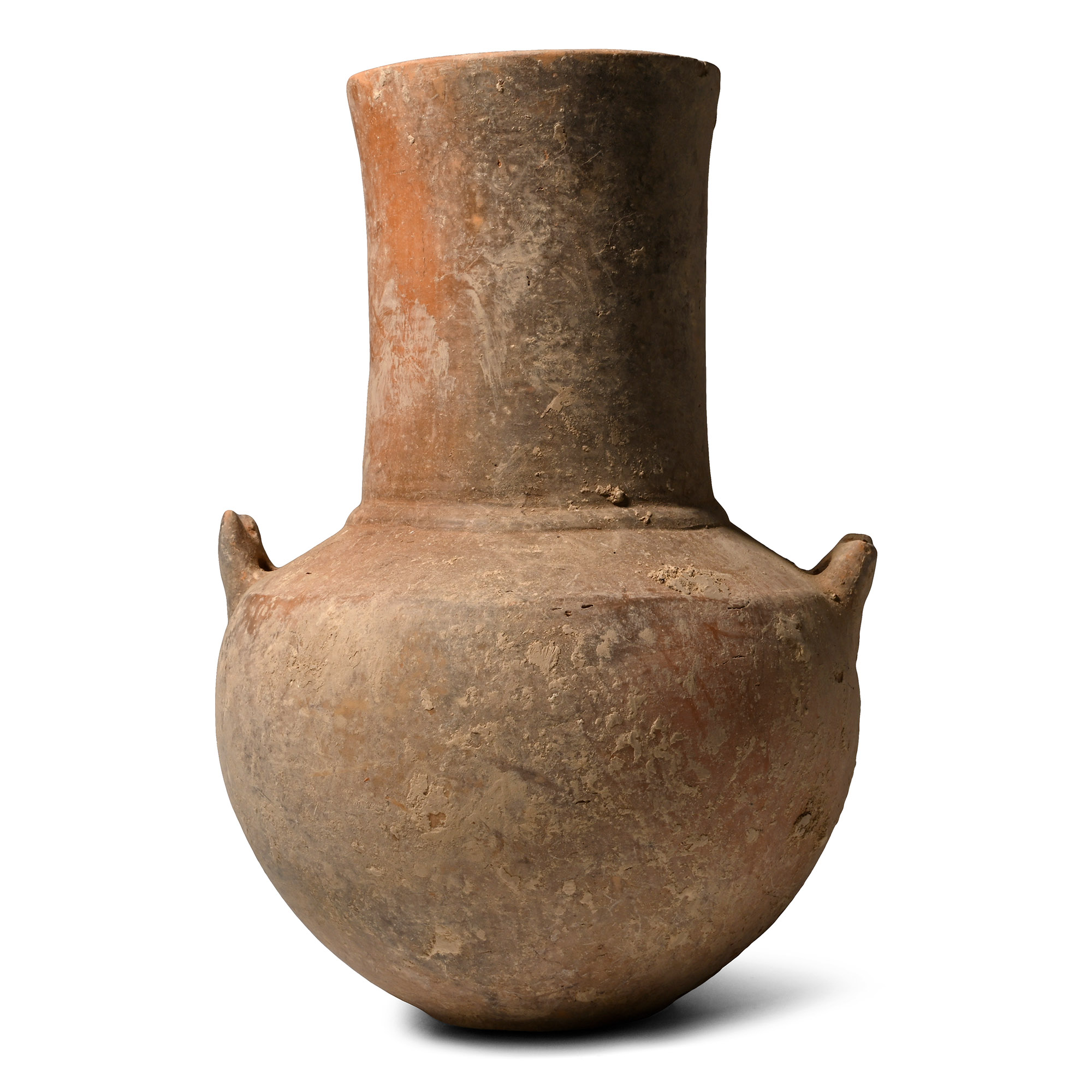
Large Western Asiatic Pottery Vessel
1ST MILLENNIUM B.C.
9 3/8 in. (965 grams, 23.8 cm).
Bulbous body with a raised band beneath the tubular neck, two pierced lug handles on the shoulder.
ProvenanceFrom an important specialist collection, London, UK, 1990s.
CONDITIONTimeLine Auctions follows a vetting process to ensure the authenticity and legality of all items, reinforcing our commitment to integrity and responsible trading. Each antiquity, antique, and coin lot undergoes thorough examination by a vetting committee of at least ten external specialists, professional trade association members, scientists, and archaeologists: Our Vetting Process
AUCTIONS:
TimeLine is a leading auction house specialising in antiquities, ancient art, collectables, natural history, coins, medals, and books. Our auctions offer museums, collectors, historians, and enthusiasts the opportunity to acquire unique and historically significant pieces.
-
.jpg)
Persian Iron Dragon-Shaped Flint Striker
17th-18th century A.D.Sold for (Inc. bp): £520
With a thick looped body and striking face to the outer edge; handle formed in openwork with stylised serpent-head, open mouth with recurved teeth, trident tail with similar pellet clusters; engraved and drilled detailing. 297 grams, 11.5 cm
Acquired Christie's, The Longridge Collection, London, UK, 2010 (£1,276.00). Personal collection of a Suffolk lady, UK.
Among the objects reflecting the continuation of traditional figural compositions in Indo-Iranian art, there are zoomorphic flint strikers, decorated with serpents, ducks or geese and hawks attacking birds, indicating the persistence of imperial and solar symbols. -
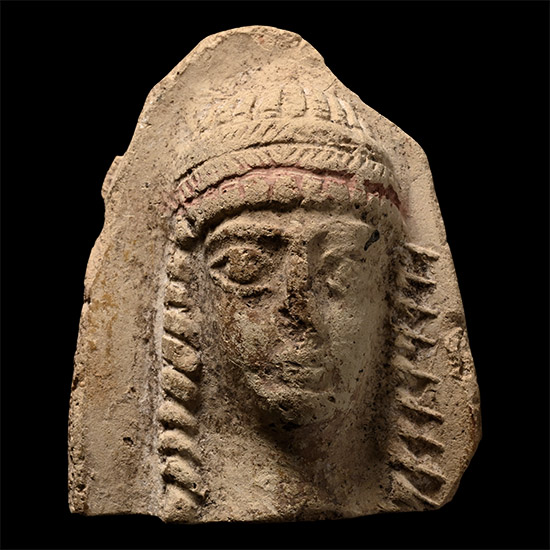
Western Asiatic Terracotta Idol Head
Circa 1st century B.C.Sold for (Inc. bp): £65
Tongue-shaped panel with integrally-moulded facing female bust, hair in radiating braids, transverse headband, lateral plaits, exaggerated lentoid eyes; plain to reverse. 17.7 grams, 42 mm
From the private collection of Mr Brian Edwards, New Malden, Surrey, UK, formed from the late 1970s-early 1980s; thence by descent. Accompanied by the original collector's data sheet(s) with reference no.A82. -
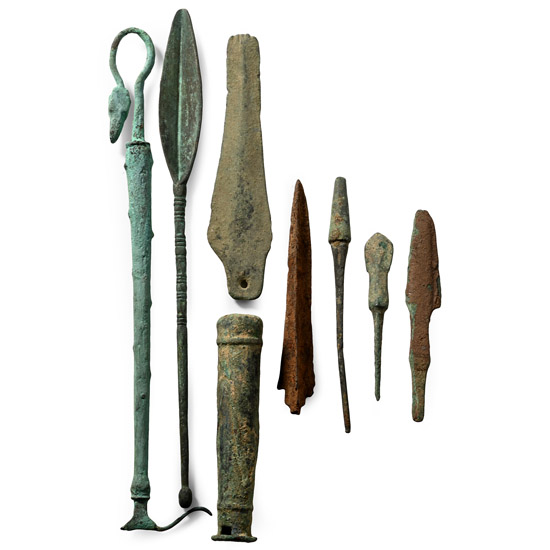
Western Asiatic Bronze Artefact Collection
Bronze Age, 1st millennium B.C. and laterSold for (Inc. bp): £124
Mixed group of items, including arrowheads, a dagger blade, a beast-headed implement, a medical spoon and others. 192 grams total, 6.4-19.1 cm
Acquiredon the London, UK, art market, 1990s onwards.
