
Loading, please wait...




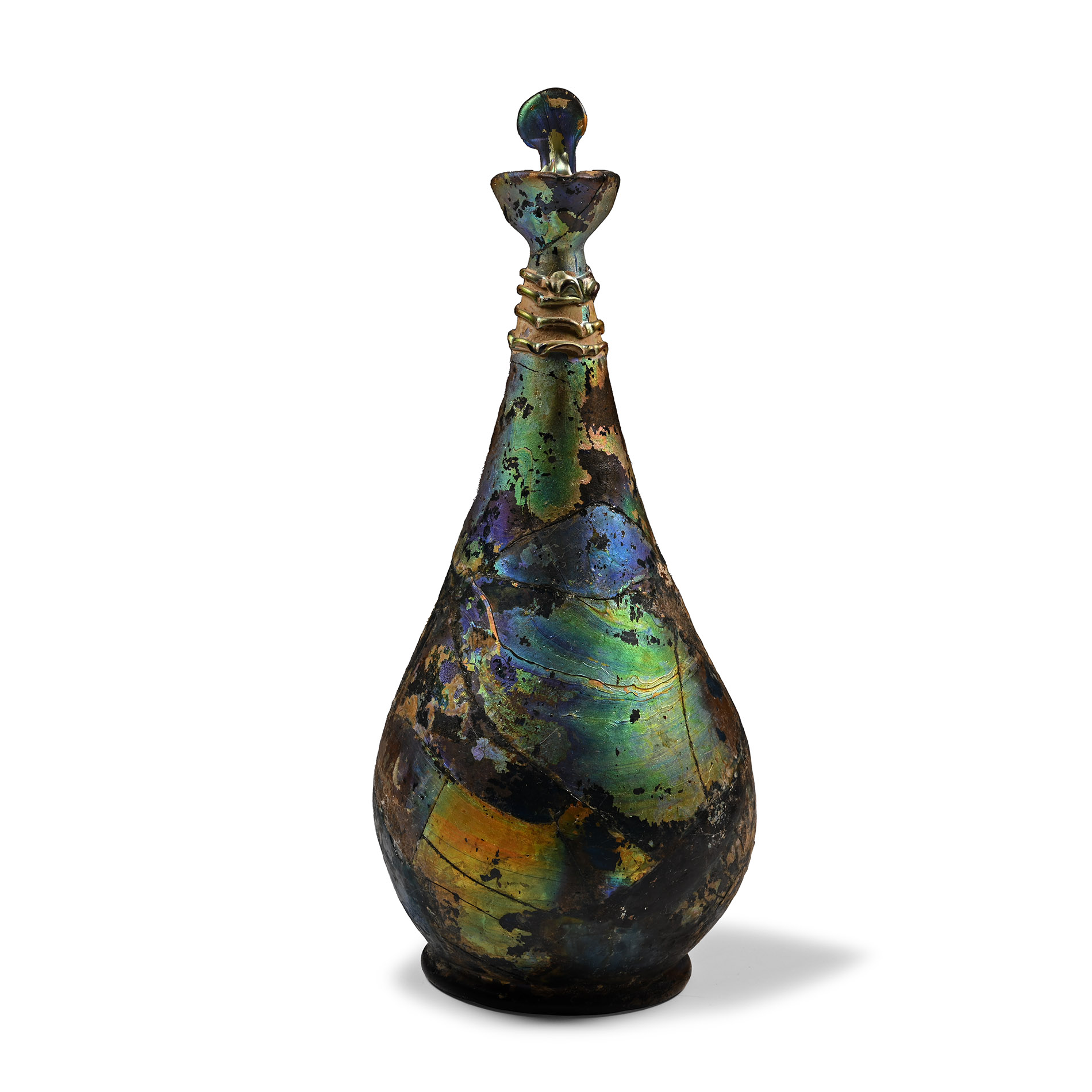
LOT 0256
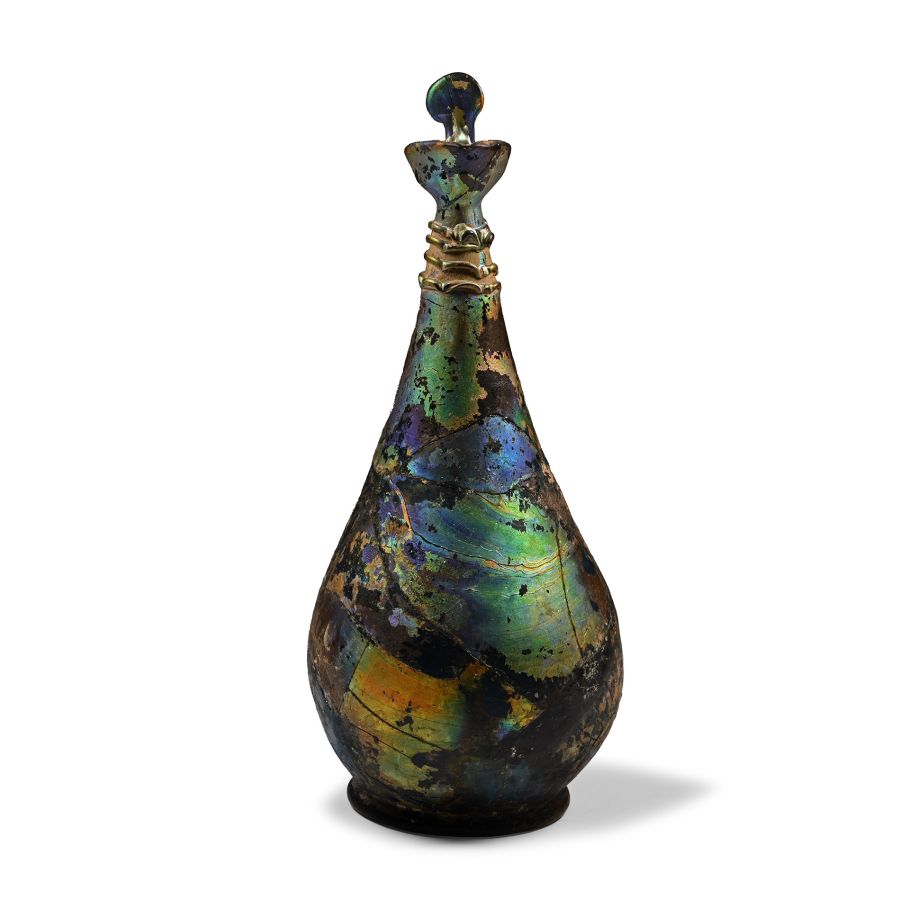
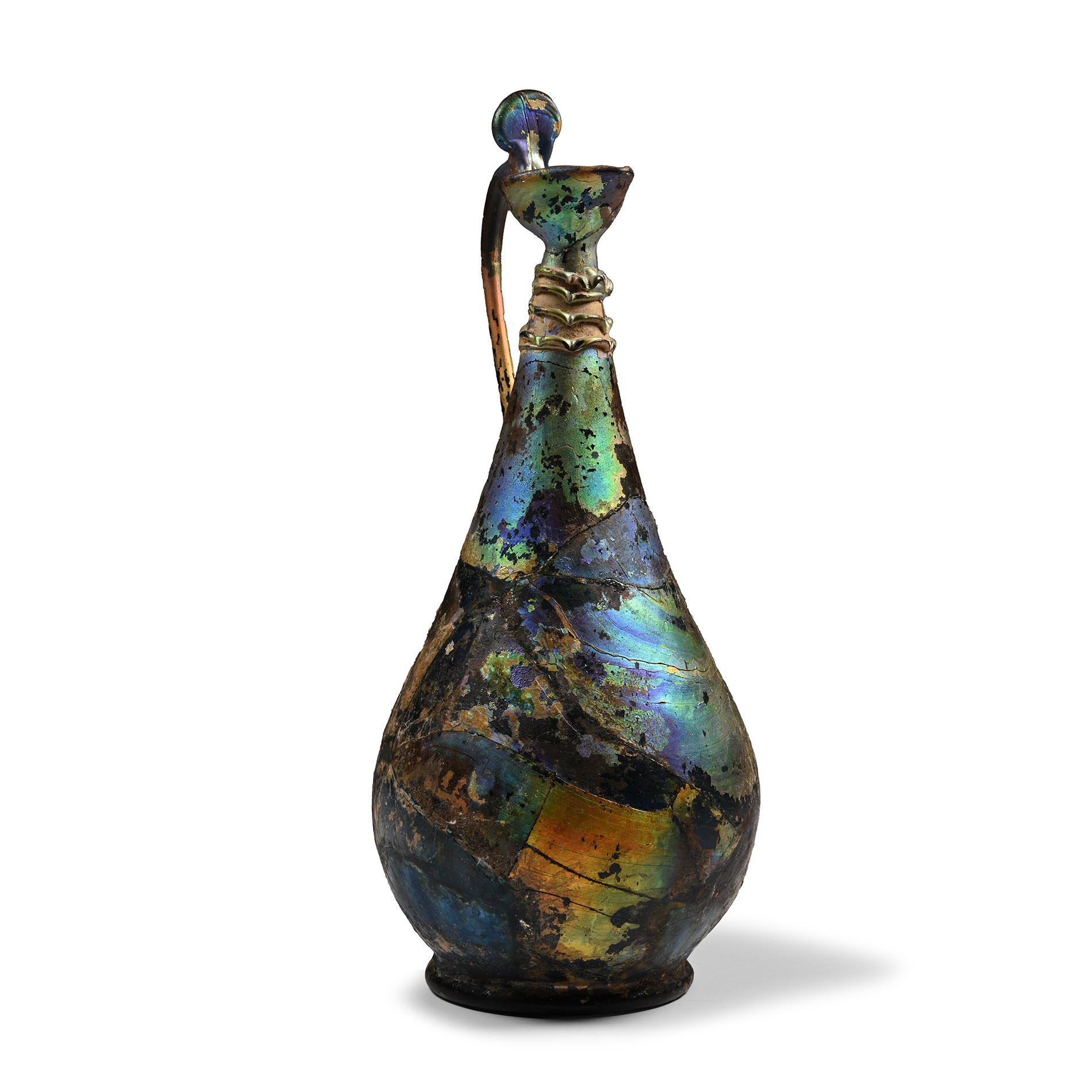
Large Western Asiatic Piriform Glass Jug with Iridescence
7TH-9TH CENTURY A.D.
9 1/4 in. (180 grams, 23.3 cm).
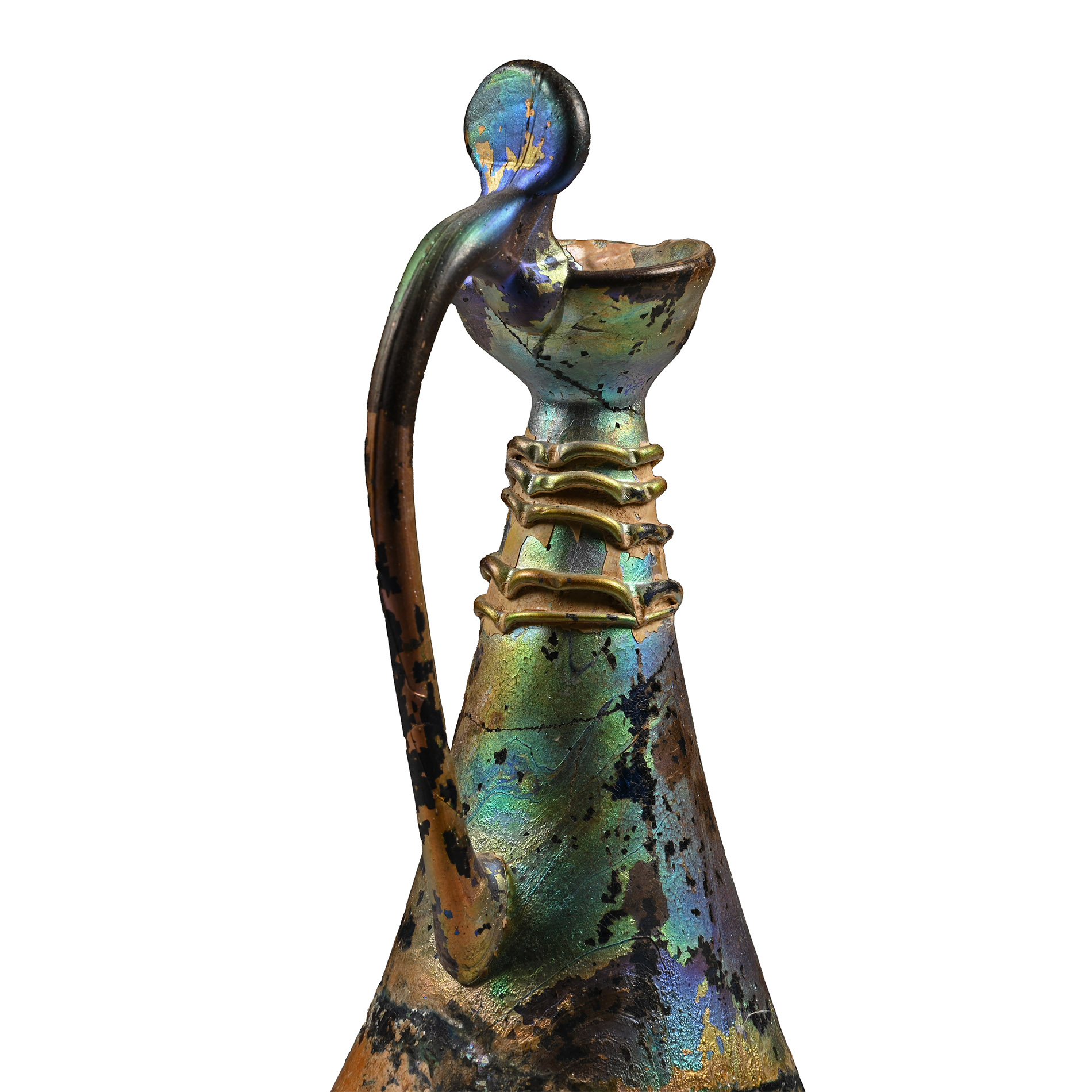
Tall piriform body with applied basal ring and dimpled base, applied trails to neck, dished piriform mouth with strap handle and thumb-pad.
ProvenanceSotheby's, Islamic Art, London 28 March 1994, no.61.
This lot has been cleared against the Art Loss Register database, and is accompanied by an illustrated lot declaration signed by the Head of the Antiquities Department, Dr Raffaele D'Amato.
TimeLine Auctions follows a vetting process to ensure the authenticity and legality of all items, reinforcing our commitment to integrity and responsible trading. Each antiquity, antique, and coin lot undergoes thorough examination by a vetting committee of at least ten external specialists, professional trade association members, scientists, and archaeologists: Our Vetting Process
AUCTIONS:
TimeLine is a leading auction house specialising in antiquities, ancient art, collectables, natural history, coins, medals, and books. Our auctions offer museums, collectors, historians, and enthusiasts the opportunity to acquire unique and historically significant pieces.
LOT 0256
Large Western Asiatic Piriform Glass Jug with Iridescence
Sold for (Inc. bp): £1,053
-
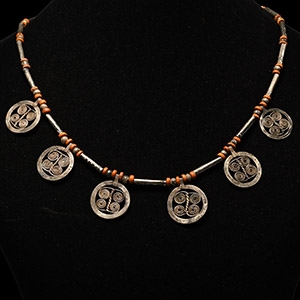
Elamite Carnelian Necklace with Silver Spiral Pendants
Late 2nd-early 1st millennium B.C.Sold for (Inc. bp): £1,300
Restrung necklace of tubular sheet-silver beads with interstitial spacers beads, six annular pendants with coiled-wire to the centre. 32 grams, 50 cm long
Acquired before 1983. Ex London gallery, 1990s. This lot has been cleared against the Art Loss Register database, and is accompanied by an illustrated lot declaration signed by the Head of the Antiquities Department, Dr Raffaele D'Amato. -
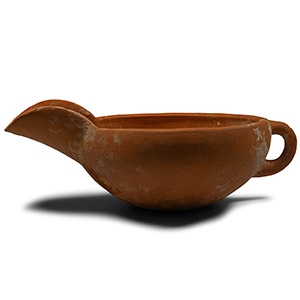
Amlash Terracotta Pouring Bowl
1st millennium B.C.Sold for (Inc. bp): £208
Squat in profile with broad base, loop handle to rear, broad U-section pouring lip. 789 grams, 31 cm
From a London, UK, gentleman's collection of ancient pottery and artefacts, 1990s. This lot has been cleared against the Art Loss Register database, and is accompanied by an illustrated lot declaration signed by the Head of the Antiquities Department, Dr Raffaele D'Amato. -
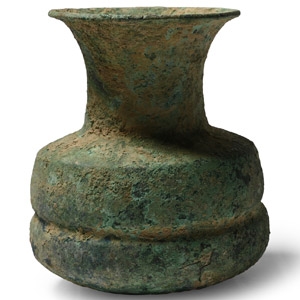
Luristan Bronze Vase
13th-7th century B.C.Sold for (Inc. bp): £169
With a waisted body and trumpet-shaped mouth. 165 grams, 10 cm
Acquired 1980-2015. Ex Abelita family collection. This lot has been cleared against the Art Loss Register database, and is accompanied by an illustrated lot declaration signed by the Head of the Antiquities Department, Dr Raffaele D'Amato.
