
Loading, please wait...
LOT 0266
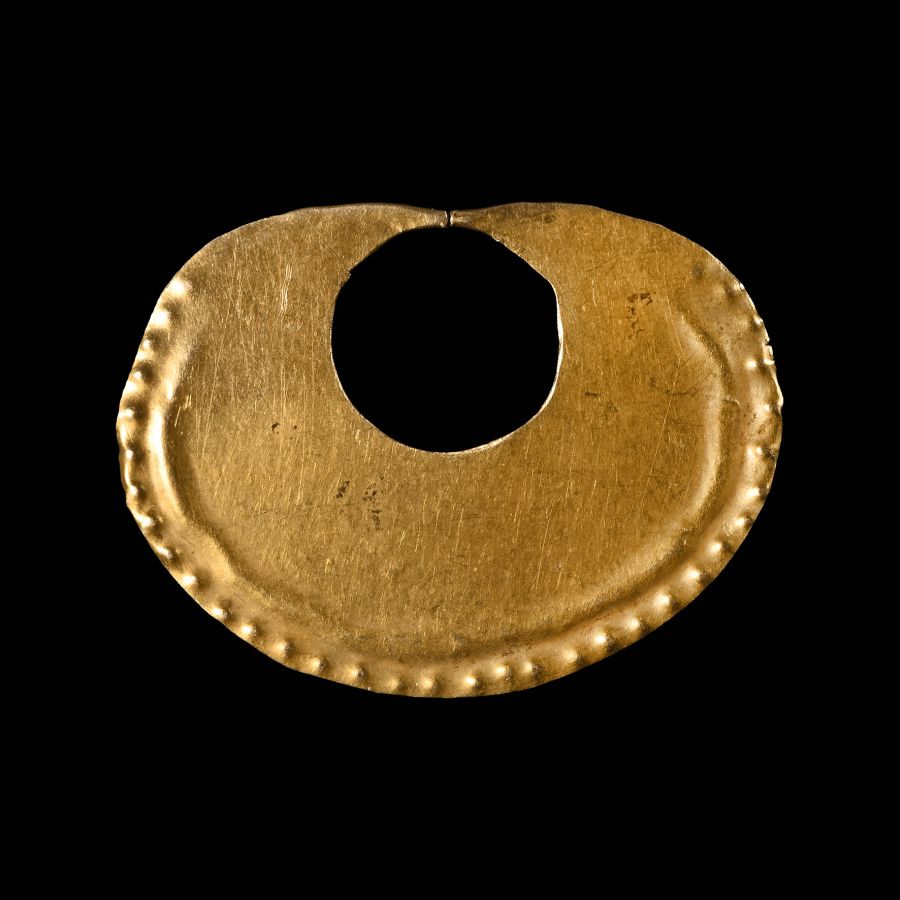
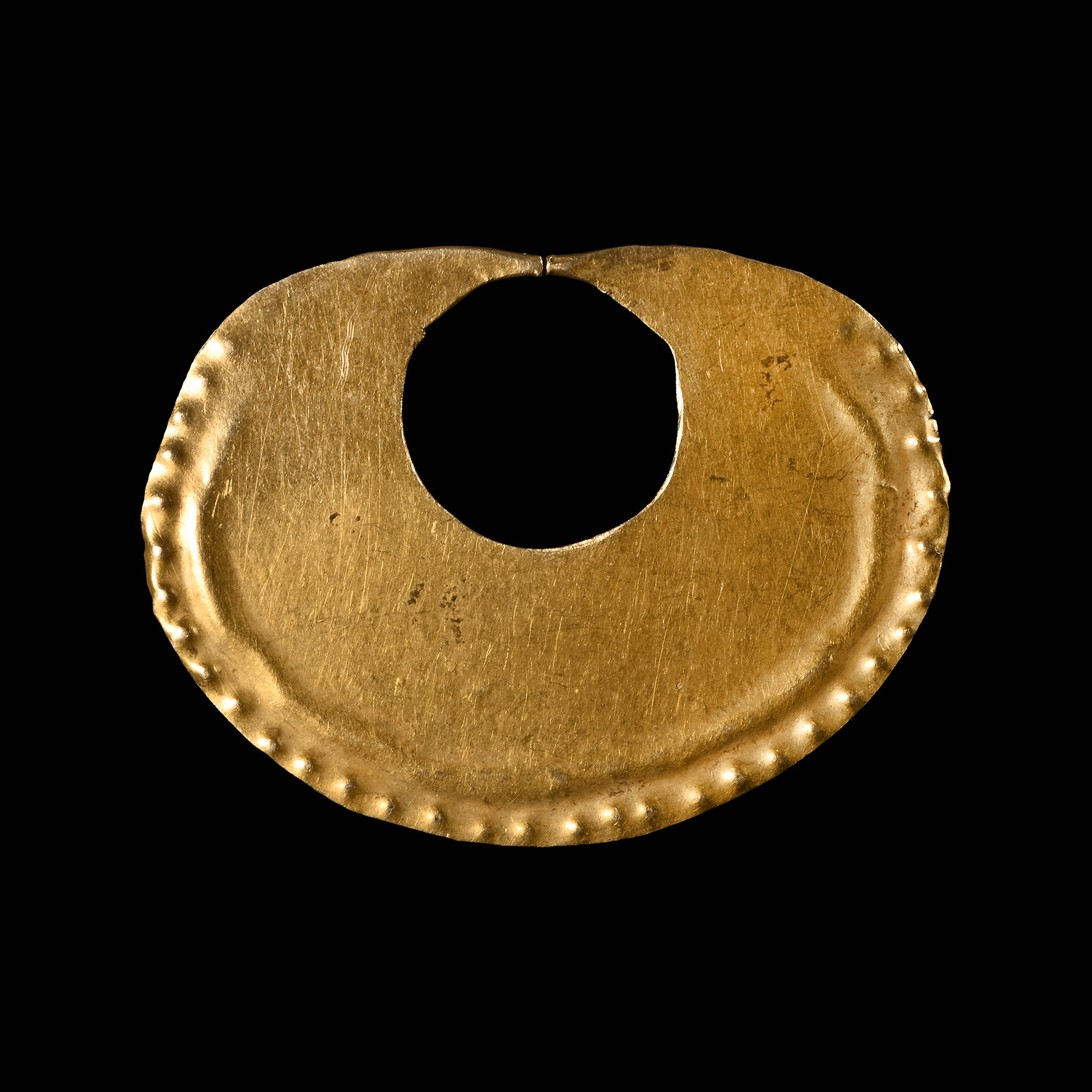
Large Western Asiatic Gold Lunar Pendant
CIRCA 2ND-1ST MILLENNIUM B.C.
1 3/4 in. (5.08 grams, 45 mm).
Shaped as a crescent moon with pearled border.
ProvenanceAcquired 1980-2015.
Ex Abelita family collection.
Cf. Ilan, D., 'The Crescent-Lunate Motif in the Jewellery of the Bronze and Iron Ages in the Ancient Near East' in Proceedings, 9th ICAANE, Basel 2014, Vol. 1, 137–150, figs.1,4, for parallels.
FootnotesThe gold lunula was a characteristic type of necklace, collar, or crescent-shaped pendant of the late Neolithic, Chalcolithic, and most often early Bronze Age. The crescent appears in various forms in the material culture of the southern Levant. It also appears in Mesopotamian and Egyptian iconography. It is most frequently associated with the crescent moon and its related deity. Such pendants were worn at the neck, in contact with the body, as protective amulets.
CONDITIONTimeLine Auctions follows a vetting process to ensure the authenticity and legality of all items, reinforcing our commitment to integrity and responsible trading. Each antiquity, antique, and coin lot undergoes thorough examination by a vetting committee of at least ten external specialists, professional trade association members, scientists, and archaeologists: Our Vetting Process
AUCTIONS:
TimeLine is a leading auction house specialising in antiquities, ancient art, collectables, natural history, coins, medals, and books. Our auctions offer museums, collectors, historians, and enthusiasts the opportunity to acquire unique and historically significant pieces.
-
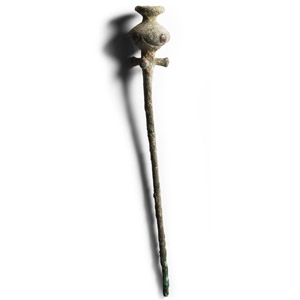
Luristan Poppy-Headed Cloak Pin
Circa 13th-8th century B.C.Sold for (Inc. bp): £52
Comprising a substantial round-sectioned pin with bulbous poppy-shaped head with three turrets below. 73 grams, 17.7 cm
UK private collection formed before 2000. Ex North London, UK, gallery. -
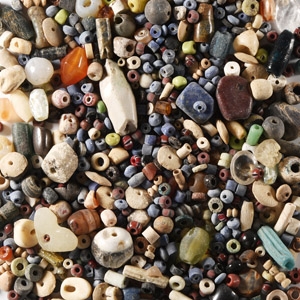
Western Asiatic and Other Mixed Stone and Glass Necklace Bead Collection
1st millennium B.C.-20th century A.D.Sold for (Inc. bp): £85
Composed of stone and glass beads in a variety of sizes, shapes and colours, some from Asia, North and West Africa, with some glass Venetian chevrons and millefiori trade beads. 69.5 grams total, 1-23 mm
UK gallery, early 2000s. -
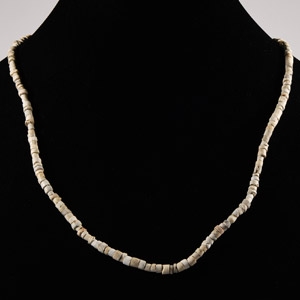
Western Asiatic White Stone Bead Necklace
Circa 1st millennium B.C.Sold for (Inc. bp): £39
Restrung; composed of small pale stone or shell smoothed cylinder beads of various shades and types. 12.1 grams, 66 cm long
UK gallery, early 2000s.
