
Loading, please wait...
LOT 0238
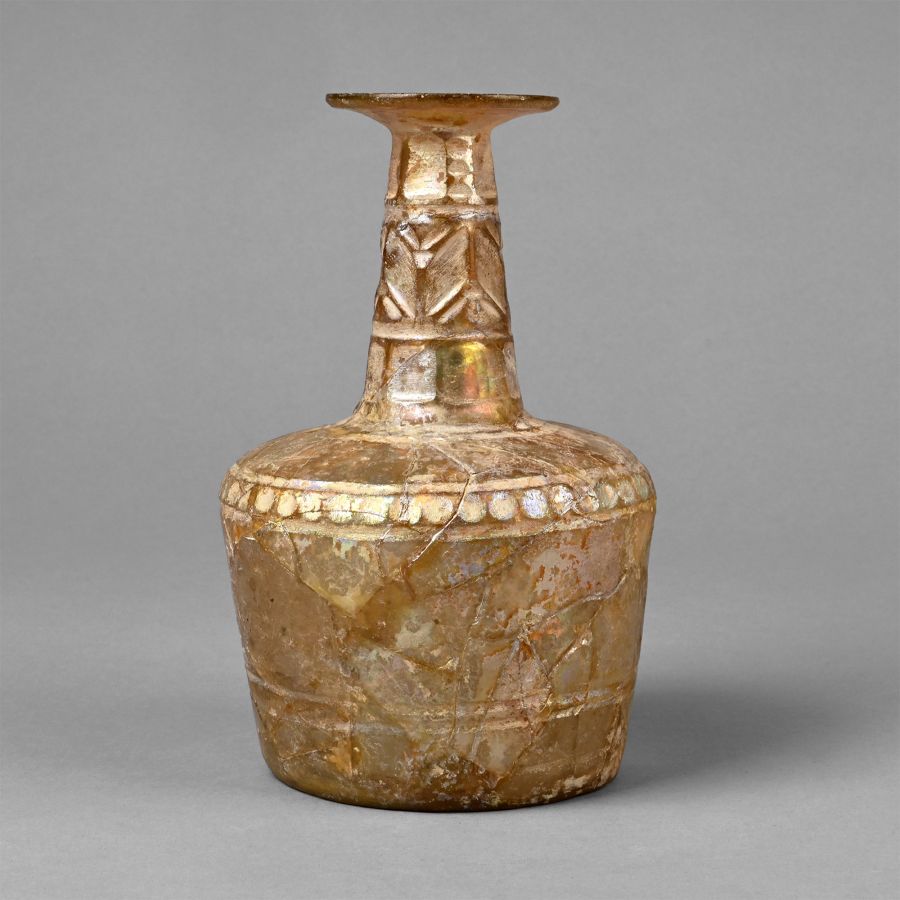
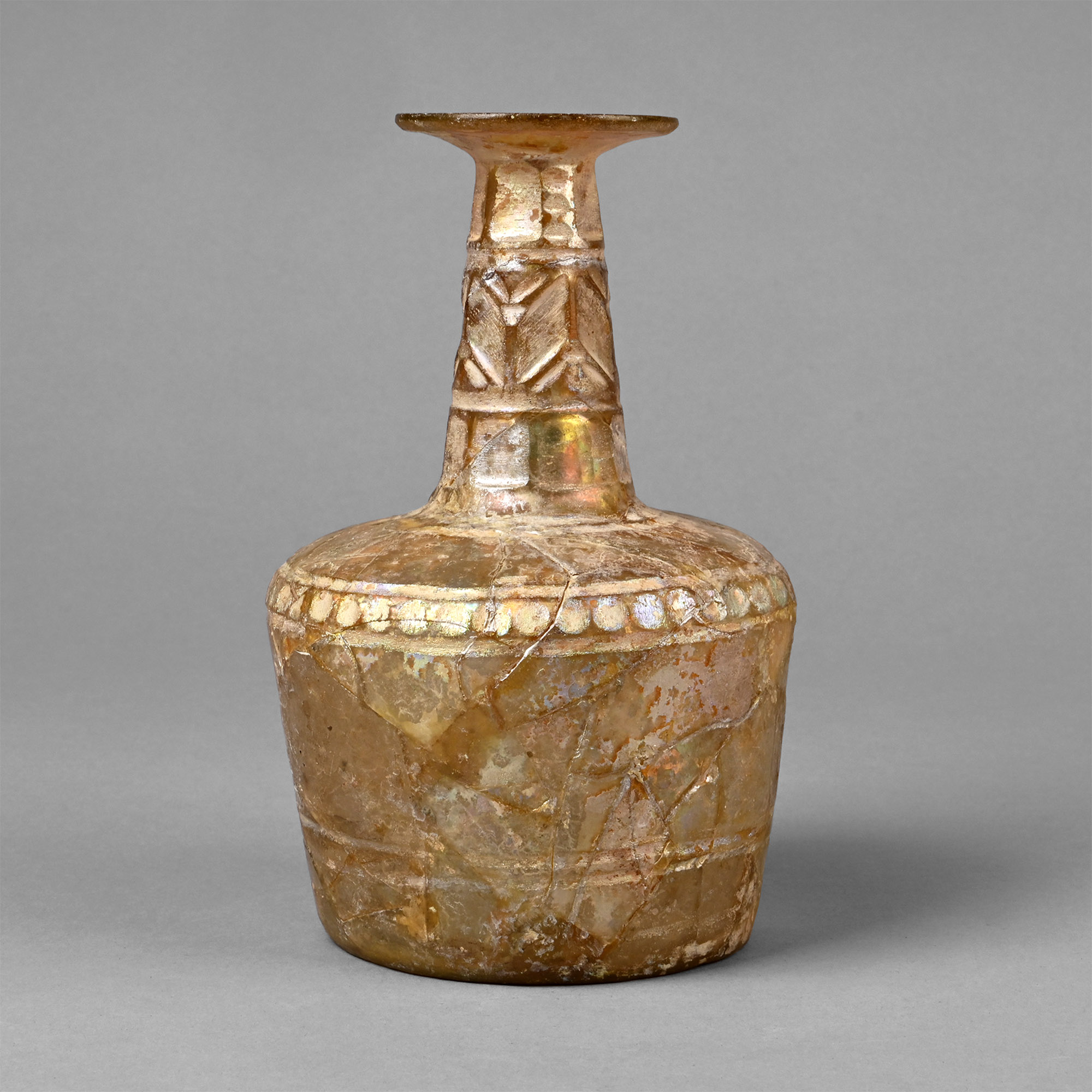
Large Western Asiatic Facetted Glass Vessel
9TH-11TH CENTURY A.D.
8 1/8 in. (412 grams, 20.6 cm).
With drum-shaped body and broad shoulder, tapering neck and flared mouth, recessed underside, segmented facets to the neck and edge of the shoulder, iridescent surface; repaired.
ProvenanceAcquired on the UK art market, 1990s.
Private collection, New York, USA.
This lot has been checked against the Interpol Database of stolen works of art and is accompanied by search certificate number no.13374-255459.
Cf. The Metropolitan Museum of Art, New York, accession number 48.101.270, for a similar example.
FootnotesThis object was probably produced in Nishapur, a vital city in the early and middle Islamic period, located on the Silk Road. The people of high and low-level classes of Nishapur, land-owning aristocracy and literates or simple farmers and miners, were able to adapt the cultural trends arriving from the Silk Road, creating a material culture with a distinctive visual language.
CONDITIONTimeLine Auctions follows a vetting process to ensure the authenticity and legality of all items, reinforcing our commitment to integrity and responsible trading. Each antiquity, antique, and coin lot undergoes thorough examination by a vetting committee of at least ten external specialists, professional trade association members, scientists, and archaeologists: Our Vetting Process
AUCTIONS:
TimeLine is a leading auction house specialising in antiquities, ancient art, collectables, natural history, coins, medals, and books. Our auctions offer museums, collectors, historians, and enthusiasts the opportunity to acquire unique and historically significant pieces.
-
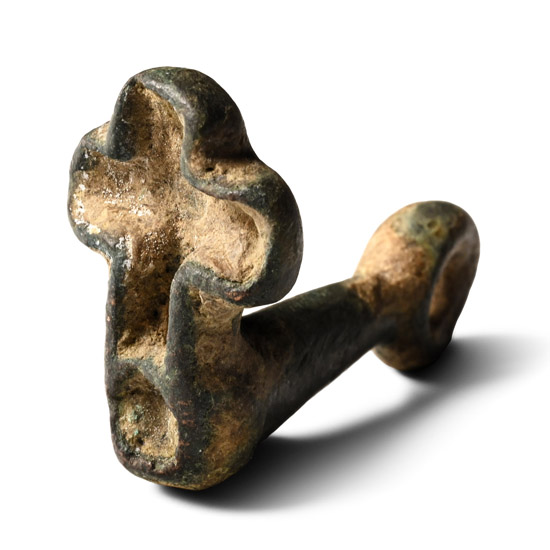
Large West Central Asian Bronze Greek Cross Seal Matrix
Circa 2300-1800 B.C.Sold for (Inc. bp): £65
Handled stamp seal with Greek cross design, accompanied by an old scholarly note, typed and signed by W.G. Lambert, late Professor of Assyriology, University of Birmingham, 1970-1993, which states: 'Stamp Seal of Bronze 28 x 17 x 35 mm. This had originally the shape of four Greek crosses based on a central small circle, but three are broken off and missing, only one remains. Above the circle is a tall stalk handle with round pierced loop on the top. the circle and crosses are compartmented. This comes from west central Asia and dates to c. 2300-1800 B.C. What remains is in good condition, and the pattern of the whole can easily be reconstructed.' 14.8 grams, 35 mm
Acquired in the late 1980s-early 1990s. Ex property of a West London businessman. Academically researched and catalogued by the late Professor Lambert in the early 1990s. Accompanied by a copy of a scholarly report, numbered T-189, typed and signed by Professor Wilfrid George Lambert. -
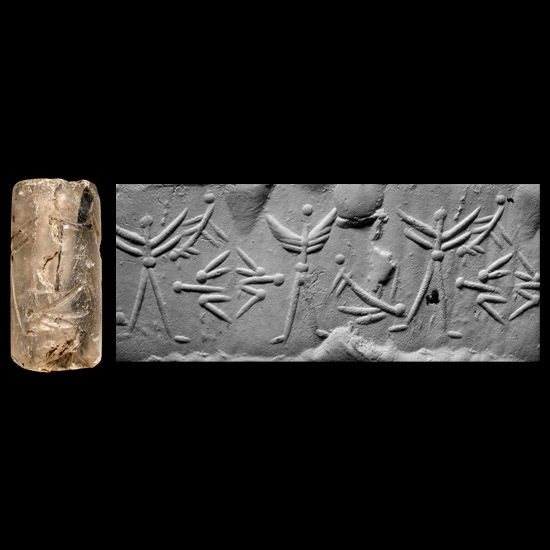
Neo-Assyrian Rock Crystal Cylinder Seal
Circa 700-600 B.C.Sold for (Inc. bp): £91
Translucent seal with stylised winged figures; supplied with a museum-quality impression. 3.17 grams, 20 mm
From the private collection of a European gentleman (1942-2024), formed since the 1970s. Accompanied by a previous typed catalogue slip with collection no.75. -
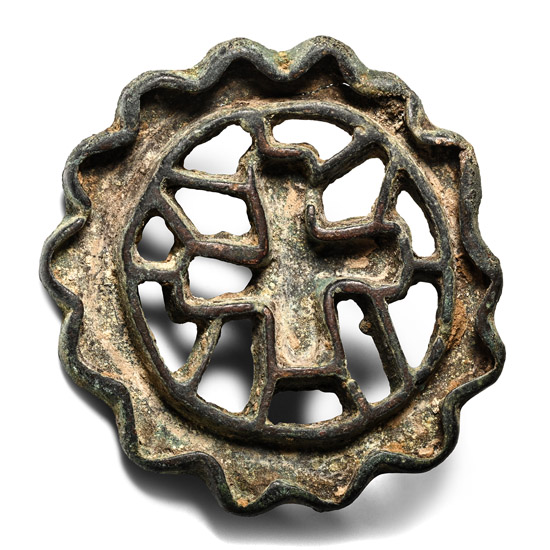
Large West Central Asian Bronze Scalloped Seal Matrix with Greek Cross
Circa 2300-2000 B.C.Estimate: £100 - 140 (+bp*)
Opening Bid: £50
Openwork seal with a loop on the reverse, accompanied by an old scholarly note, typed and signed by W.G. Lambert, late Professor of Assyriology, University of Birmingham, 1970-1993, which states: 'Stamp Seal of Bronze 50.5 x 49 16 mm. This is round with scalloped outer edge. The face is flat, as is the back, on which is mounted a handle of inverted U-shape. The design, which is both compartmented and open-work, consists of central cross with curving arms with struts between the arms to the outer band with scalloped outer rim. This comes from west central Asia and dates to c. 2300-200 B.C. There is incrustation on the surface, and the outer rim is slightly dented, but generally the pieve is in good condition.' 26.7 grams, 50 mm
Acquired in the late 1980s-early 1990s. Ex property of a West London businessman. Academically researched and catalogued by the late Professor Lambert in the early 1990s. Accompanied by a copy of a scholarly report, numbered U-22, typed and signed by Professor Wilfrid George Lambert.
