
Loading, please wait...
LOT 1543
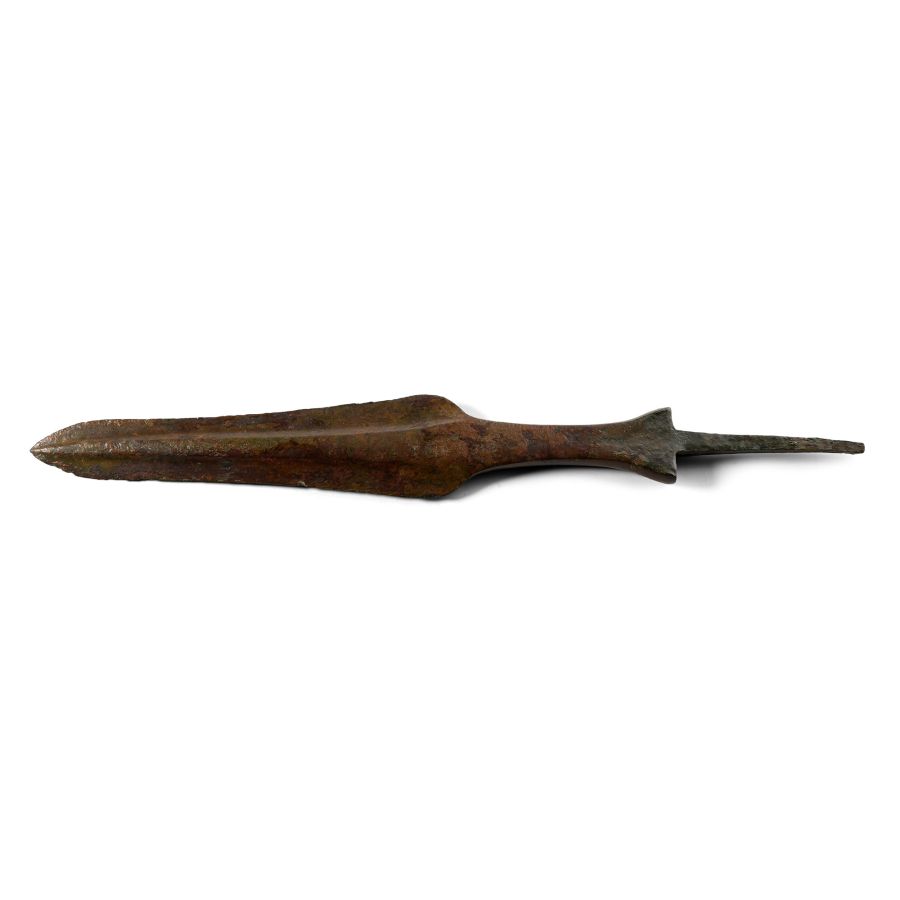
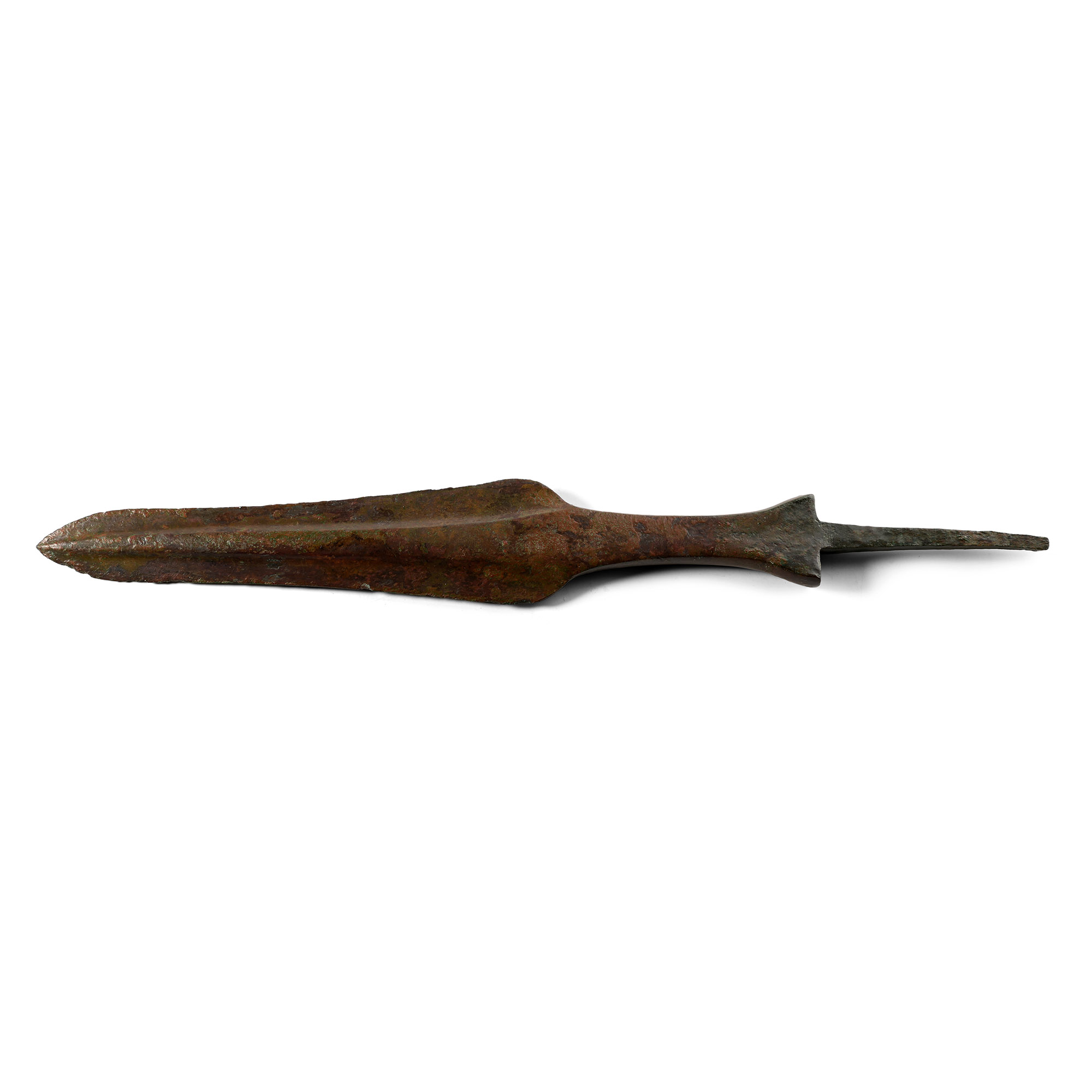
Large Western Asiatic Bronze Spearhead
EARLY 1ST MILLENNIUM B.C.
13 1/4 in. (400 grams, 33.8 cm).
The blade with rounded shoulders, the raised midrib extending to the shaft, a rectangular-section tang below.
ProvenanceEx Abelita family collection, 1990s.
LiteratureCf. Christie's, The Axel Guttmann Collection of Ancient Arms and Armour, part 2, London, 2004, item 40, p.36, for similar spearheads.
CONDITIONTimeLine Auctions follows a vetting process to ensure the authenticity and legality of all items, reinforcing our commitment to integrity and responsible trading. Each antiquity, antique, and coin lot undergoes thorough examination by a vetting committee of at least ten external specialists, professional trade association members, scientists, and archaeologists: Our Vetting Process
AUCTIONS:
TimeLine is a leading auction house specialising in antiquities, ancient art, collectables, natural history, coins, medals, and books. Our auctions offer museums, collectors, historians, and enthusiasts the opportunity to acquire unique and historically significant pieces.
-
.jpg)
Indo-Persian Inlaid Iron Talwar with Scabbard
Early-mid 20th century A.D.Estimate: £400 - 600 (+bp*)
Current Winning Bid: £300
Comprising a curved damascened steel blade, hilt with horse-head pommel, knuckle-guard and stub quilolons; scabbard with two suspension points, inlaid white-metal detailing. 823 grams, 64 cm
Private collection, UK.
This is an example of a saber mass-produced for tourists at the turn of the 19th and 20th centuries. This is evidenced by the carelessly executed decoration of the engraved ornament covering the main part of the scabbard, as well as the inferior technique of decorating the hilt. However, it is a solid replica of the swords used in real combat. -
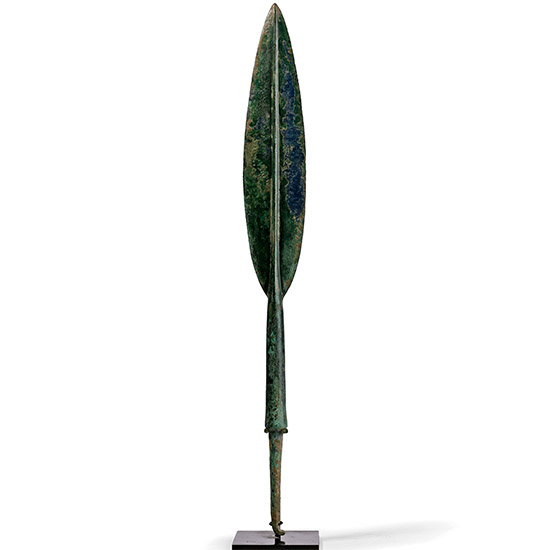
Large Luristan Leaf-Shaped Bronze Spearhead
Circa 1000-700 B.C.Sold for (Inc. bp): £845
Comprising a leaf-shaped blade with a midrib and a long tapering socket; accompanied by a display stand. 771 grams total, 44 cm including stand
with Art Ancient, London, UK. Private collection, London.
The spear, belonging to type 3 of the Khorasani classification, was used by chariot fighters to strike each other or the enemy infantry from above. Similar specimens with longer sockets were excavated by Negahban in the Amlash area. According to Moorey, sockets as long, if not longer than the blade, are a characteristic of Iranian spearheads in the late 2nd and early 1st millennium B.C. A similar spearhead from the Tappeh Sialk has been dated to the 9th-7th century B.C. -
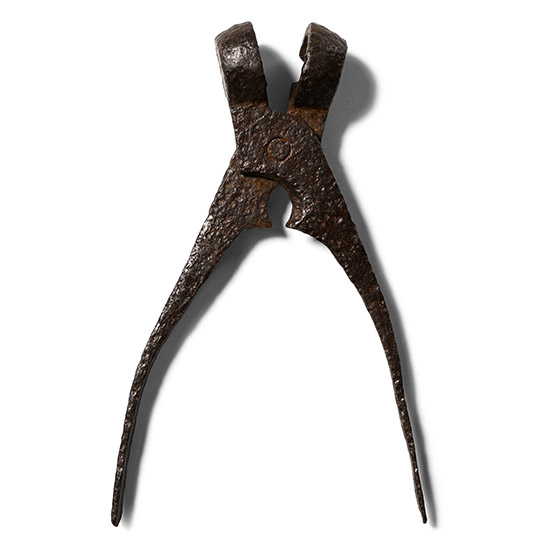
Civil War Period Iron Musket Ball Scissor Mould
Circa 17th century A.D.Sold for (Inc. bp): £85
Two-part mould with pivoting handles, pouring hole to upper face. 55.8 grams, 12.5 cm
From the private collection of Mr Brian Edwards, New Malden, Surrey, UK, formed from the late 1970s-early 1980s; thence by descent.
