
Loading, please wait...
LOT 1203
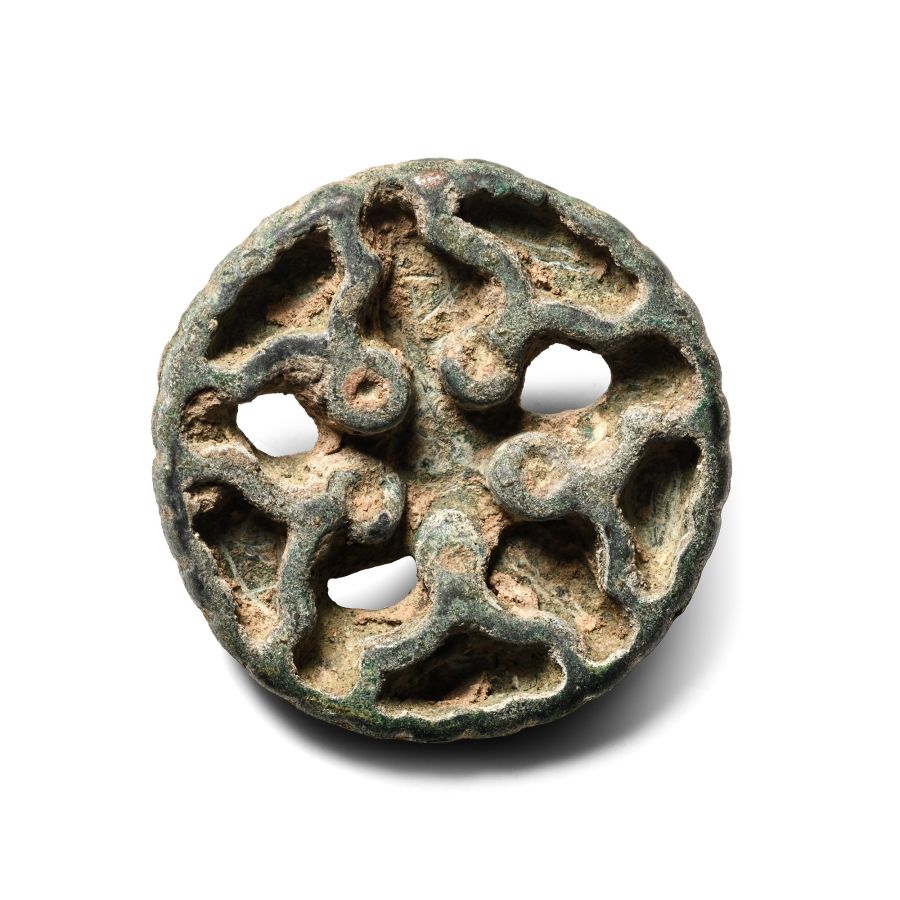
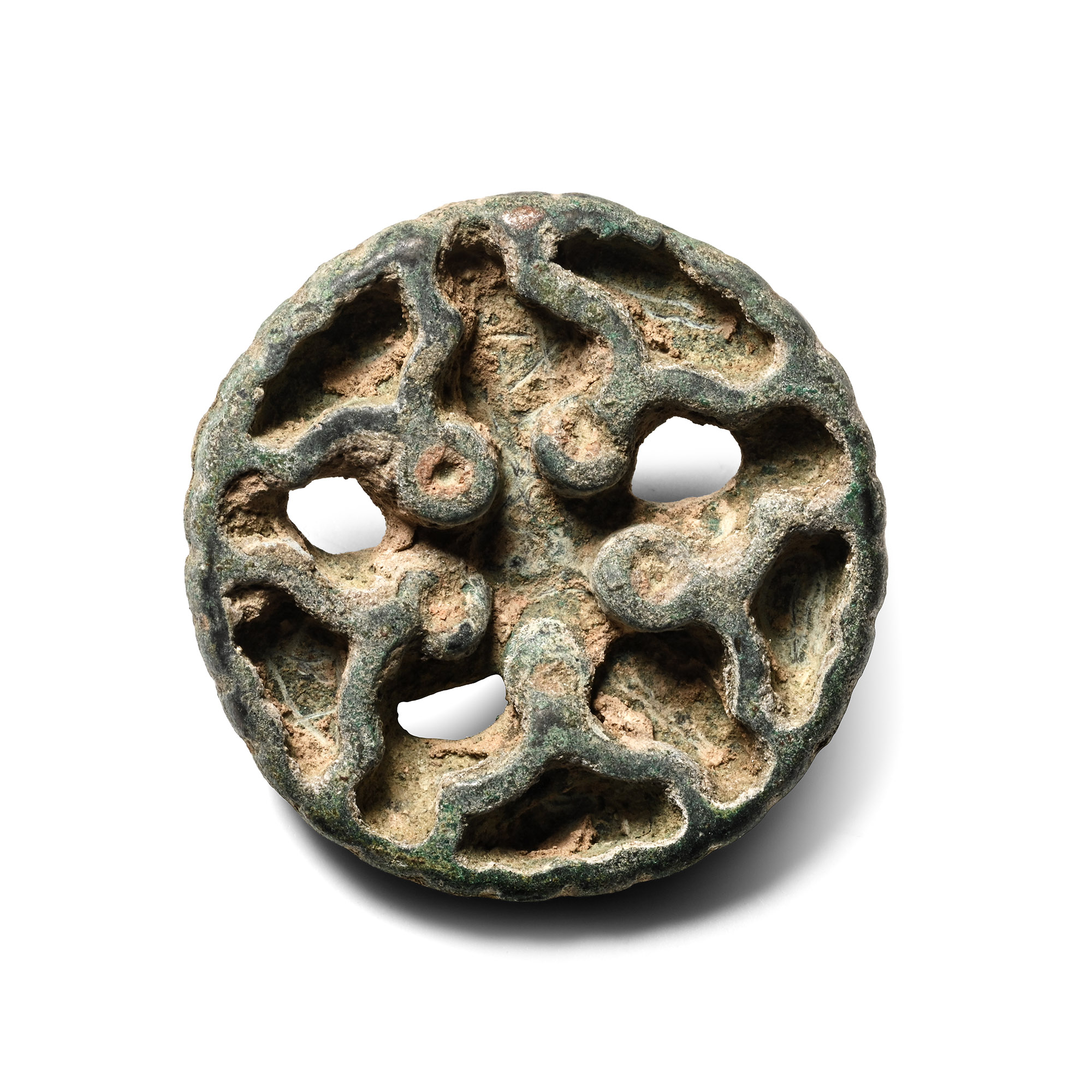
Large West Central Asian Bronze Five-Spoked Motif Seal Matrix
CIRCA 2300-2000 B.C.
1 1/2 in. (38.5 grams, 39 mm).
Openwork seal matrix with loop handle on the reverse, accompanied by an old scholarly note, typed and signed by W.G. Lambert, late Professor of Assyriology, University of Birmingham, 1970-1993, which states: 'Stamp Seal of Bronze, 39 x 39 x 15 mm. This is round, with notched outer edge with flat face and flat back on which a handle of inverted U-shape is mounted. The design is compartmented and partly open-work, perhaps by accident. It consists of five identical linear motifs starting from the edge, curving around and crossing over themselves then curving around in matching fashion and reaching the edge. This comes from west central Asia and dates to c. 2300-2000 B.C. It is a rare design. There is a little damage to the edge and the centre of the design, but generally it is in good condition.'
ProvenanceAcquired in the late 1980s-early 1990s.
Ex property of a West London businessman.
Academically researched and catalogued by the late Professor Lambert in the early 1990s.
Accompanied by a copy of a scholarly report, numbered R-745, typed and signed by Professor Wilfrid George Lambert.
TimeLine Auctions follows a vetting process to ensure the authenticity and legality of all items, reinforcing our commitment to integrity and responsible trading. Each antiquity, antique, and coin lot undergoes thorough examination by a vetting committee of at least ten external specialists, professional trade association members, scientists, and archaeologists: Our Vetting Process
AUCTIONS:
TimeLine is a leading auction house specialising in antiquities, ancient art, collectables, natural history, coins, medals, and books. Our auctions offer museums, collectors, historians, and enthusiasts the opportunity to acquire unique and historically significant pieces.
LOT 1203
Large West Central Asian Bronze Five-Spoked Motif Seal Matrix
Estimate £100 - 140€120 - 160 (for guidance only)$140 - 190 (for guidance only)
-
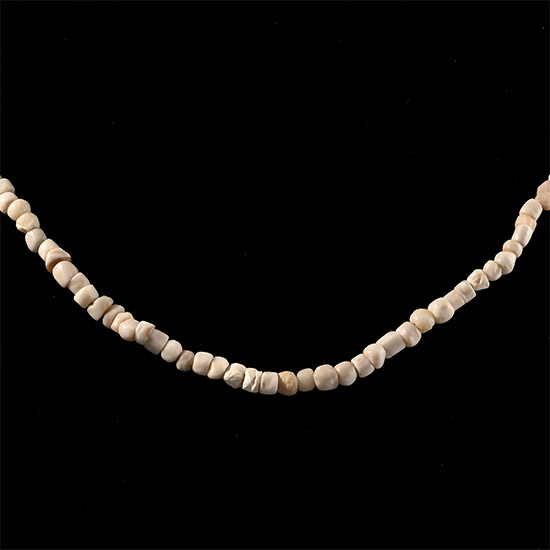
Western Asiatic Cream Glass and Other Bead Necklace String
1st millennium B.C. and laterSold for (Inc. bp): £26
Composed mainly of oblate beads, restrung. 14.2 grams, 40.5 cm
Acquired in the 1990s. Ex London, UK, collection. -
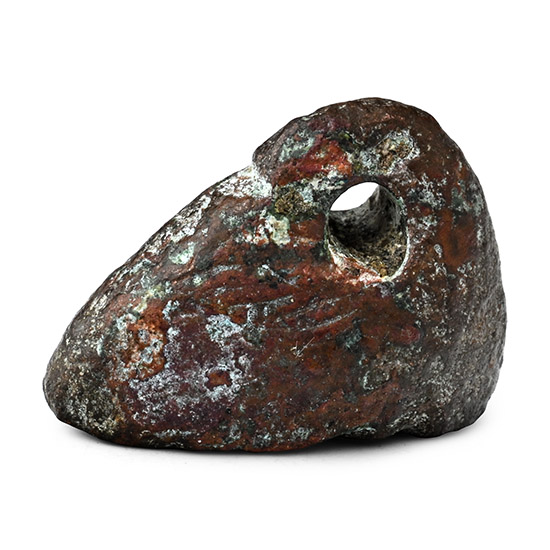
Neo-Babylonian Bronze Duck Weight of 1 Shekel
Circa 800-600 B.C.Sold for (Inc. bp): £156
In the shape of a sleeping duck, with its head turned towards its tail and with a flat striated base. 7.75 grams, 18 mm
Ex 'S' collection, London, UK, 1970 onwards. -

Western Asiatic Banded Agate Bead Collection
1st millennium B.C. and laterSold for (Inc. bp): £715
Comprising tubular, barrel-shaped, oblate and other types. 55 grams total, 4-38 mm
From the private collection of a European gentleman (1942-2024), formed since the 1970s.
