
Loading, please wait...
LOT 0520
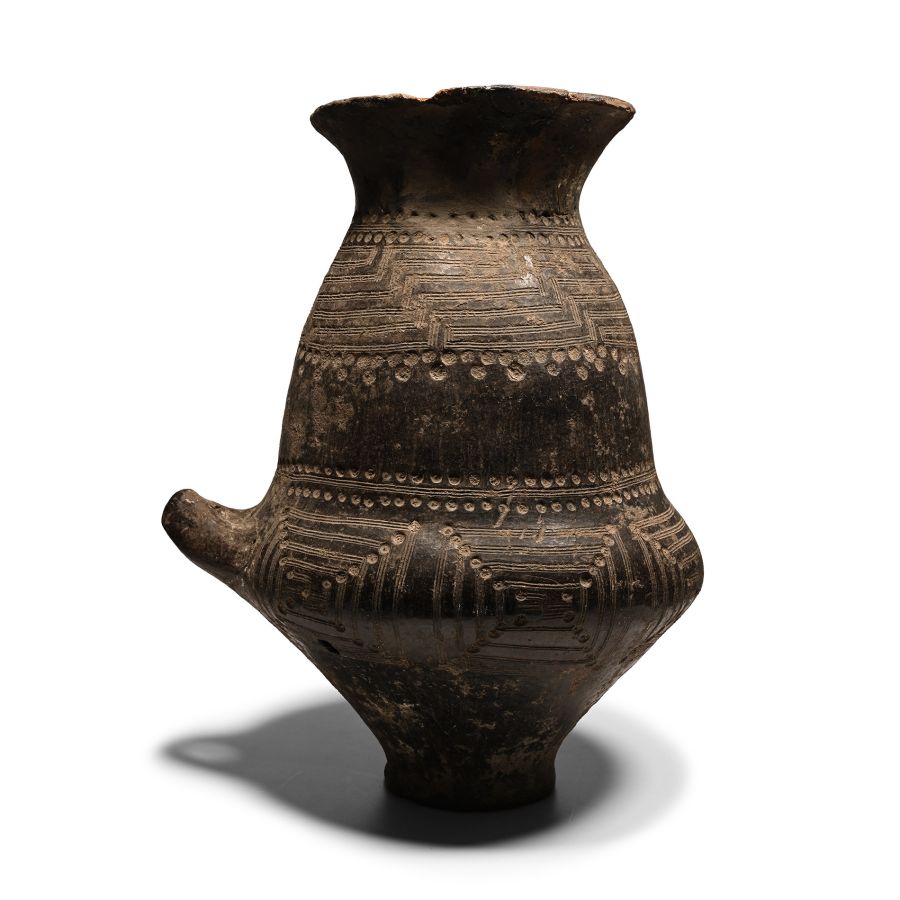
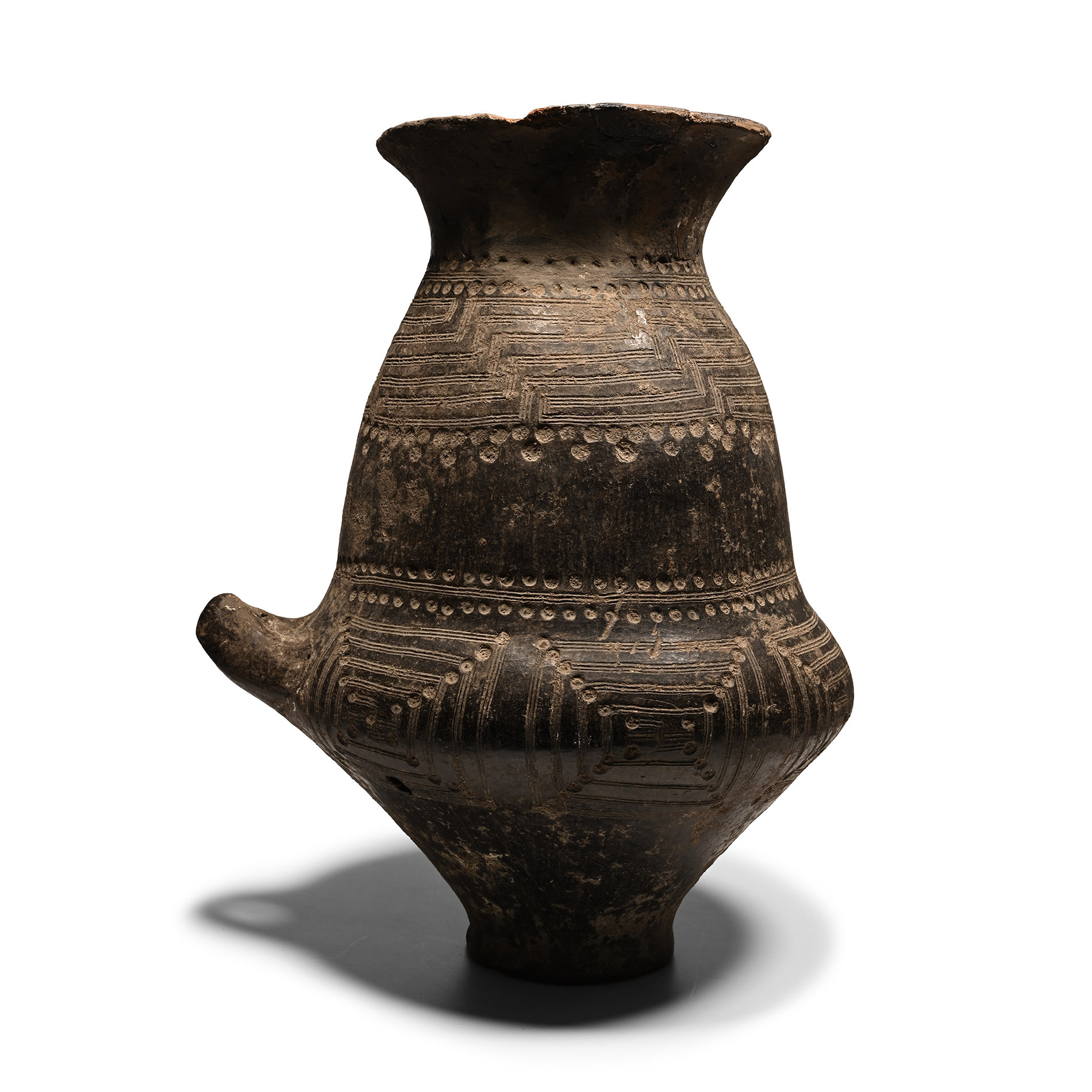
Large Villanovan Geometric Black-Glazed Vase with Handle
9TH-8TH CENTURY B.C.
16 1/4 in. (4.5 kg, 41 cm).
Biconical impasto body with broad flaring rim, bell-shaped upper section with bands of incised geometric decoration and impressed roundels, lower section tiered and sharply funicular with narrow flat base, a lateral upturned loop handle; small hole beneath the carination, rim partly restored.
ProvenanceEx Feu Dr Gonik Et/Ou Feu Me Wirth, Genève.
European private collection.
Accompanied by an academic report by Dr Raffaele D'Amato.
This lot has been checked against the Interpol Database of stolen works of art and is accompanied by search certificate number no.12205-222203.
This lot has been cleared against the Art Loss Register database, and is accompanied by an illustrated lot declaration signed by the Head of the Antiquities Department, Dr Raffaele D’Amato.
Cf. similar in the British Museum under accession number Eu1987,Q.11; a similar vase-urn in the Walters Art Museum, accession no.48.1872.
CONDITIONTimeLine Auctions follows a vetting process to ensure the authenticity and legality of all items, reinforcing our commitment to integrity and responsible trading. Each antiquity, antique, and coin lot undergoes thorough examination by a vetting committee of at least ten external specialists, professional trade association members, scientists, and archaeologists: Our Vetting Process
AUCTIONS:
TimeLine is a leading auction house specialising in antiquities, ancient art, collectables, natural history, coins, medals, and books. Our auctions offer museums, collectors, historians, and enthusiasts the opportunity to acquire unique and historically significant pieces.
LOT 0520
Large Villanovan Geometric Black-Glazed Vase with Handle
Sold for (Inc. bp): £2,080
-
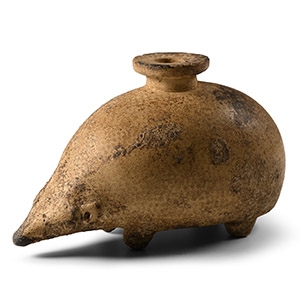
Greek Corinthian Hedgehog Aryballos
6th century B.C.Estimate: £1,500 - 2,000 (‡+bp*)
Opening Bid: £750
Hollow-formed with textured body and four stub legs, conical nose and lateral flanges with impressed point eyes; discoid flange rim to the neck with incised petal detailing. 55 grams, 98 mm
Ex Mrs IM, nr 18 (widow of Leo Mildenberg), formed in Zurich, gift from her husband between 1975-2000. Acquired by the present owner from the above. This lot has been checked against the Interpol Database of stolen works of art and is accompanied by search certificate number no.12208-222174. This lot has been cleared against the Art Loss Register database, and is accompanied by an illustrated lot declaration signed by the Head of the Antiquities Department, Dr Raffaele D’Amato. -
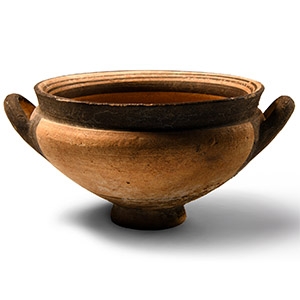
Greek Archaic Terracotta Skyphos with Concentric Circles
7th-early 6th century B.C.Sold for (Inc. bp): £468
Conical in form with rounded shoulder, everted rim and two round-section handles; painted with concentric bands around the interior and exterior. 243 grams, 15.5 cm wide
Acquired in Europe before 1992. European collection. This lot is accompanied by an illustrated lot declaration signed by the Head of the Antiquities Department, Dr Raffaele D’Amato.
The skyphos was already well known in Greece since the age of the Achaeans. In Homer, Eumaeus, the swineherd, prepares for his guest Ulysses a cyssibium filled with wine which the hero drinks during the meal and, when he is full, Eumaeus makes him drink from the cup in which he himself was using, a skyphos. Ulysses also offers Polyphemus a drink in a skyphos. -
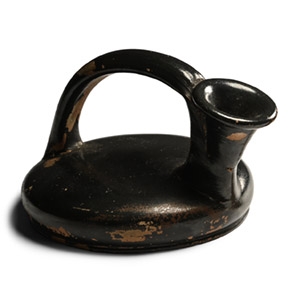
Etruscan Black-Glazed Terracotta Guttos
Circa 400-300 B.C.Sold for (Inc. bp): £715
Discoid in plan with trumpet-shaped spout and strap handle; old collector's label ' Ancient Greek / Exceedingly rare Etruscan Plaque in black ware / BC 400-300 / Excavated at Orvieto / Quite perfect / From Lord Devereaux's coll'n.'. 120 grams, 10.2 cm
Believed to have been part of the Duke of Northumberland collection. From an early 20th century collection with reference no.6/? From a Hampshire, UK, private collection. Accompanied be an early 20th century inked information packet. This lot is accompanied by an illustrated lot declaration signed by the Head of the Antiquities Department, Dr Raffaele D’Amato.
