
Loading, please wait...
LOT 0563
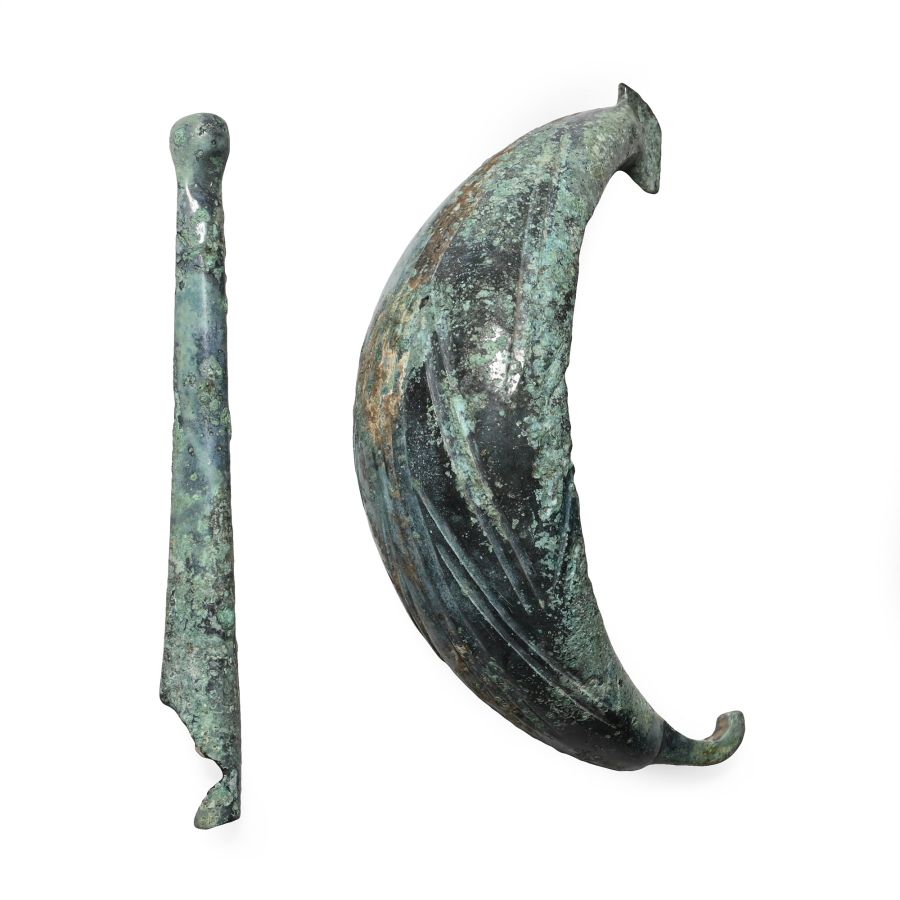
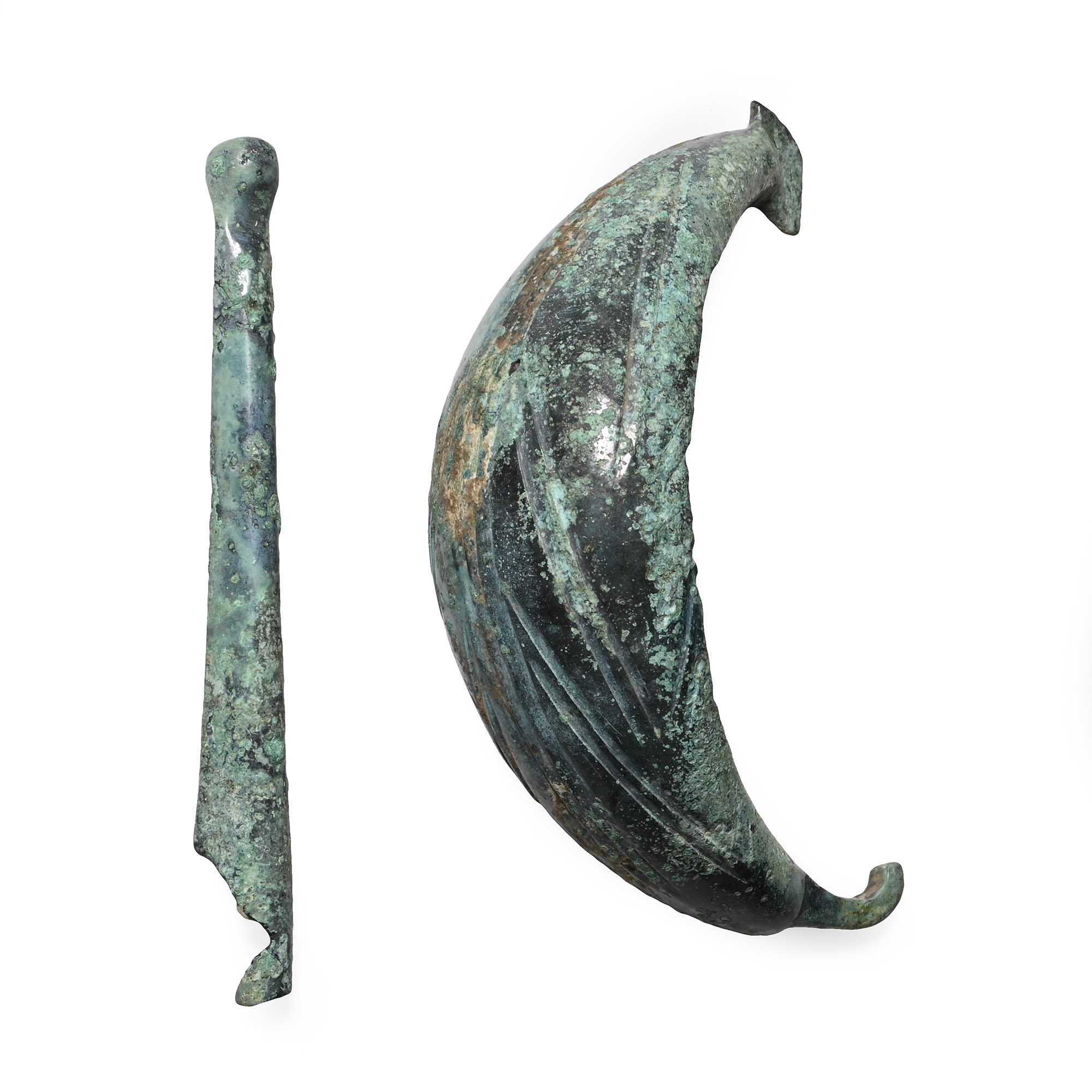
Large Villanovan Bronze Brooch Fragments
CIRCA 8TH CENTURY B.C.
3 1/2 - 3 3/4 in. (80.2 grams total, 88.7-95.5 mm).
Comprising a large convex bow decorated with deep grooves, and a fragment of a convex footplate, likely from the same brooch. [2, No Reserve]
ProvenanceFrom the private collection of a European gentleman (1942-2024), formed since the 1970s.
CONDITIONTimeLine Auctions follows a vetting process to ensure the authenticity and legality of all items, reinforcing our commitment to integrity and responsible trading. Each antiquity, antique, and coin lot undergoes thorough examination by a vetting committee of at least ten external specialists, professional trade association members, scientists, and archaeologists: Our Vetting Process
AUCTIONS:
TimeLine is a leading auction house specialising in antiquities, ancient art, collectables, natural history, coins, medals, and books. Our auctions offer museums, collectors, historians, and enthusiasts the opportunity to acquire unique and historically significant pieces.
-
.jpg)
Graeco-Persian Gold Ram-Shaped Amulet
3rd-2nd century B.C.Estimate: £15,000 - 20,000 (‡+bp*)
Opening Bid: £7,500
Modelled in the round in the form of a ram lying with its legs folded beneath the body, head turned with hooked horns, collar to the neck with a large pellet pendant; ribbed suspension loop behind the shoulders, mounting lug beneath the trunk. 12.87 grams, 30 mm
Private collection, acquired on the European art market in 2002. Accompanied by a copy of an Art Loss Register certificate, 8 June 2004. This lot has been checked against the Interpol Database of stolen works of art and is accompanied by search certificate number no.13204-249215.
The ram, a male symbol, was associated with various divinities. Turned into a ram as a child by Zeus, and a common sacrifice to the god, the ram was a symbol of Dionysus, which he shared with Aphrodite. Ram heads and pendants frequently occur in jewellery. In the animal kingdom, Eros favours the cockerel and the ram, both of which are indicative of sexual potency. -
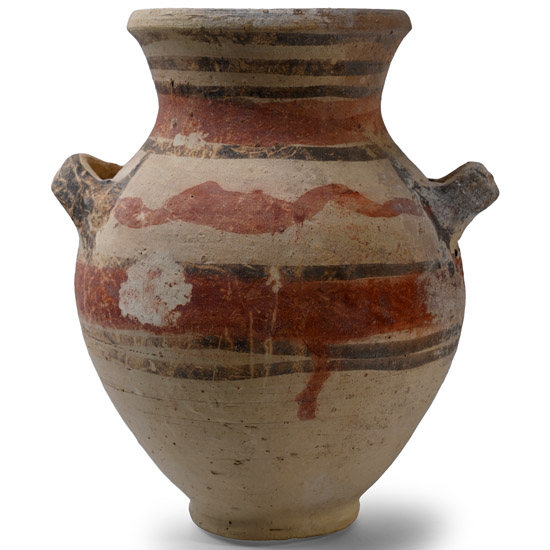
Eastern Mediterranean Two-Handled Vase
Iron Age, circa 6th century B.C. or laterSold for (Inc. bp): £221
With piriform body, broad neck and flared mouth with rolled rim, two lateral loop handles to the shoulder; painted circumferential bands. 593 grams, 19.3 cm
Property of a Northamptonshire collector. Acquired on the UK art market at auction in 2012. Property of a West Northamptonshire, UK, gentleman. -
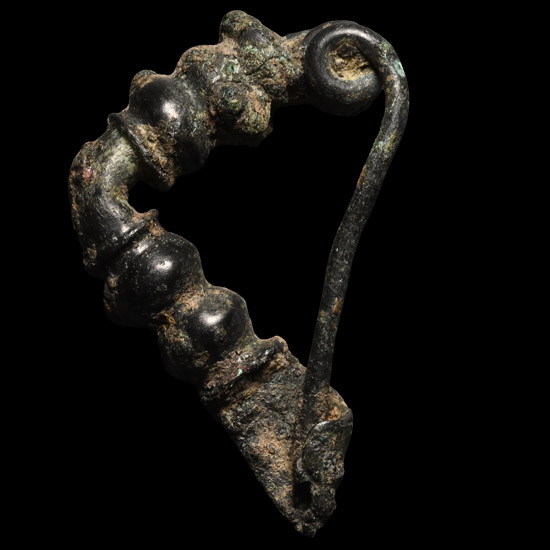
Phrygian Bronze Bow Brooch
Iron Age, circa 8th-7th century B.C.Sold for (Inc. bp): £59
With a right-angled, round-section bow with two pairs of bulbs, a hand-shaped catch. 9.1 grams, 35 mm
From the private collection of a European gentleman (1942-2024), formed since the 1970s.
