
Loading, please wait...
LOT 0337
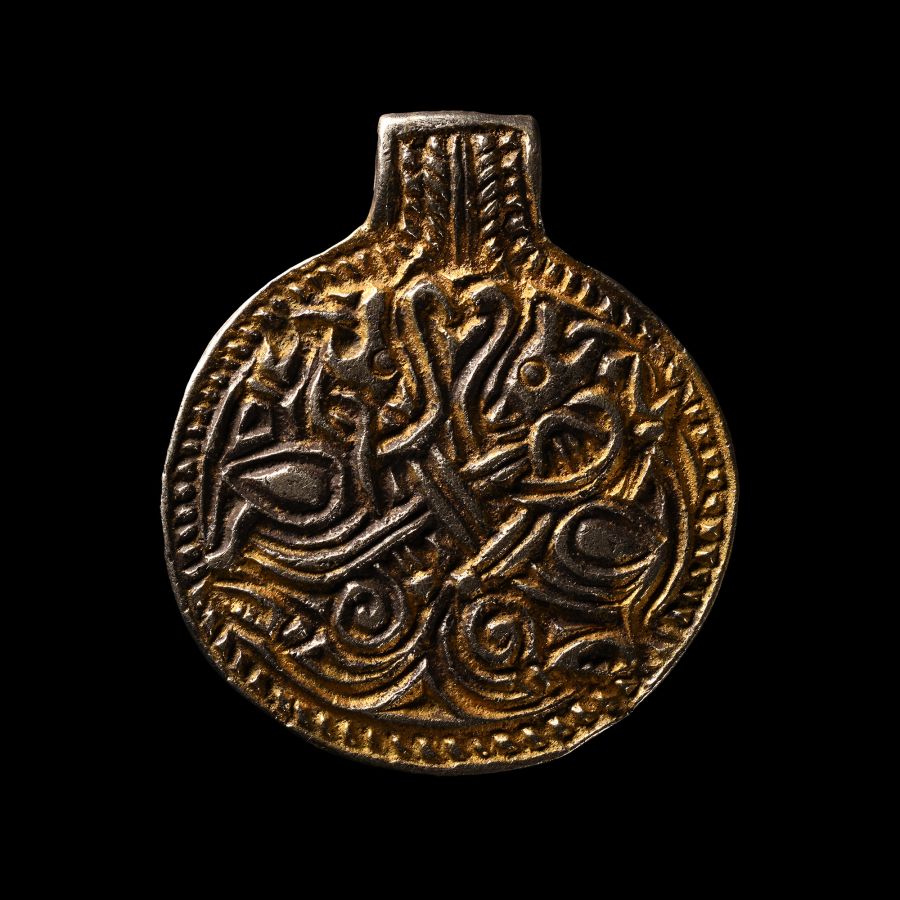
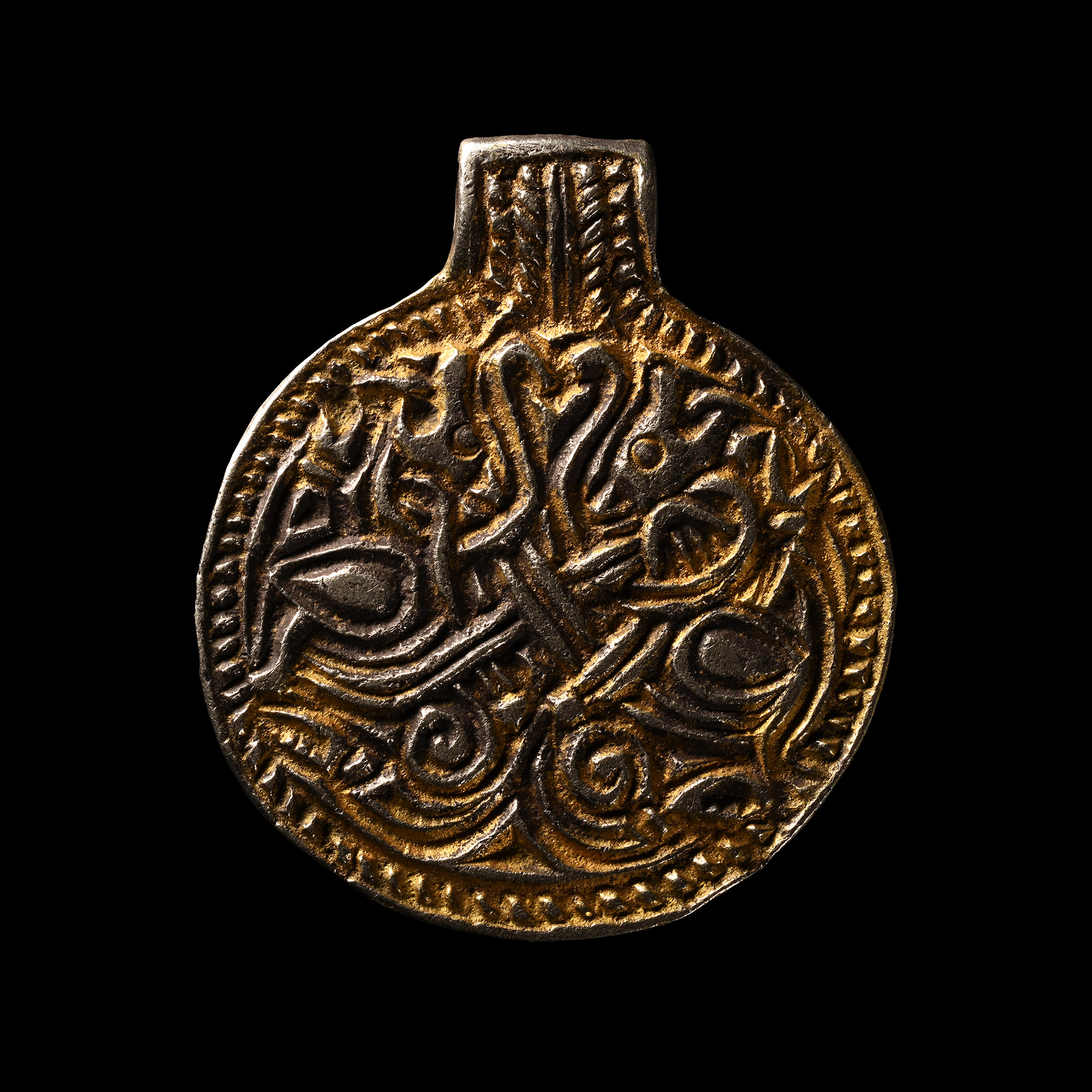
Large Viking Age Silver-Gilt Pendant with Entwined Beasts
CIRCA 9TH-11TH CENTURY A.D.
2 in. (19.83 grams, 49 mm high).
Cast with suspension loop, two beasts interlaced crossing in centre with heads with open mouths at 11 and 1 o'clock, with remains of gilding. [No Reserve]
ProvenancePrivate collection formed in Europe in the 1980s.
Westminster collection, central London, UK.
TimeLine Auctions follows a vetting process to ensure the authenticity and legality of all items, reinforcing our commitment to integrity and responsible trading. Each antiquity, antique, and coin lot undergoes thorough examination by a vetting committee of at least ten external specialists, professional trade association members, scientists, and archaeologists: Our Vetting Process
AUCTIONS:
TimeLine is a leading auction house specialising in antiquities, ancient art, collectables, natural history, coins, medals, and books. Our auctions offer museums, collectors, historians, and enthusiasts the opportunity to acquire unique and historically significant pieces.
LOT 0337
Large Viking Age Silver-Gilt Pendant with Entwined Beasts
Sold for (Inc. bp): £715
-
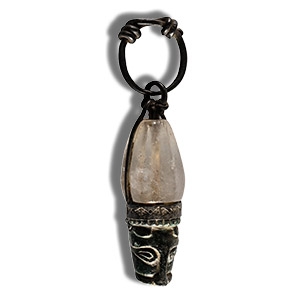
Viking Age Bronze and Crystal Pendant with Beast's Head
Circa 10th century A.D.Sold for (Inc. bp): £910
With fusiform hexagonal-section crystal bead modified for use as a pendant with the addition of a bronze collar bearing stamped 'bowtie' motifs attached to two lateral straps converging at the end to form a knotted and looped bail; finial formed as a beast-head with raised snout and piriform eyes, shallow flange ears, slanted muzzle; thick bronze wire suspension loop with ends twisted around the shank. 42.01 grams, 83 mm high
Private collection formed in Europe in the 1980s. Westminster collection, central London, UK. -
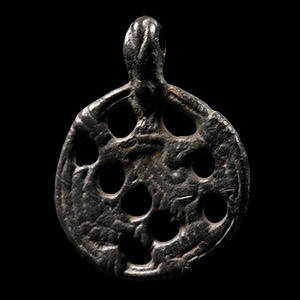
Viking Age Bronze Gripping Beast Pendant
9th-11th century A.D.Sold for (Inc. bp): £195
Composed of an openwork discoid body with integral loop displaying a beast head in relief. 4.5 grams, 29 mm
From the collection of a North American gentleman, formed in the 1990s. -
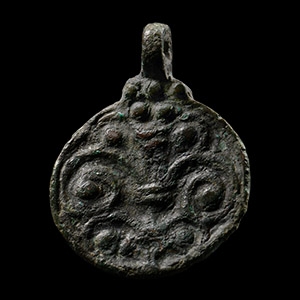
Viking Age Bronze Pendant
9th-11th century A.D.Sold for (Inc. bp): £33
Of discoid form with integral suspension loop, decorated in relief. 3.36 grams, 28 mm
From the collection of a North American gentleman, formed in the 1990s.
