
Loading, please wait...
LOT 1477
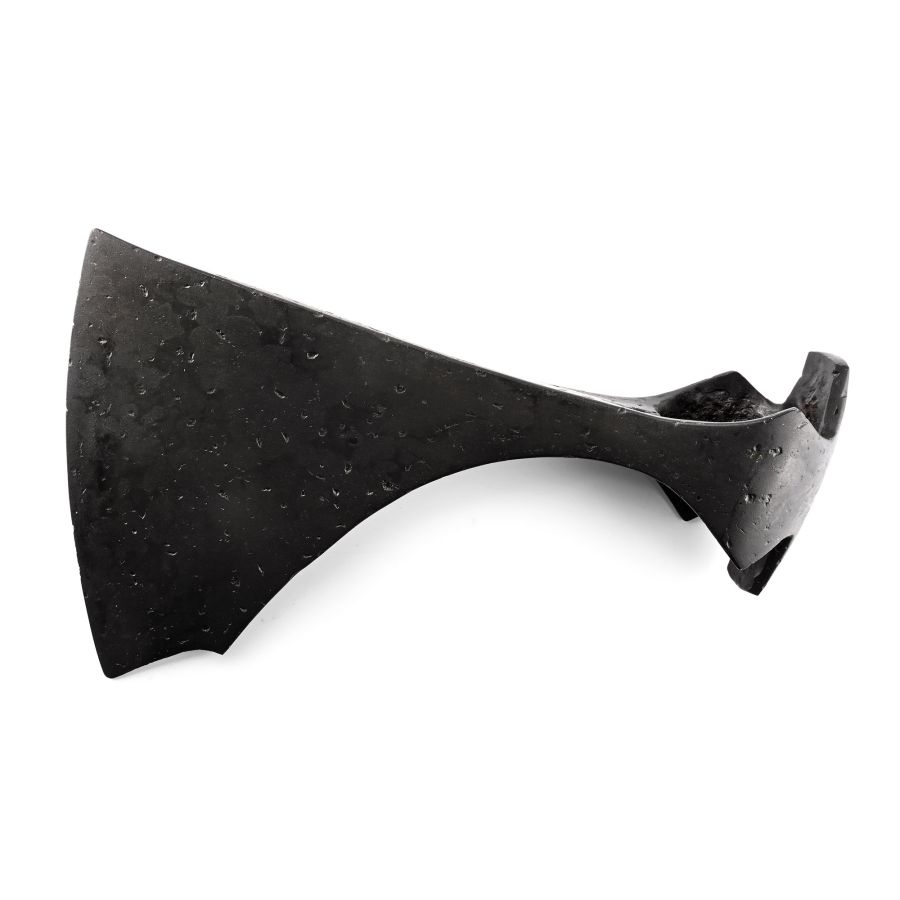
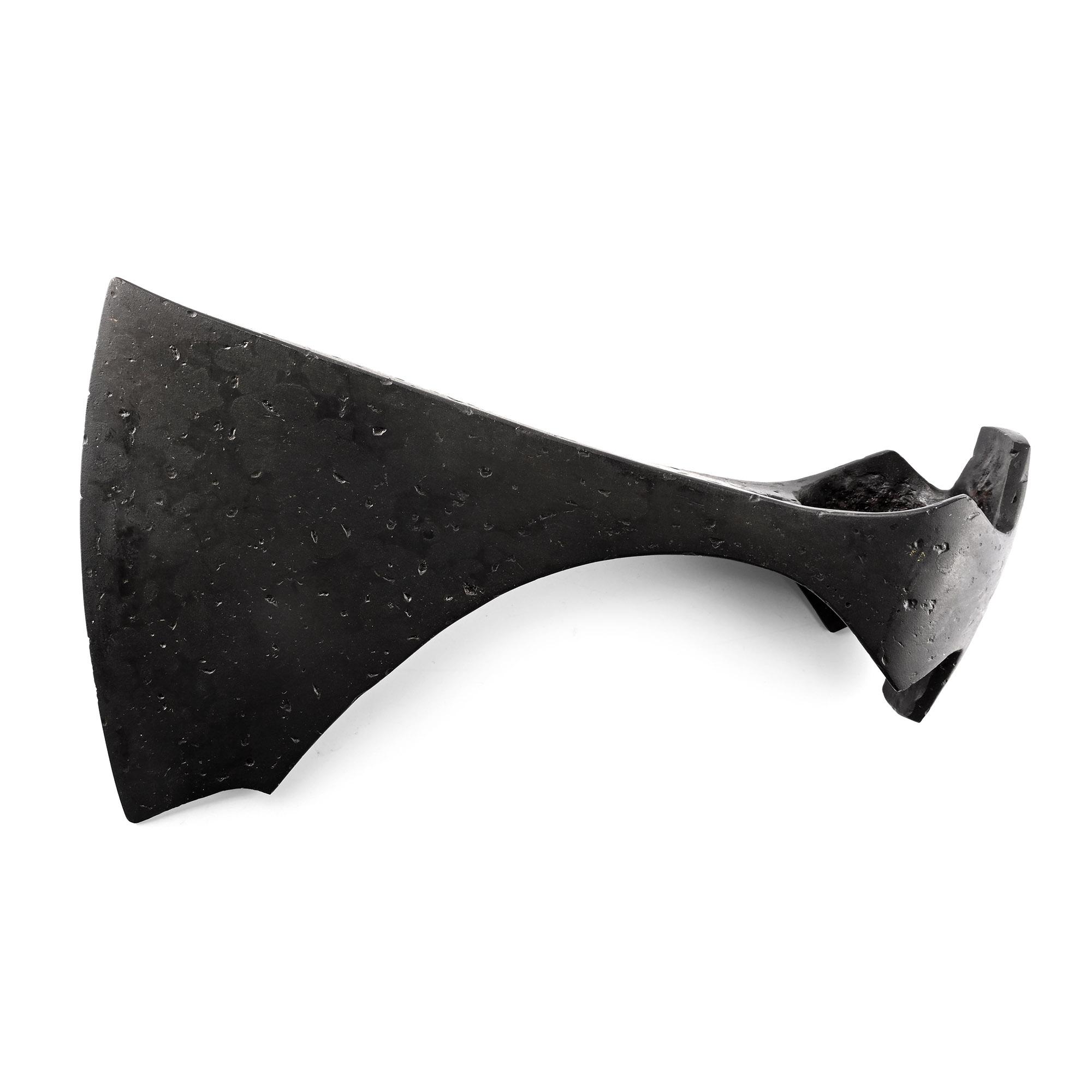
Large Viking Age Iron Socketted Bearded Axehead
CIRCA 10TH-11TH CENTURY A.D.
8 1/4 in. (730 grams, 21 cm).
Finely curved broad blade with chin to the lower edge, rounded socket with lateral triangular extensions and a rectangular extension to the rear; professionally cleaned, conserved, and restored. [No Reserve]
ProvenanceFrom the family collection of a South East London collector; formerly acquired in the late 1950s.
LiteratureCf.Arbman, H., Birka I: Die Gräber, Uppsala, 1940, pl.14 (3); Sedov, B.B., Finno-Ugri i Balti v Epokhi Srednevekovija, Moscow, 1987, pl.CXXIV, item 4.
FootnotesThis type of bearded axe seems to correspond to the E2 category of the Viking axe classification, but also has affinity with the Slavic axe-type Y. Usually these bearded axeheads (skeggöks) had a longer edge, designed to split tree trunks into planks and beams. Some of the bearded axes were known as halfÞynna öx; the neck on such a 'half thin axe' was thinly forged, to make it lighter.
CONDITIONTimeLine Auctions follows a vetting process to ensure the authenticity and legality of all items, reinforcing our commitment to integrity and responsible trading. Each antiquity, antique, and coin lot undergoes thorough examination by a vetting committee of at least ten external specialists, professional trade association members, scientists, and archaeologists: Our Vetting Process
AUCTIONS:
TimeLine is a leading auction house specialising in antiquities, ancient art, collectables, natural history, coins, medals, and books. Our auctions offer museums, collectors, historians, and enthusiasts the opportunity to acquire unique and historically significant pieces.
-
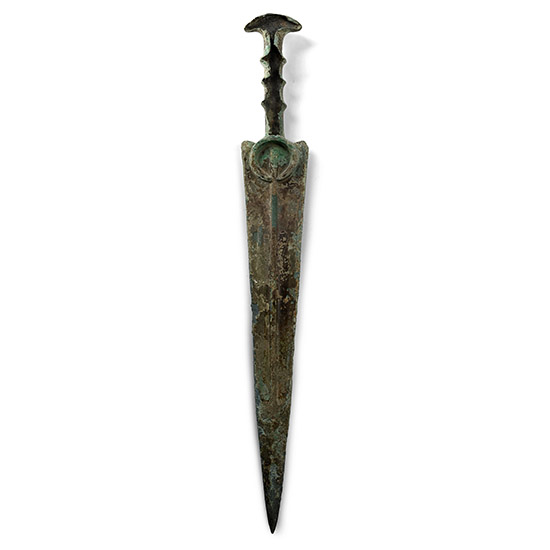
Luristan Bronze Dirk
2nd-1st millennium B.C.Sold for (Inc. bp): £468
Blade with single median rib, crescent-shaped pommel, ridged grip and pseudo-penannular guard embossed over the junction between the hilt and the blade. 355 grams, 43.5 cm
Ex Abelita family collection, 1980s-2000s.
These dirks were integrally cast. Moorey, Gordon and Khorasani created a classification of bladed weapons, according to which daggers are edged weapons no greater than 36cm in length, dirks (short swords) are between 36cm and 50cm in length, and swords are edged weapons greater than 50cm in length. -
.jpg)
Luristan Bronze Dagger
13th century B.C.Estimate: £200 - 300 (+bp*)
Opening Bid: £100
With a lentoid-section blade, tongue-shaped in plan, with an integral tapering hilt with flared finial, lateral flanges to accept a panel of bone to each face forming the grip. 185 grams, 32.5 cm
Ex Abelita family collection, 1980s-2000s.
The art of Luristan can be described as the art of nomadic herdsmen and horsemen with an emphasis on the crafting of small, easily portable objects, among these a great number of bronze weapons. The rich and noble aristocrats of the Luristan, Elamites, Hurrians, Lullubians, Kutians, and Kassites went to battle splendidly equipped and wore magnificent bronze armour, using maces, spears and daggers as offensive weapons, alongside spears, bows and arrows. -
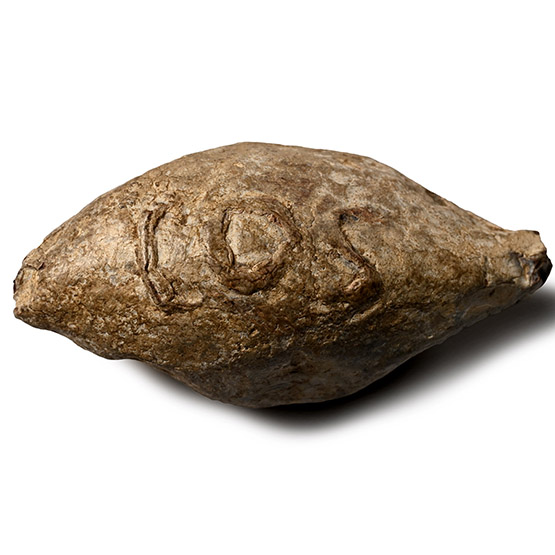
Roman 'Consular' Lead Slingshot
1st century B.C.Sold for (Inc. bp): £143
Fusiform shot with casting nipple at each end, low-relief legend 'COS' to one face and traces of letters on the other. 38 grams, 36 mm
From the collection of a London antiquarian, formed since the 1980s.
The shot (Völling type 1C) is marked with the abbreviation COS, meaning CO(N)S(UL), the highest military magistrate of the Roman Res Publica. The projectiles were made of different materials: lead (glandes) or pottery or stone (lapides missiles).
