
Loading, please wait...


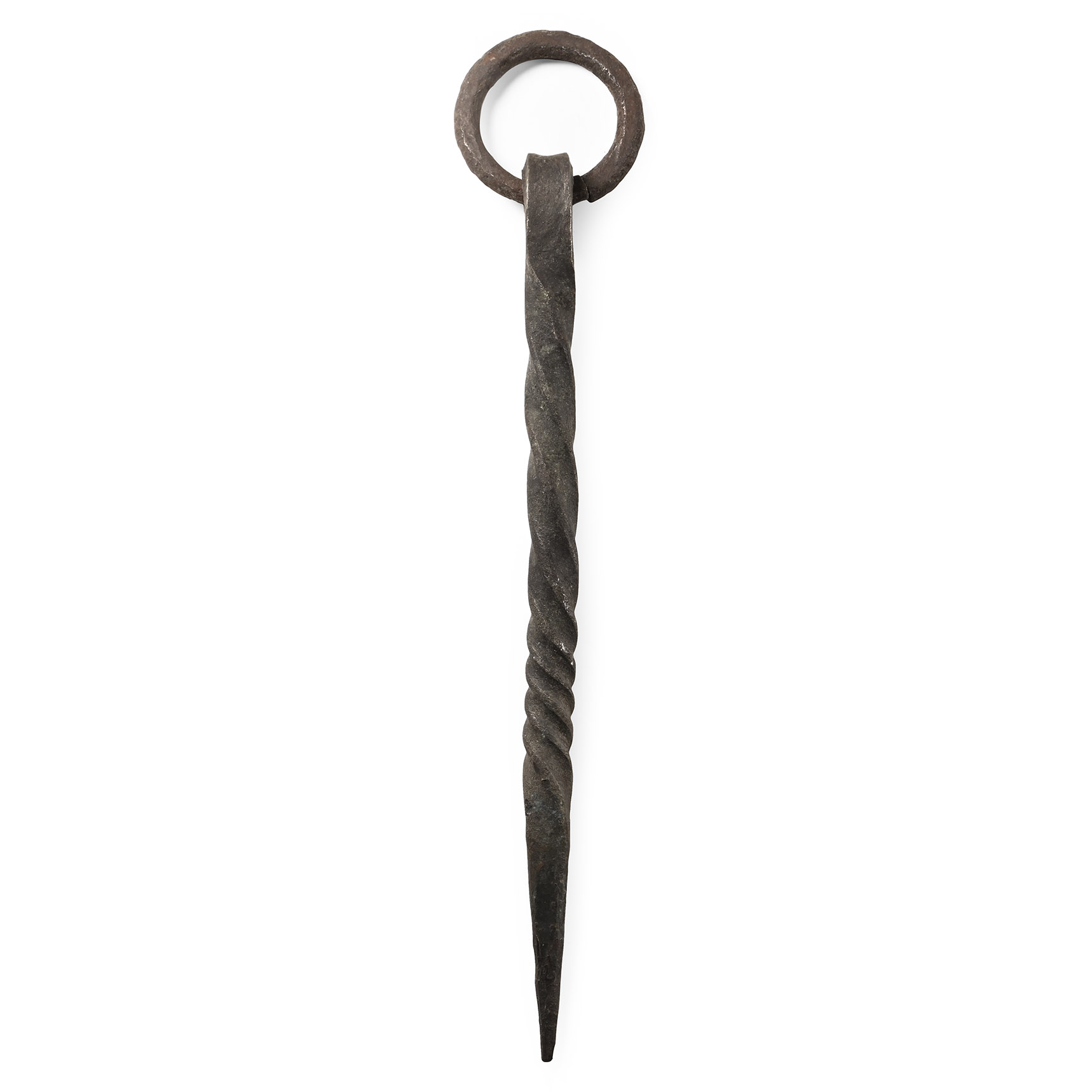
LOT 1785
Large Viking Age Bronze Twisted Ring Pin
9TH-11TH CENTURY A.D.
8 1/2 in. (115 grams, 21.7 cm).
With twisted square-section shank, loop finial with ring. [No Reserve]
ProvenanceAcquired on the European art market since the early 2000s.
From the private Northern Ireland collection of R.M.
Cf. Fanning, T., Viking Age Ringed Pins from Dublin, Dublin, 1994, fig. 23-6, 96-7.
CONDITIONTimeLine Auctions follows a vetting process to ensure the authenticity and legality of all items, reinforcing our commitment to integrity and responsible trading. Each antiquity, antique, and coin lot undergoes thorough examination by a vetting committee of at least ten external specialists, professional trade association members, scientists, and archaeologists: Our Vetting Process
AUCTIONS:
TimeLine is a leading auction house specialising in antiquities, ancient art, collectables, natural history, coins, medals, and books. Our auctions offer museums, collectors, historians, and enthusiasts the opportunity to acquire unique and historically significant pieces.
-
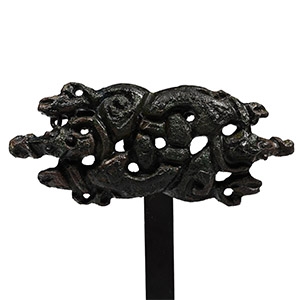
Viking Mount with Entwined Beasts
10th-11th century A.D.Sold for (Inc. bp): £1,105
Ellipsoid in plan, formed as interlaced beasts with central knot and interlaced body parts in Jellinge Style; six piercings to accept mounting rivets; hollow to the underside; mounted on a custom-made stand. 21.17 grams, 57 mm (60.7 grams total, 85 mm including stand)
Acquired on the London art market, 1997. Private collection, London. -
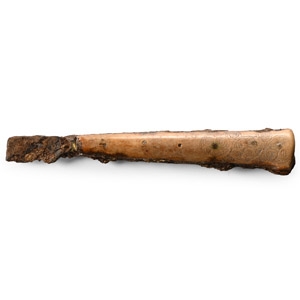
Viking Age Decorated Bone Knife Handle
8th-10th century A.D.Sold for (Inc. bp): £98
Portion of single-edged blade from a knife with attached scales to the handle, each D-shaped in section flaring towards the outer end; incised pattern of whorls, tendrils and hatched discs to the outer end of each. 33 grams, 11.5 cm
Acquired on the European art market since the early 2000s. From the private Northern Ireland collection of R.M. -
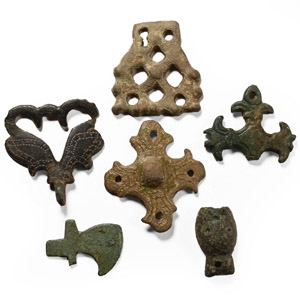
Viking Bronze Artefact Collection
9th-11th century A.D.Sold for (Inc. bp): £91
Including: stirrup mount, strap junction, pendant and other items. 36 grams total, 22-37 mm
Acquired on the European art market since the early 2000s. From the private Northern Ireland collection of R.M.
