
Loading, please wait...


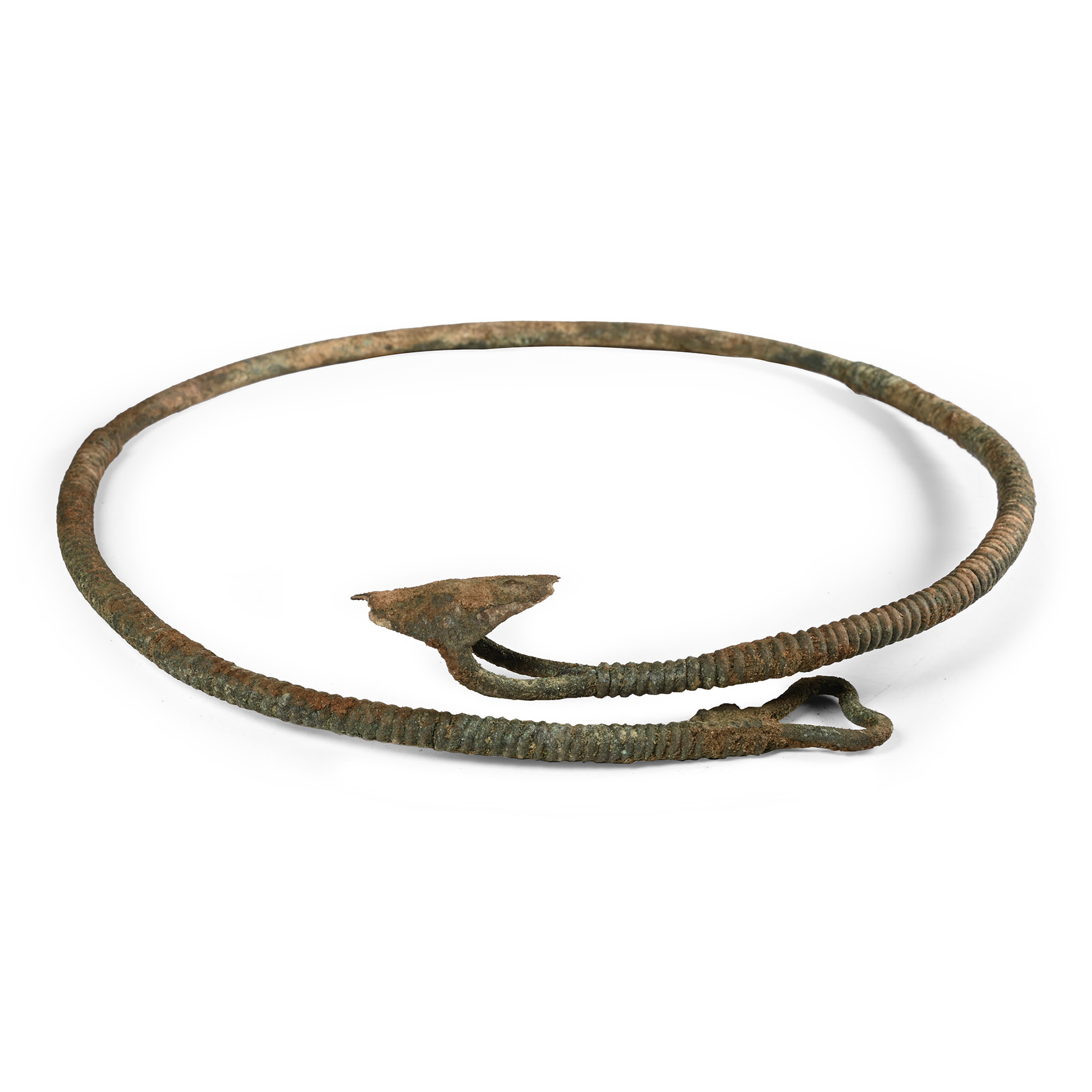
LOT 1740
Large Viking Age Bronze Bar with Coiled Wire Neck Torc
9TH-12TH CENTURY A.D.
8 1/2 in. (182 grams, 21.5 cm).
Round-section rod with ribbing, heart-shaped loop to one end and arched catchplate to the other. [No Reserve]
ProvenanceAcquired on the European art market since the early 2000s.
From the private Northern Ireland collection of R.M.
See Sedov, B.B., Finno-Ugri i Balti v Epokhi Srednevekovija, Moscow, 1987, for similar items.
CONDITIONTimeLine Auctions follows a vetting process to ensure the authenticity and legality of all items, reinforcing our commitment to integrity and responsible trading. Each antiquity, antique, and coin lot undergoes thorough examination by a vetting committee of at least ten external specialists, professional trade association members, scientists, and archaeologists: Our Vetting Process
AUCTIONS:
TimeLine is a leading auction house specialising in antiquities, ancient art, collectables, natural history, coins, medals, and books. Our auctions offer museums, collectors, historians, and enthusiasts the opportunity to acquire unique and historically significant pieces.
-
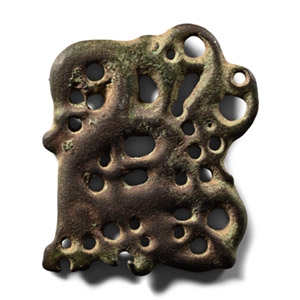
'The Stratton Strawless' Anglo-Scandinavian Viking Bronze Urnes Beast Mount
11th century A.D.Sold for (Inc. bp): £494
Openwork interlace plaque with Urnes Style stag and serpent, attachment points at outer edge. 14 grams, 39 mm
Found Stratton Strawless, Norfolk, UK. From an old private collection of Norfolk, UK, gentleman, formed since 1998. Accompanied by a copy of the British Museum's Portable Antiquities Scheme (PAS) report no.NMS-E92C94.
The motif of the stag and the serpents is associated especially with Urnes Style objects. -
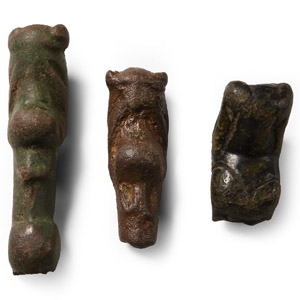
Anglo-Scandinavian Bronze Stirrup Mount Terminal Group
Circa 11th century A.D.Sold for (Inc. bp): £46
With beast-head and other detailing, hollow to the reverse. 51.4 grams total, 28-48 mm
Acquired on the European art market since the early 2000s. From the private Northern Ireland collection of R.M. -
.jpg)
Viking Age Gold Twisted Bangle
Circa 9th-11th century A.D.Sold for (Inc. bp): £11,700
Formed as two round-section rods twisted around each other and curved into a bracelet, the narrow ends coiled about the shank. 59.83 grams, 67 mm
Acquired in London, 1985. Private collection, London. This lot has been checked against the Interpol Database of stolen works of art and is accompanied by a search certificate number no.12436-226869.
