
Loading, please wait...
LOT 2065
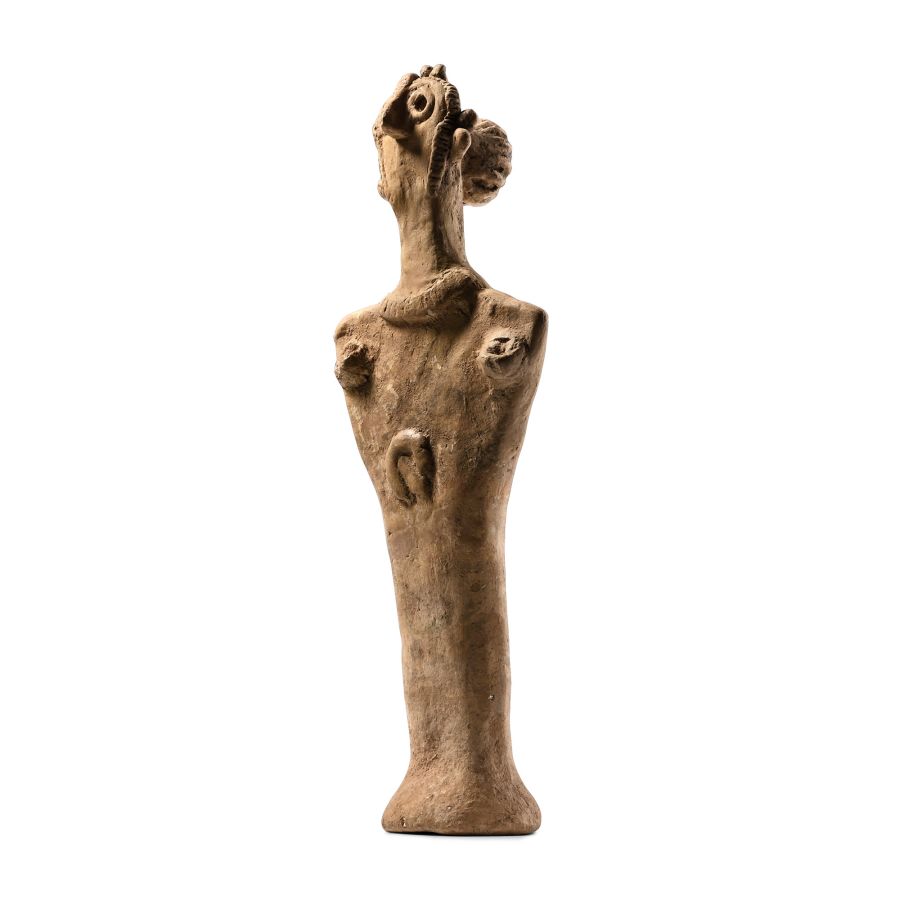
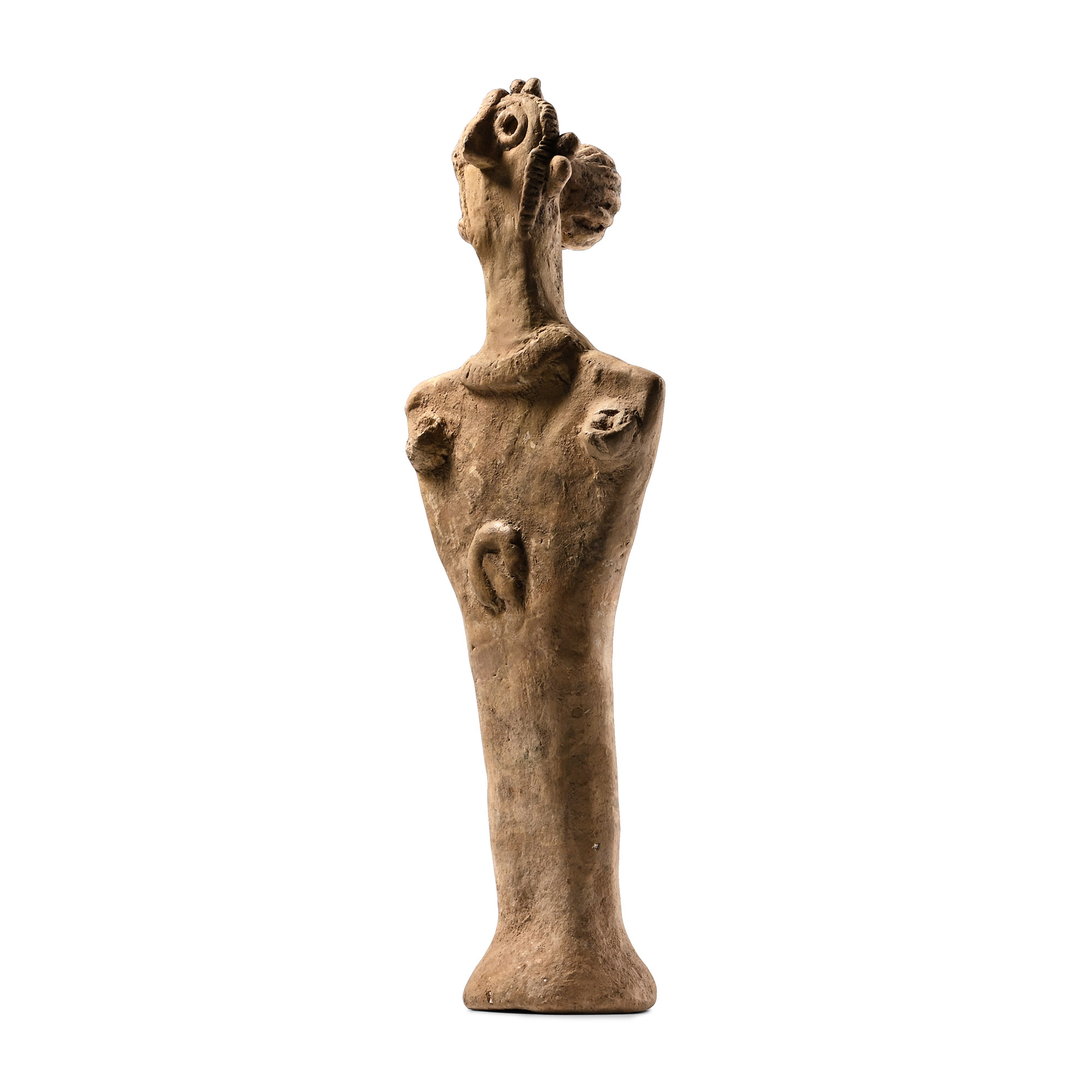
Large Syro-Hittite Style Terracotta Standing Figure
20TH CENTURY A.D. OR EARLIER
7 7/8 in. (181 grams, 20 cm).
Modelled in the round, standing, facing, each with pronounced facial features and hairdo. [No Reserve]
ProvenanceFrom the private collection of John Meredith, acquired since the 1990s; thence by descent.
CONDITIONTimeLine Auctions follows a vetting process to ensure the authenticity and legality of all items, reinforcing our commitment to integrity and responsible trading. Each antiquity, antique, and coin lot undergoes thorough examination by a vetting committee of at least ten external specialists, professional trade association members, scientists, and archaeologists: Our Vetting Process
AUCTIONS:
TimeLine is a leading auction house specialising in antiquities, ancient art, collectables, natural history, coins, medals, and books. Our auctions offer museums, collectors, historians, and enthusiasts the opportunity to acquire unique and historically significant pieces.
-

Uzbek Double-Sided Tunic
20th century A.D.Sold for (Inc. bp): £78
Reversible type with printed floral cotton design in crimson and green, and brown herringbone pattern cloth with trellis design. 1.1 kg, 106 cm high
Private collection, UK. -

Stuart Period Silver Seal Matrix with 'Hurrell Family' Heraldic Shield with Crossbows
England, 17th century A.D.Estimate: £200 - 300 (+bp*)
Opening Bid: £100
A silver chessman-type seal matrix with pierced trefoil head; central heraldic heater shield with three crossbows. 8.58 grams, 26 mm
Private collection, Europe. Acquired on the English art market.
The surnames associated with this crest are: Hurell, Hurle or Hurrell. -
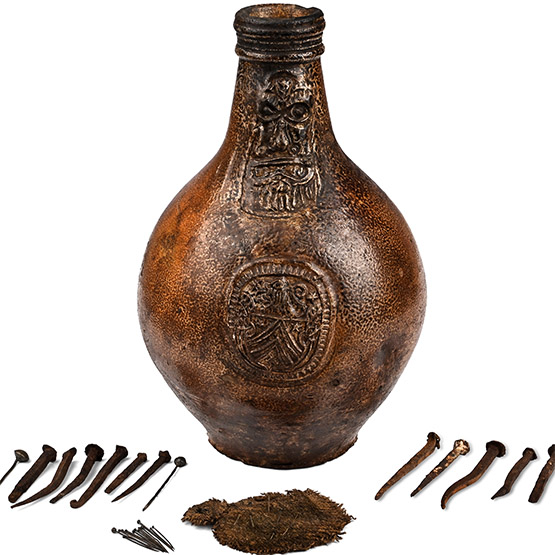
Very Large Glazed Bellarmine Witch's Bottle with Contents
Late 16th-early 17th century A.D.Sold for (Inc. bp): £9,750
Vessel of squat spherical form with a broad cylindrical neck, strap handle and foot with rolled rim, bearded face (Bartmann 'mask') and other detailing; with original contents comprising: eight iron clout nails with square-section shank and domed head; three similar with flat head; base metal dress pin with hollow-formed spherical head; similar with biconvex head; fragment of coarse-woven textile with five pins in situ; thirteen unassociated pins. 1.7 kg total, bottle: 26.5 cm
From the private collection of a London, UK, gentleman.
Witch bottles were a response to the common belief in witchcraft, which was feared in the Puritan culture of those times. The process involved heating the victim’s urine in a bottle, mixed with human hair and metal nails and pins, sometimes inserted into a cloth panel representing the victim's heart. The bottle was then either buried under the hearth of a house (East Anglian tradition) or thrown into a river (London tradition). The heating of the bottle was supposed to transfer to the body of the witch who had caused the victim to be afflicted.
