
Loading, please wait...
LOT 1952
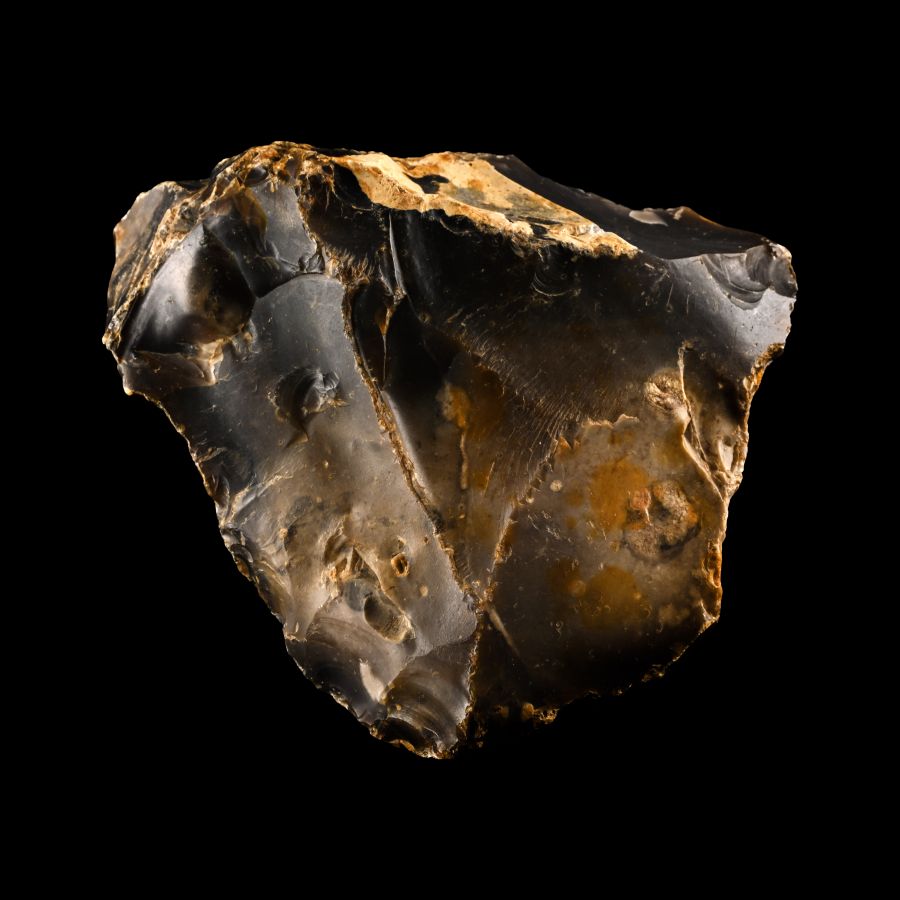
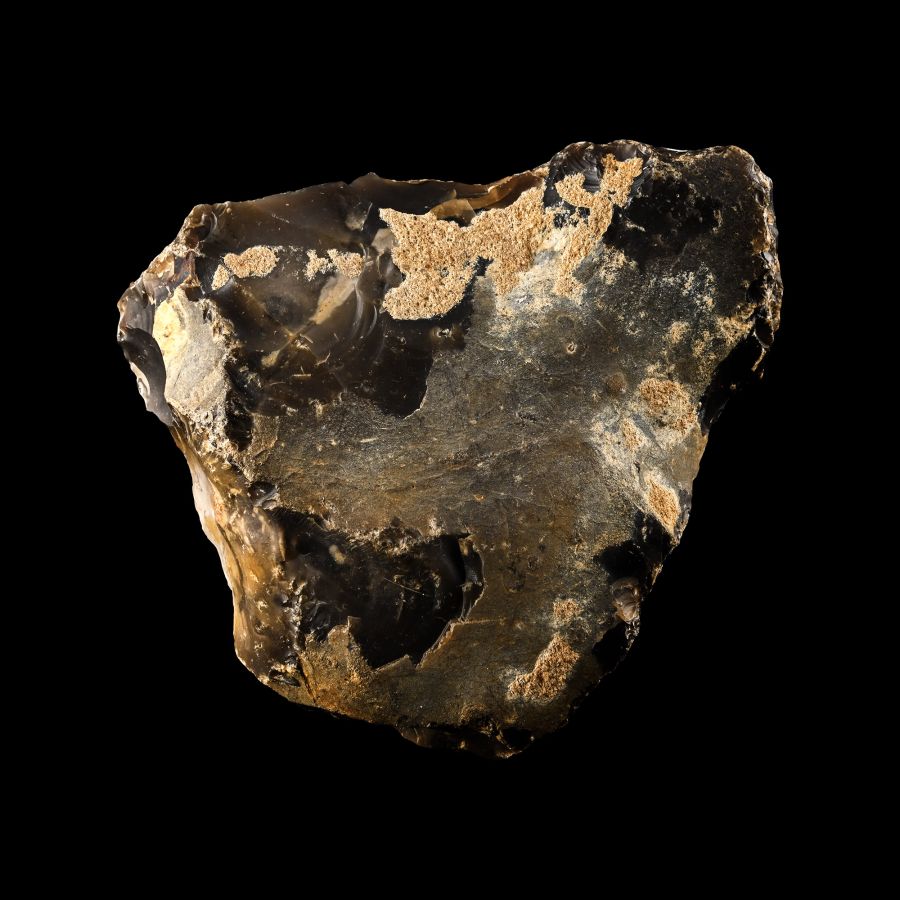
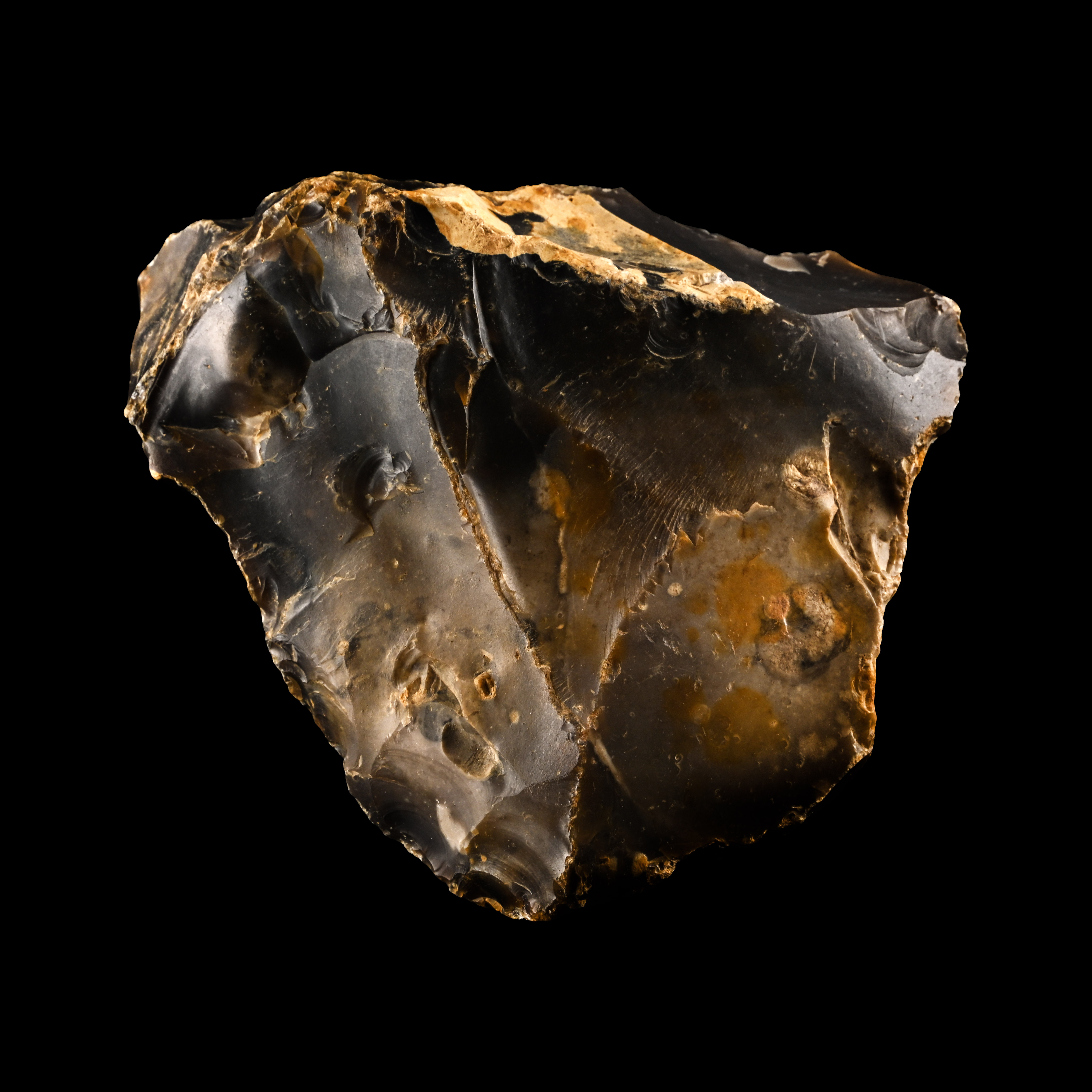
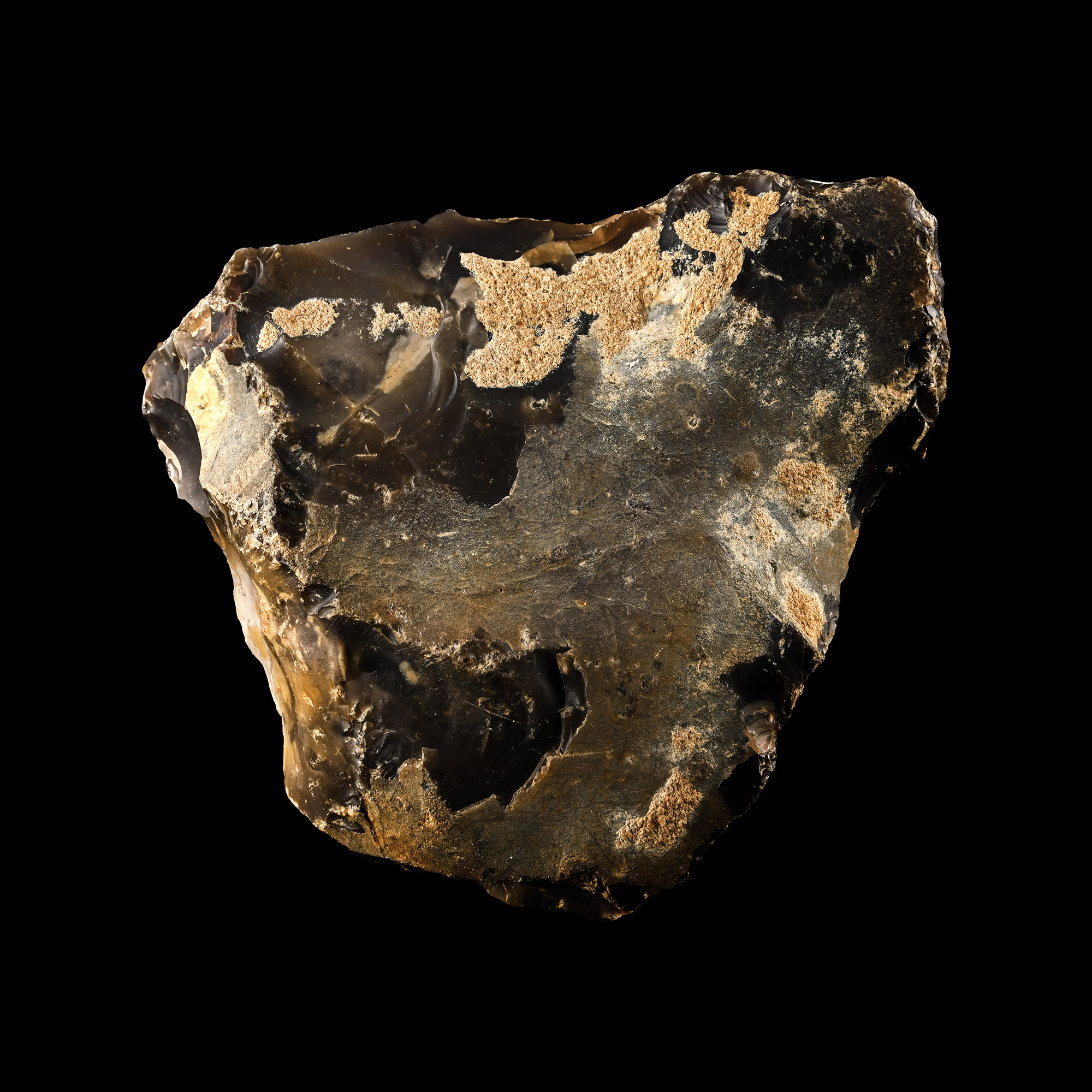
Large Stone Age Knapped Flint Hand Axe
PALAEOLITHIC PERIOD, CIRCA 60,000 B.P.
6 1/4 in. (1.23 kg, 16 cm).
Ovate in profile and lentoid in section with broad butt and rounded point; some cortex to one face.
ProvenanceFound close to the Palaeolithic Neanderthal site of Lynford Quarry, Norfolk.
Private collection, London, UK.
Lynford Quarry, a famous and well-documented site, sits on the edge of an ancient channel of water where Neanderthals thrived and hunted. When excavated many years back, hundreds of flint tools were unearthed alongside thousands of butchered bones and teeth of mammoths, woolly rhinos and deer. This axe may have been used for crushing bones to extract the nutritious marrow.
CONDITIONTimeLine Auctions follows a vetting process to ensure the authenticity and legality of all items, reinforcing our commitment to integrity and responsible trading. Each antiquity, antique, and coin lot undergoes thorough examination by a vetting committee of at least ten external specialists, professional trade association members, scientists, and archaeologists: Our Vetting Process
AUCTIONS:
TimeLine is a leading auction house specialising in antiquities, ancient art, collectables, natural history, coins, medals, and books. Our auctions offer museums, collectors, historians, and enthusiasts the opportunity to acquire unique and historically significant pieces.
LOT 1952
Large Stone Age Knapped Flint Hand Axe
Estimate £200 - 300€230 - 350 (for guidance only)$270 - 410 (for guidance only)
-
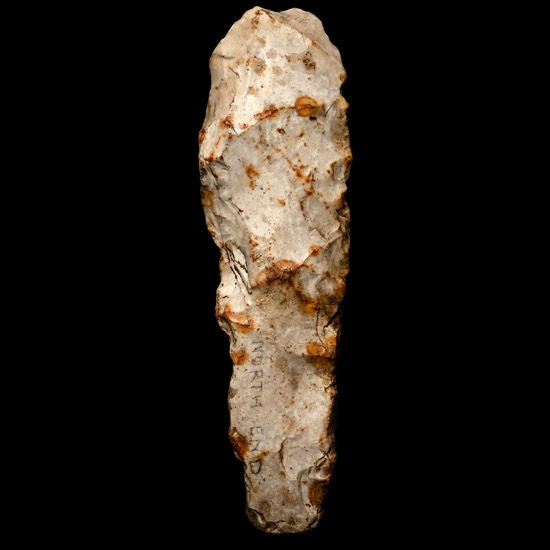
British Stone Age Large Knapped Flint Strike a Light from Farnham
Neolithic Period, circa 6000 B.P.Sold for (Inc. bp): £442
Triangular in section with rounded tip; pencilled findspot 'North End'. 113 grams, 11.4 cm
Found in 1901. From the collection of Captain Streatfield who helped to fund the archaeology excavations at Farnham, Kent. After Captain Streatfield passed away in the 1940s, his collection was sold at auction to a gentleman in Kent. The collection was then sold again in the 2020’s via a UK auction house.
Used as a tool to help create sparks to produce fire. -
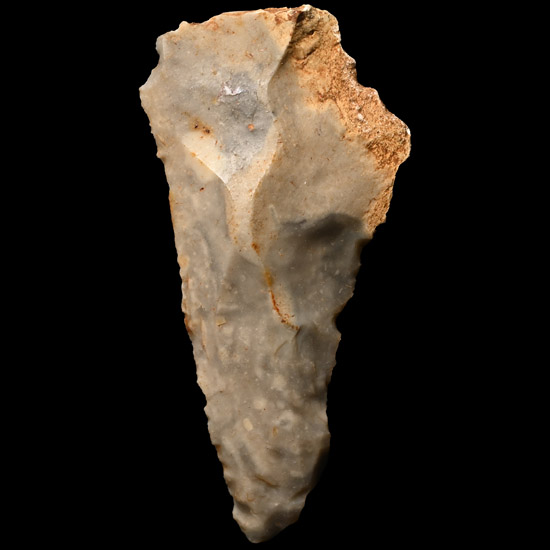
British Stone Age Knapped Flint Bifacial Knife from Farnham
Neolithic Period, circa 6000 years B.P.Sold for (Inc. bp): £338
Triangular in section with cortex to the butt. 6.69 grams, 51.5 mm
Found in 1901. From the collection of Captain Streatfield who helped to fund the archaeology excavations at Farnham, Kent. After Captain Streatfield passed away in the 1940s, his collection was sold at auction to a gentleman in Kent. The collection was then sold again in the 2020’s via a UK auction house. -
.jpg)
British Stone Age Knapped Flint 'Ficron' Handaxe from the Thames Valley
Lower Palaeolithic Period, circa 550,000-300,000 B.P.Sold for (Inc. bp): £143
Ficron form with a deep autumnal glossy patina; with old collector's note '2 Hand Axes Lower Paleolithic Thames Valley. ?100,000 years old approx. H.H. 3-4-60 British Museum'. 250 grams, 10.2 cm
Found Thames Valley, UK, on 3rd of April 1960. Accompanied by an original, old handwritten note. Acquired on the UK art market. From a private collection in the 2020s.
