
Loading, please wait...

LOT 1710
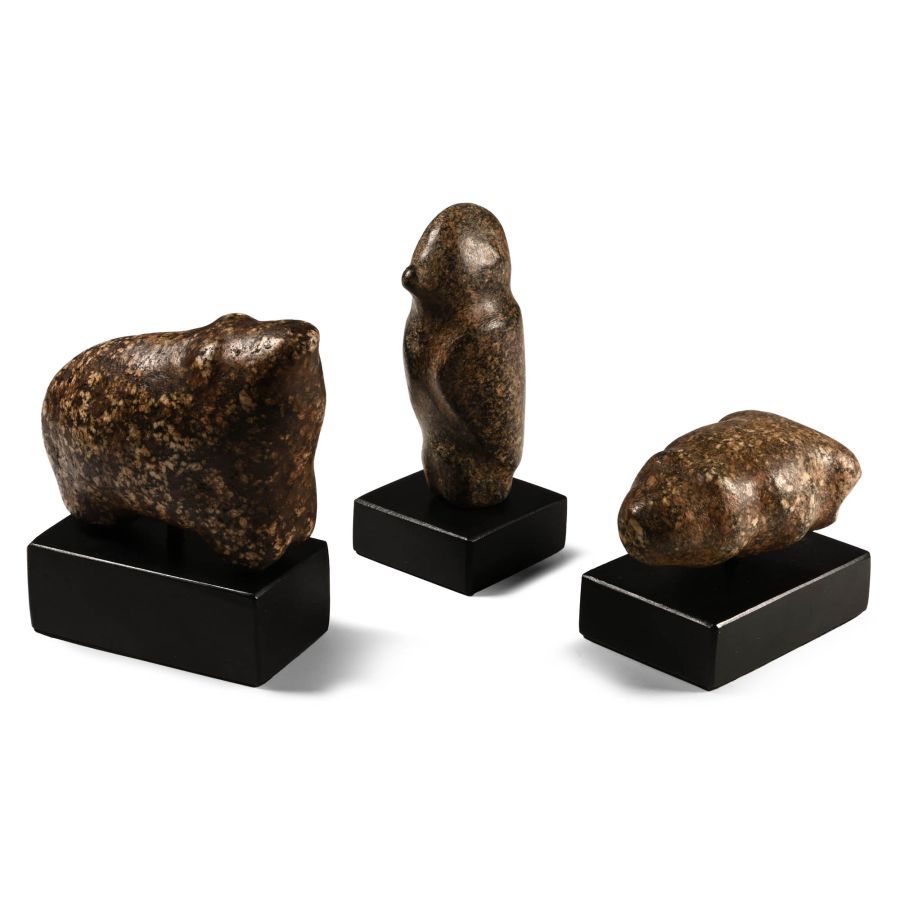
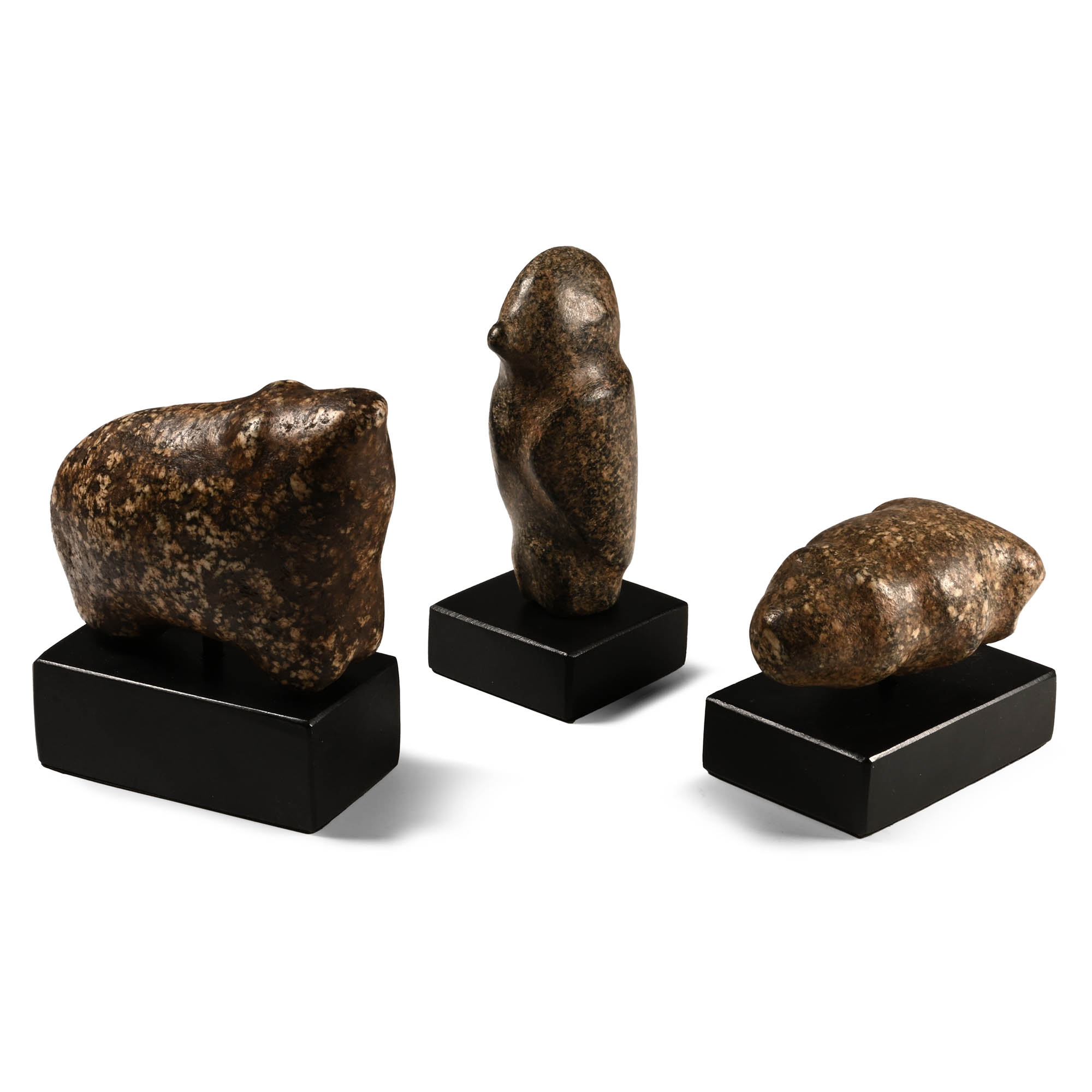
Large Stone Age Animal Idol Group
NEOLITHIC PERIOD, CIRCA 6TH-4TH MILLENNIUM B.P. OR LATER
3 5/8 - 4 5/8 in. (1.59 kg total, 9.3-11.7 cm including stand).
Comprising bird and quadruped figures carved in the round with rounded profile; each mounted on a custom-made stand. [3, No Reserve]
ProvenanceFrom a collection acquired on the UK art market from various auction houses and collections mostly before 2000.
From an important Cambridgeshire estate; thence by descent.
Accompanied by an academic report by Dr Raffaele D’Amato.
This lot has been checked against the Interpol Database of stolen works of art and is accompanied by search certificate number no.12338-224208.
This lot is accompanied by an illustrated lot declaration signed by the Head of the Antiquities Department, Dr Raffaele D’Amato.
Cf. Morris, D., The Art of Ancient Cyprus, Oxford, 1985, fig. 342, p.212, for a similar idol; Various, Idoles, au commencement était l’image – 22 Novembre 1990 – 28 Février 1991, Paris, 1990, fig.11, for a Neolithic sculpture in similar style; Nanoglou, S., ‘Representation of Humans and Animals in Greece and the Balkans during the Earlier Neolithic’ in Cambridge Archaeological Journal, 18, 2008, pp. 1-13, fig.3, nos.2-7, and fig. 6, for similar; also see Caldwell, Duncan, ‘The Use of Animals in Birth Protection Rituals and Possible Uses of Stone Figurines from the Central Sahel’ in African Arts, UCLA, 2015 Winter issue, vol.48, no.4, Nov., pp.14-25, fig.3, letters A, D, F.
FootnotesMost scholars consider these as symbols of the fertility cult and as evidence of early agricultural organisation of the earliest human society. The Stone Age people may have considered figures such as these to represent animals with their life-giving powers.
CONDITIONTimeLine Auctions follows a vetting process to ensure the authenticity and legality of all items, reinforcing our commitment to integrity and responsible trading. Each antiquity, antique, and coin lot undergoes thorough examination by a vetting committee of at least ten external specialists, professional trade association members, scientists, and archaeologists: Our Vetting Process
AUCTIONS:
TimeLine is a leading auction house specialising in antiquities, ancient art, collectables, natural history, coins, medals, and books. Our auctions offer museums, collectors, historians, and enthusiasts the opportunity to acquire unique and historically significant pieces.
-
Stone Age Bifacial Flint Hand Axe
Neolithic Period, 6th-4th millennium B.P.Sold for (Inc. bp): £364
Ovate in profile with carefully worked edge; old collector's label '14 145'. 131 grams, 91 mm
Found possibly Scarborough area, North Yorkshire, UK. Acquired Oxford, UK, November 2002. From the private collection of Kenneth Machin (1936-2020), Buckinghamshire, UK; with collection no.N145; his collection of antiquities and natural history was formed since 1948; thence by descent. This lot is accompanied by an illustrated lot declaration signed by the Head of the Antiquities Department, Dr Raffaele D’Amato. -
Stone Age Idol Group
2nd-1st millennium B.P.Sold for (Inc. bp): £85
Comprising: columnar type with one indented finial; cobble with reserved edges, centre removed to replicate an axehead; repaired. 406 grams total, 9.2-10.7 cm
From a collection acquired on the UK art market from various auction houses and collections mostly before 2000. From an important Cambridgeshire estate; thence by descent. This lot is accompanied by an illustrated lot declaration signed by the Head of the Antiquities Department, Dr Raffaele D’Amato. -
.jpg)
Stone Age Corded Ware Boat-Shaped Axehead
Late Neolithic Period, circa 2nd millennium B.P.Sold for (Inc. bp): £3,380
Finely polished in dark grey stone with expanded convex cutting edge tapering to a 'hammer' butt, socket with reserved mouth to receive handle. 676 grams, 19.5 cm
From the private collection of a London gentleman, from his grandfather's collection formed before the early 1970s. This lot has been checked against the Interpol Database of stolen works of art and is accompanied by search certificate number no.12509-231211. This lot has been cleared against the Art Loss Register database, and is accompanied by an illustrated lot declaration signed by the Head of the Antiquities Department, Dr Raffaele D’Amato.
