
Loading, please wait...
LOT 1346
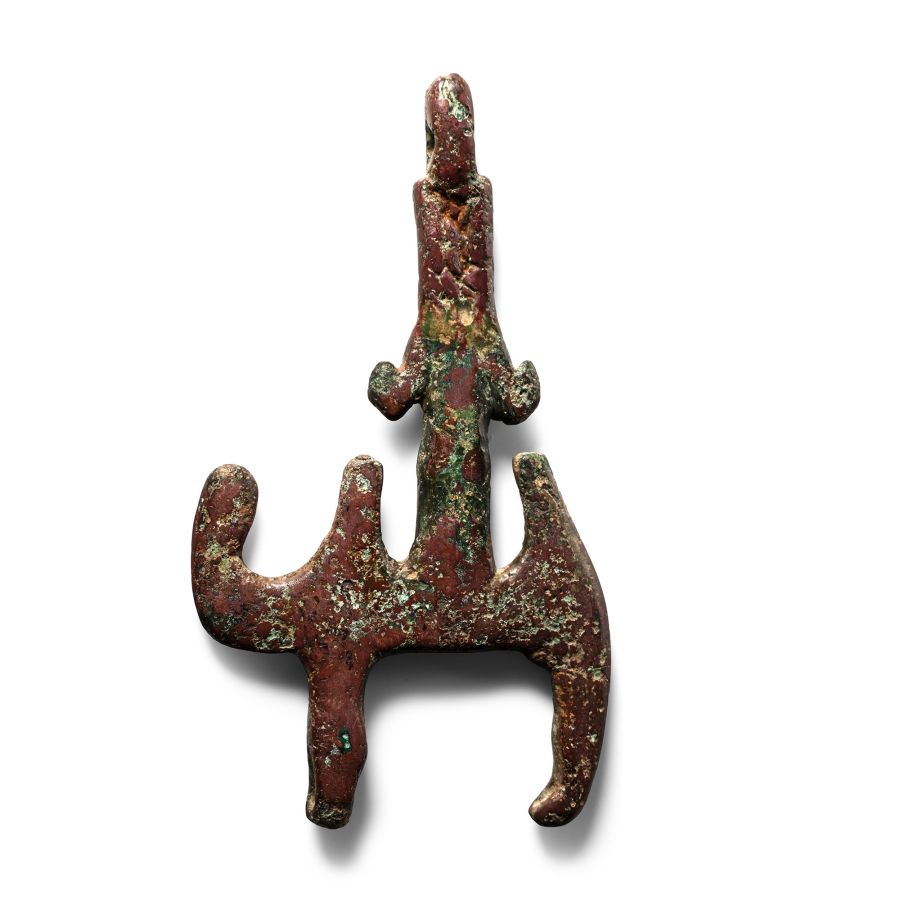
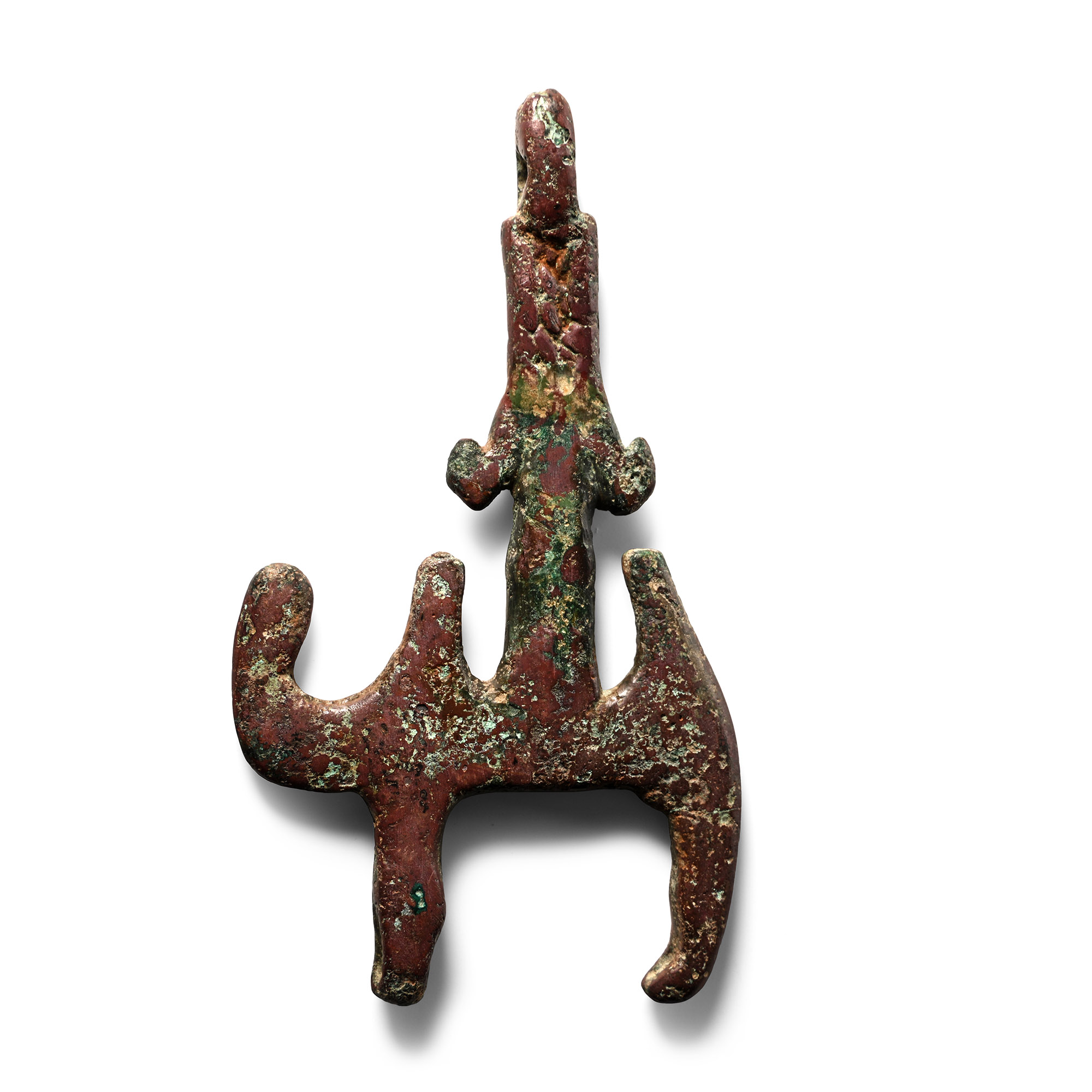
Large South Arabian Bronze Pendant with Camel Rider
1ST-4TH CENTURY A.D.
4 in. (46 grams, 10 cm).
Formed as a flat-section outline of a camel with vertical figure between the humps, suspension loop above.
ProvenanceEx London, UK, collection, 1990-2000s.
CONDITIONTimeLine Auctions follows a vetting process to ensure the authenticity and legality of all items, reinforcing our commitment to integrity and responsible trading. Each antiquity, antique, and coin lot undergoes thorough examination by a vetting committee of at least ten external specialists, professional trade association members, scientists, and archaeologists: Our Vetting Process
AUCTIONS:
TimeLine is a leading auction house specialising in antiquities, ancient art, collectables, natural history, coins, medals, and books. Our auctions offer museums, collectors, historians, and enthusiasts the opportunity to acquire unique and historically significant pieces.
-
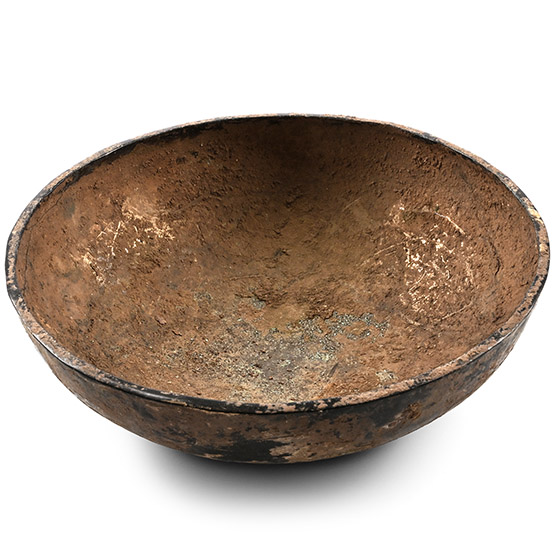
Sasanian Bronze Bowl
3rd-7th century A.D.Sold for (Inc. bp): £20
Broad and convex in profile with thickened inturned rim. 208 grams, 17 cm
From the collection of North West London, UK, gentleman, 1990-2000s. -
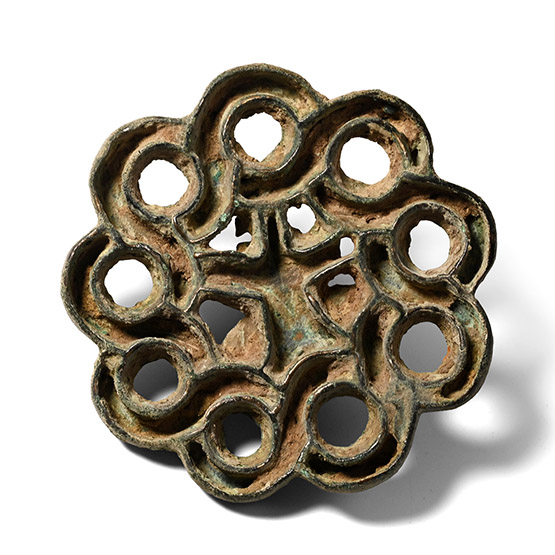
Large West Central Asian Bronze Stamp Seal with Heraldic Eagle
Circa 2300-2000 B.C.Sold for (Inc. bp): £143
Openwork discoid seal with loop handle to the reverse; accompanied by an old scholarly note, typed and signed by W.G. Lambert, late Professor of Assyriology, University of Birmingham, 1970-1993, which states: 'Stamp Seal of Bronze, 63x63x20 mm. This is round with flat face and flat back on which a handle of inverted U-shape is mounted on the back. The design is both compartmented and open-work. It shows a heraldic eagle in the middle: head up, wings spread, and tail feathers down, surrounded by a guilloche of nine spirals. The design is repeated by engraving on the back. This comes from west central Asia and dates to c. 2300-2000 B.C. The handle is worn, but otherwise it is in very good condition, and is a fine piece.' 63.6 grams, 64 mm
Acquired in the late 1980s-early 1990s. Ex property of a West London businessman. Academically researched and catalogued by the late Professor Lambert in the early 1990s. -
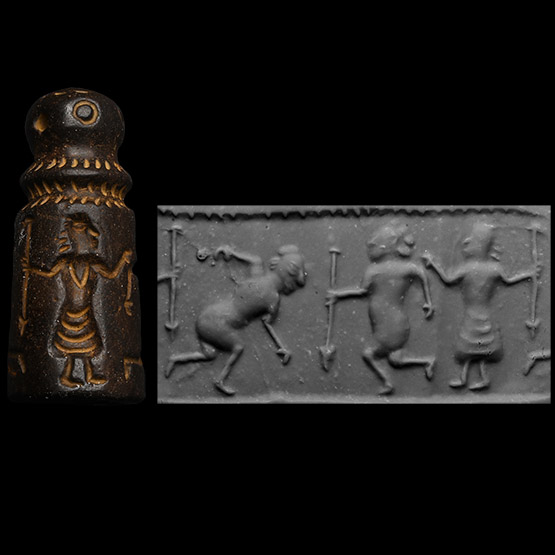
Large Mesopotamian Stone Stamp Seal with Lion and Figural Scene
Circa early 1st millennium B.C. or laterEstimate: £500 - 700 (+bp*)
Opening Bid: £250
Conical body with ribbed collar and knob finial pierced longitudinally, plaque to the underside with incuse image of reclining lion facing backwards; three figures to the outer face, two holding spears next to falling figure. 46 grams, 50 mm
Acquired on the UK art market. Private collection, England.
